REVIEW · PORTO
Small Group Surf Coaching in Porto with photos
Book on Viator →Operated by Surf Coaching Porto · Bookable on Viator
Porto teaches you to surf fast. I love the small-group setup (max 5 people), and I also love that you’ll get lesson photos afterward to share. You can pick a morning or afternoon session, and the whole thing is built around getting you onto waves with real coaching.
One thing to consider: the instructor chooses the surf spot based on conditions and your experience level, so the plan can shift to stay safe. Also, this isn’t for non-swimmers, and you’ll want a moderate fitness base for the paddling and getting up on the board.
In This Review
- Key highlights at a glance
- The vibe: small-group surfing in Porto with real attention
- Where you meet and how pickup affects your day
- How they choose your surf spot (and why that’s smart)
- Gear, sports insurance, and what that means for you
- Coaching style: sand tips, in-water encouragement, and pace
- The lesson flow: what your 3 hours will feel like
- Morning vs afternoon: choosing the right start time
- Price and value: what $42.05 buys you in Porto
- Who this surf lesson fits best (and who should skip it)
- Tips to get the most out of your session
- Should you book this small-group surf coaching in Porto?
- FAQ
- What is the duration of the Porto surf coaching lesson?
- How many people are in the group?
- What is included in the price?
- Are photos provided?
- Is pickup available?
- Where is the meeting point?
- What languages is the lesson offered in?
- What fitness level is required?
- Do I need swimming skills?
- What happens if the weather is poor?
Key highlights at a glance
- Max 5 surfers, more instructor time from start to finish
- Best-conditions beach selection to avoid dangerous or overly crowded situations
- Wetsuit, board, and sports insurance included so you show up ready
- Photos after your session (and sometimes video clips show up too)
- English coaching with clear on-the-sand instruction
- Pickup available (and the meeting point is convenient for public transit)
The vibe: small-group surfing in Porto with real attention
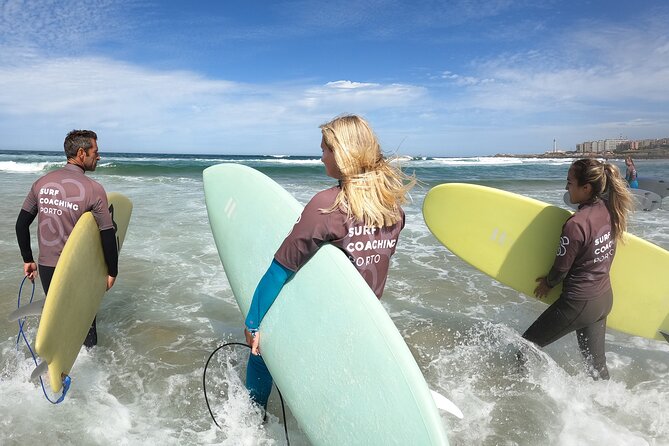
Surf lessons often look great on paper, but the difference is usually the coaching ratio. This one keeps the group small—up to 5 travelers—so you’re not stuck waiting your turn while someone else gets the instructor’s eyes. You’ll still learn in a group, but the pacing feels built for individuals.
I also like the follow-up: you receive photos from your lesson. That matters because surfing is one of those activities where your brain gets focused on the next attempt. Having images you can look back on makes the whole session feel more real—and it’s great for friends who ask, so what did it look like?
Pick a morning or afternoon start time depending on your energy level. Either works, as long as you show up ready to move. Porto weather can be moody, so plan to be flexible if conditions require a different approach.
You can also read our reviews of more photography tours in Porto


Where you meet and how pickup affects your day
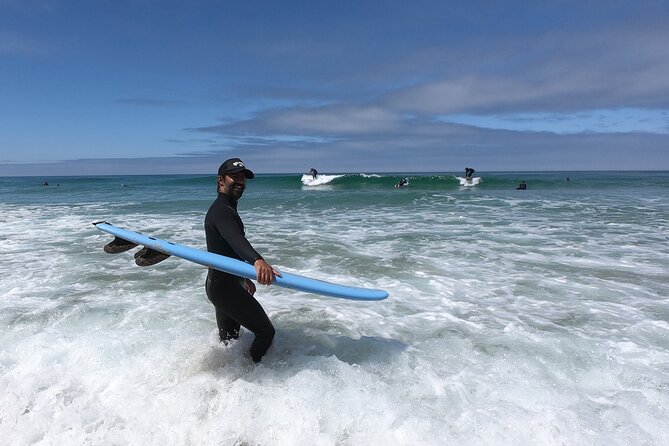
The meeting point is Pr. Cid. Salvador 4100, Porto. It’s also listed as near public transportation, which is handy if you’d rather not coordinate a car or rely on taxi timing.
If you want pickup, it’s offered, and the team can pick up and drop off from your accommodation—with a note that coverage is tied to a defined area, and anything outside that may be possible under request. Translation: if you’re staying in the city center, it should be straightforward. If you’re a bit farther out, message ahead so you’re not guessing on arrival day.
For a 3-hour lesson, logistics matter more than with longer tours. You don’t want a big travel buffer just to get to the beach and warm up. This option is designed to keep things simple and get you coaching time, not transport time.
How they choose your surf spot (and why that’s smart)
The session isn’t a one-size-fits-all trip to the same crowded beach. Instead, the instructor searches for the best spot based on your experience and the day’s conditions. That’s a big deal for beginners, because wave quality and local safety vary a lot around the coastline.
You’ll also hear the practical part of it: they try to avoid crowded spots during peak periods unless minimum safety conditions are met. Crowds don’t just mean more people—it means more crossed paddling paths and less room to bail safely if things go sideways.
The trade-off is that you might not know exactly where you’ll surf until the day-of. If you’re the type who likes a fixed plan with zero surprises, that uncertainty is the only real downside. If you’re there to learn and keep it safe, the flexible approach is exactly what you want.
Gear, sports insurance, and what that means for you
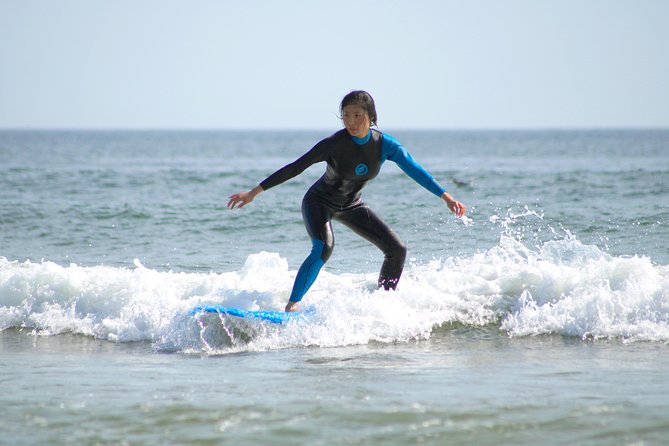
This lesson includes the basics you’d normally have to rent or worry about: surfing equipment and sports insurance. That reduces two common beginner headaches. First, you’re not trying to figure out wetsuit sizing on the fly. Second, you don’t have to guess whether you’re covered for the fun-but-risky parts of the sport.
All the gear handling also speeds up your warm-up. The faster you’re dressed and on a board, the more wave attempts you get in your limited time. In a short lesson, minutes count.
You’ll also get instruction that starts on land and moves into the water. Multiple lessons like this tend to focus only on the water, but the best results come from correcting technique when you’re standing still, then testing it immediately. This is the kind of coaching that tries to connect the two.
Coaching style: sand tips, in-water encouragement, and pace
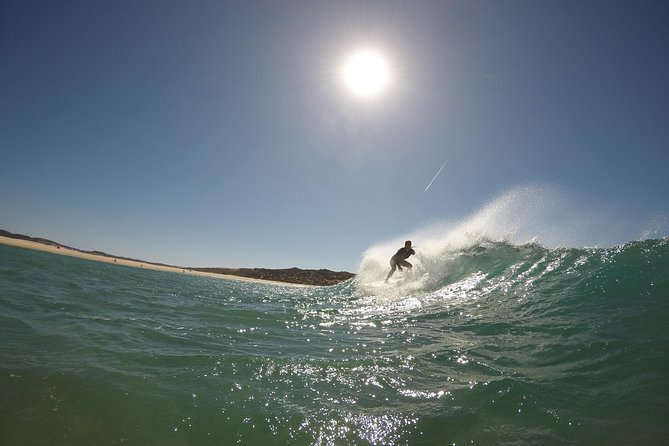
The coaching tone comes through clearly in the feedback: instructors are patient, helpful, and tuned in to different starting levels. If you’re brand new, you shouldn’t feel like you’re holding everyone back. The lesson is structured for beginners, including folks learning how to get up and catch waves for the first time.
Names that show up include João and Juan (and one mention of Jon). Regardless of who’s guiding, the approach is similar: clear guidance, lots of encouragement, and adjustments that help you feel progress during the session rather than after it ends.
What I like most is the focus on getting each person better, not just getting photos. One comment praised an instructor who kept people improving even when the lesson ran a bit longer than advertised. Another noted how helpful the guidance was for first-timers, enough to feel confident continuing later.
That said, no surf day is perfectly predictable. Water conditions can change fast, and that can make a group feel like it’s moving through moments of waiting. For most people, it’s normal. For someone expecting an ultra-scripted lesson minute-by-minute, it can feel chaotic on a tough day.






The lesson flow: what your 3 hours will feel like
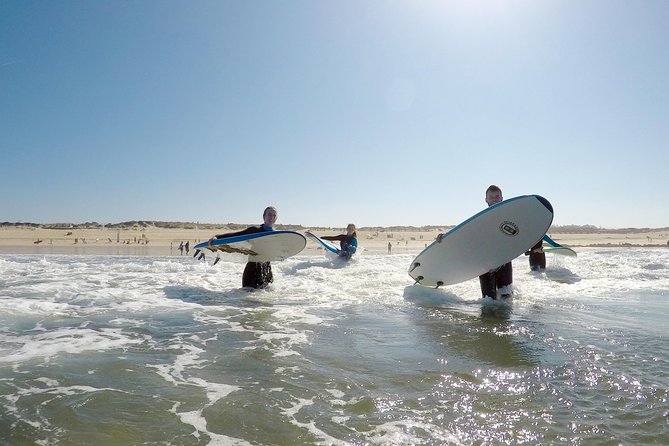
Even though the lesson is listed at about 3 hours, the real question is how that time is used. Here’s the pattern you can generally expect:
1) Meet, gear up, and get ready
You’ll start at the meeting point, then get equipped so you can focus on technique instead of logistics. If pickup is included for your location, you’ll save time here and arrive ready to move.
2) On-the-sand instruction
This is where you learn how to position yourself and what to do when a wave shows up. When instructors also explain common mistakes, you’ll catch on faster because you know what to correct the next try.
3) In-water coaching and wave attempts
This is the payoff. With a small group, you should get more frequent checks and quick adjustments rather than long stretches of silence.
4) Wrap-up and lesson photos
You’ll get photos from your session. If you’re lucky (based on past feedback), you may even see video-style content as part of the follow-up.
One note from real experiences: some sessions can run a little longer than the posted duration when everyone is still actively improving and the conditions allow it. Don’t count on it, but it’s a nice sign of flexibility.
Morning vs afternoon: choosing the right start time
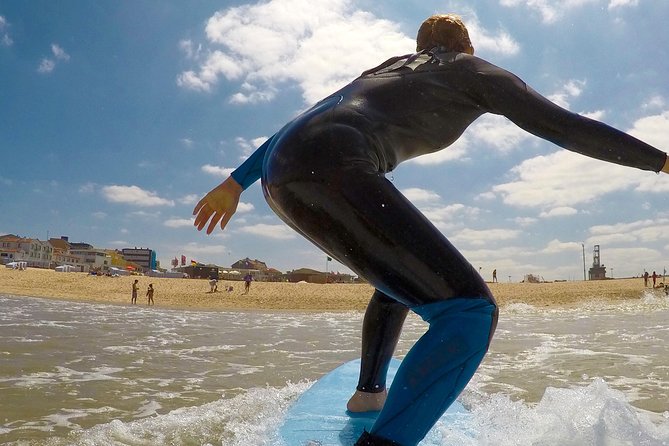
You can choose either a morning or afternoon tour time. The best choice depends on your travel rhythm:
- Morning often works well if you want your surf day to feel fresh and you want the rest of the day open for Porto wandering.
- Afternoon can be nice if you prefer a slower start and don’t want to rush breakfast, especially on a short trip.
The surfing itself still depends on weather and sea conditions. If conditions are poor, the experience may be changed or canceled and refunded. That’s normal in coastal activities, and it’s the price you pay for not forcing bad conditions just to hit a calendar date.
Price and value: what $42.05 buys you in Porto
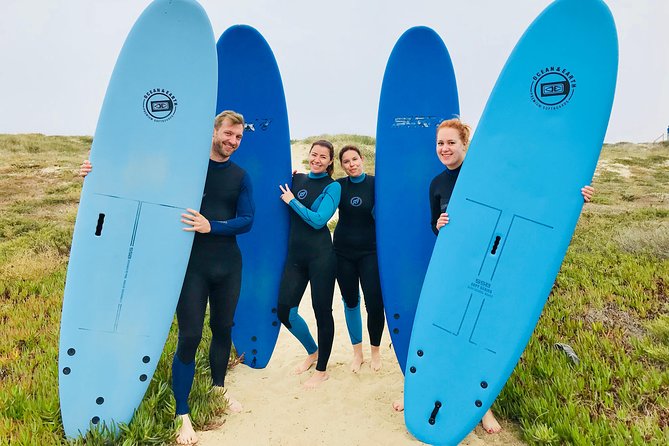
At $42.05 per person for about 3 hours, the value is strongest when you look at what’s included. You’re paying for coached surf time, not just board rental.
Here’s what you’re getting for that price:
- small-group setup (max 5)
- surf equipment included
- sports insurance included
- coaching in English
- photos after your lesson
- optional pickup (depending on your location)
That package matters. If you tried to DIY the same experience—renting gear, figuring out a safe entry point, finding an instructor, and hoping for decent beginner waves—you’d burn time and still might miss the coaching that makes surfing click.
The only cost you’re really still responsible for is your effort: you’ll need basic swimming skills and a moderate fitness level. If you can meet those requirements, the price feels like a straightforward, low-friction way to get real surf practice.
Who this surf lesson fits best (and who should skip it)
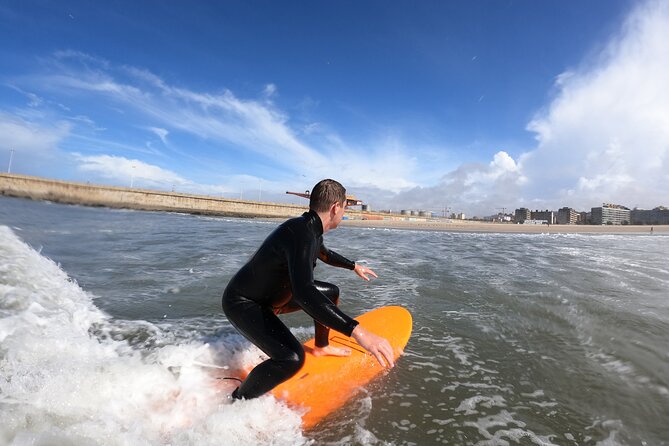
This is a good match if you:
- want a beginner-friendly surf experience
- like the idea of a small group and more personal attention
- are okay with the spot being chosen based on conditions and your level
- care about having photos you can share afterward
It’s not the right fit if you:
- don’t have basic swimming skills (this is explicitly not recommended for people without them)
- expect a purely classroom-style experience where you don’t get wet
- have issues with moderate physical demands like paddling, getting in and out, and balance on a moving board
If you’re traveling with a friend or just a couple of solo days, the group size also makes the experience feel friendly without turning into a crowded circus.
Tips to get the most out of your session
You’ll have a better time if you show up thinking like a learner, not like a spectator.
- Bring swim-ready comfort under your wetsuit.
- Listen to on-the-sand cues, then test them quickly. Surfing rewards fast feedback loops.
- If you feel overwhelmed, say so. A small group coach can adjust pacing.
- Don’t fight every wave. In beginner sessions, the smart move is learning when to attempt and when to reset.
Also, give your instructor room to adapt. If the plan shifts to match safety and wave conditions, that’s not failure. It’s how surfing stays fun instead of scary.
Should you book this small-group surf coaching in Porto?
Book it if you want a structured beginner lesson with included gear and sports insurance, a small group up to 5, and real coaching that helps you catch waves instead of just learning theory. Add the photo follow-up, and it’s a solid souvenir without needing to carry your camera into the water.
Skip it only if you’re not comfortable swimming, you’re looking for a tightly fixed route with zero day-of changes, or you dislike waiting while conditions are checked. Surf is weather math. If that part annoys you, you might prefer a different activity.
FAQ
What is the duration of the Porto surf coaching lesson?
It’s listed at approximately 3 hours.
How many people are in the group?
The maximum group size is 5 travelers.
What is included in the price?
Surfing equipment and sports insurance are included.
Are photos provided?
Yes. You’ll receive photos from your lesson to share with friends.
Is pickup available?
Pickup is offered. Picking up and dropping off from accommodations is also available, including areas outside the defined range under request.
Where is the meeting point?
The meeting point is Pr. Cid. Salvador 4100, Porto, Portugal.
What languages is the lesson offered in?
The lesson is offered in English.
What fitness level is required?
Travelers should have a moderate physical fitness level.
Do I need swimming skills?
It’s not recommended for anyone without basic swimming skills.
What happens if the weather is poor?
This experience requires good weather. If it’s canceled due to poor weather, you’ll be offered a different date or a full refund.