Porto looks different through a phone lens. This workshop mixes mobile photography practice with a walk through Porto’s old lanes, led by João, who shows how to spot details and frame shots away from the loudest spots. You’ll learn composition and guiding lines, plus how to edit on the go, so your pictures look more intentional. One heads-up: you’ll cover steep stairs and slopes, so wear grippy shoes and plan for some climbing.
I like that the instruction is flexible. If you’re brand-new with your phone camera, João adjusts. If you already shoot on your iPhone or Android, you’ll still get fresh ways to improve, and you’ll leave with a batch of images ready for social media. With a small group (max 15) and a 1 hour 30 minute pace, it feels more like hands-on coaching than a sightseeing lecture.
In This Review
- Key takeaways before you go
- Why this Porto workshop feels worth $59.15
- What you need to bring (and why it matters)
- How João teaches mobile photography on the move
- The route: Porto’s photo rhythm stop by stop
- São Bento Station: start with angles and close-up possibilities
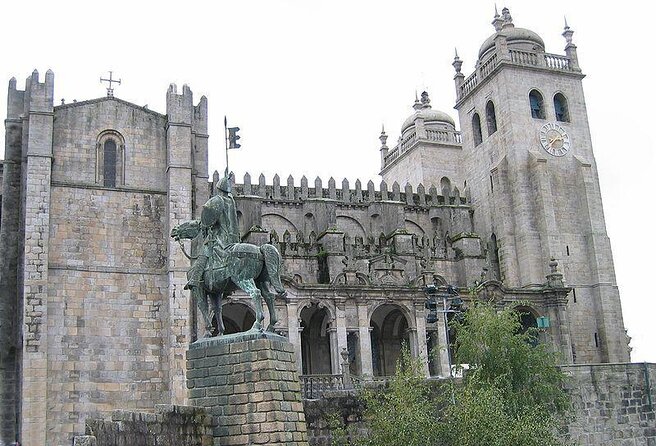
- Catedral do Porto: practice details, not just the whole building
- Miradouro da Rua das Aldas: higher viewpoints, new camera habits
- Passeio das Virtudes: balance wide views with street-level textures
- Final stretch back toward Porto: turn practice into publishable shots
- Editing with a phone: what you’re really paying for
- Pace, group size, and the walking reality
- Who should book this workshop in Porto
- Should you book this Porto mobile photo workshop?
- FAQ
- FAQ
- How long is the mobile photography workshop?
- What is the price and what’s included?
- Do I need to know photography before I go?
- What if I already take photos with my phone?
- Where does the tour start and end?
- Is the workshop in English?
- Is there a lot of walking or stairs?
- What happens if the weather is bad or the trip is canceled?
Key takeaways before you go
- Oldtown photos with less crowd pressure: You’ll look for details in narrow streets away from the busiest areas.
- Composition practice that you can repeat: You’ll focus on framing, technique, and guiding lines you can use anywhere.
- Editing help while you’re still walking: You’ll learn the app process João uses to refine shots on the trip.
- João’s focus on people + depth: You’ll get ideas for adding humans to scenes for scale and layering.
- A route that asks for moderate fitness: Expect steep stairs and uneven streets.
Why this Porto workshop feels worth $59.15
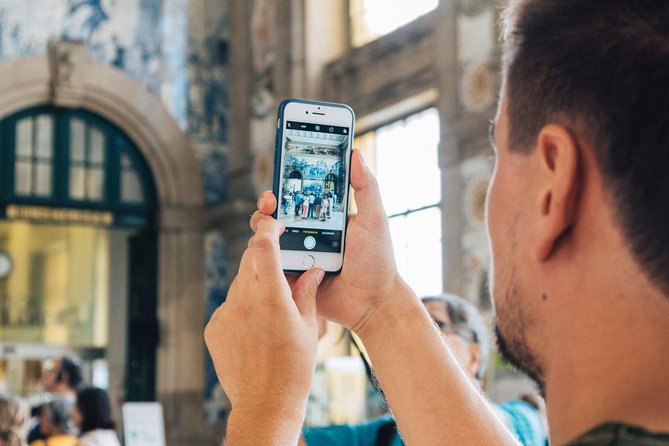
A lot of photo tours show you pretty places and hope you figure out the camera part. This one does the opposite. The walking is built around learning—how to see, how to compose, and how to get your phone photos to look like you meant them.
The price also makes more sense when you think about what you’re buying. You’re paying for 90 minutes of coaching, plus an end result: a set of images you can publish right away. You’re not just collecting photos of landmarks. You’re building a repeatable way to work your camera app, then editing while you’re still in the city.
And Porto is the right kind of city for this approach. With tight streets, strong angles, and frequent changes in light, you get lots of chances to practice framing quickly—without needing special gear.
You can also read our reviews of more photography tours in Porto

What you need to bring (and why it matters)
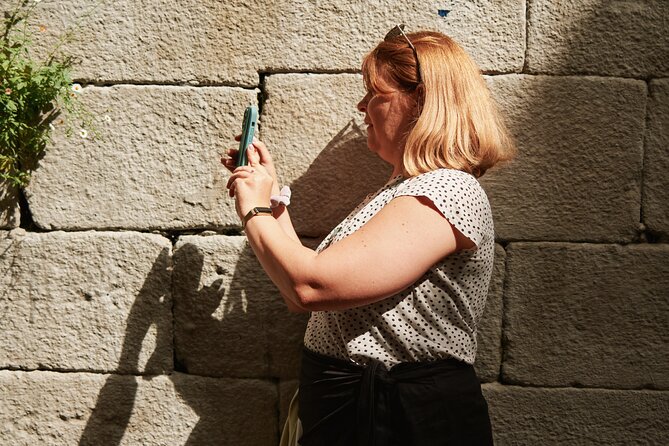
Bring one thing, and bring it charged: your phone or tablet. The workshop is designed so you can go straight from shooting to editing, so a battery that’s already half-dead will slow you down and shrink your options.
Think about your power plan before you leave your hotel:
- fully charge the device you’ll use
- use any battery-saver mode sparingly so you don’t lose control in the middle of a shot
- if you have one, plan to carry a small power bank (not required by the listing, but it’s smart in practice)
Next, bring curiosity. You’ll be walking through narrow old streets where the best photo moments often show up as small details—textures, edges, and lines that lead your eye. If you only chase the biggest views, you’ll miss half the lesson.
Finally, bring shoes for uneven stone and steep stairs. This isn’t a flat stroll, and the pace assumes moderate physical fitness.
How João teaches mobile photography on the move
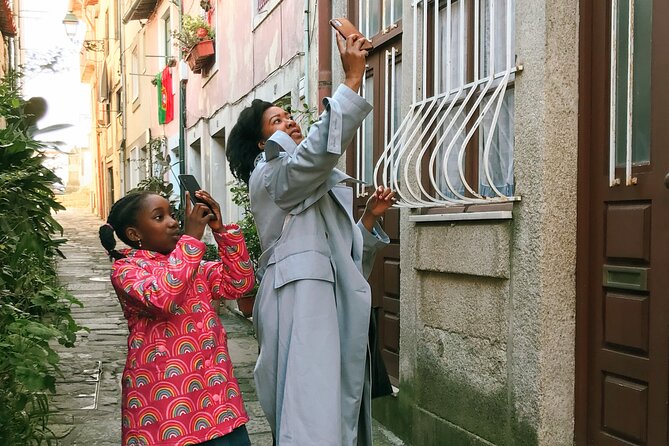
João’s style is practical. He doesn’t just point and say take a photo. He pushes you to look first, then shoot with purpose. One theme from his coaching: don’t treat a snapshot as an accident. Before you press the button, you’re encouraged to think about composition choices that make the image feel deeper and more layered.
In the lessons, you’ll work on:
- technique with your phone camera
- composition that improves quickly after a few attempts
- guiding lines, so your frame leads the viewer through the scene
- tips for including people so the image has scale and story
That last part is a big deal in a city like Porto. When you add people well, your photo stops looking like a postcard and starts looking like a moment. João’s examples also get you thinking about depth—how to place elements so the scene has foreground, midground, and background, even when you’re shooting close.
The route: Porto’s photo rhythm stop by stop
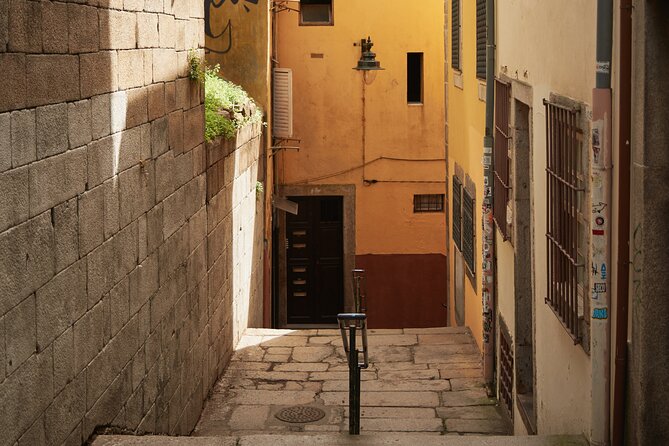
You’ll meet at São Bento station (Praça de Almeida Garrett, 4000-069 Porto) and finish back there. The overall loop is designed so you can practice different types of shots—street-level details, religious/architectural angles, and higher viewpoints.
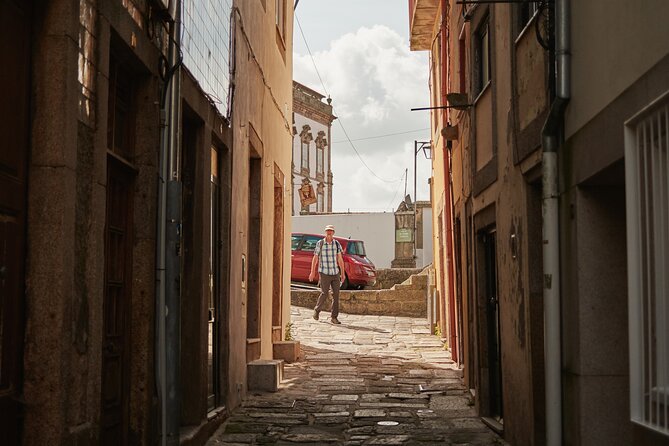
Along the way, you’ll explore older streets away from the biggest crowds. That’s not just for comfort. It gives you the chance to frame without constantly fighting for space in the shot.
São Bento Station: start with angles and close-up possibilities
São Bento Railway Station is where you kick off, right at the start. For phone photography, that’s a smart move because it gives you lots of surfaces and lines to work with immediately.
What you’ll get out of this first stop:
- a chance to warm up fast and build confidence
- practice with framing so your shot looks intentional, not random
- early work on composition and guiding lines
The main drawback at the start is time pressure. If you arrive late or your phone battery is low, you’ll spend your first moments scrambling. Arrive ready, and use this stop to test your approach before the steeper sections come.



Catedral do Porto: practice details, not just the whole building
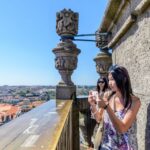
Next you head to Catedral do Porto. This stop is useful for learning how to photograph architecture with a phone. You’ll be looking for ways to frame parts of the cathedral rather than only capturing the full facade.
Tip for your practice here: treat it like a composition puzzle. Instead of one wide shot, try choosing an angle where vertical lines feel strong, and where edges lead the eye toward a focal point. Phone photos often look flat when everything is centered—so experiment with where you place the subject.
The consideration here is crowds and space. Even when the overall workshop avoids the busiest areas, cathedral zones can have people moving through. That’s why João’s focus on people can actually help: you can work with the human flow instead of fighting it.
Miradouro da Rua das Aldas: higher viewpoints, new camera habits
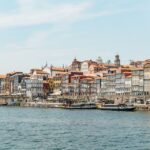
At Miradouro da Rua das Aldas, your mindset shifts. Viewpoints naturally change composition because you’re suddenly working with depth—streets, roofs, and layers.
This stop is where guiding lines really shows up for real. From a higher angle, streets often act like arrows pointing into the scene. Your phone also gives you a chance to test how your framing changes when the world is spread out.
A practical downside: wind and uneven footing. You’ll want to watch your step while you’re shooting, especially if you’re hopping for a quick angle. Keep your body steady first, then aim.
Passeio das Virtudes: balance wide views with street-level textures
Then comes Passeio das Virtudes, another viewpoint-style stop that rewards your patience. The lesson here is how to balance big views with small, interesting elements that keep the photo from feeling empty.
Try this approach:
- take at least one wider shot to capture the overall scene
- then switch to a closer framing where you can include a textural detail or a small human moment
- use guiding lines so your eye has a path through the image
This stop can also be where you see the value of editing help. When light is mixed—bright sky plus shaded streets—your raw shot might need small fixes to look like what you saw in your mind.
Final stretch back toward Porto: turn practice into publishable shots
Your last part of the walk is about turning what you learned into a batch of images you can actually post. The workshop aims for a concrete outcome: you’ll have a set of photos from Porto ready for social networks.
I find that the best way to use the final stretch is to pick a photo goal and stick to it. For example: commit to taking 5 images using guiding lines, or 5 frames where you intentionally include people. That way you finish with variety, not just a pile of near-duplicates.
Editing with a phone: what you’re really paying for
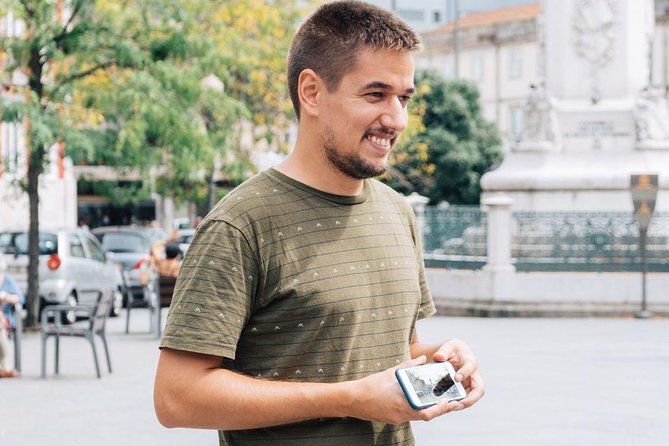
The workshop includes time and guidance on editing your photos while you travel. That matters because even the best framing can look dull if the edit doesn’t match the scene you intended.
João will share the app process he uses to edit on the go. You’ll also pick up a practical mindset: edit enough to improve clarity and mood, but don’t spend so long you miss the next photo moment.
Here’s the real takeaway you’ll want to carry home: your goal isn’t to turn every photo into a masterpiece. Your goal is to make your pictures look consistent and worth sharing. A light touch—especially on contrast, color balance, and focus—can turn an okay shot into something you’ll actually post.
Pace, group size, and the walking reality
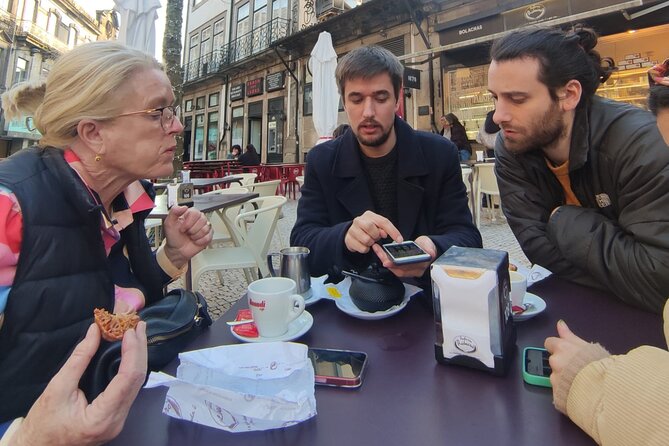
This is 1 hour 30 minutes and capped at 15 people. That small group size is a big part of the value. It means João can see what you’re doing, adjust your framing ideas, and offer tips that match your skill level.
The pace is also the point. You’ll practice and shoot continuously, so you learn by doing. If you’re the type who loves long, slow museum-style wandering, this might feel more structured than you want. But if you want results and you learn fast through repetition, the timing works well.
And yes, expect moderate steep stairs and streets. It’s not a dealbreaker, but it is a planning point. Bring comfortable shoes, keep your phone secure, and give yourself a steady rhythm. The route changes elevation a few times, so take your time on the steps.
Who should book this workshop in Porto
This is a great fit if you:
- want to improve your mobile photography without buying a camera
- enjoy walking and learning at the same time
- like shooting street scenes and architectural angles
- want a clearer process for composition, guiding lines, and editing
It’s also a strong option if you’ve already been photographing Porto on your phone. João’s approach aims to refine habits, not just teach basics. One clear highlight from his instruction: he helps you think about adding people to scenes for depth and scale, which can instantly level up your results.
Skip it if you:
- don’t want to deal with steep stairs
- can’t commit to staying on your feet for roughly 90 minutes
- don’t have a phone/tablet you can keep charged during the session
Should you book this Porto mobile photo workshop?
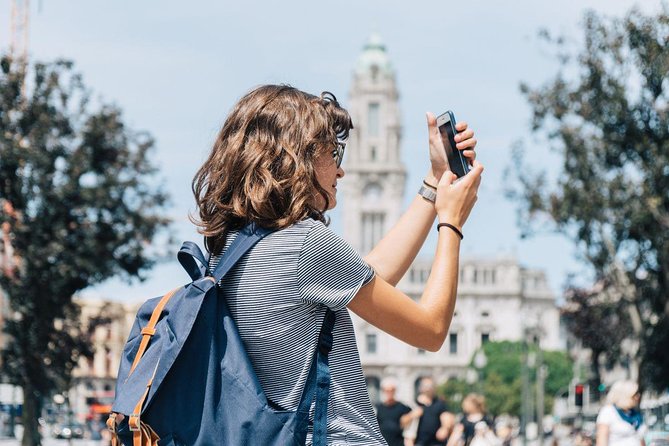
If you want to see Porto and improve your photos in the same afternoon, I’d book it. The value comes from the combination of guided street walking plus phone-specific teaching—composition, guiding lines, and on-the-go editing—so you finish with images that actually reflect what you learned.
The only real reason to hesitate is physical comfort. If stairs and uneven streets are a problem for you, the route could feel stressful. If you’re okay with moderate climbing and you show up with a charged phone, this is an efficient, hands-on way to get better fast and leave Porto with more than sightseeing snaps.
FAQ
FAQ
How long is the mobile photography workshop?
It lasts about 1 hour 30 minutes.
What is the price and what’s included?
The price is $59.15 per person. You get a mobile ticket, a guided walk, mobile photography instruction, and guidance on editing photos so you can publish them afterward.
Do I need to know photography before I go?
No. If you have no experience using your phone or tablet for photos, João adapts the workshop to your needs.
What if I already take photos with my phone?
That’s fine too. If you already use your phone to photograph your travels, you’ll still get new ideas and tips to improve.
Where does the tour start and end?
It starts at São Bento station, Praça de Almeida Garrett, 4000-069 Porto, Portugal, and ends back at the same meeting point.
Is the workshop in English?
Yes, it’s offered in English.
Is there a lot of walking or stairs?
There is moderate walking on steep stairs and streets, so you should have a moderate physical fitness level.
What happens if the weather is bad or the trip is canceled?
The experience requires good weather. If it’s canceled due to poor weather, you’ll be offered a different date or a full refund. You can cancel for a full refund up to 24 hours before the experience starts.