REVIEW · PORTO
Porto Ribeira and highlights Private Walking Tour
Book on GetYourGuide →Operated by CrisExperiencePorto · Bookable on GetYourGuide
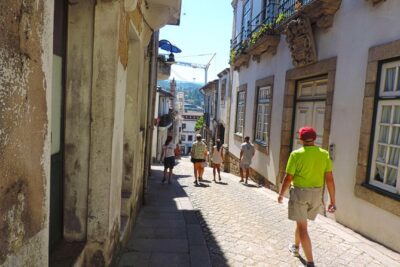
Porto’s narrow streets beat the bus tour. I love how this private walk threads through the first neighborhood on foot, and I love the history-first explanations that put Porto’s evolution into plain language as you go. The one drawback to consider: the route is street-focused, so if you want only a biggest-sites checklist, you may spend more time in the older lanes and fewer minutes in the most obvious spots.
This tour is built for comfort and flow. You’ll move at a walking pace for about 2 hours, with the order planned to go down hills more than up them, and you’ll finish right by the Douro River for that classic riverfront perspective. If it rains, you’ll want to have your own umbrella—Porto doesn’t always ask permission first.
In This Review
- Key things I’d watch for
- A 2-Hour Private Walk in Porto’s Oldest Neighborhood
- Starting at Sé and Porto Cathedral: Where Porto’s Story Gets Its Shape
- São Bento Station: A Short Stop That Changes How You Look at Tiles
- Rua das Flores to Infante D. Henrique Square: The Street-Level Porto People Actually Use
- Alminhas of the Bridge: The Meaning Behind a Tiny Pause
- Rua de Sant’Ana and Palácio da Bolsa: From Quiet Streets to Monumental Presence
- Ribeira do Porto Finish: The Douro View That Makes Everything Click
- Price, Pace, and Who This Tour Really Fits
- A quick note on the guide style
- Practical Tips So You Get the Most Out of It
- Should You Book This Porto Ribeira Private Walking Tour?
- FAQ
- How long is the Porto Ribeira and highlights private walking tour?
- Is the tour private or shared?
- Where does the tour start?
- Will we go inside the buildings?
- Which landmarks are included during the walk?
- Where does the tour finish?
- What languages are available for the live guide?
- What should I bring?
- What is the cancellation policy?
Key things I’d watch for
- Private-only group time: it’s just you, a couple, or your group, so questions don’t get rushed.
- Old-town depth, not a stop-and-snap sprint: the focus is on how Porto became Porto.
- Views you reach on foot: you’re guided to viewpoints along the way, not just at the end.
- Buildings from outside: you’ll see emblematic places by walking by them, not doing a long set of indoor tickets.
- A local-recommendation list at the end: you’ll leave with practical restaurant and sightseeing ideas for more Porto days.
A 2-Hour Private Walk in Porto’s Oldest Neighborhood
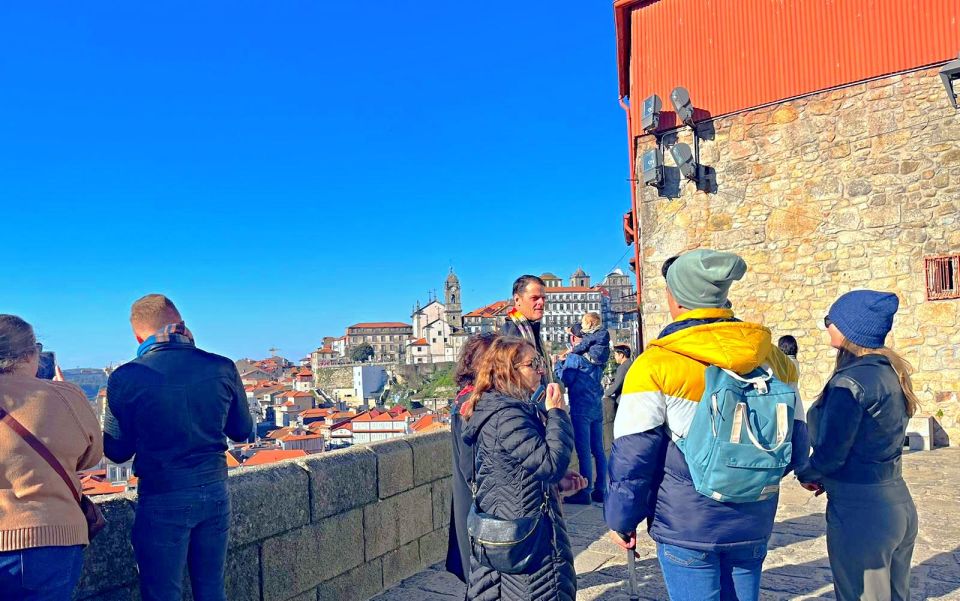
Porto can feel like two cities at once: the one on the postcards and the one you only understand when you walk its seams—tight alleys, steep angles, and sudden views over the river. This tour leans hard into that second version.
What makes it work is the format. It’s private, so the guide can follow your interests—history, architecture, everyday life, even the personality of the Tripeiros. You’re not competing with a crowd for the best vantage points or for time to ask why something is the way it is. And because it’s only about two hours, the experience stays energetic instead of turning into a long endurance event.
The other thing I like is that you’re walking through Porto’s earliest neighborhood idea first, then easing toward the river. That gives you a sense of the city’s logic: where life started, how the streets connected, and why the waterfront matters.
You can also read our reviews of more walking tours in Porto
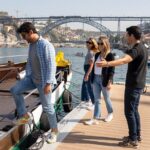


Starting at Sé and Porto Cathedral: Where Porto’s Story Gets Its Shape
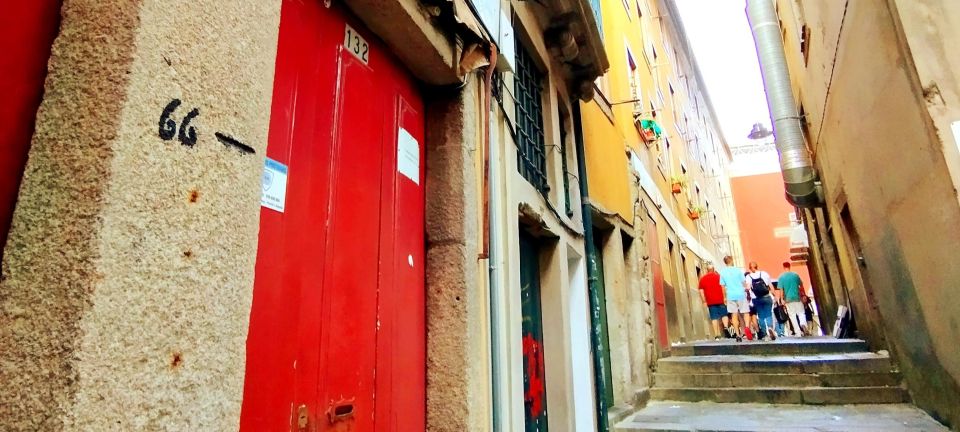
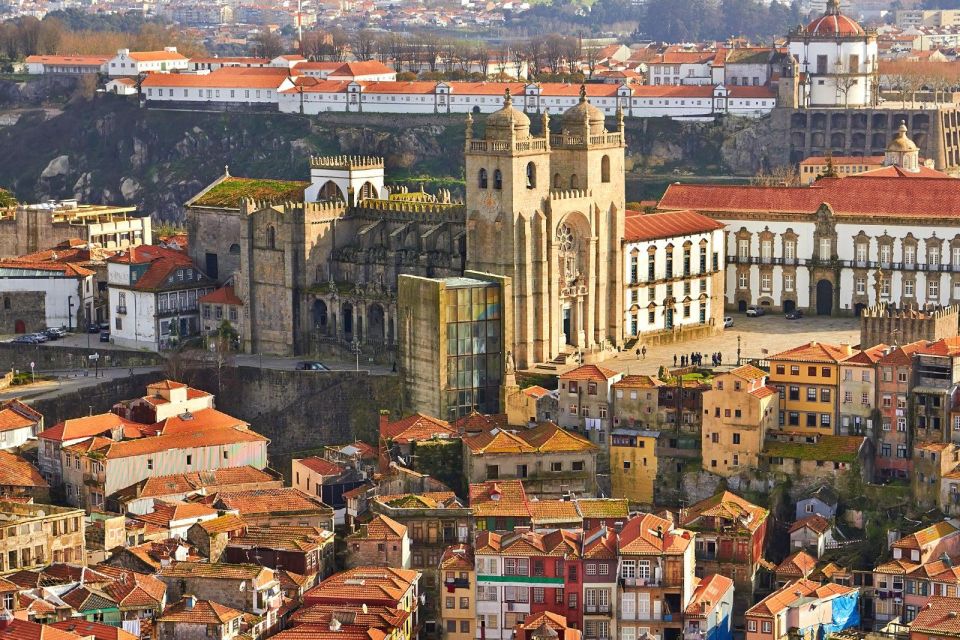
The tour begins at Sé, the area around Porto Cathedral, which is a smart starting point. You get immediate context because the cathedral sits in the historic core. Even if you don’t go inside, a good guide can make the building and its setting feel like a timeline you can walk through.
You’ll get a guided stop of about 15 minutes here. The value isn’t in memorizing facts. It’s in understanding what people in Porto cared about across centuries—religion, power, trade, and the way the city organized itself around those priorities. If you’ve only seen Porto from the riverfront or from viewpoints, this is the part that gives you a foundation.
A practical note: you’ll be on foot in a city that’s hilly. Even when the tour order is designed to go downhill more often, your legs still notice Porto. Wear shoes you trust.
São Bento Station: A Short Stop That Changes How You Look at Tiles
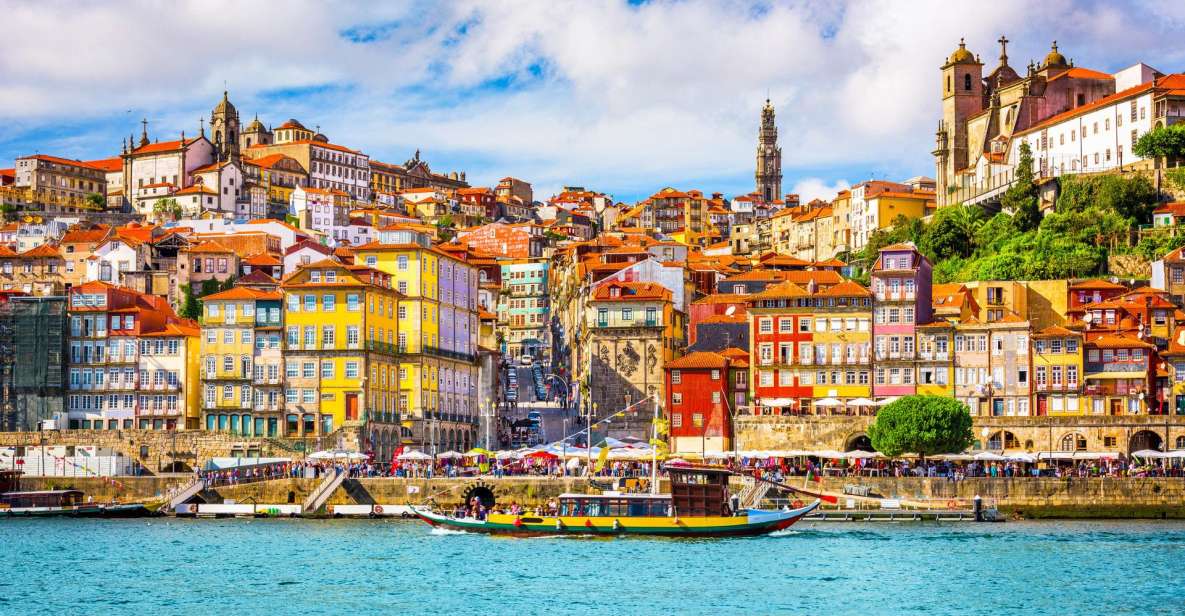
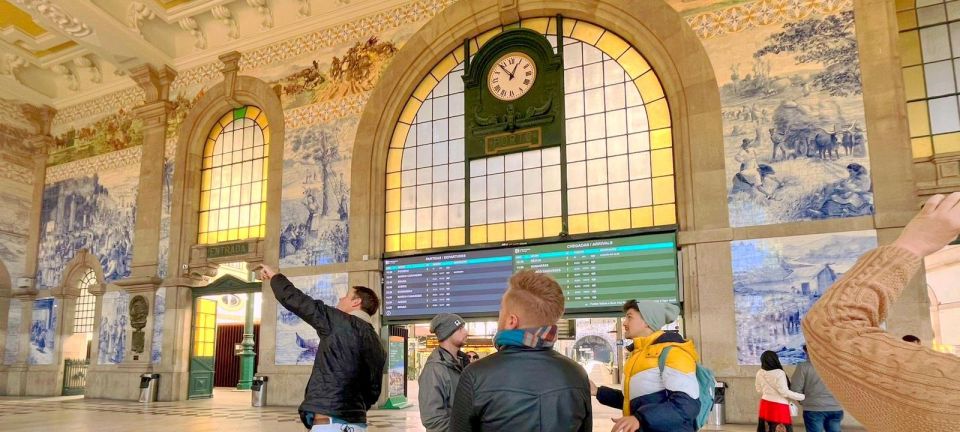
Next up is São Bento Station, with a sightseeing pause of about 10 minutes. This is one of those places where people rush through because they think they already know what it is. But when you’re standing there with context, you start noticing patterns and the mood of the artwork—the station becomes a miniature storybook.
Why this stop matters on a walking tour like this: it ties the city’s cultural identity to a daily-life setting. It’s not a museum you have to plan. It’s a real station where history shows up on the walls and keeps moving while you’re there.
You’ll keep moving, so don’t plan to read every detail. The goal is to get your bearings fast, then let the guide point out the most meaningful cues so you leave understanding what you saw.
Rua das Flores to Infante D. Henrique Square: The Street-Level Porto People Actually Use
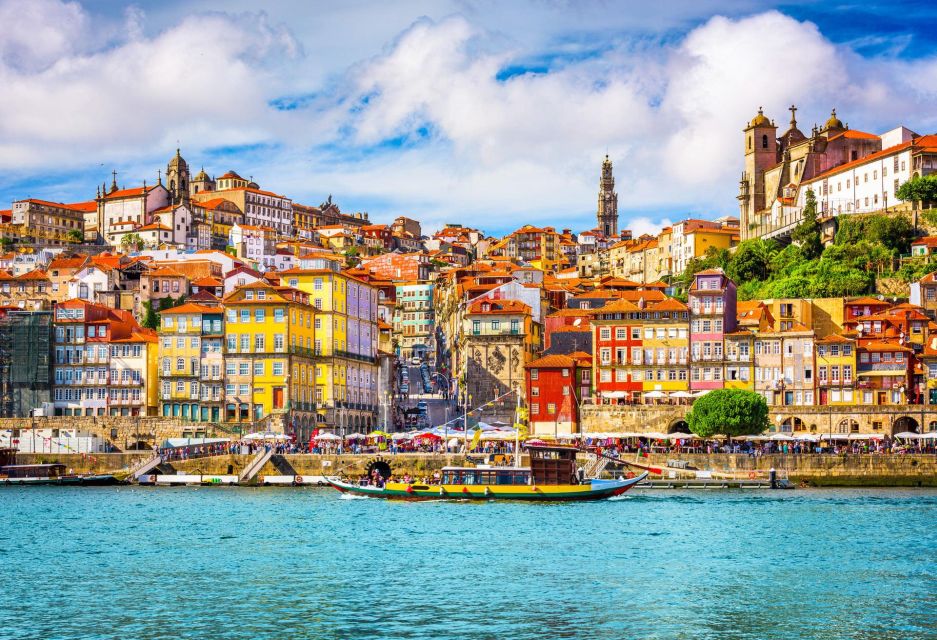
The tour then spends time around Rua das Flores, guided in a couple of short segments (about 10 minutes, then again later for another guided stretch). These repeated passes are useful. The first time you walk a street, you’re paying attention to where you are. The second time, you can notice how the street’s character connects to what you just learned.
You also visit Infante D. Henrique Square, with about 15 minutes of guided time. This area acts like a hub in the overall walk, giving you space to absorb the city’s scale and shift from narrow alley focus to wider views and photo moments.
Here’s what you’ll likely appreciate most: the guide doesn’t treat these stops like checkboxes. The goal is to explain how Porto changed and how those changes still show up in the street layout and the way neighborhoods function. Even if you’re not a hardcore architecture person, street-level context helps you understand why Porto feels the way it does.
One drawback to be aware of: because there’s a lot of walking between points, you’re not going to linger for long in any one spot. If you like slow, solo wandering, consider using your free time after the tour to return to the streets or viewpoints that hook you.
Alminhas of the Bridge: The Meaning Behind a Tiny Pause
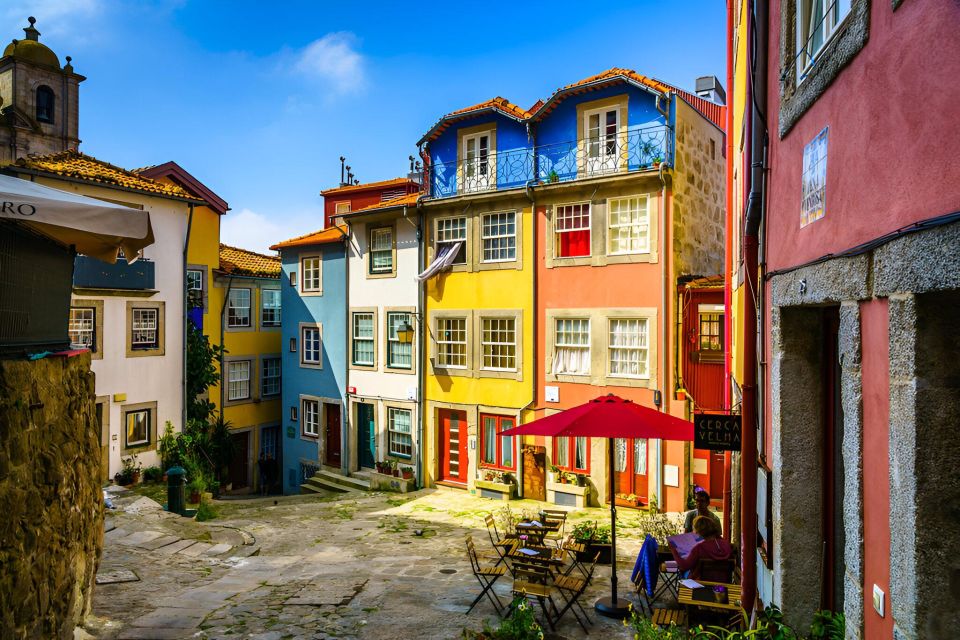
You’ll reach the Alminhas of the Bridge area and spend around 7 minutes. This is the kind of stop that can get overlooked if you’re just rushing through Porto’s main routes. A guide-oriented explanation can turn it into one of the more memorable moments, because it’s often a small, human-size detail that carries big cultural meaning.
On a practical level, it also functions as a viewpoint/transition moment. You pause, look around, and absorb the river connection before you keep going.
If you care about the small markers that tell you how people live their city—religion, tradition, memory—this is where you’ll feel the tour’s attention to character.
You can also read our reviews of more private tours in Porto




Rua de Sant’Ana and Palácio da Bolsa: From Quiet Streets to Monumental Presence
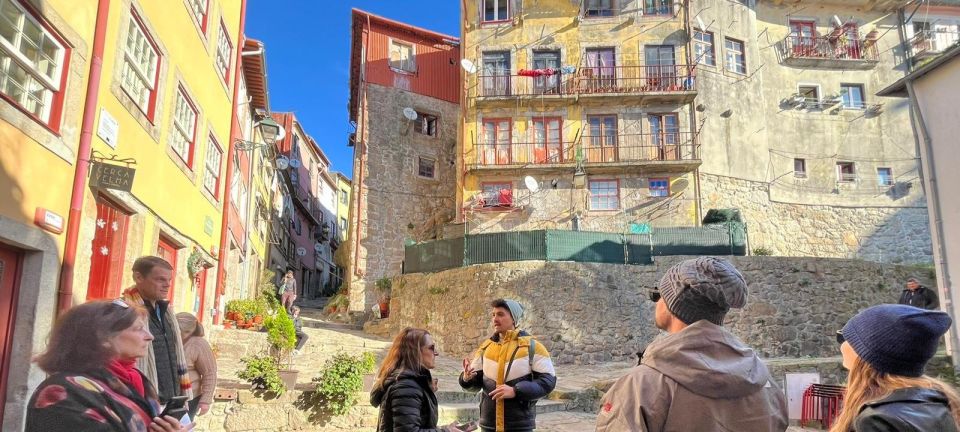
After the square and bridge area, you’ll move along to Rua de Sant’ Ana for about 15 minutes of sightseeing. This is a good stretch for letting the tour settle into a more reflective rhythm. The walk keeps you grounded in everyday Porto streets, and your guide’s historical storytelling helps you interpret what you’re seeing rather than simply passing by it.
Then comes Palácio da Bolsa, which gets sightseeing time as you approach and look in from the outside. This is the “scale shift” moment. You go from street-level texture to something more official and monumental. Even from outside, the building’s presence does a lot for the final understanding of Porto as a trading and power center.
A helpful way to think about this stop: it’s where Porto starts feeling like a city built for business and influence, not just one defined by charm and views. When your guide ties that to the city’s evolution, Palácio da Bolsa becomes more than a façade. It becomes a clue.
Ribeira do Porto Finish: The Douro View That Makes Everything Click
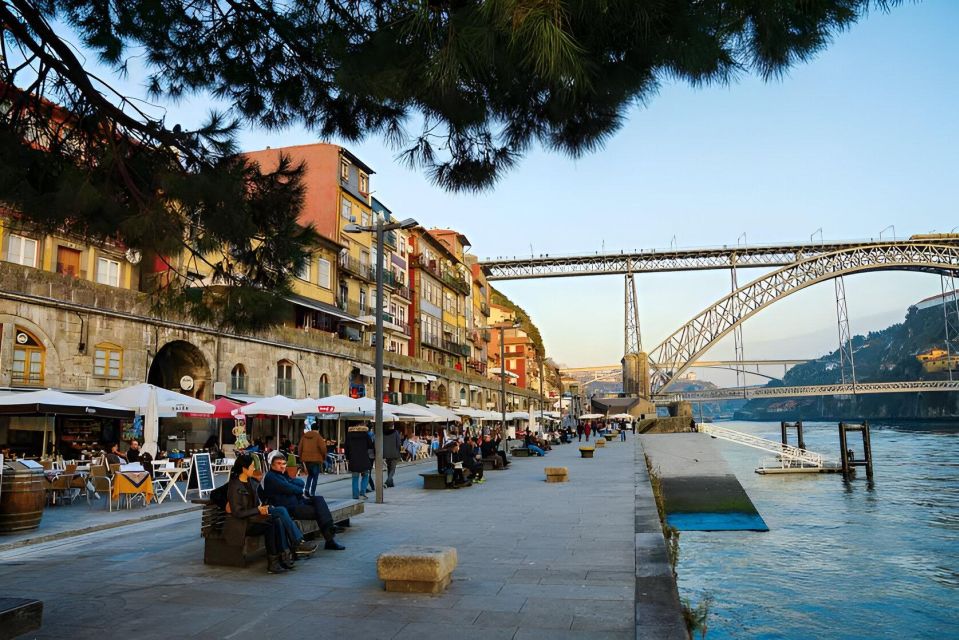
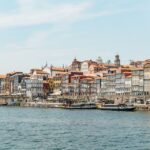
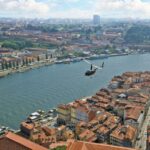
The tour ends at Ribeira do Porto, next to the Douro River, with an emphasis on viewpoint time. This matters because it closes the loop: you start in the historic core and work your way down toward the water, which historically shaped the city’s economy, movement, and identity.
Even if you’ve seen Ribeira already, finishing there after you’ve heard the city’s “why,” not just its “what,” changes the experience. The streets you walked begin to make sense. The hills feel intentional rather than random. And the riverfront feels earned.
If you’re the type who likes to take photos, this is where you’ll want to slow down. Look for angles where the river and the rooftops line up. Then, after the tour, use your remaining energy to walk a little further on your own while you still have the guide’s context in your head.
Price, Pace, and Who This Tour Really Fits
At $41 per person for about 2 hours, this tour sits in a reasonable range for a private guide in a compact old-city area. The value isn’t only the walking. It’s the way the guide uses that walking time to explain Porto’s evolution, connect landmarks to the city’s personality, and hand you a personalized set of next steps.
This tour fits best if you:
- want a private, question-friendly experience rather than a big group rush
- enjoy history told through streets and neighborhoods, not a lecture
- like viewpoint moments but don’t want to spend half your trip in transit
- are short on time and want a guided route that makes the rest of your Porto days easier
It may not fit as well if you:
- want a full “see everything in one day” itinerary
- prefer long indoor visits and timed entry experiences
- dislike walking in hills, even when the route is planned to go downhill more than uphill
A quick note on the guide style
One highlight that stands out is guide quality. In one instance, Angelica was praised for fluent English, a sense of humor, and a way of adapting based on questions and interests. That’s a big deal. A private tour works only if the guide can read your curiosity and pace the story accordingly.
Practical Tips So You Get the Most Out of It
A few small choices can make this walk feel effortless instead of tiring:
- Wear shoes for uneven pavement and hills. Porto’s old streets aren’t made for flimsy soles.
- Bring an umbrella if rain is in the forecast. The tour data explicitly suggests it.
- Expect mostly exterior viewing. You’re touring by walking city buildings from outside, so plan your indoor ticket expectations around other days.
- Leave some time after the tour to wander. You’ll finish near the riverfront, and that’s where Porto rewards lingering.
Should You Book This Porto Ribeira Private Walking Tour?
I’d book it if you want Porto explained the way locals experience it: on foot, in the older streets first, with story and humor along the route, and a clean walk ending in the right place for views. The price makes sense for a private format, and the structure (short stops, planned hill-down rhythm, exterior landmark viewing, river finish) is efficient without feeling like a sprint.
I wouldn’t book it if your priority is stacking as many headline attractions as possible with minimal walking logic. This is for people who enjoy the in-between moments—alleys, squares, meaningful small stops, and the feeling of a city that has layers.
If you want one day in Porto that helps you understand where to go next, this is a solid choice.
FAQ
How long is the Porto Ribeira and highlights private walking tour?
It lasts about 2 hours.
Is the tour private or shared?
It’s a private tour for you, a couple, or your group only.
Where does the tour start?
The pickup/start point is in the Sé area (Cathedral of Porto). There is also mention of a meeting point in front of the Horse Vilmara Perez, and hotel pickup may be available depending on where you’re staying.
Will we go inside the buildings?
The tour is described as visiting buildings listed by walking the city and viewing them from outside.
Which landmarks are included during the walk?
Key stops include Porto Cathedral, São Bento Station, Rua das Flores, Infante D. Henrique Square, the Alminhas of the Bridge, Rua de Sant’Ana, and Palácio da Bolsa, finishing in Ribeira do Porto.
Where does the tour finish?
It finishes next to the Douro River in the Ribeira do Porto area, with an emphasis on views.
What languages are available for the live guide?
The tour guide is available in English, Portuguese, and Spanish.
What should I bring?
Bring your own umbrella in case it rains, since Porto is often rainy and the walk is outdoors.
What is the cancellation policy?
Free cancellation is available up to 24 hours in advance for a full refund.