REVIEW · PORTO
Porto’s #1 Walking Tour
Book on Viator →Operated by Revolutours · Bookable on Viator
Porto snaps into focus when you walk it. This #1 walking tour strings together photo-friendly stops like São Bento and the Clérigos Tower area into an easy, guided route that helps you understand the city fast.
I like two things most: you get an English-speaking guide who explains what you’re looking at, and the route is built for orientation—so you’re not just collecting photos. One heads-up: it’s a limited central loop, so if you’re chasing every major Porto highlight, you’ll likely want a second plan after this.
In This Review
- Key highlights you’ll actually notice
- Price and logistics: cheap entry, real guide time
- How the 2.5-hour route works (and why it matters)
- Stop-by-stop: Centro Português de Fotografia to Tribunal da Relação
- Igreja do Carmo and Porto’s tile-and-façade storytelling
- Livraria Lello and Avenida dos Aliados: famous streets, guided meaning
- São Bento Railway Station and the walk’s best “pause and look”
- Ending at Porto Cathedral: where the story tightens
- What the guides do that changes the whole walk
- Included vs. not included: decide your ticket strategy
- Pace, hills, and rainy-day reality
- Who should book this Porto walking tour
- Should you book Porto’s #1 Walking Tour?
- FAQ
- What language is the tour offered in?
- How long is the walking tour?
- Where does the tour start and end?
- Is there an admission ticket included for any stops?
- Is the tour free since the price is listed as $0.91?
- How big are the groups?
- Can I cancel for free?
- Is good weather required?
Key highlights you’ll actually notice
- A pay-what-you-want format (you tip the guide based on what feels fair)
- An easy intro route with a smart mix of views, churches, and landmark streets
- Stops with a mix of free and separately ticketed sights
- Smallish group size (max 28), which usually keeps the pace human
- A guide-led storytelling style—named guides like André, Harold, Jorge, and Diogo get called out often
Price and logistics: cheap entry, real guide time
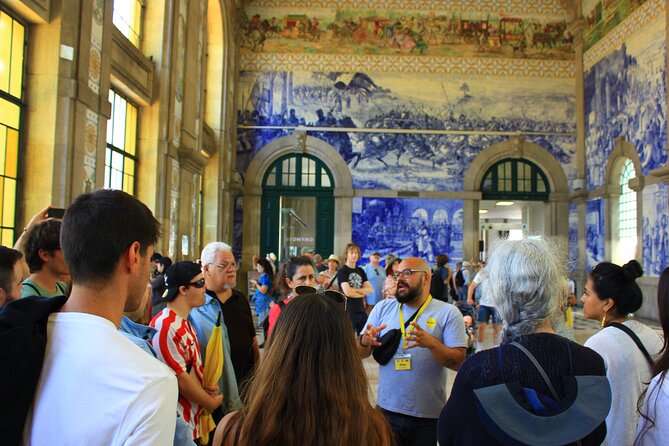
This tour is listed at a tiny per-person price, but the actual spirit is pay-what-you-want. In practice, that means you should treat the listed amount as a booking hook and budget for a tip on top. The tour also makes it clear that your booking guarantees your place on the walk, not that you’re done paying once you book. That’s good: you’ll only feel surprised at the end if you ignore the pay-what-you-want setup.
Value-wise, you’re paying for something most self-guided walks miss: context. Porto can look like a pile of churches, tiles, and windy streets—until someone connects the dots. Guides on this tour are repeatedly praised for pacing, humor, and clear answers, including practical questions about getting around and what to do next. If you’re on a short schedule and want to know where things fit, a guided walk is one of the most efficient ways to spend a few hours.
You can also read our reviews of more walking tours in Porto


How the 2.5-hour route works (and why it matters)
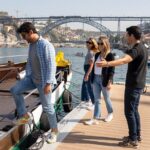
The walk runs about 2 hours 30 minutes. The stops are timed in short chunks—around 10 minutes each—so you get repeated “stop, look, learn, move” rhythm instead of one long lecture. The route starts at Largo Amor de Perdição, near Campo dos Mártires da Pátria (2117), and ends at Porto Cathedral, at Terreiro da Sé. That end point matters because it’s the kind of location where you can keep exploring right away on your own.
Group size caps at 28, which helps. You’ll still walk with others, but it’s not the kind of crowd where you can’t hear or see. You’ll also have a mobile ticket, and the meeting point is near public transportation—handy if you’re mixing this with other Porto plans.
Finally, keep shoes practical. Porto includes some hills (even if nothing feels like an endurance test). If your plan is to “do Porto on foot,” you’re already thinking the right way.
Stop-by-stop: Centro Português de Fotografia to Tribunal da Relação
This tour opens in a place that sets the tone: Centro Português de Fotografia. It’s a quick introduction—free admission is noted for this stop—and it helps you shift from sightseeing mode into observation mode. Think of it as a warm-up. After a short explanation, you’ll start noticing how Porto is designed to be seen: angles, facades, and viewpoints that reward looking up.
Next comes Miradouro da Vitória, again listed as free. A miradouro is exactly what you want early on: a fast payoff view that helps you orient. Even if you already know Porto from postcards, standing there gives you a better sense of how neighborhoods connect.
From the viewpoint, the walk moves into the clout-and-craft zone around the Torre dos Clérigos. You’ll get history and context, but admission for the tower itself is not included. That’s normal for many walking tours: you get the story, and you choose whether you want to pay for the climb or entry.
Then you pass by Tribunal da Relação do Porto. This is one of those official, “you didn’t come here on purpose” buildings that becomes memorable when a guide explains what it represents. You’re not there for a ticket. You’re there to understand why this corner of Porto looks the way it does.
Practical tip: for the tower and other ticketed stops later, decide early whether you’ll buy entry or just enjoy the exterior. The tour gives you the narrative either way, but your overall time will change depending on what you add.
Igreja do Carmo and Porto’s tile-and-façade storytelling
After the courthouse area, you’ll reach Igreja do Carmo, with specific attention on the church and its tiles. Admission is not included here, but the guide’s job is to make the exterior and details feel meaningful. Porto’s tiles are a big part of its identity, and this stop is a focused crash course—without turning your walk into a museum day.
This church stop also does something smart: it shifts you from civic buildings (courts, towers, institutions) into Porto’s visual language. That matters because after this point, you’ll start seeing patterns repeat—art on walls, meaning in design, and religious architecture used as a public statement.
From there, you move to Universidade do Porto. It’s a quick history stop, and admission isn’t included. Even so, it’s useful. University sites in Europe often sit at the crossroads of old power and modern education, and Porto is no exception. With a guide, it stops being “just another old building” and turns into a marker of how the city grew.
Livraria Lello and Avenida dos Aliados: famous streets, guided meaning
Next comes Livraria Lello. Yes, it’s famous. The key is what you do with that fame. This tour stops briefly, gives you context, and doesn’t include admission. So you’re not forced into buying tickets to enjoy it—though if you’re a book lover, you may still want to add a visit on your own time.
Then you hit Avenida dos Aliados, one of Porto’s most recognizable streets. A short stop here does two things: it resets your pace in a broader urban space, and it shows how Porto balances grandeur with everyday life. The guide’s explanation helps you place the street in the city’s story rather than treating it as just a photo corridor.
If you’re thinking, I don’t want to walk 10 kilometers for street views—this is the reason the route is designed this way. You get iconic city energy without turning the afternoon into a workout.



São Bento Railway Station and the walk’s best “pause and look”
The tour then reaches São Bento Railway Station, and this is the one stop marked as admission included. That’s valuable because it means you get access without extra planning. It also breaks up the walk nicely: stations in big European cities are more than transport hubs. They’re where design, history, and public life collide in one place.
Because the tour includes this stop, I’d treat it as your anchor. If you do one extra “ticket decision” during the tour, let it be the ones you’re already considering for later—while you enjoy this included entry as part of the main plan.
Even if you’re not into rail history, the station area is a great spot to reset. You’ll be less rushed and more able to actually take in what’s in front of you.
Ending at Porto Cathedral: where the story tightens
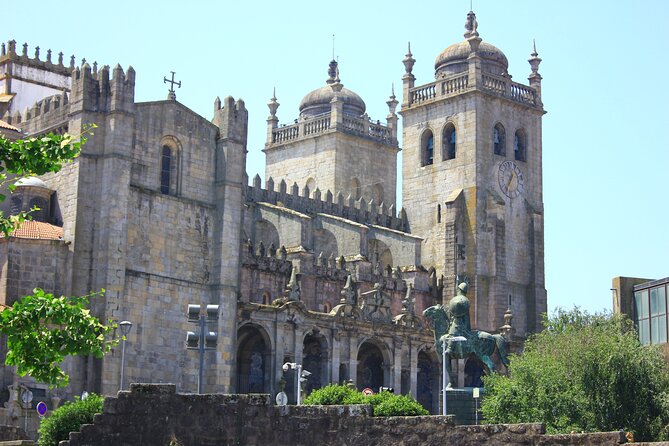
The final stop is Catedral do Porto. Admission isn’t included, but you end here on purpose: Porto Cathedral is central to understanding the old city. Ending at a major landmark is also practical. When the tour ends, you’re not wandering aimlessly looking for something to do—you can keep going from the center.
This end point also helps if you’re planning dinner nearby. You’ll finish in an area with lots of foot traffic and easy connections to other parts of town.
What the guides do that changes the whole walk
The most praised aspect of this tour is the guide experience. Names like André, Harold, Jorge, Caoi, Diogo, and Natalia show up again and again in positive comments, and the recurring pattern is storytelling plus answers.
Here’s what that looks like on the ground:
- The guide talks in a way that connects buildings to how Porto developed.
- You get humor, not just facts.
- You can ask extra questions, including transportation and what else is worth your time.
I also like that the tour doesn’t feel rigid. Even when the stops are timed, good guides keep the flow moving so it feels like a conversation with a strong plan, not a checklist.
One small caution: if your biggest goal is maximum distance per minute, you may prefer a faster route style. Some people note that photo moments can run a bit long, and a few more stops than you expected may feel like a pause. That said, the stops are short and the route stays manageable.
Included vs. not included: decide your ticket strategy
From the way the tour is set up, you should expect a mix:
- Free admission is listed for Centro Português de Fotografia and Miradouro da Vitória.
- Admission not included is listed for major sights like Torre dos Clérigos, Tribunal da Relação do Porto, Igreja do Carmo, Universidade do Porto, Livraria Lello, Catedral do Porto, and more.
- Admission included is listed for São Bento Railway Station.
So here’s a smart way to plan: treat the walk as the “guided orientation” layer, then choose a few separately ticketed stops based on your interests. If you love towers, you may want to add entry to Torre dos Clérigos. If you’re all about religious architecture and tiles, Igreja do Carmo is your candidate. If you want book-nerd energy, Livraria Lello might be the one you add later.
If you’re traveling light on time and don’t want extra lines, you can still do the tour and simply enjoy what you can see from the street at the ticketed stops.
Pace, hills, and rainy-day reality
The walking pace is generally described as easy enough for most people, with only some hills. That fits Porto well—your legs do a little work, but it’s not designed to wipe you out.
Weather is a factor. The experience notes that it requires good weather, and if it gets canceled due to poor weather, you’ll be offered another date or a full refund. In real life, Porto weather can change quickly. My advice: wear layers and keep a rain jacket handy in your daypack. If it’s drizzling lightly, you may still end up walking; if conditions are rough, you’ll at least know the tour has a weather plan.
Who should book this Porto walking tour
This is a strong pick if you want:
- A guided introduction that helps you orient quickly
- A route that covers Porto’s big visual categories: viewpoints, churches, civic buildings, iconic streets, and station architecture
- An English-speaking guide who can answer questions beyond the script
It’s also a good fit for families and mixed-age groups because the stops are short and the pace is manageable. If you’re solo, it’s equally useful because it gives you structure and a chance to ask practical questions. And if you’re on a couple-day stay, this kind of tour can turn the rest of your time into a smoother plan.
Who might not love it as much:
- If you’re expecting every top monument ticketed inside, you may find the limited loop leaves you wanting more.
- If you hate any “photo stop” time, you might find a few pauses frustrating.
Should you book Porto’s #1 Walking Tour?
I’d book it if you want Porto to make sense fast. The combination of easy pacing, a short list of landmark moments, and guides who clearly know how to explain what you’re seeing makes this a practical use of your time—especially on a first visit.
Skip or pair it with other plans if your priority is a full day of ticketed attractions. This walk is built to give you context and confidence, not to replace every other Porto activity.
If you book, do one thing that improves the experience: decide before you arrive how many ticketed stops you want to add. Then you can enjoy the guided story without turning the day into “should we buy this now?” stress.
FAQ
What language is the tour offered in?
The tour is offered in English.
How long is the walking tour?
It lasts about 2 hours 30 minutes.
Where does the tour start and end?
It starts at Largo Amor de Perdição, Campo dos Mártires da Pátria 2117, Porto, and it ends at Porto Cathedral, Terreiro da Sé.
Is there an admission ticket included for any stops?
Yes—São Bento Railway Station lists admission as included. Some other stops list free admission as well, while several major sites list admission as not included.
Is the tour free since the price is listed as $0.91?
The tour is described as pay-what-you-want, and you’re expected to tip the guide individually. There is no fixed amount.
How big are the groups?
The tour has a maximum of 28 travelers.
Can I cancel for free?
Yes. You can cancel up to 24 hours in advance for a full refund.
Is good weather required?
Yes. If the tour is canceled due to poor weather, you’ll be offered a different date or a full refund.