REVIEW · PORTO
Braga Heritage Walking Tour
Book on Viator →Operated by Trek Portugal · Bookable on Viator
Braga feels like a Roman detour with views. You’re in Porto, but your day shifts to the hill-town of Braga for UNESCO Bom Jesus and a guided sweep through the sites that shaped this place. With a small crew and a friendly guide named Ricardo, you get context instead of just landmarks.
I especially like two things: you receive photos from the tour so you can relax and actually look, and the route mixes big-name monuments with calmer corners like the Santa Barbara Garden. That balance makes the day feel thoughtful, not frantic.
One thing to consider: it’s a long 9-hour outing, and Bom Jesus can mean stairs if you skip the funicular. Also, lunch isn’t included, so plan how you’ll handle food.
In This Review
- Key highlights you’ll care about
- A small-group Braga day that actually makes sense
- Meeting point and timing: starting at 8:30 sharp
- Braga on foot: Roman roots and a living city
- Igreja da Lapa: a chapel story with real-world quirks
- The castle keep: medieval traces at the highest point
- Jardim de Santa Barbara: a quiet pause with medieval leftovers
- Arco da Porta Nova: the arch that teaches a phrase
- Se de Braga Cathedral: chapels, high choir, and the treasury
- Bom Jesus do Monte: UNESCO views with the world’s oldest operating funicular
- Price and value: what $150.20 buys you in real terms
- What to bring for a day that includes stairs and churches
- Who this tour is best for
- Should you book Braga Heritage Walking Tour?
- FAQ
- FAQ
- What time does the Braga Heritage Walking Tour start?
- Where is the meeting point?
- How long is the tour?
- What’s the group size limit?
- Is pickup included?
- Is the tour available in English?
- Do I get a mobile ticket?
- Are monument entrances included?
- Is lunch included?
- What happens if the weather is bad?
- Can I cancel for a full refund?
Key highlights you’ll care about
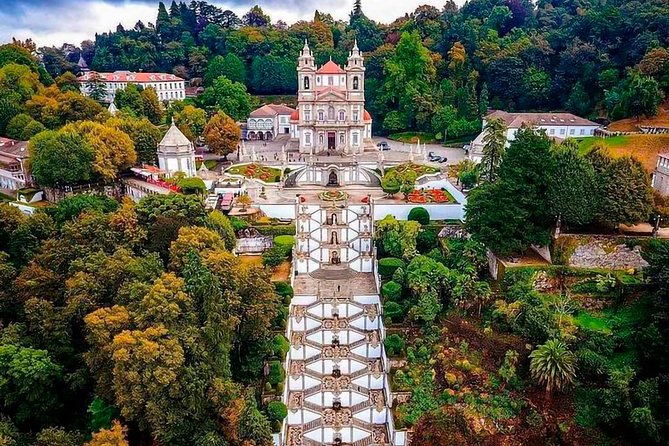
- UNESCO focus at Bom Jesus do Monte, plus time to enjoy the views over Braga
- Small group size (max 6), which means more time for questions and slower pacing
- Ricardo’s storytelling, with history explained in plain language
- Guide photo delivery, so you can capture less and enjoy more
- Plenty of included entry points, including the cathedral visit and the lift at Bom Jesus
A small-group Braga day that actually makes sense
This Braga Heritage Walking Tour from Porto is built for people who like history but don’t want a lecture. You’ll be in an air-conditioned vehicle for pickup and drop-off, then switch into a walk-and-visit rhythm through Braga’s highlights. The small group matters here: with a maximum of 6 people, the guide can adjust pace, answer questions, and keep the group together without that herding-cats energy.
The tone is practical too. Ricardo’s approach is friendly and hands-on, and the day is organized so you’re not constantly wondering what comes next. And yes, the photos are a real plus. Even if you’re the type who takes a lot of pictures, it helps to know you’ll also have a set from your guide when you get home.
At $150.20 per person for a full day, you’re paying for more than sightseeing. You’re paying for transport, entry into key monuments, and the lift ride to Bom Jesus—plus insurance, fees, and taxes.
You can also read our reviews of more walking tours in Porto
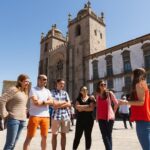

Meeting point and timing: starting at 8:30 sharp
The tour starts at Av. dos Aliados 266, 4000-125 Porto at 8:30 am and ends back at that same meeting point. That timing is good because you beat the worst crowds and get more comfortable light for photos during the main church and hill portions.
The day runs about 9 hours. That’s long enough that you should treat it like a proper itinerary day, not a casual stroll. You’ll move between multiple sites, including a hillside stop, so wear shoes you trust. If you tend to get cranky after walking too long, pack a little patience and a water bottle.
Braga on foot: Roman roots and a living city
Braga is one of those places where the past isn’t locked in a museum case. It shows up as streets, churches, gardens, and buildings that still sit in the middle of modern life. The tour starts with a broad introduction to Braga’s story, including why people sometimes call it Portuguese Rome.
You’ll connect the dots between:
- Bracara Augusta, the Roman city at the root of Braga
- the Sacro-Montes tradition in Europe, with Bom Jesus tied into that religious landscape
- the city’s mix of 18th-century houses, gardens, and nature areas
This stop isn’t about checking off one photo and moving on. It’s about learning how Braga’s religious devotion and Roman legacy shaped the city you’re walking through. It also helps you understand why the next stops feel connected instead of random.
Practical tip: during the first leg in town, I’d stay ready to shift attention from one detail to another. Braga rewards people who notice small things—stonework, street layout, and the way churches anchor neighborhoods.
Igreja da Lapa: a chapel story with real-world quirks
Stop for Igreja da Lapa, and you’ll hear an explanation that’s easy to remember: people can confuse the church with the Arcada area because of how devotion played out locally.
Here’s the key story thread:
- In 1757, a priest and canon from the Cathedral of São Paulo was preaching in Portugal.
- During that religious event in Braga, devotion to Our Lady of Lapa took on momentum.
- The authorization for building a chapel came later under Archbishop D. Gaspar de Bragança.
This is the kind of stop that feels small on the map but big in meaning. You’re not just looking at an old church. You’re seeing how public preaching, community devotion, and official approval shaped physical space.
If you like religious art and local lore, you’ll probably enjoy this stop more than you expect. And if you’re not a church person, it still works because it’s a clear story with dates and roles you can picture.
The castle keep: medieval traces at the highest point
Braga’s medieval past shows up most sharply at the castle keep, recognized as a National Monument since 1910. It’s also one of the few visible remnants of the old castle on the highest point of the medieval town.
The details that make this stop click:
- You’ll see the coat of arms of D. Fernando above the door.
- Documents mention the castle as early as the beginning of the 14th century.
- Construction was ordered after invasions in 1369.
- The castle was demolished in 1906, and while it once had six towers, traces still survive.
Even if you’ve seen other castle ruins in Portugal, this one has a different feel. It’s not about imagining everything perfectly. It’s about reading what remains—small marks, door details, and the way the site’s position dominates the town below.
You can also read our reviews of more historical tours in Porto

Jardim de Santa Barbara: a quiet pause with medieval leftovers
Then you slow down at the Jardim de Santa Barbara. This is one of those stops that helps the rest of the day feel human. The garden sits next to the 14th-century Archbishop’s Palace, and it uses the backdrop of history instead of fighting it.
What you’ll notice:
- the garden takes advantage of medieval arches left from a palace arcade
- it was laid out in the 1950s in a Romantic style, designed by Jose Cardoso da Silva
- you’ll spot palace elements reused in the garden’s geometry, including statues, cornices, and coats of arms
- there’s a central feature: a statue of Santa Barbara on a fountain
This stop is free and open all year, so you don’t have to worry about it vanishing depending on the season. If your legs are getting tired, it’s also a great reset moment: sit, look around, and let the city noise soften for a bit.
Arco da Porta Nova: the arch that teaches a phrase
Next up: Arco da Porta Nova, one of Braga’s most iconic structures. This isn’t only about architecture. It’s about how buildings become language.
The tour connects the arch to a familiar expression tied to leaving a door open: the idea of being from Braga. It’s a neat cultural nugget—proof that everyday speech can grow from real places and old urban planning.
This is a short stop (about 10 minutes), but it’s worth using those minutes well. Look closely at the arch’s role in the city and how it marks movement through town. It’s a reminder that streets aren’t just routes—they’re stories.
Se de Braga Cathedral: chapels, high choir, and the treasury
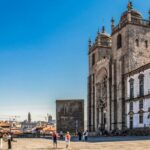
Your longer church stop is Se de Braga (Braga Cathedral). This is a Roman Catholic church that serves as the seat of the Archdiocese of Braga and of the Primate Archbishop of Portugal and Spain. That level of responsibility matters—this isn’t a minor church.
On the visit, you’ll cover:
- the cathedral itself
- the chapels
- the high choir
- the Treasury-Museum
The guide’s job here is important. Cathedrals like this can feel like a blur if you’re just wandering. With the right pacing, you understand why the chapels and the choir matter, and how the museum connects to what you’re seeing in the main space.
If you care about church art and how power and faith were displayed, this is one of the most rewarding stops on the day. If you’re less into interiors, take the cathedral portion slow anyway. The High Choir area is a good place to pause and let the scale hit you.
Bom Jesus do Monte: UNESCO views with the world’s oldest operating funicular
Now for the “cherry on top” part of the day: Bom Jesus do Monte. This is the UNESCO World Heritage highlight, and it’s more than a single church. It’s a hillside sanctuary complex that feels designed for slow movement and contemplation.
You have two ways up:
- take the lift/funicular—described as the world’s oldest operating lift/funicular, moved using a counterbalance of water
- or climb the majestic stairs if you want the workout
Either way, you’ll reach the top for views over Braga, then make your way back toward your hotel at the end of the day.
My practical take: if the weather is good and you’re comfortable with a climb, the stairs can be memorable. If it’s hot, rainy, or your schedule has you conserving energy, the funicular is a smart call. Either route still gives you the sanctuary experience, and the view is the payoff.
Price and value: what $150.20 buys you in real terms
At $150.20 per person, the price can look “not cheap” at first glance. But when you break it down, it includes several costs that often add up fast on your own.
Included items cover:
- full-day tour (about 9 hours)
- pickup and drop-off in an air-conditioned vehicle
- entrance to monuments
- the lift to Bom Jesus do Monte
- insurance, fees, and taxes
- and a small group size (max 6), which is harder to find on day trips
Also, the tour offers mobile tickets and is in English, which helps if you want fewer moving parts before you arrive. Group discounts are mentioned too, which can be a nice perk if you’re booking with friends.
The big value shift for me: you’re buying time and explanation. A guide like Ricardo helps you see why Braga’s sites connect—Roman origins, medieval power, and the long thread of devotion ending at Bom Jesus.
What to bring for a day that includes stairs and churches
This is an active day. Even if you choose the lift at Bom Jesus, you’ll still be on your feet for long stretches, including cathedral interiors and outdoor garden breaks.
Bring:
- comfortable walking shoes (Braga is not built for flip-flops)
- a light layer (church interiors can feel cooler)
- water (lunch isn’t included)
- a camera, but don’t forget to look with your eyes too
Weather matters. The tour notes that it requires good weather. If conditions are poor, you may be offered a different date or a full refund.
Who this tour is best for
This Braga Heritage Walking Tour fits best if you:
- want a guided history thread through Braga instead of scattered stops
- enjoy UNESCO sites and church interiors
- prefer a small group with time to ask questions
- like getting photos after your outing, so you can keep your focus on the moment
If you’re someone who hates structured days and timed transitions, you might prefer a flexible self-guided approach. But if you want a confident plan, this one is built for clarity.
Should you book Braga Heritage Walking Tour?
I’d book it if your goal is to understand Braga in one day—Roman roots, medieval remnants, cathedral power, and the UNESCO draw of Bom Jesus do Monte—without juggling tickets and transit. The small group size and Ricardo’s friendly, fact-filled guiding style are the kind of extras that turn a day trip into a real story you remember.
I’d think twice if you need a relaxed pace, you’re counting on lunch being provided, or you’d rather avoid any chance of stair climbing. With the funicular option at Bom Jesus, you can still make it work, but comfortable shoes and planning for food matter.
FAQ
FAQ
What time does the Braga Heritage Walking Tour start?
It starts at 8:30 am.
Where is the meeting point?
The start meeting point is Av. dos Aliados 266, 4000-125 Porto, Portugal.
How long is the tour?
The duration is about 9 hours.
What’s the group size limit?
The tour has a maximum of 6 travelers.
Is pickup included?
Pickup is offered, and the tour includes pickup and drop-off in an air-conditioned vehicle.
Is the tour available in English?
Yes, it’s offered in English.
Do I get a mobile ticket?
Yes, the tour uses a mobile ticket.
Are monument entrances included?
Entrance to monuments is included, and the cathedral visit and the Bom Jesus lift are also included.
Is lunch included?
No, lunch isn’t included.
What happens if the weather is bad?
The tour requires good weather. If it’s canceled due to poor weather, you’ll be offered a different date or a full refund.
Can I cancel for a full refund?
Yes. You can cancel up to 24 hours in advance for a full refund.