REVIEW · PORTO
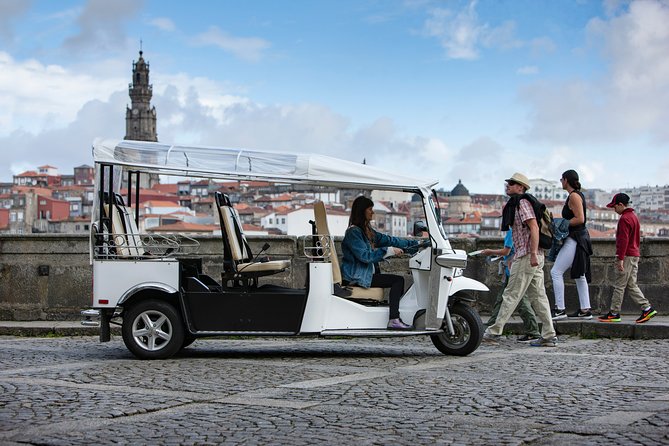
Discover Porto’s Highlights on a 2-Hour Private Electric Tuk Tuk
Book on Viator →Operated by Tuk Tour Porto · Bookable on Viator
Porto’s hills stop being a problem fast. This private, almost-silent electric tuk-tuk tour helps you see top sights quickly, hear your guide’s commentary clearly, and skip the worst uphill walks. The one thing to plan for: some stops, like Porto Cathedral, have entry fees you’ll pay separately.
I like how the route stacks classic lookouts with city neighborhoods so you leave with a solid mental map of Porto. Guides such as Tiago and Ricardo are praised for tailoring the pace, keeping things smooth even in rough weather, and sharing practical tips like where to eat and what to notice as you roll past. One more consideration: it’s designed for comfort over long hiking, so if you’re hoping for lots of walking time at each monument, this isn’t that style.
In This Review
- Key highlights in plain terms
- What this electric tuk-tuk tour gets right in Porto
- Price and value: what you really get for $48.37
- Where you start: the meeting point and how to plan your timing
- Stop 1: Fontainhas viewpoints over the Douro and Ponte Luís I
- Batalha district stop: theatre vibes and local street life
- Ponte do Infante: a modern bridge viewpoint with wide city views
- Catedral do Porto (Sé do Porto): Romanesque-Gothic first impression
- Aliados Avenue: Porto’s grand civic boulevard
- Cordoaria and Jardim da Cordoaria: greenery and a cultural-feeling zone
- Clérigos: the tower view you’ll actually use
- Palácio de Cristal Gardens: plants, fountains, and the city’s best lookouts
- What the guide experience feels like (and why it matters)
- Comfort, weather, and who this tour suits best
- Practical tip: how to turn a 2-hour tour into a 2-day plan
- Should you book the 2-hour private electric tuk-tuk tour?
- FAQ
- How long is the Porto private electric tuk-tuk tour?
- What is the price per person?
- Is the tour private or shared?
- What language is the tour offered in?
- Where is the meeting point?
- Does the price include entry tickets to monuments?
- Are blankets provided?
- Are there any age restrictions?
- Is the tour suitable if you use a service animal?
- What happens if the tour can’t run due to weather?
Key highlights in plain terms
- Almost-silent ride: You can actually hear commentary without shouting over the engine.
- Best views without the leg burn: Porto’s slopes feel gentler when you’re not hiking them.
- Private = flexible: Your guide can steer the timing and stops toward what matters to your group.
- Tuk-tuk access: Smaller vehicles can reach narrow streets and make frequent photo pauses.
- Comfort add-ons: Blankets are provided for cooler weather, and you stay sheltered while moving.
- Smart “first-day” overview: In about two hours, you get the lay of the land for where to return later.
What this electric tuk-tuk tour gets right in Porto
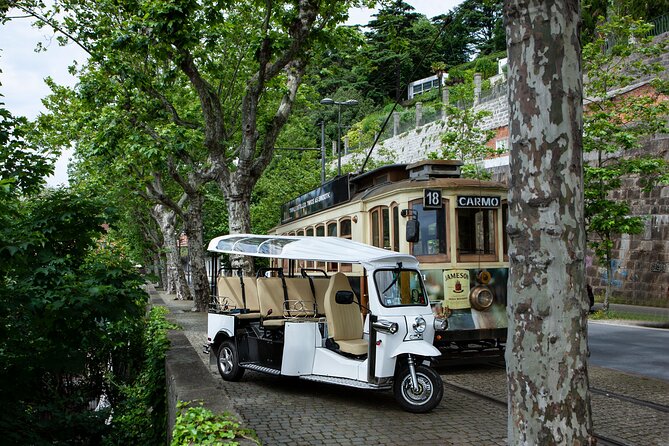
Porto is a city of layers: riverfront drama, steep streets, grand avenues, and neighborhoods that feel lived-in rather than staged. The tricky part is doing it all without turning your day into a nonstop stair workout.
That’s where a private electric tuk-tuk shines. The vehicle is quiet enough that your guide’s explanations don’t turn into background noise. You get moving time plus context—so you’re not just taking photos, you’re learning what you’re seeing while it’s right in front of you. And because it’s private, the experience doesn’t feel like you’re being rushed with a crowd.
At about 2 hours and a price of $48.37 per person, it’s priced like a “high-impact” tour, not a slow, deep, museum-style day. You’re paying for efficiency: multiple viewpoints, minimal waiting, and a guide who helps you interpret the city fast. If you only have a short window in Porto, this is the kind of investment that saves time later.
You can also read our reviews of more private tours in Porto


Price and value: what you really get for $48.37
For a little over two hours, you’re buying four main things:
- Transport built for Porto’s streets. A compact tuk-tuk can maneuver where larger buses and cars struggle, and it makes frequent stops practical.
- A guide to connect the dots. You’ll hear why places matter, not just where they are.
- Comfort during the ride. Blankets help if the morning or evening air feels cool.
- Private pacing. You’re not forced to match someone else’s itinerary.
What’s not included is important for budgeting: snacks and entry fees aren’t part of the price. The Porto Cathedral stop is specifically listed without included admission. So if you want to go inside a major church or tower, expect a separate ticket cost.
Also, if you’re the type who wants to sit longer at viewpoints or roam on foot for extended stretches, you may find the timing feels tight. The upside is that you get a broad sweep of Porto without exhausting yourself.
Where you start: the meeting point and how to plan your timing
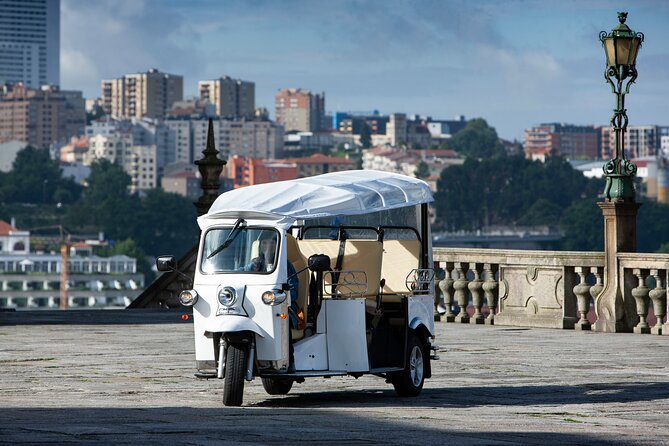
You’ll meet at R. de Alexandre Herculano 251, 4000-053 Porto, and the tour ends back at the same place. That matters because Porto’s center can be awkward to navigate on your own—especially if you’re juggling time, parking, or figuring out steep side streets.
A practical approach: schedule this early in your Porto stay, ideally the first half-day you’re in town. You’ll use the tour like a map you can think with: after you learn what’s where, you’ll have an easier time choosing which areas deserve a return visit on foot.
Stop 1: Fontainhas viewpoints over the Douro and Ponte Luís I
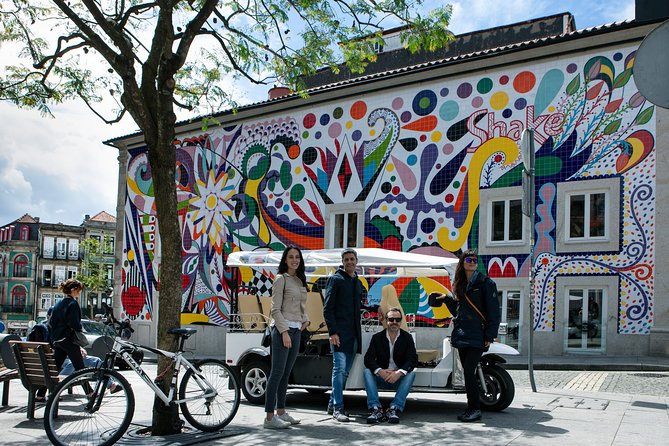
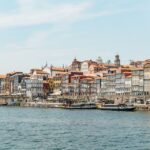
The tour kicks off with panoramic views from Fontainhas, one of Porto’s charming historic areas known for traditional houses and classic overlooks. This is a strong opener because you immediately get the city’s “main storyline” in one glance: the Douro River stretching out, plus the iconic Ponte Luís I connecting Porto and Vila Nova de Gaia.
What I like about starting here is psychological. You go from “Porto is hilly” to “I know what river I’m looking at and which bridge is which.” That makes everything that follows feel more coherent.
A small drawback: because you’re viewing from an overlook, it’s not a long sit-and-stroll stop. Plan for photos and a quick orientation, then you’ll be moving again.
Batalha district stop: theatre vibes and local street life
Next, you’ll pass through the Batalha district, tied to São João National Theatre and a lively local atmosphere. This part of the route is useful because it balances the “viewpoint tourism” with something more everyday. It helps you understand that Porto isn’t only monuments—it’s neighborhoods with routines, shops, and cultural venues.
If you’re someone who likes cities that feel like they’re still being lived in, this area sets the tone nicely. The main limitation is time: you’re driving through, so it’s less about wandering and more about noticing what’s around you.
You can also read our reviews of more tours and experiences in Porto


Ponte do Infante: a modern bridge viewpoint with wide city views
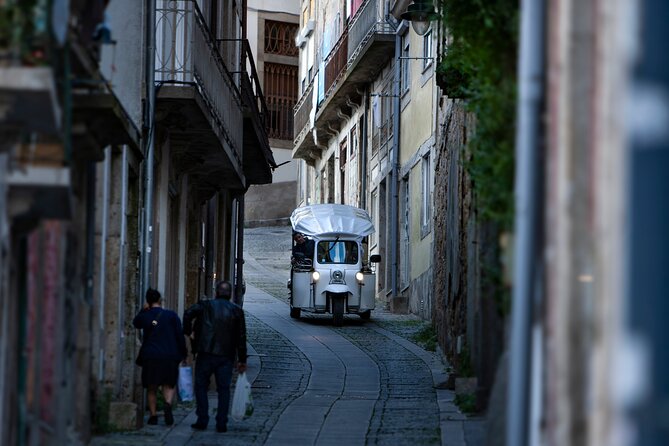
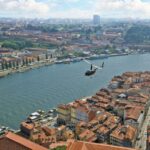
Then you’ll cross Ponte do Infante, a modern architectural highlight with sweeping views over Porto and toward Vila Nova de Gaia. This bridge stop works as a “breather” between dense historic corners and the more monumental blocks later in the route.
The advantage here is perspective. You can see how Porto’s built-up areas layer over the river, and you’ll spot the direction of major landmarks as you travel onward.
If you’re sensitive to motion, note that bridge segments can involve a bit of movement while the tuk-tuk is crossing. It’s normal, and the ride stays comfortable, but it’s worth keeping in mind.
Catedral do Porto (Sé do Porto): Romanesque-Gothic first impression
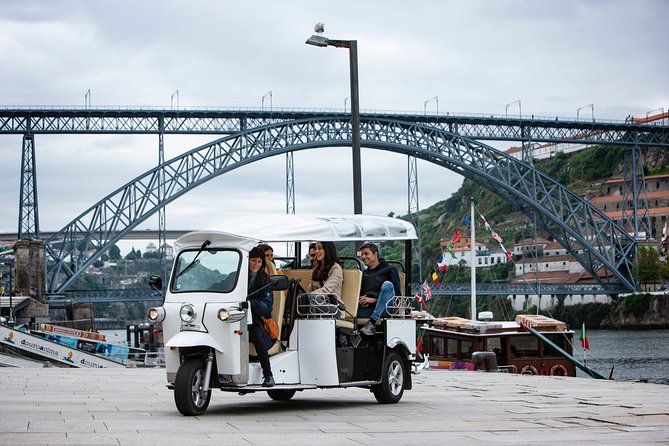
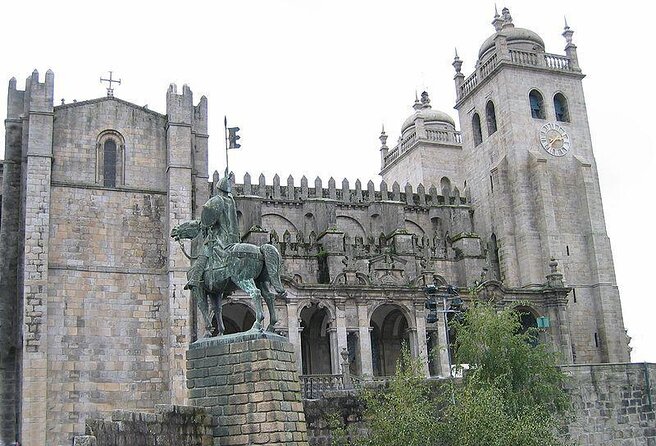
One of the most recognized monuments on the route is the Porto Cathedral, also known as Sé do Porto. Expect a quick stop—listed as about 10 minutes—focused on seeing the church and the architectural presence from key angles. Admission is not included, so this is the kind of place where you decide quickly: do you want to pay for entry, or do you prefer to absorb the exterior and move on?
What makes this stop valuable on a tour like this is timing. You’ll get the cathedral as a landmark in the middle of the ride, not as a separate half-day plan. If you’re visiting Porto for the first time and want to check the major “must-see” box, this is a smart way to do it.
Aliados Avenue: Porto’s grand civic boulevard
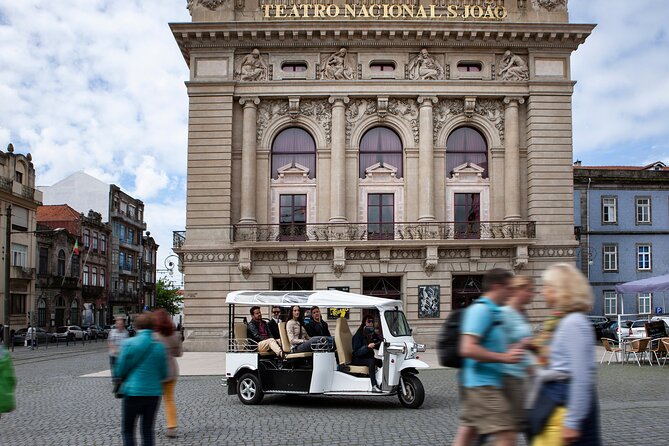
From cathedral-adjacent streets, the route shifts to Aliados Avenue, a grand boulevard lined with impressive buildings, hotels, and cafés. This is where Porto starts feeling more “urban grandeur” than hillside village.
Why it matters: Aliados helps you understand how the city presents itself—big streets, formal facades, and a central hub where locals and visitors mix.
Potential drawback: because it’s a major thoroughfare, it can feel busy and less intimate. Still, it’s a useful part of the route because it frames the next historic blocks.
Cordoaria and Jardim da Cordoaria: greenery and a cultural-feeling zone
The tour then moves through Cordoaria, an area known for its scenic Jardim da Cordoaria and its proximity to landmarks. This is one of the stops that breaks up the stone-and-street feel with greenery and more open air.
If you like gardens and parks as part of a city’s identity, you’ll enjoy this portion because it gives your eyes a different focus while still staying close to notable sights.
Clérigos: the tower view you’ll actually use
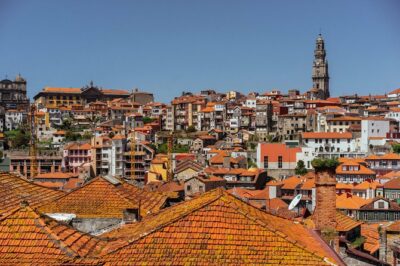
Next comes Clérigos, famous for the Clérigos Tower, an 18th-century baroque bell tower with panoramic views over Porto. Even if you don’t climb, the area around Clérigos is a strong visual anchor. You get the sense of elevation and line-of-sight that defines Porto’s sightseeing.
This stop is a great match for a tuk-tuk tour because the area can be easier to access by vehicle, while the viewpoints give you that “from above” feeling without you spending the whole day climbing.
What to consider: if you want the full payoff of tower views by entering, you’ll be making a ticket decision that isn’t included in the tour price.
Palácio de Cristal Gardens: plants, fountains, and the city’s best lookouts
The final major viewpoint stop is the Palácio de Cristal Gardens, known for lush paths, fountains, and what’s described as exotic plants. It’s not just pretty; it’s strategically placed for views over the city and river.
If you’ve been watching Porto unfold from viewpoints throughout the ride, this garden is the moment where your “Porto understanding” clicks into place. It’s one of those stops where you’ll look in multiple directions and suddenly connect the river, bridges, and older neighborhoods you saw earlier.
The limitation is time. This tour is structured for sweeping coverage. So you’ll enjoy the space in a short window rather than as a long, slow garden afternoon.
What the guide experience feels like (and why it matters)
A big theme in the feedback is that the best part isn’t just the vehicle—it’s the guide. People highlight guide personalities and the way they explain Porto’s layers without making it a lecture.
Names you’ll hear repeatedly include João, Ricardo, Diogo, and Tiago, plus others like Frederico, Barbara, Fran, and Helena. The common thread is consistent: guides build confidence fast. They share history, yes, but also what to look for and what to do next.
You’ll also appreciate the practical side. Several guides are praised for restaurant tips and local guidance, including references to a nearby market for snacks or browsing. That kind of intel is worth a lot on a short trip because it reduces the guesswork.
Comfort, weather, and who this tour suits best
This tour includes blankets for cooler weather, which is a small detail that can make a big difference, especially if your timing is early or you’re sensitive to wind on the river side.
It’s also described as requiring good weather. If it’s canceled due to poor weather, you’ll be offered another date or a full refund. Even with that, it’s smart to bring a light layer and plan for changing conditions—Porto can shift quickly.
Who should book:
- You want a quick orientation to Porto in a short time.
- You want to avoid steep hill fatigue.
- You like photo stops with freedom to pause.
- You’re traveling as a couple, friends group, or family unit that wants a private pace.
Who might find it less satisfying:
- If you’re expecting long on-foot time at each major site.
- If you only care about interior entry tickets rather than viewpoints and street-level architecture.
Practical tip: how to turn a 2-hour tour into a 2-day plan
Here’s the trick I recommend: after the tuk-tuk ride, pick two “themes” for your next day(s):
1) A river/bridge day (based on where you saw the Douro and the major bridges).
2) A neighborhood walking day (based on where you felt the city vibe—like Batalha and the areas near Clérigos and Cordoaria).
This tour helps you choose those themes fast. You’ll know which areas feel right for you, instead of wandering blind and getting worn out.
Should you book the 2-hour private electric tuk-tuk tour?
I’d book it if you’re the kind of traveler who wants to leave Porto with clarity: where everything is, what matters most, and where you want to return without guesswork. The combination of private pacing, quiet electric transport, and a route that mixes river views, major architecture, and garden lookouts makes it a strong “first or second day” move.
I would skip or reconsider if you’re planning a Porto trip where you’ll already do lots of long guided walking tours and paid-entry sightseeing. In that case, you might prefer a longer day focused only on interiors and deeper exploration.
If you’re on a tight schedule, though, this is one of the more efficient ways to get the highlights while saving your legs. And in a city as hilly as Porto, that alone can be worth it.
FAQ
How long is the Porto private electric tuk-tuk tour?
It’s about 2 hours.
What is the price per person?
The price listed is $48.37 per person.
Is the tour private or shared?
It’s a private tour/activity, so only your group participates.
What language is the tour offered in?
The tour is offered in English.
Where is the meeting point?
You’ll meet at R. de Alexandre Herculano 251, 4000-053 Porto, Portugal.
Does the price include entry tickets to monuments?
No. Entry fees and tickets for monuments are not included.
Are blankets provided?
Yes. Blankets are included for cooler weather.
Are there any age restrictions?
Children under 7 years old are not allowed.
Is the tour suitable if you use a service animal?
Yes. Service animals are allowed.
What happens if the tour can’t run due to weather?
It requires good weather. If canceled due to poor weather, you’ll be offered a different date or a full refund.