REVIEW · PORTO
Best of Braga and Guimaraes Day Trip from Porto
Book on Viator →Operated by Living Tours · Bookable on Viator
Portugal starts before lunch on this day trip. You get an efficient hit of Northern Portugal, guided in plain English, with enough structure to understand what you’re seeing and enough free time to wander like a local. I especially love the Bom Jesus funicular complex and its 1882 water-powered engineering, and I also appreciate how this runs in a small, air-conditioned group.
What makes the value click is that key sites come with your day: Braga Cathedral and Guimarães Castle entries plus time walking the UNESCO streets. One consideration: if your day is rainy and the group is mixed by language, the experience can feel a bit less smooth than the best-case scenario.
In This Review
- Key highlights to expect
- 7:50 AM meeting, then Minho County mode
- Bom Jesus Funicular: 1882 engineering plus Baroque drama
- Braga’s Sé Cathedral: Portugal’s early identity, in stone
- Braga free time: what you do with it is the whole point
- Guimarães arrival: birthplace energy without tourist pressure
- Guimarães Castle: legends, walls, and what’s accessible now
- Igreja de São Miguel do Castelo: tiny church, big founding-era symbolism
- UNESCO Centro Histórico: restored medieval streets you can actually feel
- Value for about $71: what’s included, what you supply
- Weather reality: how rain changes the feel
- Guide quality makes the difference
- Who this is best for (and who might want a different plan)
- Should you book this Braga and Guimarães day trip?
- FAQ
- What time does the tour start in Porto?
- Where does the tour meet and end?
- How long is the day trip?
- Is transportation included?
- What language is the tour offered in?
- Are tickets included?
- Is lunch included?
- Is there free time in Braga and Guimarães?
- Can you access Guimarães Castle walls?
Key highlights to expect
- Bom Jesus Sanctuary and funicular engineering from the 19th century, including a water-powered ramp
- Braga Sé Cathedral, Portugal’s oldest cathedral, with royal burials in the Chapel of Kings
- Guimarães Castle views and legends tied to Afonso Henriques and the formation of Portugal
- Igreja de São Miguel do Castelo, a small Romanesque church linked to the kingdom’s founding traditions
- UNESCO Centro Histórico walk with restored medieval streets, balconies, and cloisters
- Real pacing with short guided segments and time to shop, snack, and reset
7:50 AM meeting, then Minho County mode
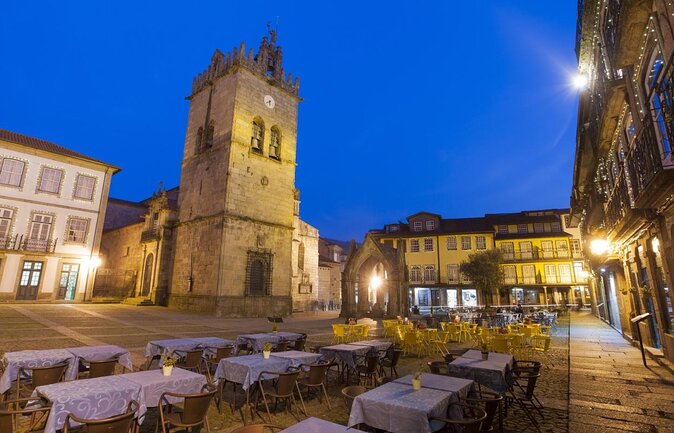
This tour begins early from Calçada de Vandoma near São Bento Train Station. Starting around 7:50 a.m. matters, because you’ll get out of Porto traffic while the morning is still calm. You travel in an air-conditioned minibus, which is a quiet lifesaver in summer and also just nicer on a long day when weather changes.
Group size caps at 27 people, and that’s a big deal for how tours actually feel. You can hear your guide, the bus doesn’t take forever to load, and you’re less likely to feel like you’re in a moving classroom of strangers. I like that the day isn’t all one long bus narration either. The flow alternates between guided stops and chunks of free time.
You can also read our reviews of more tours and experiences in Porto
Bom Jesus Funicular: 1882 engineering plus Baroque drama
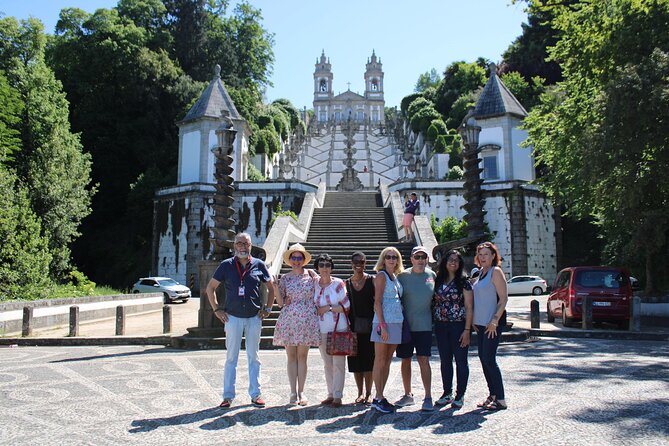
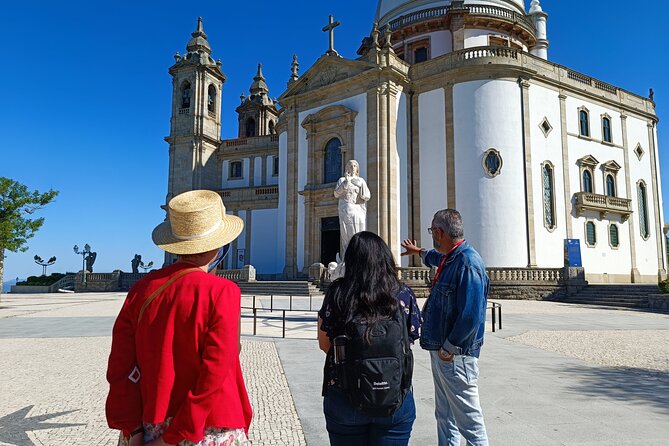
The day’s first major stop is Bom Jesus Sanctuary in Braga’s hills. Even if religion isn’t your main interest, this place is worth it for the architecture and the sheer logic of the design.
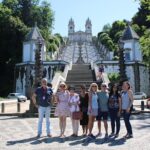
Here’s what makes Bom Jesus feel different: the site is famous for religious reasons, but the funicular and staircase are also a story about Portuguese engineering. The first funicular of its kind in Portugal was installed in 1882. The ramp is about 300 meters, and it runs using a water-powered system that can move people up in around 3 minutes.
Then you get the staircase itself: 17 landings, each with symbolic fountains and allegorical statues. The decoration ties to themes like the Stations of the Cross, the Five Senses, the Virtues, Moses receiving the Commandments, and more biblical figures near the top. If you do nothing else at Bom Jesus, do this: take in the view from the bottom of the staircase before you head up. You get the layout in context, and it makes the whole climb feel like a designed path, not just steps.
One practical tip: wear shoes you trust. Even on a short stop, you’ll likely do more walking and standing than you expect, especially if you pause often for photos.
Braga’s Sé Cathedral: Portugal’s early identity, in stone
After Bom Jesus, you head back into city history with Se de Braga (Braga Cathedral). This is Portugal’s first cathedral, and it’s older than the country itself. Construction began at the end of the 11th century, and it was consecrated and dedicated to the Virgin Mary on August 28, 1089, by Bishop Pedro.
The cathedral isn’t just a museum stop. You’ll also connect it to power and legacy. One detail I like is that D. Henrique and D. Teresa, parents of Portugal’s first king, are buried in the Chapel of Kings. That gives you a real “this mattered” feeling, especially when you compare it to the smaller scale of what you’d guess at first glance.
Guides also help you understand the competition-for-influence vibe between famous Iberian religious centers, including how Braga’s Sé is often discussed alongside Santiago de Compostela. Even if you’re not a history buff, your brain clicks into place: these buildings weren’t built for silence. They were built because people fought, prayed, traveled, and competed for meaning.
Time here is about 30 minutes, which is short but workable if you keep your focus. Look at the cathedral’s structure and entrances first. Then, if you can, spend the last few minutes finding the Chapel of Kings context so you remember what you learned afterward.
Braga free time: what you do with it is the whole point
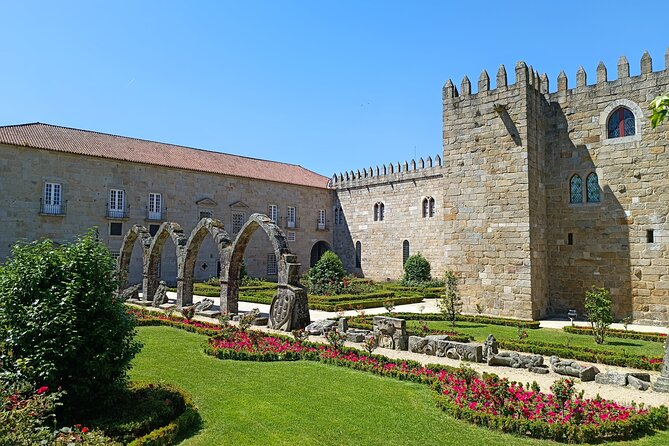
Next comes a free exploration window in Braga—about 1 hour on the schedule. This isn’t where you go deep. It’s where you get your bearings, buy a snack, and see what locals actually do with their time.
Use this stretch in a smart way:
- If it’s raining, duck into shops and cafés and keep moving. Braga’s streets are built for wandering, not racing.
- If it’s dry, walk one loop away from the main sights so you find quieter lanes.
- Grab something simple for lunch later if you’re not sure what you’ll find in Guimarães.
I like that this break exists because you’ll absorb the morning content faster when you can pause, eat, and reset your thoughts.
Guimarães arrival: birthplace energy without tourist pressure
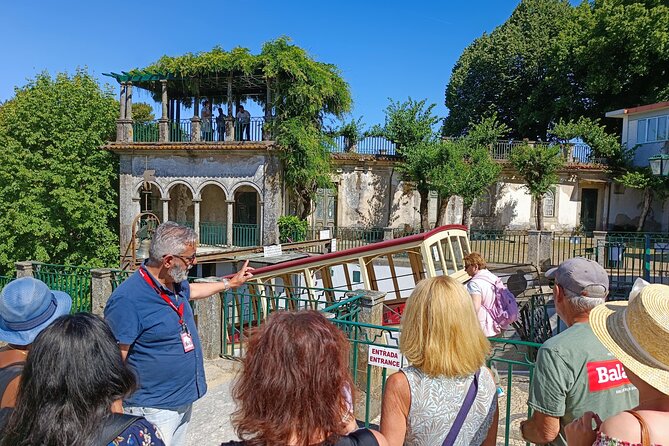
After Braga, you drive to Guimarães, often described as the birthplace of Portugal because Afonso Henriques—the first king—was born here. The schedule gives you about 2 hours in the city before castle time, which is a good window for photos, casual shopping, and lunch.
Guimarães feels different from Porto and Braga. It’s smaller, more compact, and easy to walk. That means your guide’s stories land better, because you can connect them to visible streets and buildings without constant refocusing.
Also, your pace is your choice here. Want to take it slow and shop? Great. Want to head straight to the next stop? You can.


Guimarães Castle: legends, walls, and what’s accessible now
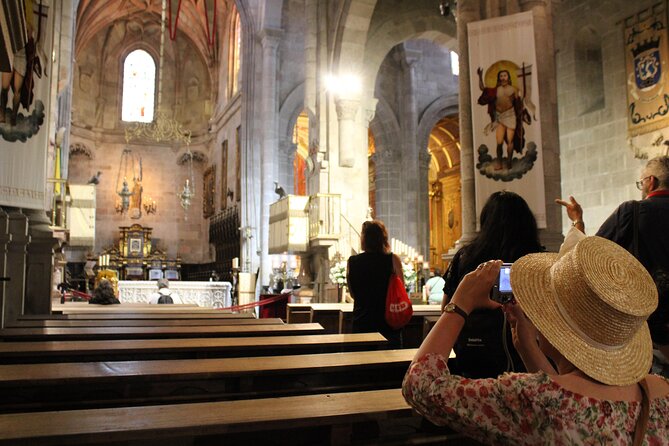
The guided highlight in Guimarães is the castle area, included with your ticket. You get around 30 minutes to explore, and the setting is built for legends to feel believable.
The story starts with refuge. Around 968, Mumadona, countess of Galicia, ordered a castle on this site so the local population could seek shelter from attacks by Vikings arriving by sea and raids from the Muslims further south. Later, as the political situation shifted, Count Henry ordered a larger, sturdier construction. That’s where the defensive structure you see now comes into play, including the square keep positioned between four towers at the wall corners.
There’s also tradition tying the place to family origin: it’s likely (though not strictly documented) that a building against the inner northern wall was Count Henry’s residence and could have been the birthplace of his son Afonso Henriques.
Important practical note: access to the castle has limited areas, and access to the walls is prohibited. So don’t build your day around a long wall-walk. Plan on viewpoints from permitted areas, and focus on the keep, the structure, and the immediate surroundings.
If you love castle architecture, the “defense logic” is the payoff. If you only want dramatic cliff panoramas, you might find it less breathtaking than a frontier fortress—still worthwhile, just set expectations.
Igreja de São Miguel do Castelo: tiny church, big founding-era symbolism
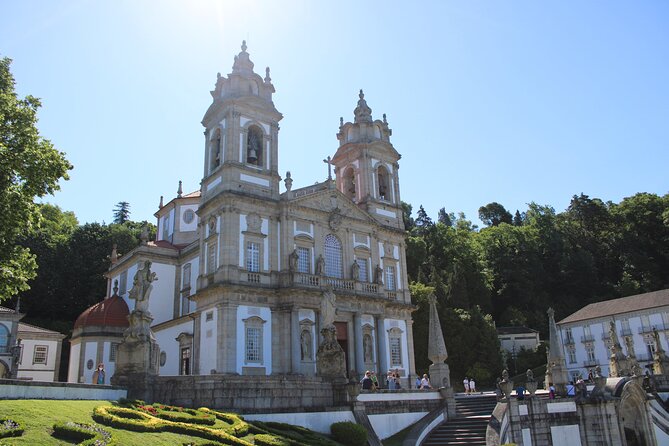
Right after the castle, you visit Igreja de São Miguel do Castelo. It’s a small church with a simple exterior and a calmer interior, which makes it a nice change of pace after the heavier castle imagery.
The church is associated with the 12th/13th century founding traditions. The current building dates to the 13th century, but tradition says it would have been built in the 12th century by Count Dom Henrique (Henry of Burgundy), where he would have baptized his son, Dom Afonso Henriques.
Inside, it’s described as Romanesque and reduced in decoration—more about proportion than ornament. One detail that adds emotional weight: under the floor of the church lie buried great warriors of the nation’s founding period.
This is the kind of stop where your guide’s short explanations really matter. With limited time, you’ll get the core meaning quickly. I recommend you let it be short and quiet. Don’t try to multitask here.
UNESCO Centro Histórico: restored medieval streets you can actually feel
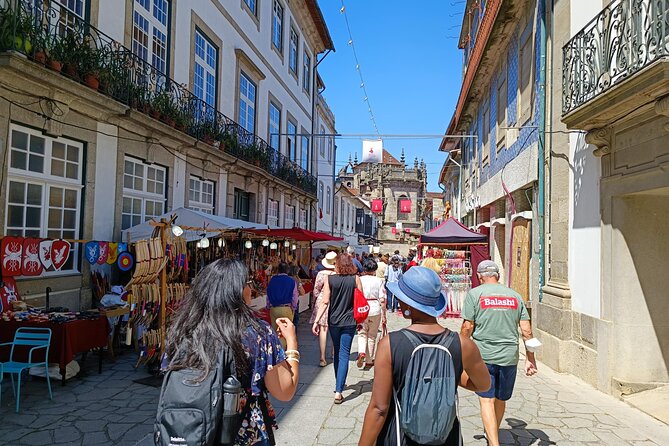
The final guided segment focuses on Centro Histórico de Guimarães, a UNESCO World Heritage site since 2001. This is in the area that used to be within city walls, and the best part is how the restoration keeps the neighborhood’s identity intact.
Expect a walk that helps you notice details you could easily miss if you were on your own. You’ll pass iron verandas, granite balconies, porticos, old mansions, arches connecting narrow streets, and paving slabs worn smooth by time. There are cloister-like spaces and towers, and it can genuinely feel like stepping into the rhythm of medieval daily life.
Your guide also ties these streets to the formation and identity of Portugal. That’s what turns it from pretty scenery into meaningful travel. You start noticing how the city design supports community life: narrow streets, gateways, balconies facing the street, and a built environment that makes casual walking practical.
This stop is about 30 minutes. It’s long enough to absorb the visual language, short enough that you can still wander after the official portion if you’d like.
Value for about $71: what’s included, what you supply
At $71.35 per person for roughly 9 hours, this isn’t a bargain tour, but it’s a fair value for what you get. You’re paying for transportation, a specialized guide, and several included entries and entrances.
Here’s what’s covered:
- Air-conditioned minibus transport
- A professional guide specialized in the destination
- Bom Jesus Sanctuary entrance
- Braga Cathedral (Se de Braga) ticket
- Guimarães Castle ticket
- Entrance-related stops in Guimarães, plus the walking tour in the UNESCO historic center
- You also get a Porto walking tour option available after your experience (a free tour tied to the same provider)
What you supply:
- Lunch (not included)
- Personal spending
- You’ll likely want water and a small snack plan for long walking moments
The smart value move: treat this day as a guided history framework, then spend your money on a good meal during the Guimarães free time. That way your day doesn’t feel like sightseeing-only.
Weather reality: how rain changes the feel
This tour handles schedule shifts better than you might expect because the stops are spread across cities and viewpoints, not just one long hike. Still, rain can change the tone. You’ll be on your feet in city centers, and you’ll likely be standing for views at least briefly.
If your travel window includes rainy days, bring:
- A compact umbrella or rain jacket
- Shoes with grip
- A light layer for temperature swings
One more thing: the tour is offered in English, but groups can sometimes run bilingually depending on how passengers arrive. That can slightly affect how much detail you catch in any one moment, but it’s usually manageable when your guide keeps the pace and you focus on the main stories.
Guide quality makes the difference
This kind of day trip lives or dies by the guide’s ability to connect places to people. The strongest impressions from past departures mention guides like Castro, Christian, Philip, Pedro, Jose, and Jorge Mendoza (and others). The common thread is clear: they keep the stories organized, answer spontaneous questions, and adjust pacing so the group doesn’t feel rushed.
You can also tell when a guide is proud of the material. Some names show up repeatedly in feedback because they did the practical job well: explain what you’re seeing while you’re actually there, not hours later from a bus seat.
My advice: when you meet your guide, ask one simple question that fits your interests. Even something like what made Braga powerful compared to other northern towns often turns the rest of the day into a better story for you.
Who this is best for (and who might want a different plan)
This works especially well if:
- You want a strong introduction to Portugal’s northern heritage in one day
- You like guided explanations but also want space to wander on your own
- You’re comfortable with a long day and some walking at multiple stops
- You want included tickets without planning entrances yourself
It may be less ideal if:
- You want only one major highlight and nothing else. This tour stacks several important moments.
- You’re extremely focused on castle wall panoramas, since wall access is prohibited.
- You’re sensitive to rain and prefer a fully indoor itinerary.
Should you book this Braga and Guimarães day trip?
Book it if you want a day that feels structured but not trapped. The combo of Bom Jesus engineering, the Sé Cathedral’s early Portuguese significance, and the UNESCO Guimarães streets is a smart, efficient way to understand the region.
Skip or reconsider if you already know you only care about one type of stop, like only museums or only landscapes with long hiking. This is a history-and-streets day with a few iconic architecture hits. When that matches your interests, it’s a very satisfying way to see more than just Porto.
If your goal is simply to get your bearings in Northern Portugal quickly, you’ll come away with a clearer mental map of where Portuguese identity began—and why these cities matter.
FAQ
What time does the tour start in Porto?
The tour starts at 7:50 a.m. You’ll meet near Calçada de Vandoma, close to São Bento Train Station.
Where does the tour meet and end?
You meet at Calçada de Vandoma, 4000 Porto, Portugal and the tour ends back at the same meeting point.
How long is the day trip?
The duration is about 9 hours, though it’s approximate and can shift with local traffic and site schedules.
Is transportation included?
Yes. You travel by comfortable air-conditioned minibus.
What language is the tour offered in?
The tour is offered in English. The experience info also notes that a second language may be used.
Are tickets included?
Yes for several key sites, including Braga Cathedral, Guimarães Castle, and Bom Jesus Sanctuary entrance.
Is lunch included?
No. Lunch is not included, so you’ll want to plan for food during the free time.
Is there free time in Braga and Guimarães?
Yes. There’s free time in Braga (about 1 hour) and free time in Guimarães (about 2 hours).
Can you access Guimarães Castle walls?
Access to the castle is limited, and access to the walls is prohibited.