REVIEW · PORTO
Private Electric Bike Tour in Oporto
Book on Viator →Operated by Green Tours · Bookable on Viator
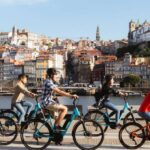
Porto looks better on an electric bike. This private electric bike tour strings together standout sights across both Porto and Gaia, with smart photo stops and plenty of time to look around. I also like that it’s up to 3 people, so you’re not stuck riding in a big pack while you try to hear your guide. The main thing to consider is the pace: you’ll be on the bike for roughly 3 hours total, and the tour asks for moderate physical fitness plus good weather.
You’ll start at R. da Póvoa 261 and cruise past classic landmarks without needing to plan bus routes or parking. Many stops are listed as free (so you’re not constantly waiting on ticket lines), and the route is built for easy “see it, then move on” sightseeing. One practical drawback: lunch isn’t included, so decide ahead of time whether you’ll bring snacks or plan a post-ride meal near the Douro area.
If you’ve got limited time and want Porto’s viewpoints plus its quieter corners, this is a strong fit—especially for first-timers who’d rather ride than just rush.
In This Review
- Key Points You’ll Care About
- Electric Power Meets Historic Porto and Gaia
- 3 Hours That Actually Feel Like Sightseeing (Not a Workout)
- Price and Value: $143.29 for Up to 3, Bikes Included
- The Route, Stop by Stop: Porto’s Icons to the Douro Views
- São Bento Railway Station: A Grand Start
- Porto Cathedral: Gothic Roots in the Old City
- The Bridge Moment: Gustave Eiffel’s Engineering Legacy
- Miradouro Serra do Pilar: Porto and Gaia in One View
- Cais de Gaia: Terraces, River Energy, and UNESCO Across the Water
- Douro Marina (Afurada): Modern River Life Near the Atlantic Edge
- Praca da Batalha: Pedro V and City Culture
- Mercado do Bolhão: A Market Built for Everyday Porto
- Aliados Avenue: The Main City Center Street
- Igreja dos Carmelitas and Igreja do Carmo: Hidden House Story
- Hospital Stop (Teaching + Modern Care)
- Torre dos Clérigos: Porto’s Postcard Tower
- Miradouro da Vitória: Old Jewish Quarter Views
- Passeio das Virtudes: Sunset-Worthy River Relaxation
- Jardins do Palacio de Cristal and Palácio da Bolsa: Green + Classic Interiors
- Prince Henry’s Area: Casa do Infante Tradition
- Carlos, the Guide Factor, and Why Private Matters
- Where Lunch Fits (Because It’s Not Included)
- Logistics That Make the Tour Easy to Plan
- Who Should Book This Electric Bike Tour?
- Should You Book This Electric Bike Tour?
- FAQ
- How long is the private electric bike tour in Porto?
- What’s the group size and price?
- Is the tour offered in English?
- What’s included and what should I plan for myself?
- Where does the tour start and end?
- Do I need to be a strong cyclist or be very fit?
- What happens if the weather is bad?
Key Points You’ll Care About
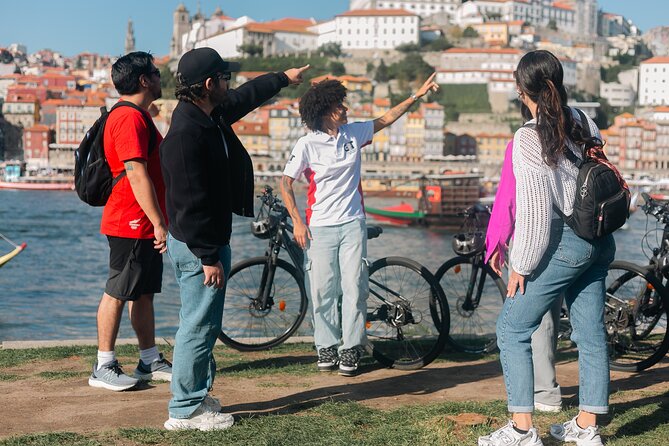
- Private group, up to 3 people: you get a more personal ride and your guide can pace for your comfort.
- Electric assist helps with hills: you can keep moving without arriving drenched in sweat.
- Big Porto + Gaia coverage in ~3 hours: efficient sightseeing without feeling like a sprint.
- Frequent scenic breaks: viewpoints like Miradouro Serra do Pilar and Miradouro da Vitória are built into the route.
- A real local rhythm around the Douro: Cais de Gaia and Douro Marina give you that river-life feeling.
- Guide names matter: Carlos stands out in feedback for being both fun and informative, with an easygoing style.
Electric Power Meets Historic Porto and Gaia
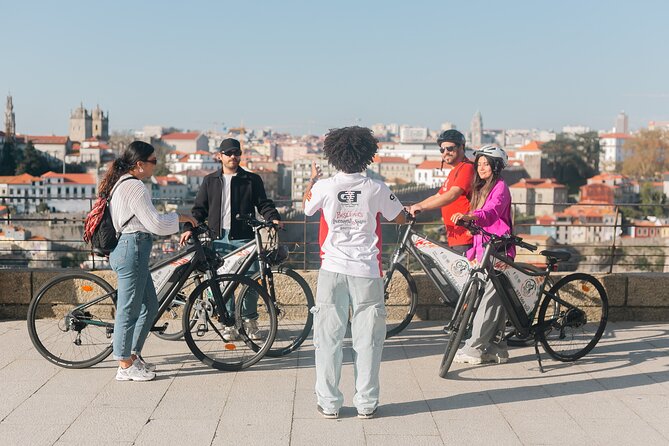
This tour works because it’s designed for movement. Porto is gorgeous, but it can be physically annoying if you’re walking the whole time—steep streets, long distances, and lots of “wait, where are we supposed to go now?” moments. With electric assist, you can keep a steady pace and actually enjoy the ride instead of paying for every stop with sore legs.
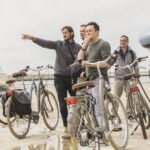
It’s also private, which changes the vibe. Instead of following a rigid script with strangers, you ride as your own small group and you can ask questions as you go. The tour is offered in English, so you won’t need to rely on guesswork at the churches, viewpoints, and historic squares.
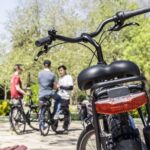
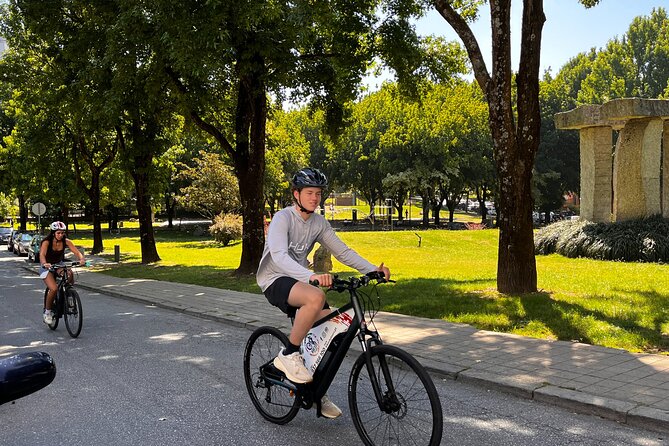
And yes, it’s fun. Electric bikes are quick, playful, and they make short distances feel effortless. The feedback highlights that the bikes are easy to handle and navigate, which matters if you’re not a confident cyclist.
You can also read our reviews of more cycling tours in Porto
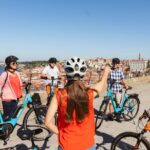
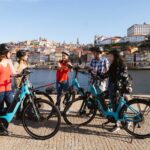
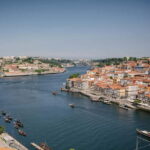
3 Hours That Actually Feel Like Sightseeing (Not a Workout)
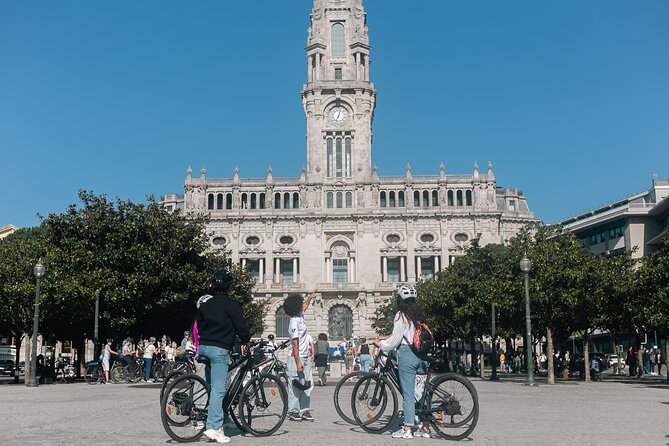
The tour clocks in at about 3 hours, but the timing is flexible in the way sightseeing should be. The ride time includes short stops—around 5 to 15 minutes at most places—so you get to see the key sights without turning each location into an hour-long commitment.
That stop length is intentional. You’ll hit famous places like São Bento Railway Station and Torre dos Clérigos, then move on quickly to viewpoints such as Miradouro da Serra do Pilar and Miradouro da Vitória. This keeps the momentum going, which is how Porto rewards you best: with a series of “oh wow” moments in a compact time window.
One more reason the pace works: the route mixes major landmarks with smaller spiritual and neighborhood stops. You’re not just chasing postcards; you’re also getting the street-level stories that explain why Porto looks the way it does.
Price and Value: $143.29 for Up to 3, Bikes Included
At $143.29 per group (up to 3), the math gets interesting fast. If you’re riding as a couple, you’re probably splitting the cost between two people. If three of you go, it becomes one of those Porto deals where the price starts to feel like a bargain compared to how much ground you cover.
What helps the value: GST is included, and bicycle use is included. Since the stops are listed as admission ticket free for the sights on the route, you’re not dealing with a pile of extra fees mid-tour. Lunch and snacks aren’t included, though, so plan a meal—or a quick snack—before or after.
If you want a “see a lot, spend less time planning” day, this price format makes sense. It’s also a good choice when you don’t want to rent a bike yourself and then figure out parking or route logic.
The Route, Stop by Stop: Porto’s Icons to the Douro Views
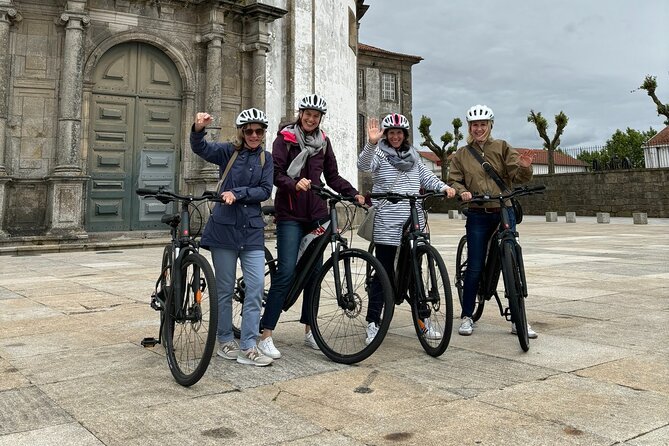
Start point: R. da Póvoa 261, Porto. The tour ends back at the same meeting point, which keeps logistics simple.
São Bento Railway Station: A Grand Start
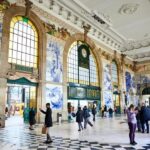
You begin at São Bento Railway Station, widely treated as one of the world’s most beautiful stations. Even if you’re not planning a full train-station visit, it’s a great “first impression” stop. It’s classic Porto—centered, recognizable, and instantly photogenic.
You can also read our reviews of more private tours in Porto


Porto Cathedral: Gothic Roots in the Old City
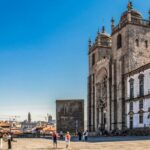
Next up is Catedral do Porto, built in the Gothic period in the 12th century. It’s described as the main building of the Catholic Church in Porto, so it’s not just an architectural detour. You get context for the city’s religious and cultural center without wandering far off the route.
Practical note: expect a short look—this tour gives you time to see and understand, not to linger for hours.
The Bridge Moment: Gustave Eiffel’s Engineering Legacy
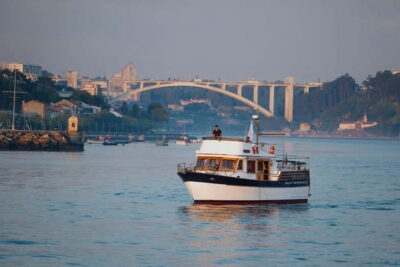
There’s a passing stop over one of Porto’s best-known bridges, designed by Gustave Eiffel (same engineer as the Eiffel Tower). This is the kind of “wait, really?” detail that makes a bike tour feel smarter than a basic walking loop.
Instead of treating the bridge as a distant landmark, you experience it as part of the route. You’ll feel like you’re moving through the city, not just stopping beside it.
Miradouro Serra do Pilar: Porto and Gaia in One View
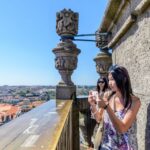
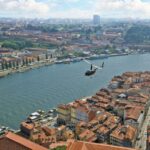
Then you climb into a viewpoint at Miradouro Serra do Pilar. This is where the tour earns its keep: you get panoramic views over Porto and Gaia, so the city’s geography clicks into place.
This stop is short, but the payoff is big. You can stand, take photos, and get that “now I get the layout” understanding.
Cais de Gaia: Terraces, River Energy, and UNESCO Across the Water
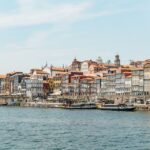
After the viewpoint, you head toward Cais de Gaia, a tourist area on the left bank of the River Douro in Vila Nova de Gaia, opposite Porto’s historic centre (UNESCO World Heritage Site).
This is a fun shift in atmosphere. Porto’s old streets feel different from the riverfront terraces and restaurant/bars side of life. Even if you don’t stop for a long sit-down meal, it’s an important visual change—and it helps you understand why the river is the city’s main character.
Douro Marina (Afurada): Modern River Life Near the Atlantic Edge
The route includes Douro Marina, located in Afurada (Vila Nova de Gaia). You’ll spend around 50 minutes here, and the setting is described as a modern marina concept blending sport, leisure, tourism, and nature.
This is a great time buffer in the tour because it’s not just “look and go.” It’s also where the river changes tone—Douro energy before it meets the Atlantic. If you like photo angles, you’ll find plenty. And since the tour information notes lunch is often taken in nearby restaurants but is ultimately your call, this stop is a natural window for a plan.
Praca da Batalha: Pedro V and City Culture
You then reach Praca da Batalha, which since 1866 has been dominated by the monument to King Pedro V, designed by Teixeira Lopes. The square also links to culture via the São João National Theatre and Cine-Teatro Batalha.
This stop is brief, but it’s useful. It’s a reminder that Porto isn’t only churches and viewpoints; it also stages public life in prominent squares.
Mercado do Bolhão: A Market Built for Everyday Porto
Next is Mercado do Bolhão. The building is described as a municipal heritage site and a monument of public interest. The market keeps the memories and stories of a fresh, everyday market alive in the heart of the city.
Even if you’re not buying anything, it’s worth looking at how the building represents Porto’s rhythm. It adds a “people live here” layer that you don’t always get from purely scenic tours.
Aliados Avenue: The Main City Center Street
You also ride/see Aliados Avenue, Porto’s main avenue and city center. Think of it as the “spine” of downtown—useful for orientation, and a good moment to recognize how streets connect before you head toward the religious and viewpoint cluster.
Igreja dos Carmelitas and Igreja do Carmo: Hidden House Story
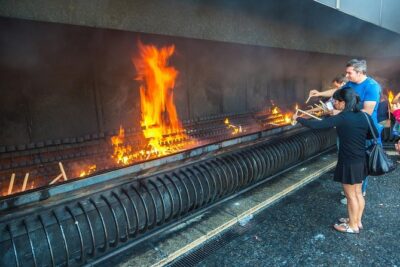
You pass Igreja dos Carmelitas, which started being built in the 17th century. Then you move toward Igreja do Carmo, where the story gets more interesting.
On the west side, land was given to the Order in 1752. Because the time didn’t allow building two churches side by side, the Hidden House was built between them. The tour frames this as part of what you’ll learn along the way, and it’s exactly the kind of detail that makes a guided ride feel worth the money.
Hospital Stop (Teaching + Modern Care)
There’s also a stop tied to a general, central, and university hospital, connected with teaching at the University of Porto’s biomedical sciences institute. The note that it’s housed in a historically valuable building but functions as a modern, well-equipped hospital gives you an interesting contrast: Porto changes, but it also repurposes.
This is a shorter, more “story” stop—so don’t expect a long facility tour. Expect context.
Torre dos Clérigos: Porto’s Postcard Tower
Then comes Torre dos Clérigos, described as a remarkable tower ensemble and basically Porto’s postcard view. Even from street level, the tower shapes the skyline in a way that makes Porto look like Porto.
This stop is quick, but it’s a key “I’m in the right city” moment.
Miradouro da Vitória: Old Jewish Quarter Views
You finish the viewpoint stretch with Miradouro da Vitória, located in the old Jewish quarter. The area’s story is tied to King João I demarcating where Jews lived with walls and gates in the 14th century, lasting about 100 years until the Inquisition.
Again, this is a short stop, but it’s meaningful. The viewpoint doesn’t just give you a view; it gives you the sense that you’re looking over layers of old decisions and old communities.
Passeio das Virtudes: Sunset-Worthy River Relaxation
Then you reach Passeio das Virtudes, a garden built for sunset over the River Douro. The tour frames it as ideal for relaxing on grass or on a terrace with a beer, with views over the river all the way toward where it meets the sea.
This is the “slow down” moment. After churches, towers, and market-adjacent streets, you get that calmer ending where the city feels less like a checklist and more like a place.
Jardins do Palacio de Cristal and Palácio da Bolsa: Green + Classic Interiors
The route includes Jardins do Palácio de Cristal, a green space with panoramic views over the Douro River and the sea. Then you also see Palácio da Bolsa, a neoclassical building whose construction began in 1842, tied to the closure of Casa da Bolsa do Comércio and the way Portuguese traders discussed business openly.
These are two different moods: gardens for breathing room, then formal architecture for a “Porto built big ideas here” feel.
Prince Henry’s Area: Casa do Infante Tradition
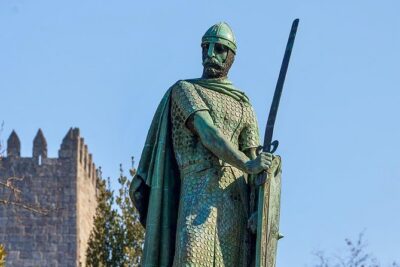
Finally, there’s a square in the historic centre that pays homage to Prince Henry the Navigator, with tradition saying he was born nearby in the Casa do Infante in 1394. It’s a classic Porto closure: discovery-era Portugal, right where the old city keeps its stories.
Carlos, the Guide Factor, and Why Private Matters
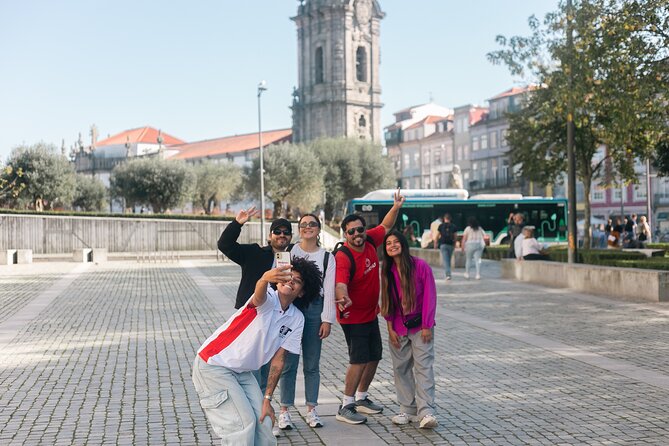
The feedback on this tour is strongly tied to the guide experience, especially Carlos. People highlight how he’s both fun and knowledgeable, and how he shapes the ride so it feels scenic rather than mechanical. That matches what this route needs: a guide who can connect the dots between stations, towers, bridges, viewpoints, and riverfront districts.
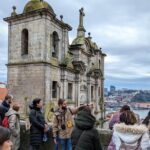
Private matters here because it lets you ask real questions at the real moments. When you stop at viewpoints like Serra do Pilar or Vitória, the guide can point out what you’re actually seeing and why it matters. On a big group tour, those details get lost in noise.
And since the bikes are described as easy to handle, the guide’s role becomes less about safety drills and more about making you comfortable enough to enjoy the streets.
Where Lunch Fits (Because It’s Not Included)
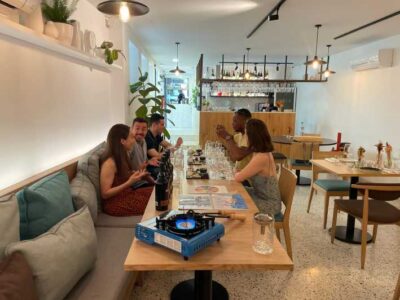
Lunch isn’t included, and the tour explicitly leaves lunch choice up to you. The itinerary notes that you’ll often stop nearby for lunch around the Douro Marina area, but that’s not a fixed requirement.
So here’s the practical move: plan either
- a relaxed lunch after the Douro Marina stop, or
- a quick snack before you start, then eat a proper meal later.
If you’re the type who likes to keep options open, this tour works well because it doesn’t lock you into a specific restaurant.
Logistics That Make the Tour Easy to Plan
A few small details help you plan without stress:
- Mobile ticket is provided.
- The tour is offered in English.
- Confirmation is received at booking time.
- Service animals are allowed.
- The tour requires good weather, and if it’s canceled due to poor weather, you’ll be offered a different date or a full refund.
This is especially important in Porto. If fog, heavy rain, or wind makes riding uncomfortable, you’ll want flexibility.
Who Should Book This Electric Bike Tour?
This is a great pick if:
- you want to cover Porto + Gaia in about 3 hours
- you like guided stories more than “walk and hope”
- you prefer small groups (up to 3 people) over larger crowds
- you want a mix of landmarks, viewpoints, squares, and riverfront atmosphere
It’s also a good choice if you’re not a super confident cyclist, since the bikes are described as easy to handle and navigate. Electric assist helps a lot, but you still need that moderate physical fitness level to enjoy the ride comfortably.
If you only want a museum-heavy day or only want one neighborhood, you might find this tour moves too fast. But for most first-time planning, it hits the sweet spot.
Should You Book This Electric Bike Tour?
I think you should book it if your goal is practical sightseeing with great pacing: a private ride, electric help, and a route that takes you from Porto’s core landmarks to Gaia’s river energy and viewpoint payoff.
The value is strongest when you split the group price with two people, and the experience gets better when you treat it as a ride-with-stops day rather than a “linger everywhere” day. Just remember: bring your appetite for walking a few blocks between highlights, and plan lunch separately.
If the weather is good, this tour is an efficient, fun way to see Porto the way you’ll remember it later—through motion, views, and stories that connect the city to the river.
FAQ
How long is the private electric bike tour in Porto?
It runs for about 3 hours (the hours are approximate).
What’s the group size and price?
The price is $143.29 per group with a maximum of up to 3 people.
Is the tour offered in English?
Yes, the tour is offered in English.
What’s included and what should I plan for myself?
The tour includes GST and use of the bicycle. Lunch and snacks are not included, so you’ll need to plan your own food.
Where does the tour start and end?
It starts at R. da Póvoa 261, 4000-099 Porto, Portugal and ends back at the meeting point.
Do I need to be a strong cyclist or be very fit?
The tour asks for moderate physical fitness. The bikes are described as easy to handle, but you’ll still be riding for much of the 3 hours.
What happens if the weather is bad?
This experience requires good weather. If it’s canceled due to poor weather, you’ll be offered a different date or a full refund.