REVIEW · PORTO
Experience Porto by Bike: 3-Hour Private Tour
Book on Viator →Operated by Biclas & Triclas - Rent a Bike and Tours · Bookable on Viator
Porto on two wheels beats standing in lines. This small-group private tour mixes old-city sights with beach and park time in just three hours. You’ll get a guided route that covers the city’s biggest postcard stops, plus calmer stretches along the Douro and out toward the coast.
What I like most is how family-friendly the pacing feels, even when you’re rolling past hills and big viewpoints. I also like the smart mix of stops—historic streets, a river crossing by boat, then golden-sand coastline—so you don’t feel like you’re just ticking boxes.
One thing to keep in mind: this experience depends on the weather. If it’s poor, you may be offered another date or a full refund, so plan your Porto day with some flexibility.
In This Review
- Key Highlights You’ll Actually Feel on the Ride
- Getting Started at Biclas & Triclas and Why It Matters
- The Big Picture Route: Historic Porto, Beaches, Parks, and the Douro
- Stop-by-Stop: What Each Place Feels Like (and What to Watch For)
- Miragaia: Cobblestones, Villas, and the City’s Shoreline Changes
- Porto’s Tram Museum Area: A Quick Detour for Transport Nerds
- Ponte da Arrábida: The Bridge That Turns the Route Into a Landmark
- Cantareira: Riverside Fisher Boats and a Name with a Water Story
- Jardim do Passeio Alegre and Fortress São João Baptista: Coast Views with Character
- Farolim de Felgueiras and Pergola da Foz: A Lighthouse Stop + Beach Label Names
- Praia do Castelo do Queijo: The Pirate-Defense Story Behind the Shape
- Matosinhos Beach: Big Sands, Easy Access, Surf-Friendly Water
- Porto City Park and Parque Urbano da Pasteleira: Green Space Between Sights
- Jardim do Cálem: River Mouth Views and the Photo Finish Mood
- Ponte Luís I and the Ribeira Waterfront: Porto’s Most Famous Ex-Libris
- Passing São Francisco Church and Porto Wine Cellars: Icons Without the Crowd Trap
- How Long Is It Really, and What Pace Should You Expect?
- Value for $59.28: What You’re Getting Beyond a Ride
- The Only Real Drawback: Weather and the Role of Your Guide
- Who Should Book This Bike Tour (and Who Might Skip It)
- FAQ
- FAQ
- How long is the Porto by Bike private tour?
- Is this tour private?
- What is included in the price?
- Where does the tour start and end?
- What areas of Porto does the route cover?
- Is the tour suitable for families and different fitness levels?
- What should children know about bike seating?
- Does the tour depend on weather?
- What is the cancellation policy?
Key Highlights You’ll Actually Feel on the Ride
- Small group up to 8 + private tour for your group: you get breathing room at stops and fewer bottlenecks on busy streets.
- Douro to Atlantic in one loop: historic Porto views, then Foz/Matosinhos beaches, then back through major landmarks.
- Helmet and bottled water included: small details that make the start easier and the ride more comfortable.
- Iconic architecture on the route: Arrábida Bridge, Ponte Luís I, and the Ribeira waterfront all show up.
- Parks as a reset: City Park and other green spaces break up city density with wide paths and open air.
- Lots of quick photo moments: each stop is short, so you get variety without losing time.
Getting Started at Biclas & Triclas and Why It Matters
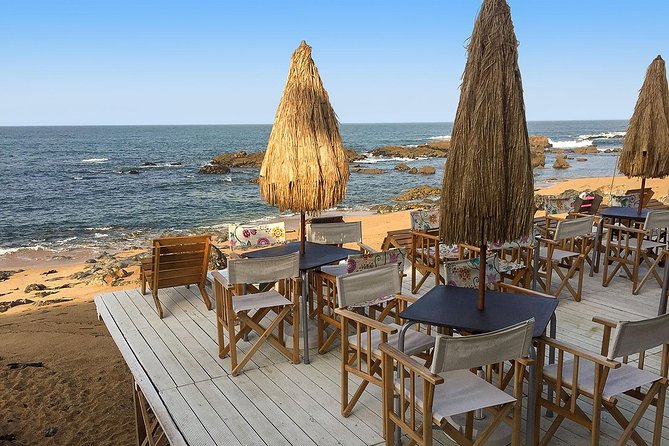
You meet at Biclas & Triclas in central Porto, where you’ll greet your guide, fit your helmet, and get a short safety briefing before you roll. It’s the kind of setup that helps you feel ready fast. No long waiting around, and you’re not spending the first 30 minutes still figuring out gears.
This tour is built for comfort and flow. It’s private for your group, and the small size (limited to 8) helps keep the ride easy to manage on tighter streets. You’re not dealing with a swarm of people, and that matters in Porto, where streets can get narrow and turns happen fast.
You also get bottled water included. That sounds basic, but on a 3-hour ride it’s one less thing you have to carry or remember.
You can also read our reviews of more cycling tours in Porto

The Big Picture Route: Historic Porto, Beaches, Parks, and the Douro
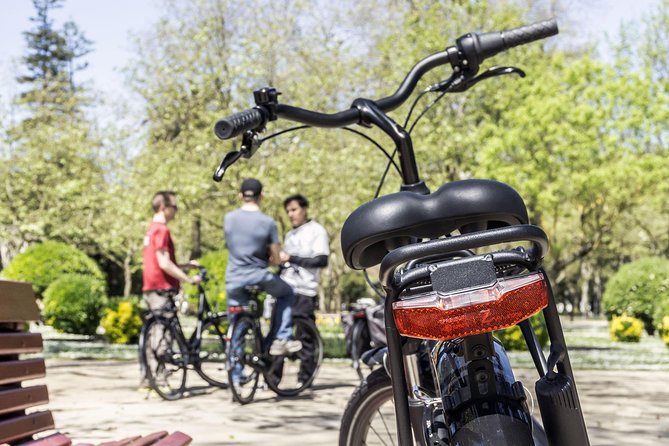
The heart of the experience is that it doesn’t just stay in the Ribeira for views and call it a day. You start in Porto’s historic quarter and head outward along the Douro corridor. Then you swing toward the coast to enjoy the Foz and Matosinhos beach areas. After that, you work your way back toward the historic core, with the kind of “different Porto” variety that makes the time feel well used.
You’ll cycle at a leisurely pace with intermittent stops for photo breaks and history. The stops are short, so you’re constantly moving through new scenery—river views, cobbled streets, gardens, and iconic bridges—without the tour dragging.
And yes, Porto has hills. The tour is designed for all fitness levels and abilities, but do yourself a favor: ask for help with your settings at the start, and if you’re offered an assist bike, use it. Reviews from prior riders repeatedly point out that being comfortable with the gears makes a big difference.
Stop-by-Stop: What Each Place Feels Like (and What to Watch For)
Miragaia: Cobblestones, Villas, and the City’s Shoreline Changes
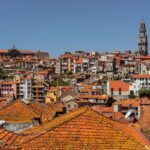
You begin by heading past Miragaia, a picturesque area known for cobbled streets lined with villas and small places to eat typical Portuguese dishes. This is the kind of neighborhood where you’ll see how people actually live along the slopes and the waterfront, not just where the postcards come from.
A neat detail here is the way urban change reshaped the shoreline. The modifications around Miragaia included building a huge platform connected to the Customs area, replacing an older Miragaia beach. If you like understanding why Porto looks the way it does today, this is a good early mental “map” stop.
Practical note: cobblestones can feel bumpy even on a bike lane nearby, so keep a relaxed grip and let the bike move under you.
Porto’s Tram Museum Area: A Quick Detour for Transport Nerds
The route continues past an area associated with Museu do Carro Eléctrico (Porto Tram Museum), which opened in 1992 and sits in a former thermoelectric power station near the River Douro in Massarelos. You’re not going to spend the afternoon inside, but the stop helps you connect Porto’s riverside industry to how the city moved people.
If you’re a history-and-infrastructure person, this brief stop adds context. If not, it still works because it’s quick and keeps you moving toward the views.
You can also read our reviews of more private tours in Porto



Ponte da Arrábida: The Bridge That Turns the Route Into a Landmark
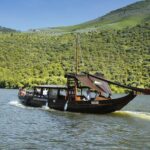
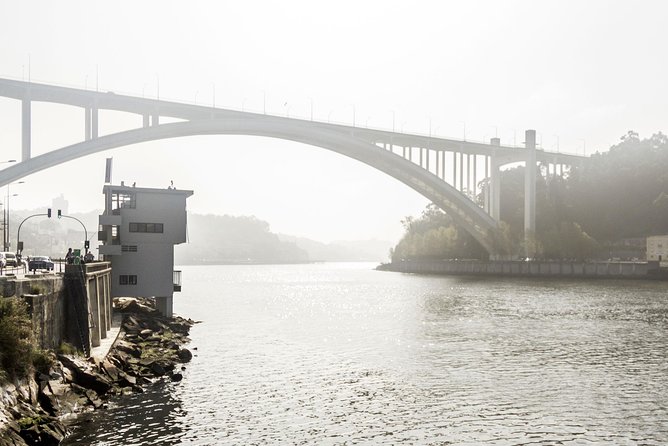
Next comes Ponte da Arrábida, a major arched bridge connecting Porto and Vila Nova de Gaia. At the time it opened in 1963, it had the largest reinforced concrete arch of any bridge in the world. That’s the kind of stat that makes you look at the structure instead of just using it as a shortcut.
The best part is that the bridge moment gives you scale. You’ll see the Douro stretching out, and you’ll feel how the city is built around movement—ships, boats, and trade—long before you even reach the waterfront sights.
Cantareira: Riverside Fisher Boats and a Name with a Water Story
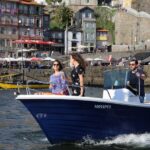
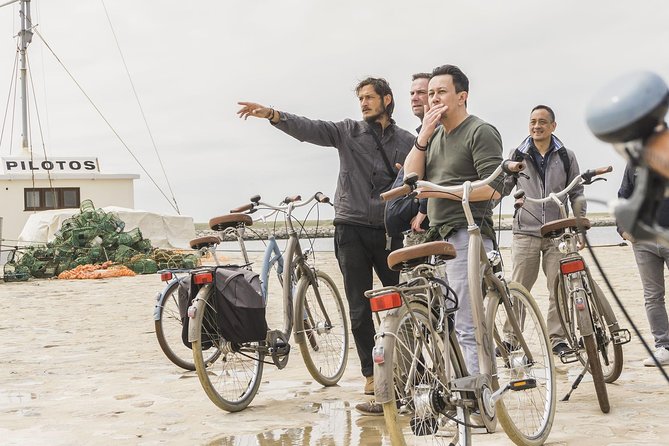
Cantareira is a riverside area that still shows the feel of working waterfront life. The name ties back to when fountains brought water for locals who hauled it with pitchers. Today, it’s associated with riverside fishermen, with harbor shelter for small boats and storage gear.
This stop is worth it because it’s less about monuments and more about everyday river culture. Porto isn’t only churches and bridges; it’s also the working edge along the water.
Jardim do Passeio Alegre and Fortress São João Baptista: Coast Views with Character
You’ll roll through Jardim do Passeio Alegre, a garden area classified as a property of public interest, connected to nearby heritage. It’s a calmer stretch with a “walkable” vibe even while you’re biking.
Then you’re at the São João Baptista da Foz Fortress, positioned dominantly near the Douro river bar to provide access into Porto. If you like fortifications, think of it as the city’s maritime “defense line.” Even from the bike, you get that strong positioning feeling—high ground, river mouth energy.
These are good stops for photos because the views come with an explanation. You’re not just looking; you’re understanding why that spot mattered.
Farolim de Felgueiras and Pergola da Foz: A Lighthouse Stop + Beach Label Names
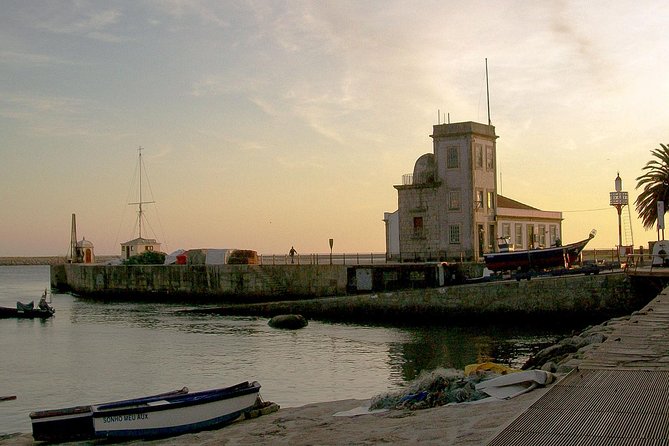
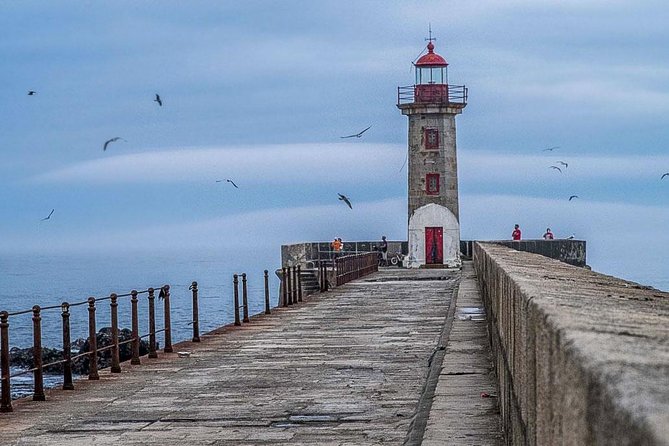
At Farolim de Felgueiras, you’ll see the lighthouse on the right bank tip of the pier area in Foz do Douro. Lighthouses can turn into pure scenery fast, but on this route, the focus stays on giving you context for the coastline.
Then you’ll reach Pergola da Foz, which is tied to the broader beach area designation of Praia da Foz (including Ourigo, Ingleses, and Luz). This is where the tour transitions from “city coast” to “outdoor Porto.” You’ll start feeling the breeze more.
Praia do Castelo do Queijo: The Pirate-Defense Story Behind the Shape
This stop is fun to learn. Praia do Castelo do Queijo sits on a cheese-shaped rocky hill, called Castelo do Queijo because of its form. It was built in the 17th century to protect the coast from North African pirates.
So yes, it’s a viewpoint. But it’s also a story about why those defenses were built where they were. If you’re curious, you’ll catch yourself looking at the coastline differently after hearing that.
Matosinhos Beach: Big Sands, Easy Access, Surf-Friendly Water
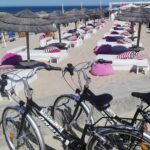
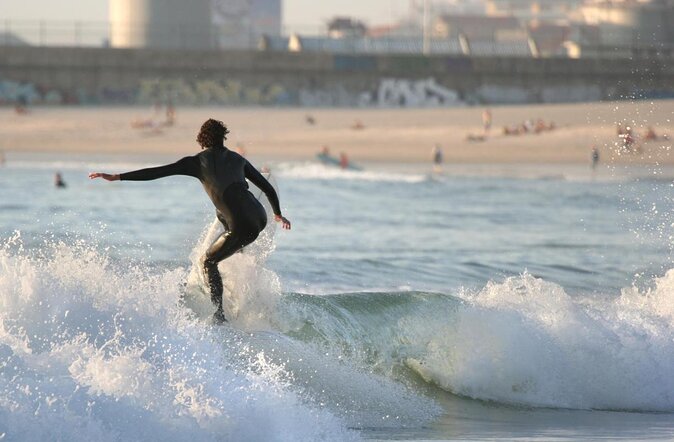
Then the route heads to Praia de Matosinhos, the largest beach with easy access from central Porto. You’ll get the feel of a real beach day spot—wide golden sands and waves that work for surfing.
This is often where the tour feels like a “reset.” You’re not in a dense street canyon anymore. You’re out near the Atlantic, and the ride gives you space to breathe.
Porto City Park and Parque Urbano da Pasteleira: Green Space Between Sights
Back inland, you’ll cycle through Porto City Park, the biggest urban park in Portugal. It covers 83 hectares with about 10 km of paths, and it’s set up with lakes, flora, and fauna integrated into the city.
After that, you’ll pass Parque Urbano da Pasteleira, a public park in Lordelo do Ouro with extensive forest. It’s divided into two plots connected by wooden pontoons across an area cut by Afonso de Paiva Street.
These park stops are valuable because they keep the ride from becoming only “urban intensity.” You get calmer footing and open views, and the route feels less like sightseeing marching.
Jardim do Cálem: River Mouth Views and the Photo Finish Mood
You then reach Jardim do Cálem, a small garden space almost at the mouth of the Douro. The big draw here is the view—plus the tall black poplars that frame the scene.
This feels like a “set up” stop before the iconic bridge and the historic core. It’s where the river starts to look cinematic.
Ponte Luís I and the Ribeira Waterfront: Porto’s Most Famous Ex-Libris
The tour includes the iconic Ponte Luís I. One interesting detail: its real name is Luiz I, and the city nickname comes from a sentimental question people in Porto debated over time. Either way, it’s one of the city’s signature images.
The bridge also carries a UNESCO World Heritage connection since 1996, so this isn’t just a bridge-as-a-photo background. It’s part of why Porto’s waterfront matters globally.
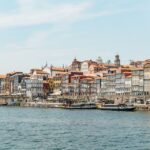
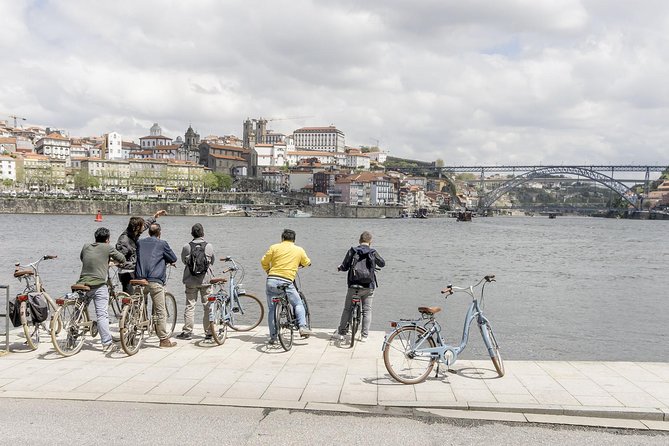
From there, you reach Praça da Ribeira, one of the oldest squares in Porto. It’s already referenced in royal letters in 1389. This part of the tour is where you feel Porto’s origins as a river trade city—commerce turned toward the Douro, which shaped growth along the quay.
And there’s a heavy historical note too: the Ponte das Barcas disaster in 1809, when more than 4,000 people died during an onslaught of French troops. Today, a bronze bas-relief marks the event nearby.
It’s a lot to hold in one ride, which is why the biking format works: you’re not trapped indoors listening to a lecture. You’re moving through the city while the stories land.
Passing São Francisco Church and Porto Wine Cellars: Icons Without the Crowd Trap
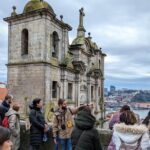
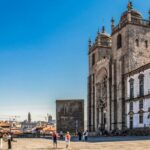
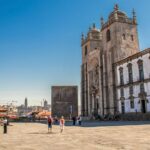
As you return through central areas, the route also takes you past São Francisco Church and Porto wine cellars. You don’t have to schedule a separate visit to get the impact of these places. Even from the street and viewpoints, they help you place the river trade theme against Porto’s architecture.
This matters if you have limited time. You get orientation plus key landmarks, then you can decide what to revisit later on foot.
How Long Is It Really, and What Pace Should You Expect?
It’s about 3 hours. The pacing is described as leisurely, with short stops for photos and explanations. Most people find it doable, including families, because the route mixes bike lanes, city streets, and park paths rather than turning it into a nonstop “push.”
If you’re worried about hills, keep expectations realistic and treat it as a guided cycling experience, not a flat stroll. Porto is hilly. The good news is that the tour is set up so you’re not alone with the challenge: you’re guided, you have a helmet, and you ride together in a group small enough to regroup easily.
I’d also plan on wearing something you can move in. Sunscreen helps a lot, and the breeze near the coast can mean you’ll want a light layer even when the sun is out.
Value for $59.28: What You’re Getting Beyond a Ride
At around $59.28 per person for a roughly 3-hour private tour, the value comes from what’s included. You get the local guide, bike use, helmet, and bottled water, plus all taxes, fees, and handling charges.
That’s not just convenience. A guide matters here because Porto has layers: old streets, maritime systems, bridge engineering, and the coastline’s defensive past. Without that context, you’d be cycling through pretty scenery and missing the “why.”
Also, the tour is limited to a small group (up to 8). Even when it’s described as private for your group, you’re still benefiting from that low group size because it keeps stops from turning into chaos.
If you’re comparing, ask yourself what you’d pay for separately: a guided route + bike rental + helmet + a couple of prime waterfront landmarks with context. When you stack those pieces, this price starts to make sense.
The Only Real Drawback: Weather and the Role of Your Guide
Weather is the main operational risk. The experience requires good weather, and if it’s canceled due to poor conditions, you’ll be offered another date or a full refund. Porto’s coastal zones can get breezy, so if rain is on the horizon, pack for it.
The other consideration is that this is guide-driven. On a private tour, your guide shapes the tone, pacing, and how comfortable you feel asking questions. If you want specific details—food, daily life, neighborhoods—be clear early in the ride. If something feels off, address it right away so the tour can shift.
Who Should Book This Bike Tour (and Who Might Skip It)
You should book if:
- You want active sightseeing without spending the day walking uphill.
- You’re short on time and want a route that covers historic Porto + Ribeira + bridges + beaches.
- You’re traveling as a family or mixed ages and want a paced experience that’s still fun outdoors.
You might skip if:
- You’re only interested in long visits inside major attractions. This tour is about moving and viewing from the bike route.
- You want an extremely relaxed, minimal-stops vibe. The itinerary is full of quick “look and learn” points.
FAQ
FAQ
How long is the Porto by Bike private tour?
It runs for about 3 hours.
Is this tour private?
Yes. It’s a private tour/activity, so only your group participates.
What is included in the price?
Included are all taxes, bottled water, a local guide, bicycle use, and a helmet.
Where does the tour start and end?
You start at Biclas & Triclas – Port Rent a Bike and Tours in Porto, and you end back at the same meeting point.
What areas of Porto does the route cover?
You cycle through Porto’s historic quarter, pass attractions such as São Francisco Church and Ponte de Dom Luis I, ride toward the Foz and Matosinhos beaches, and visit park areas before returning toward Ribeira.
Is the tour suitable for families and different fitness levels?
It’s described as family-friendly and suitable for all fitness levels and abilities.
What should children know about bike seating?
Children must be accompanied by an adult. Also, children up to 5 years of age must use a child seat.
Does the tour depend on weather?
Yes. It requires good weather. If canceled due to poor weather, you’ll be offered a different date or a full refund.
What is the cancellation policy?
You can cancel for free up to 24 hours before the experience start time for a full refund.
Should you book this? If you want a fast, outdoor way to connect Porto’s waterfront identity to the beach and park side of the city, this is a strong pick. Bring sunscreen, be ready for breeze off the water, and use the bike start moment to get comfortable with your ride. If your schedule is tight and you prefer moving through neighborhoods with a guide, it’s an efficient use of your time.