REVIEW · PORTO
Private e-Bike Tour in Porto – Explore Riverside, Beaches & Parks
Book on Viator →Operated by Biclas & Triclas - Rent a Bike and Tours · Bookable on Viator
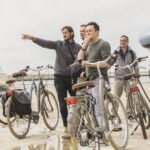
Porto looks different at bike speed. This private e-bike tour strings together riverside, beaches, and big parks with a licensed guide and provided e-bikes.
I love how it reaches beyond the usual city-center loop. You get stops like Miragaia, the Tram Museum, Arrábida Bridge, and the Foz beaches, so you’re seeing more of Porto’s edges in less time.
One drawback to plan for: Porto’s waterfront paths and road crossings can be busy. If you’re not comfortable riding near pedestrians, cars, and scooters, you may find the ride a little stressful even with the power assist.
In This Review
- Key points to know before you go
- Why the e-bike is the right tool for Porto’s river and coast
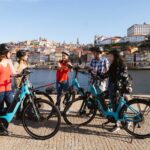
- Meeting at Biclas & Triclas: how the 3-hour private ride works
- Miragaia, Alfândega and the Tram Museum stop you’ll actually remember
- Arrábida Bridge plus the Foz forts and lighthouse views
- Pergola da Foz, Castelo do Queijo and Matosinhos Beach
- Parque da Cidade and Pasteleira: Porto’s big green breather
- Jardim do Cálem, Ribeira square and the moment on Dom Luís I Bridge
- Price, pacing and how to ride safely in busy Porto
- Should you book this e-bike loop around Douro and the Atlantic?
- FAQ
- How long is the private e-bike tour in Porto?
- What’s included in the tour price?
- Is food or drink included?
- Where does the tour start?
- When does the tour end?
- Is this tour private or shared?
- What language is the tour guide?
- Can children participate?
- Is the tour only for good weather?
- What if I need to cancel?
- What should I bring?
Key points to know before you go
- Private, small-group feel: you ride with just your group, with pacing set for comfortable speeds
- E-bike support on the hills: you can keep moving without feeling crushed by Porto’s grades
- A route that mixes river, coast, and parks: Douro viewpoints, Atlantc sand time, then green breaks
- Stops are mostly simple and free: expect short photo-and-context stops rather than long museum marathons
- Included essentials: helmet and bottled water, plus a guide who explains what you’re looking at
Why the e-bike is the right tool for Porto’s river and coast
Porto is a city of edges: steep bits here, big views there, and long stretches where walking starts to feel like a workout you didn’t buy a ticket for. An e-bike is what makes a “see more in less time” route actually pleasant.
Here, you’re not just cruising scenery. You’re getting a guided route that moves you between distinct Porto worlds: the Douro riverside, the Foz coast area, and large urban parks. That matters because Porto’s big highlights aren’t all packed into one walkable bubble. By bike, you can connect them without spending your whole day in transit.
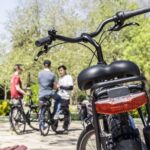
The basics are covered too. You get an e-bike, a helmet, and bottled water. That’s not just convenience. It means you can focus on staying alert, staying comfortable, and enjoying the views instead of juggling gear and logistics.
And the tone from the guides seems consistent: you’ll get history and local context, but you’ll also get practical coaching—how to ride the route at a steady pace and where to pay attention near the busiest areas.
You can also read our reviews of more cycling tours in Porto

Meeting at Biclas & Triclas: how the 3-hour private ride works
Your tour starts and ends at Biclas & Triclas – Port Rent a Bike and Tours, R. Nova da Alfândega 108 R/C, 4050-431 Porto. It’s convenient because it’s not far from public transportation, and you don’t have to plan a second drop-off elsewhere.
This is a private experience, so only your group participates. That’s a big deal for riding comfort. You’re less likely to get stuck waiting for a crowded pack, and the guide can slow down or speed up depending on how your group feels behind the handlebars.
Timing-wise, plan for about 3 hours on the clock. In that window, the route is built around short stops—enough time to hear the story, take photos, and then roll on. If you want a slower, longer sit-down museum day, this isn’t that kind of tour. It’s more like a guided highlights ride with smart breaks.
Also worth knowing: the tour requires good weather. Porto can turn windy or rainy, and while the equipment is described as in great shape, a poor-weather cancel offer is built into the experience.
Miragaia, Alfândega and the Tram Museum stop you’ll actually remember
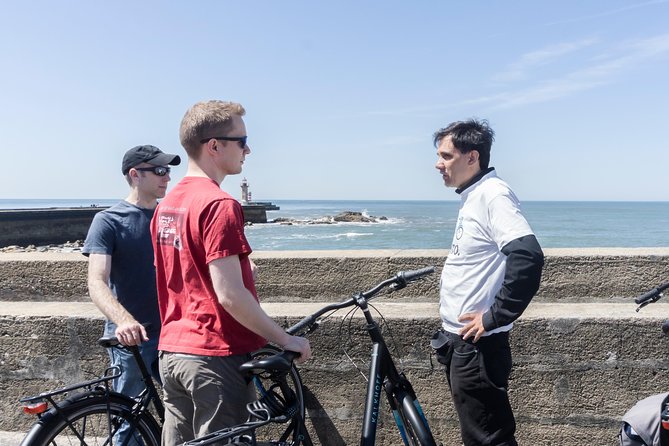
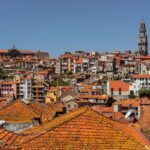
The route starts in the Miragaia area, a hillside district known for cobbled streets, villas, and small places serving typical Portuguese dishes. Even if you never plan to do a full day in Miragaia, this first stop helps you understand why Porto looks the way it does: compact neighborhoods clinging to the river edge.
Next up is the Alfândega Porto Congress Centre area. This stop can feel like a quick historical waypoint, but the point is the transformation it represents—how major urban changes in the 19th century reshaped the waterfront, including replacing the older Miragaia beach with new platforms and pier-related construction.
Then comes the Museu do Carro Eléctrico (Porto Tram Museum). It’s located in a former thermoelectric power station by the Douro in Massarelos. Why I like this stop in a bike tour: it gives you a human-scale angle on Porto’s engineering and everyday life. You’re not just seeing monuments—you’re learning what moved people around before cars became the default.
Most of these stops are short and have free admission, so don’t expect a deep, hour-by-hour museum experience. Instead, treat them like story checkpoints that make the ride mean more.
Arrábida Bridge plus the Foz forts and lighthouse views
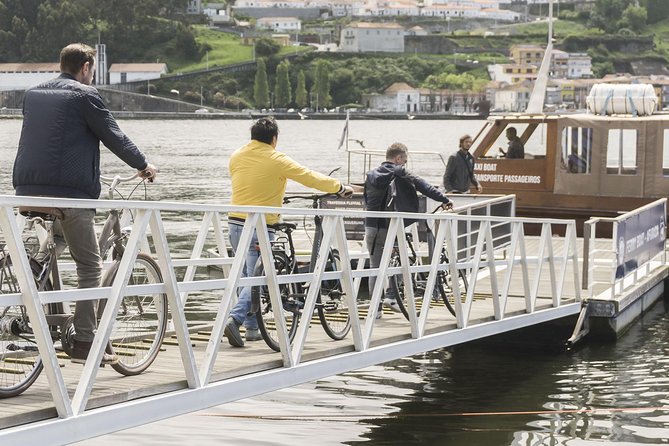
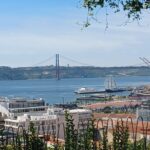
From the central river stretch, the tour swings toward the wider water views with the Ponte da Arrábida. This arched bridge connects Porto and Vila Nova de Gaia, and it’s famous for its scale at the time of construction in 1963. Even if you’ve seen photos of Porto bridges, the benefit here is perspective: you get to understand how the bridge slots into the city’s flow and river geography.
After the bridge, you reach Cantareira, a riverside area tied to fishermen and small-boat shelter. It’s the kind of stop that’s short on paper but strong in feel. You’re looking at how the riverfront supports daily work, not just postcards.
Then the route climbs into classic Foz scenery: the Jardim do Passeio Alegre, the Fortress of São João Baptista (also known as São João da Foz Castle), and the Farolim de Felgueiras lighthouse area. Together they help you grasp Porto’s “mouth of the river” vibe—fortifications built for control and visibility, and gardens that show how people wanted green calm next to the Atlantic.
A practical note: these are photo-friendly spots, but Porto near the water can be windy. If you ride in cooler months, bring a layer you’ll actually wear. The “short stop” length doesn’t matter much if you’re shivering.
Pergola da Foz, Castelo do Queijo and Matosinhos Beach
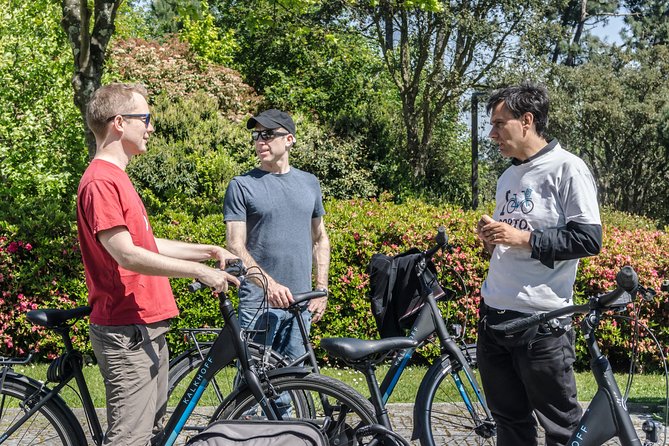
The middle stretch shifts toward beach country and coastal viewpoints.
Pergola da Foz gives you a nicer “walk-and-look” pause along the Praia da Foz area, which covers beaches like Ourigo, Ingleses, and Luz. This is a good time to capture the coastline shape rather than single buildings.
Then you’ll reach Praia do Castelo do Queijo, which traces back to coastal defense built in the 17th century to protect against North African pirates. The name comes from the hill’s shape—cheese-like—and it’s an example of how Porto’s past is often tied to practical geography.
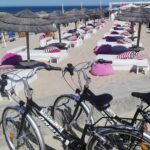
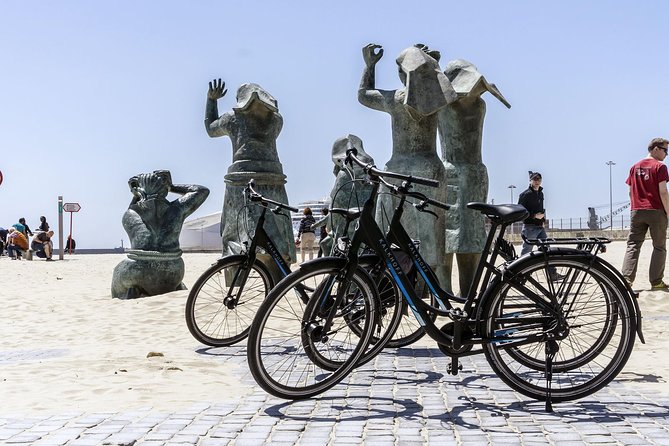
Next comes the big one: Matosinhos Beach. It’s described as the largest beach with easy access from central Porto and known for wide golden sands and waves that suit surfing. If you came to Porto hoping for “river city, yes—but also ocean air,” this is where it clicks.
One watch-out: riding through coastal stretches is usually pleasant, but you still share space with pedestrians and active road zones. Keep your focus up and your speed predictable.
You can also read our reviews of more private tours in Porto


Parque da Cidade and Pasteleira: Porto’s big green breather
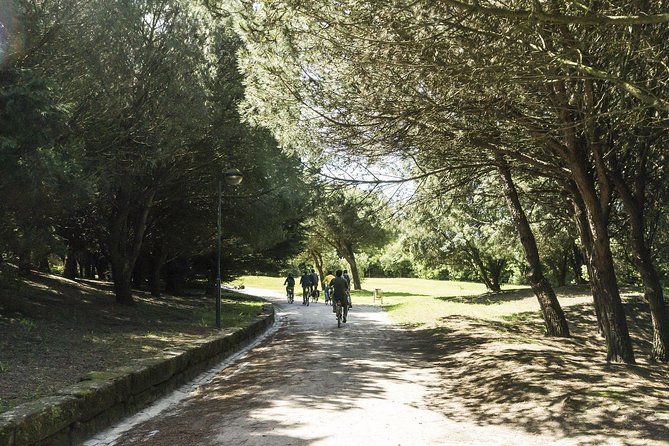
After the coastal energy, you get the payoff for anyone who loves a change of pace: Parque da Cidade. It’s the largest urban park in Portugal at 83 hectares, with about 10 km of paths and designed landscape elements by Sidónio Pardal. The important idea on a bike tour is simple: you stop fighting your legs and start enjoying your eyes.
You’ll also pass Parque Urbano da Pasteleira, a public park with forested areas divided by a street, and connected by wooden pontoons. These park sections break up the ride so it doesn’t feel like a nonstop cruise. Even better, they help you recharge before returning toward the historic center.
This is where the e-bike does its quiet work. You still get movement and fresh air, but you’re not constantly paying the “hills tax.” In fact, the route is described as mostly fairly flat, with only a few hillier segments.
Jardim do Cálem, Ribeira square and the moment on Dom Luís I Bridge
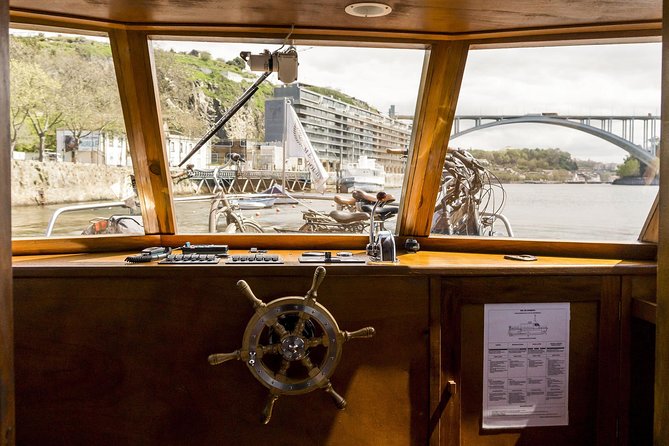
As you approach the river’s historic heart, the tour adds two anchor stops.
First is Jardim do Cálem, a small garden space near the mouth of the Douro with river views and distinctive tall black poplars. This stop works well because it’s visually calm. You get a break from the “busy movement” of waterfront crowds and focus on water and sky.
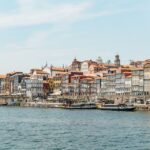
Then you roll into Praça da Ribeira, one of Porto’s oldest squares, closely tied to the city’s early commercial growth with the Douro. It’s a place where you can connect the dots: the river brought trade, trade shaped neighborhoods, and neighborhoods built the city you walk today.
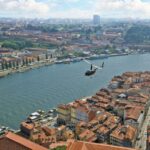
Finally, the ride closes at Dom Luís I Bridge (often called Luiz I). It’s included in UNESCO’s World Heritage Site since 1996. Even if you’ve already seen the bridge from the viewpoint side, seeing it as part of your bike loop gives you a sense of how it frames Porto’s river life.
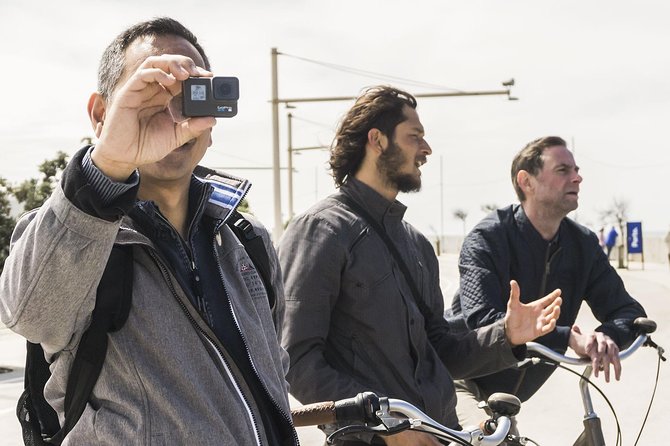
If you’re taking photos, consider doing a quick camera check at this stage. The area around the bridge can be busy, so you’ll want your gear ready before you lock in the shot.
Price, pacing and how to ride safely in busy Porto
At $71.20 per person for about 3 hours, you’re paying for more than transportation. You’re paying for a licensed guide, the e-bike, helmet, bottled water, and a route designed to include multiple standout stops that are free to enter. You’re also getting a small-group experience and a private setup.
That value adds up when you consider what you’d otherwise do on your own: assembling a route, finding bike-friendly connections, and then spending extra time in transit between the river and the coast. This ride is built to compress those hours.
Pacing is another strength. Several people describe the ride as easy on the bike and powered up hills so you can keep going without getting bogged down. At the same time, one real-world factor matters: Porto can be crowded, and some parts of the route involve busier areas where you’ll share paths with pedestrians and deal with road hazards.
So here’s how you tilt the experience in your favor:
- Ride as predictably as possible. Don’t surge or brake suddenly.
- Keep your eyes up, not just on the ground—watch for foot traffic and tricky edges.
- If you’re new to city cycling, tell the guide early. You want the coaching pace set before the busiest stretches.
Also, note that the tour does not include food or drinks unless specified. If you’re riding at a time you normally eat, plan a snack stop before or after. It’ll keep the mood light and prevent the “hangry minutes” problem.
Should you book this e-bike loop around Douro and the Atlantic?
Book it if you want a fast, guided way to see Porto’s riverfront and coast without spending half your day walking hills. I’d especially recommend it for:
- first-timers who want a wide overview and a sense of where the city’s parts connect
- people who like parks and want a break from stone streets
- couples or friends who want private pacing and a calm ride rhythm
Skip it or think twice if you’re very uncomfortable riding near foot traffic and scooters. Even with e-bike help, Porto’s paths can feel like shared space, not a quiet bike lane.
One more reason to consider it: the guides bring the city to life with stories tied to what you’re passing. Names that have come up include Javier, Eduardo, Emanuel, Helio, Philippe, Atur, Joachim, and Mirella—and the common thread is that they don’t treat the route like a checklist.
If the weather looks solid and you’re up for a guided ride that mixes river views, beach air, and park calm, this is a strong use of a half-day in Porto.
FAQ
How long is the private e-bike tour in Porto?
It runs for about 3 hours.
What’s included in the tour price?
You get the local guide, use of the e-bike, helmet, bottled water, and all taxes/fees.
Is food or drink included?
No. Food and drinks aren’t included unless specifically mentioned.
Where does the tour start?
It starts at Biclas & Triclas – Port Rent a Bike and Tours, R. Nova da Alfândega 108 R/C, 4050-431 Porto.
When does the tour end?
It ends back at the same meeting point.
Is this tour private or shared?
It’s private—only your group participates.
What language is the tour guide?
The tour is offered in English.
Can children participate?
Children up to 5 must use a child seat. Most travelers can participate, but you should confirm with the operator if you have questions.
Is the tour only for good weather?
Yes. It requires good weather, and if it’s canceled due to poor weather, you’ll be offered a different date or a full refund.
What if I need to cancel?
You can cancel for a full refund up to 24 hours before the experience starts.
What should I bring?
Bring weather-appropriate clothing since it depends on conditions, and plan for the fact that the tour includes bike gear and water but not meals.