REVIEW · PORTO
PORTO: Historical Walking Tour
Book on GetYourGuide →Operated by DailyTours34 · Bookable on GetYourGuide
Porto rewards slow walking. This tour’s standout for me is the guide-level storytelling (people have had Pedro and Gregorio) plus the sweep of panoramic views over the river and Gaia. The route also packs in major sights without dragging, mixing medieval lanes with big-photo landmarks. One thing to consider: 3 hours is a fair walk, and some folks feel it in their legs around the two-hour mark.
I like the way the tour balances “what you’re seeing” with “why it matters.” You’ll hit classic Porto stops like São Bento Station and the Lello Bookshop, then you’ll connect them to the city’s shifting history and architecture. For $21 and 3 hours, you also get real extras on the way—Port wine, bread and olive oil, and an optional picnic.
If you choose the finish in Virtudes Gardens, it turns into a proper break, not just another stop. The tour wraps back at R. de Mouzinho da Silveira 34, with time to hang with your group and a small surprise at the end.
In This Review
- Key highlights worth your attention
- The real value: an orientation walk that also feels like a story
- Meeting at R. de Mouzinho da Silveira and following a smart city loop
- São Bento Station to Avenida dos Aliados: Porto’s grand face
- Sé neighborhood: where the city feels medieval and personal
- Lello Bookshop and art nouveau details that you can actually spot
- Igreja do Carmen, Clérigos Tower, and the skyline symbols of Porto
- Dom Luís Bridge, Palacio da Bolsa, and the big view over Douro and Gaia
- Virtudes Gardens picnic box: a real finish, not an add-on
- 3 hours on your feet: who it suits and who should adjust
- Port wine, bread and olive oil, and why the price feels fair
- Should you book the Porto Historical Walking Tour?
- FAQ
- How long is the Porto Historical Walking Tour?
- Is the tour guided in English?
- What’s included in the tour price?
- Is the picnic in Virtudes Gardens optional?
- Where does the tour start?
- Is free cancellation available?
Key highlights worth your attention
- Sé neighborhood medieval streets: narrow lanes, old corners, and a local-feeling pace.
- São Bento Station stop: a must-see landmark that anchors the trip’s “Porto at a glance” vibe.
- Livraria Lello and art nouveau moments: a sharp contrast between old-world reading and Porto’s design flair.
- Clérigos Tower views: the tower’s presence shows up across the city.
- Dom Luís Bridge and river viewpoints: you get the big geography of Porto and Vila Nova de Gaia.
- Virtudes Gardens picnic option: bread, cheese, hams, fruit, Portuguese pastries, and a bottle of wine, plus a blanket.
The real value: an orientation walk that also feels like a story
This is the kind of Porto tour you do early—when you want your bearings fast, but you still want it to be enjoyable. The route is designed to give you a “shape” of the city: where the action sits, where the history lives, and how the river divides Porto from Vila Nova de Gaia.
What makes it work is the balance. You get major monuments, yes, but the tour spends time on the in-between spaces—small alleys and neighborhoods that help everything else click. Guides named Pedro and Gregorio show up in bookings and are praised for clear, fun storytelling, which matters because Porto’s past can feel tangled unless someone makes it make sense.
The price also feels sensible for what’s included. For $21, you’re not just paying for walking. You’re getting a live guide plus Porto wine and bread and olive oil, and you have an option to turn the ending into a full picnic.
You can also read our reviews of more walking tours in Porto



Meeting at R. de Mouzinho da Silveira and following a smart city loop
The tour starts at R. de Mouzinho da Silveira 34. From there, the route moves in a logical loop through Porto’s “signature hits,” then returns you to the same area. For visitors with limited time, that loop format is a quiet win—you don’t have to keep re-navigating from one side of town to the other.
The walking style is classic city-center pacing: frequent turns, quick looks at facades, then short breaks to reset. There’s one scheduled break time (Vitória gets a pause), and that helps keep the 3-hour stretch more comfortable.
Because the itinerary threads together both grand and tucked-away streets, it suits people who enjoy contrasts. You’ll go from wide, public spaces to tight medieval corridors, without the tour feeling like it’s switching gears every five minutes.
São Bento Station to Avenida dos Aliados: Porto’s grand face
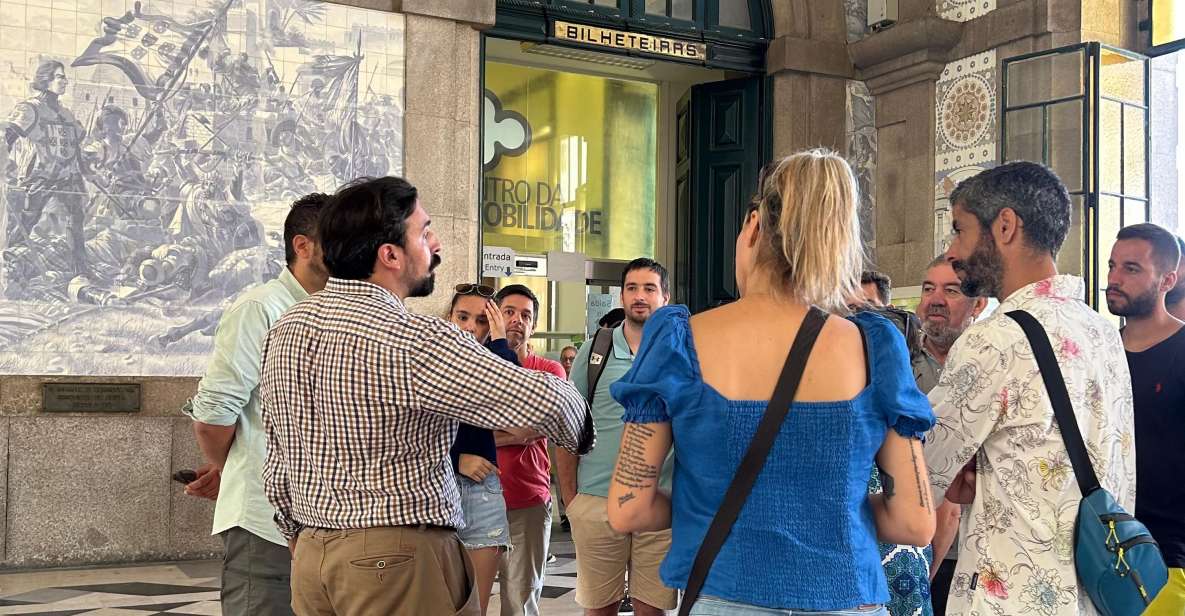
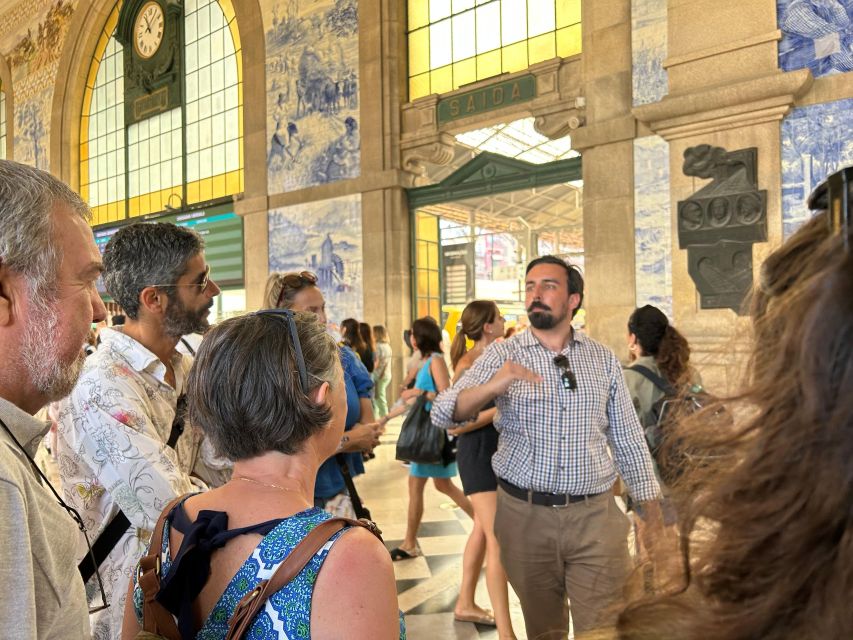
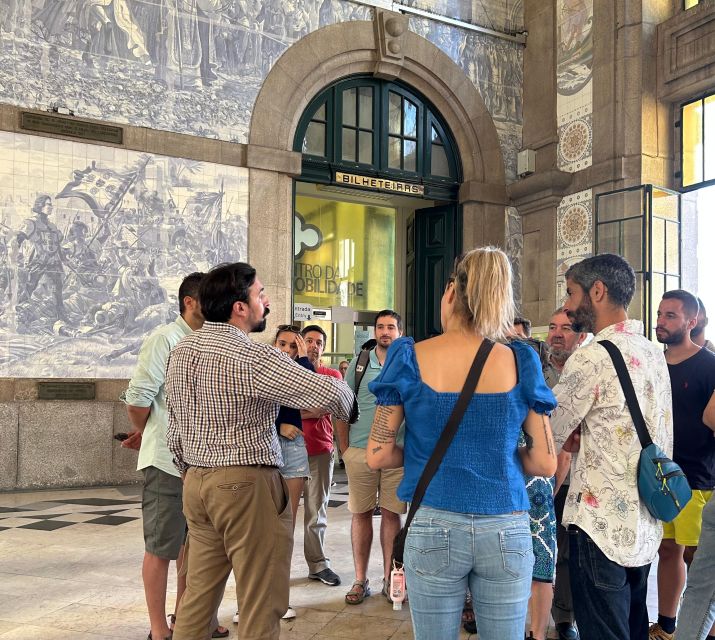
One of the first stops is São Bento Station (about a 10-minute visit). Even if you’re not hopping on a train, it’s a strong “arrival point” for understanding Porto. It sets a tone: Porto isn’t only charming streets and viewpoints. It also has big civic pride and design confidence.
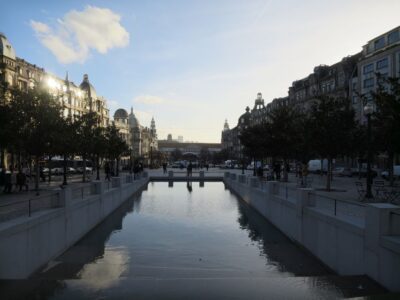
From there, you pass through central showpieces like Avenida dos Aliados and Porto City Hall. These are the parts of town that help you picture Porto as a working, organized city—then you contrast that with what’s coming next in the older quarters.
If you like travel days that feel efficient, this early sequence helps. In a short window, you get landmarks that are easy to recognize later, which makes your self-guided exploring afterward smoother.
Sé neighborhood: where the city feels medieval and personal
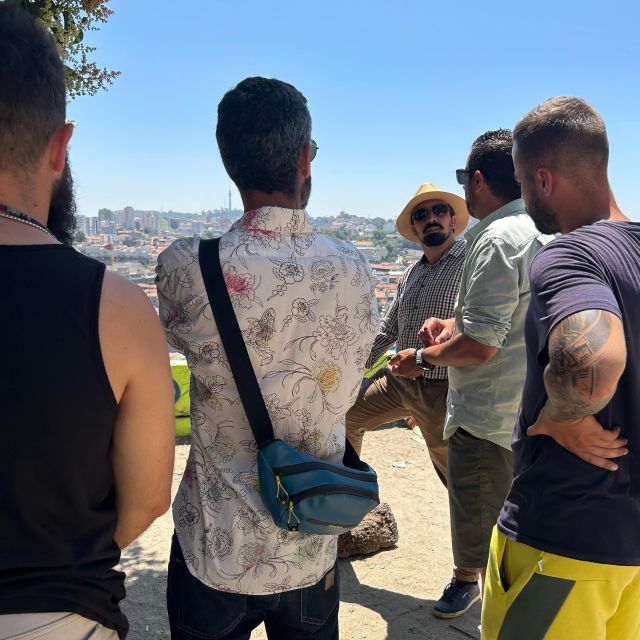
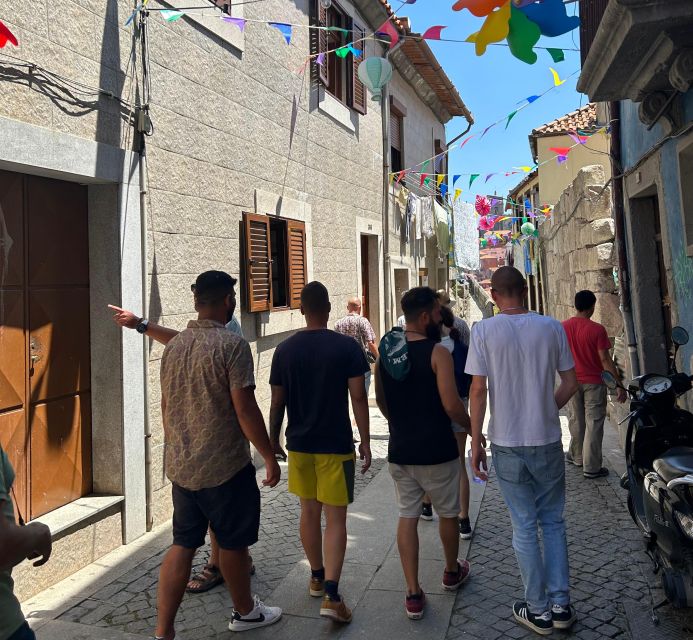
Next you shift into the Sé area—one of Porto’s medieval cores. The tour’s time here is about more than checking a box. The guide leads you through the small alleys and narrow streets where Porto’s age shows in the details.
This is also where the walking tour format earns its keep. A guide can point out what you should notice in a place that would otherwise blur into “more old streets.” You’re learning how the neighborhood functioned, and how Porto’s identity was shaped in older times.
You’ll pass by key stops around Sé, and you’ll also get a break in the Vitória area (about 15 minutes). That pacing is thoughtful. It gives your legs a chance to recover while you’re still in the dense, character-heavy part of town.
Practical note: this section is more “city feet” than “museum floors.” Wear comfortable shoes, especially if you’re visiting in warmer weather or you’re sensitive to longer walks.
Lello Bookshop and art nouveau details that you can actually spot
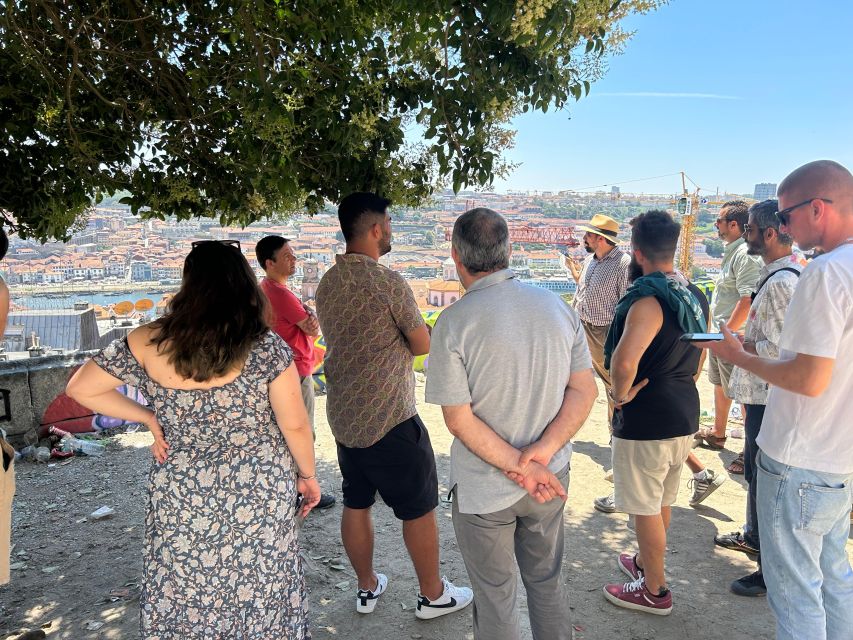
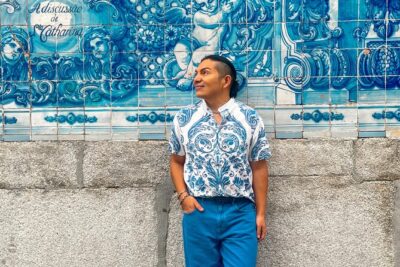
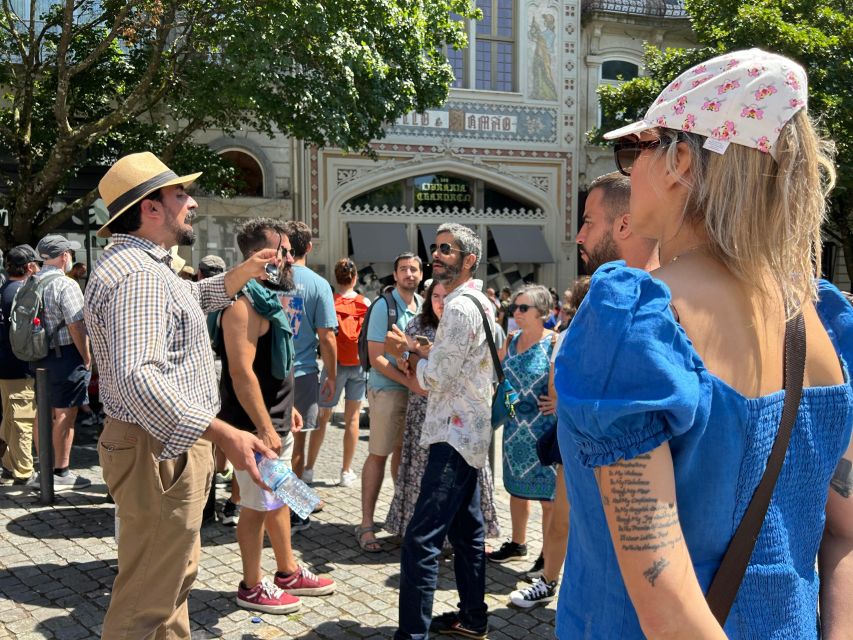
After the medieval lanes, the tour turns toward Porto’s more decorative side. You’ll pass art nouveau buildings until you reach the famous Livraria Lello & Irmão—one of Portugal’s oldest bookstores.
The bookshop stop is short (10 minutes in the itinerary flow), but it’s the kind of stop that still pays off. Even if you’re not a serious book collector, it’s a recognizable, high-impact place that changes how you see Porto’s culture—this city loves art, design, and institutions that preserve identity.
If you’re the type who likes architecture, this part is a treat. It sits in contrast to Sé: less stone-and-street medieval, more visual flair and Portuguese creativity. It’s also a great photo moment, because the building draws attention from different angles.
Just don’t over-plan your stop time. The value here is staying with the guide’s context, then using your extra time after the tour to explore deeper if you want.
You can also read our reviews of more historical tours in Porto




Igreja do Carmen, Clérigos Tower, and the skyline symbols of Porto
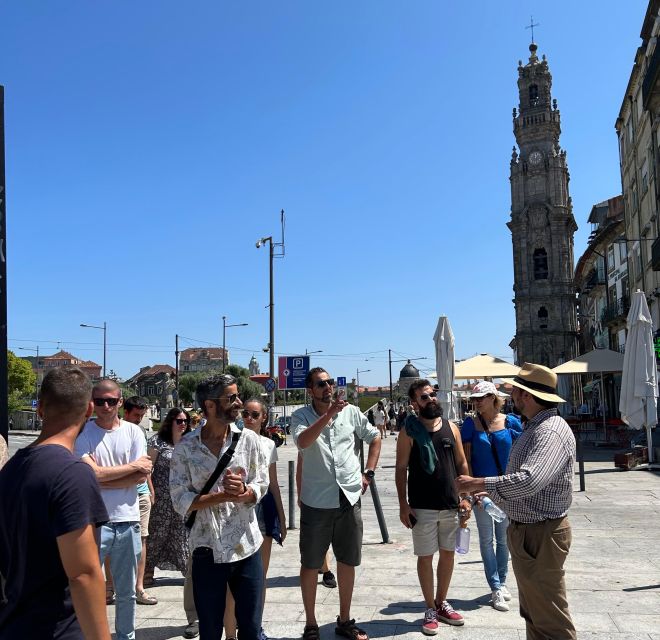
The route also includes a pass by Igreja do Carmen, Porto. It’s brief in the plan, but these quick sighting moments matter. They train your eye to recognize which churches and facades are part of Porto’s recurring skyline language.
Then comes Clérigos Tower, described as one of the city’s most characteristic symbols that you can spot from multiple points. This is a key “mental map” stop. Once you know what the tower means in the city view, you’ll start noticing it everywhere on your own walks.
In practical terms, this helps you navigate and explore later. You’ll understand why certain streets “feel” like they’re leading somewhere, because you can link them to the city’s visible landmarks.
Dom Luís Bridge, Palacio da Bolsa, and the big view over Douro and Gaia
After you work your way through the central sights, you reach stops that show Porto’s scale. Dom Luís Bridge is one of those “you get it instantly” landmarks. Even if you don’t spend long there, it’s a turning point: you’re crossing from old streets into the city’s dramatic geography.
You’ll also pass Palacio da Bolsa (about 10 minutes). It’s not just a building stop. It’s a reminder that Porto’s story isn’t only medieval. It includes moments of wealth, power, and civic identity—things that shaped how the city built itself.
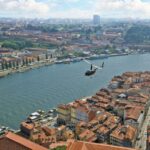
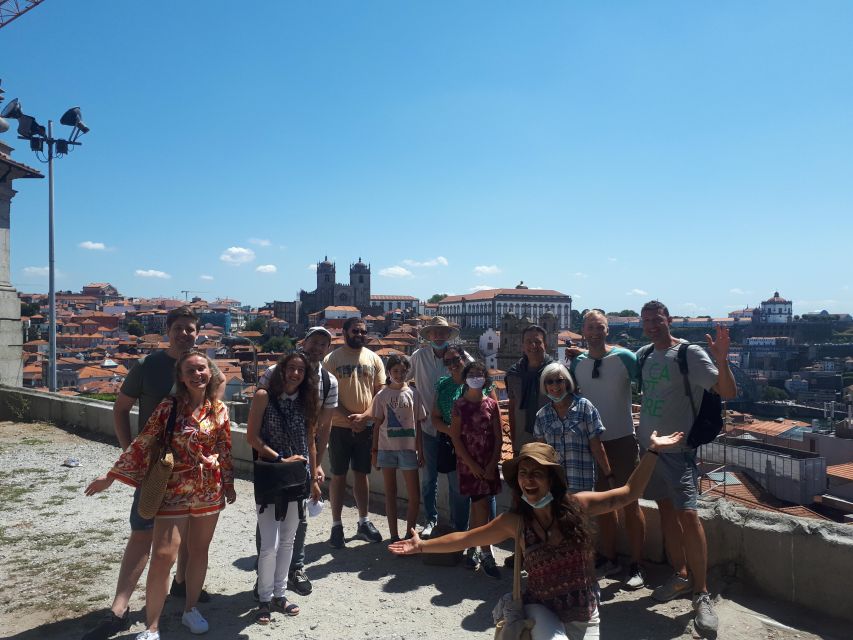
And then you get the payoff: an astonishing panoramic outlook over downtown Porto, the river, and Vila Nova de Gaia. If you like travel rewards you can feel in your chest—the kind that makes you stop walking for a second—this is where that happens.
One small consideration: viewpoints and photo moments are worth it, but the tour keeps moving. If you’re chasing perfect photos, keep your phone ready, because the best views may come with short windows.
Virtudes Gardens picnic box: a real finish, not an add-on
The ending is where you choose your vibe.
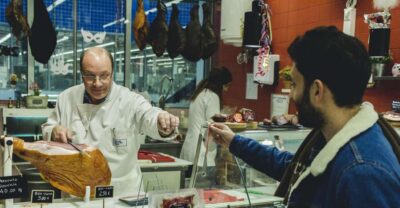
If you select the picnic option, the tour finishes in Virtudes Gardens with a picnic box of Portuguese food and wine. The contents are clearly spelled out: bread and cheese, hams, fruit, Portuguese pastries, and 1 bottle of wine, plus a traditional Portuguese picnic blanket.
This is a smart option for two reasons. First, it gives your body an actual reset after the walking-heavy first half. Second, it turns the tour into a cultural experience, not only a history lesson. You’re eating like a local moment—slow enough to feel like a break, scenic enough to stick in your memory.
If you skip the picnic, you still get time with your group at the end and a little surprise. The picnic just makes the finale more “sit, eat, and exhale.”
3 hours on your feet: who it suits and who should adjust
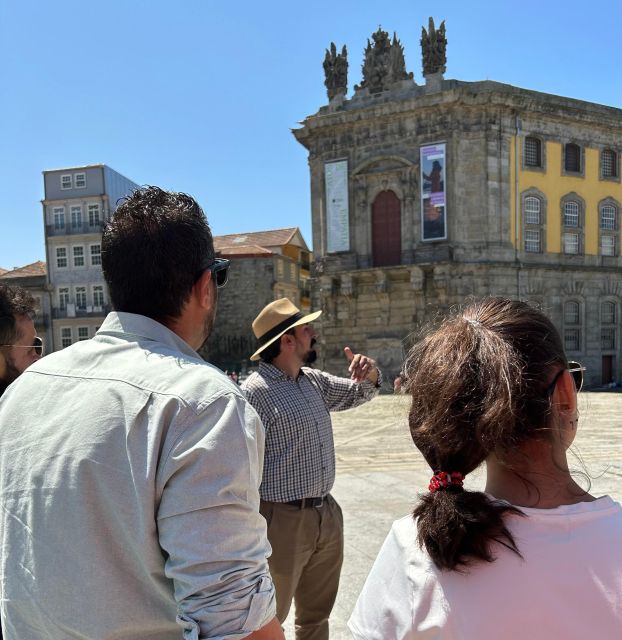
This tour is best for people who want a lot of Porto in a short time and don’t mind walking. It’s also a strong pick if you care about architecture and city symbolism. You’ll see a clear spread: station landmark, central civic areas, medieval Sé streets, art-related stops like the bookstore, tower symbolism, bridge views, and a palace.
It may be less ideal if you’re dealing with mobility limits or you know you tire quickly on longer walks. One comment in the booking history notes that 3 hours can feel 30–45 minutes too long for some, with people getting tired around the two-hour mark. If that sounds like you, plan accordingly: go in with water, wear supportive shoes, and treat the scheduled break as your main recovery moment.
On the flip side, many people mention the pace feels good and the time flies, especially when the guide keeps the story flowing with humor. Guides are repeatedly praised for making the history readable and entertaining, which is one of the best “comfort hacks” on any walking tour.
Port wine, bread and olive oil, and why the price feels fair
At $21 per person for 3 hours, the tour’s value comes from the mix of guided context and included food and drink. You’re not only paying for sight access. You’re paying for someone to explain what you’re seeing—then backing it up with simple local tastings like Porto wine, plus bread and olive oil.
Then there’s the optional picnic. If you select it, the package is more than a snack: it’s a box with multiple items (cheese, hams, fruit, pastries) and a bottle of wine, plus the picnic blanket. That makes the ending feel like a full experience rather than a token gesture.
For budget-conscious travelers, this matters. Porto can be expensive once you start adding paid attractions, meals, and tastings. Here, at least some of those costs are bundled, and you still get a structured walk that helps you enjoy the rest of your days in the city.
Should you book the Porto Historical Walking Tour?
Book it if you want an efficient Porto orientation that still feels lively. This is a great first or second-day tour because it links major sites (São Bento Station, Lello Bookshop, Clérigos Tower, Dom Luís Bridge, and more) to the city’s older neighborhoods like Sé.
I’d also book it if you like guides who tell stories with personality. Based on guide names like Pedro and Gregorio appearing in successful trips, you’re likely to get an entertaining, clear approach that makes the walk feel worth it even when you’re just passing certain buildings.
Skip it or adjust expectations if 3 hours of walking sounds like a struggle. If you’re sensitive to extended walking, plan your day around the tour and keep the rest of your schedule light.
FAQ
How long is the Porto Historical Walking Tour?
The tour lasts 3 hours.
Is the tour guided in English?
Yes, it’s a live tour guide in English.
What’s included in the tour price?
You get a tour guide, Porto wine, and bread and olive oil. A picnic is included only if you select the picnic option.
Is the picnic in Virtudes Gardens optional?
Yes. You can choose to end the tour with a picnic box in Virtudes Gardens.
Where does the tour start?
The starting location is R. de Mouzinho da Silveira 34.
Is free cancellation available?
Yes. You can cancel up to 24 hours in advance for a full refund.