REVIEW · PORTO
Porto: Historical Center Walking Tour
Book on GetYourGuide →Operated by Footstepers · Bookable on GetYourGuide
Porto clicks faster on foot. This 2.5-hour UNESCO Historical Center walking tour lines up the Sé Cathedral area with the riverside Ribeira quarter, plus the climb toward Juderia do Olival, so you get the full layout in one go. I love how the guide makes the city’s religious roots feel practical, then walks you through port-city life by the river. I also love the route that strings together big-name sights like Clérigos Tower and Livraria Lello without dragging. One possible drawback: it is not suitable if you have mobility impairments, because the walk includes alleys and stairways.
The tour runs with a live guide in English or Spanish and has a strong track record (4.8/5 across 33 reviews). If you want a first visit that feels organized, not chaotic, this is a smart way to start.
In This Review
- Key highlights worth planning around
- Why This 2.5-Hour Porto Loop Works So Well
- Start at Estátua de Vímara Peres: The Perfect Launch Point by Sé
- Porto Cathedral and Paço Episcopal: The Religious Spine of the City
- Ribeira: Stairs, Alleys, and the Real Port-City Atmosphere
- Palácio da Bolsa, Vitória, and the City’s Power Centers
- Clérigos Church and Tower Area: One of the Best Photo-Plus-Context Combos
- Livraria Lello & Irmão and the “Bookshop That’s More Than a Bookshop” Moment
- Avenida dos Aliados and São Bento Station: Porto’s Street Stage
- The Defensive Wall Route: How the Walk Shapes Your Understanding
- Cordoaria Area and the Climb Toward Juderia do Olival
- Price and Value: What $32 Buys You in Real Terms
- Group Size, Timing, and How to Get the Most Out of the Pace
- What to Bring, and Simple Rules That Keep It Enjoyable
- Who This Porto Historical Center Tour Suits Best
- Should You Book This Porto Walking Tour?
- FAQ
- Where does the Porto Historical Center walking tour start?
- How long is the tour?
- How much does the tour cost?
- What language is the guide available in?
- Which major sights are included on the route?
- Is it suitable for people with mobility impairments?
- What should I wear or bring?
- Are there any rules about behavior during the tour?
- Is there an option to change plans if I need flexibility?
Key highlights worth planning around
- Sé Cathedral and Paço Episcopal: start with the religious core, then see how the Bishops Palace anchors the area.
- Ribeira and the river traders vibe: you’ll move from monument streets down toward the port pulse.
- Palácio da Bolsa and Clérigos: major civic and city-mark symbols, all on foot and in sequence.
- São Bento Station, then Avenida dos Aliados: two big “street energy” stops that help you read Porto quickly.
- Livraria Lello and Irmão: a quick, guided look at one of the city’s most recognizable stops.
- Jewish Quarter of Juderia do Olival + Cordoaria area: a different Porto flavor on the way back around the historic center.
Why This 2.5-Hour Porto Loop Works So Well
Porto’s old center is a maze until someone gives you the map in plain words. This tour does that with a tight 2.5-hour format that focuses on layout: where things sit, how neighborhoods connect, and which views make sense to chase later on your own.
At $32 per person, you’re paying for two things that are hard to fake on your own: a guided route that links religious, commercial, and community life; and a local who can adjust as you go. One of the most consistent themes from the guide’s approach is adaptability—Lucas tunes the pacing to what you care about, instead of rushing everyone through the same script.
You’ll walk enough to feel like you visited, but the structure keeps you from overheating on a first day. And because it’s a walking tour focused on the UNESCO core, you end up with a mental “grid” of Porto rather than a pile of separate photos.
You can also read our reviews of more walking tours in Porto



Start at Estátua de Vímara Peres: The Perfect Launch Point by Sé
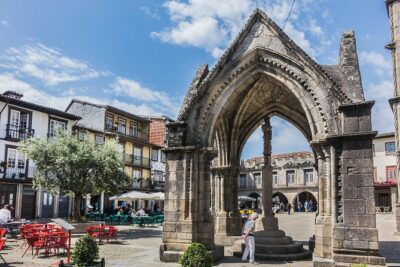
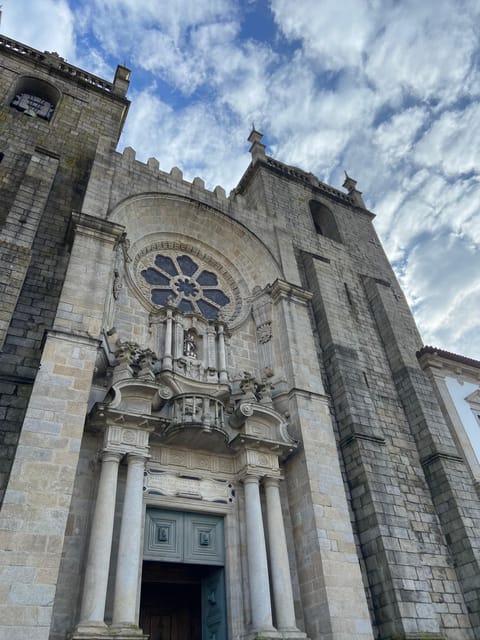
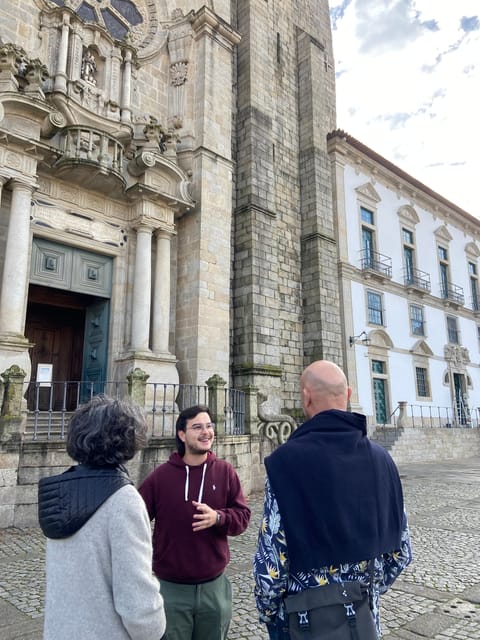
The meeting point is next to the Estátua de Vímara Peres near the Sé Cathedral of Porto. It’s a good start because you’re immediately placed at the center of the story. Sé isn’t just a landmark; it’s the kind of building that shaped the way people organized the city around faith and authority.
From the first stop, the guide sets expectations in a useful way: you’re not only touring, you’re learning how Porto’s different eras show up in the streets. That matters because the city changes feel subtle—unless you’re told what to look for, you can walk right past “meaning” and only notice postcard backdrops.
The initial orientation also helps if this is your first day. You’ll leave with clearer direction for how to walk the city again later, whether you’re heading for viewpoints, churches, or just a good route to wander without getting turned around.
Porto Cathedral and Paço Episcopal: The Religious Spine of the City
Your first guided stop is at Porto Cathedral (Sé), with a short orientation that sets the religious influence on the country’s development into context. Then you continue toward Paço Episcopal, the Bishops Palace area.
Here’s why I like this part: it gives you a frame. Porto isn’t only about trade and river views—its identity is also tied to Judeo-Christian framework and the power structures that came with it. When you understand that, the architecture and the placement of major buildings start to make sense fast.
The pace at these stops is intentionally not long. You’re not stuck listening forever in one spot. Instead, you get just enough meaning to carry into the next streets, where the city begins to show its mixed layers: faith, governance, trade, and community all in walking distance.
Ribeira: Stairs, Alleys, and the Real Port-City Atmosphere
From the cathedral zone, the tour moves down to Ribeira, the riverside neighborhood known for traders and the old port-city rhythm. This section is where Porto starts to feel like Porto.
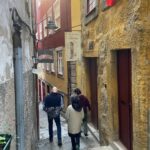
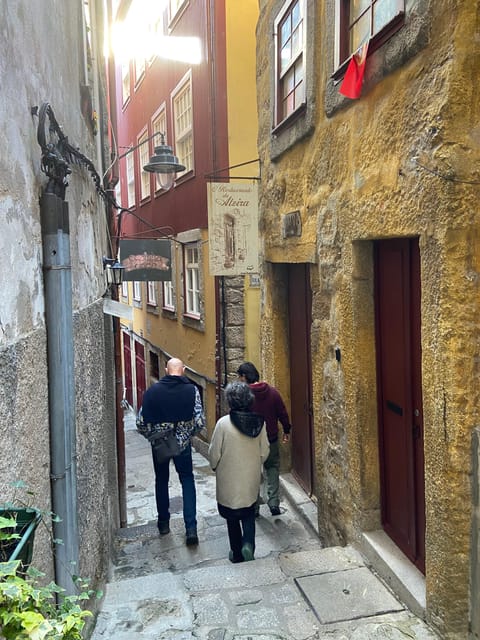
Expect narrow routes and the kind of alleys and stairways that define the historic center. Ribeira rewards your attention to small details: where people gathered for commerce, how streets “tilt” toward the river, and how the city’s waterfront life shaped the surrounding blocks.
This is also one of the best moments to think like a local rather than a visitor. The guide’s job here isn’t to recite dates. It’s to help you read the neighborhood: what it used to do, why it developed the way it did, and how that explains the layout you’re seeing right now.
If you plan to do a boat ride or a longer waterfront walk later, Ribeira is the place you want to already have in your mental map. This tour builds that foundation.
Palácio da Bolsa, Vitória, and the City’s Power Centers
Next up is Palácio da Bolsa. It’s one of the city’s standout civic landmarks, and the guided stop helps you connect it to the broader story of commerce. Nearby you’ll also pass through Vitória, another key area in the historic center circuit.
What I like about this stretch is balance. It’s not just religious buildings and scenic viewpoints. You’re also seeing where the city managed business and legal life—part of why Porto grew into a major port city.
The guide’s explanations also help you spot why certain places attract attention even from a distance. You’ll understand what you’re looking at, not just where it is. That’s a big deal in Porto, where many streets look similar until someone points out what each one is “for.”
You can also read our reviews of more historical tours in Porto




Clérigos Church and Tower Area: One of the Best Photo-Plus-Context Combos
Then comes Clérigos Church, followed by the broader Clérigos area as part of the sightseeing loop. Even if you’ve seen the tower in photos, you often don’t understand how it anchors the surrounding urban lines until you walk the streets that lead you toward it.
This is one of those stops where context changes the photo. The guide helps you connect the monument to the city’s physical structure and historic growth. You also get a better sense of how Porto’s church and tower landmarks helped people navigate and organize the urban landscape.
Short guided moments here work well because the tour is about momentum. You get enough to feel informed, then you move before fatigue sets in. That keeps the whole 2.5 hours feeling light.
Livraria Lello & Irmão and the “Bookshop That’s More Than a Bookshop” Moment
Livraria Lello & Irmão is one of Porto’s most famous interior stops, and this tour includes a guided visit. Even if you’re not a book person, you’ll probably understand why it has pull fast: it sits inside the city’s story of art, identity, and cultural presence.
The guided component matters here because it turns the stop from a quick selfie stop into a meaningful one. You’re not just rushing past a famous place; you’re getting direction on what to notice and why it matters within the walk you’re already doing.
This stop also gives you a nice psychological break. After cathedral stone and river streets, you get something different—an indoor, cultural pause that still keeps the tour moving forward.
Avenida dos Aliados and São Bento Station: Porto’s Street Stage
Avenida dos Aliados is where you feel the city’s public-life side. This is a wide, statement-making avenue, and the guided stop helps you understand why it works as a hub between older districts and the everyday city.
Then comes São Bento Station, where you’ll have a longer guided segment (about 30 minutes). This is one of the most satisfying stops on a walking route because it’s a place you can actually slow down without feeling like you’re losing time. If you like train stations, architecture, or portrait-like storytelling scenes, this stop tends to click immediately.
Why I think this is a smart inclusion: stations are where visitors learn how a city functions. Porto’s station gives you a snapshot of movement and identity, and it also helps you figure out where you’ll want to return later.
The Defensive Wall Route: How the Walk Shapes Your Understanding
A key feature of this tour is the route along the XIV century defensive wall area. That loop-around is the secret sauce because it turns Porto’s historic center into a story you can physically follow.
Instead of hopping randomly between highlights, the wall path gives you structure. You start to see how neighborhoods “sit” behind fortification logic, how the city’s growth wrapped around defenses, and why certain monuments appear where they do.
It’s also a practical benefit. When you later plan your own wandering, you’ll already know which direction the historic center bends, and you’ll feel less like you’re guessing.
Cordoaria Area and the Climb Toward Juderia do Olival
The tour also brings you to the Cordoaria area, with famous city monuments along the way. You’ll spend time exploring and connecting these stops back to the overall loop around the center.
Then there’s the walk up toward the Jewish Quarter of Juderia do Olival. The highlight list specifically calls out this neighborhood climb, and it’s easy to see why: it’s a different Porto texture compared to the river and main squares.
Even if you don’t know the Jewish history in detail, the guided approach helps you understand why the quarter matters within the broader Judeo-Christian framing the tour uses as a thread. You’ll also feel the “topography logic” of Porto here—the city’s shape changes as you move, and that affects where you get views and how streets connect.
If you like tours that give you variety in neighborhoods—not just repeating the same type of street—this section delivers.
Price and Value: What $32 Buys You in Real Terms
At $32, this tour is priced like an introduction—not a long-day extravaganza. The value comes from what’s included: a guided walk through major historic landmarks, plus the chance to have questions answered as you go.
A walking route with context is one of the best bargains in any city because it compresses time. Without a guide, you’d still visit some of these places, but you’d likely bounce between “sites I recognize” and “streets that don’t connect.” Here, the order and the explanations help you build a map.
Also worth mentioning: multiple reviews point out that Lucas doesn’t just recite facts. He adapts to interests and gives useful local recommendations beyond the monuments. One specific tip that stood out is his suggestion for where to try port wine from smaller producers. That kind of practical advice is worth real money once you’re out of the tour.
Group Size, Timing, and How to Get the Most Out of the Pace
The tour is 2.5 hours, and the stops are guided in relatively short chunks, which keeps energy up. There are a few longer segments, like the São Bento Station stop (around 30 minutes), but most others are around 15 minutes each.
That format works especially well if you’re the kind of traveler who gets bored with lectures but loves context. You’ll get enough to understand what you’re seeing, then move before your attention drifts.
A small caution: because the walk includes stairways and a climb toward Juderia do Olival, you’ll want to go in with the right gear. Comfortable shoes aren’t optional here. This isn’t a sit-and-stroll event.
What to Bring, and Simple Rules That Keep It Enjoyable
Bring comfortable shoes and comfortable clothes. The route includes uneven historic streets, stairways, and uphill sections, so anything slick or restrictive will slow you down.
The tour also has standard behavior rules: no intoxication, no littering, and no nudity. It’s a sensible setup designed to keep the experience respectful inside and around working streets and public places.
If you’re the kind of person who likes photos, you’ll get plenty of chances. If you’re the kind of person who hates waiting, the paced, guided stops help you keep moving.
Who This Porto Historical Center Tour Suits Best
This tour is a good fit if you:
- Want a first-visit orientation to Porto’s UNESCO historic core
- Like monuments, but also like knowing what they mean in the city’s story
- Prefer a walking plan with enough structure to avoid getting lost
- Appreciate a guide who adjusts to interests (Lucas seems to do this often)
It’s less ideal if you:
- Have mobility impairments, since the route isn’t designed for that
- Want a strictly low-walking experience, because you’ll be on foot for the whole loop
If you’re traveling solo, it can also feel reassuring—having a clear route reduces the early-day stress of figuring out where to go next.
Should You Book This Porto Walking Tour?
Book it if you want a fast, organized way to understand Porto’s historic center and leave with a real sense of how neighborhoods connect. For $32 and a 2.5-hour timeline, you get a lot of major landmarks: Sé, Ribeira, Palácio da Bolsa, Clérigos, Livraria Lello & Irmão, Avenida dos Aliados, São Bento Station, Paço Episcopal, plus the loop around the defensive wall and the move toward Juderia do Olival and the Cordoaria area.
Skip it only if you need a tour that avoids climbs and stair-heavy walking. Otherwise, this one is a strong start because it gives you direction, context, and practical local pointers—like port wine recommendations from smaller producers—that help you enjoy Porto even after the tour ends.
FAQ
Where does the Porto Historical Center walking tour start?
It starts next to the Estátua de Vímara Peres statue near Sé Cathedral of Porto.
How long is the tour?
The duration is 2.5 hours.
How much does the tour cost?
The price is $32 per person.
What language is the guide available in?
The live guide is available in English and Spanish.
Which major sights are included on the route?
The tour includes stops such as Porto Cathedral (Sé), Ribeira, Palácio da Bolsa, Vitória, Clérigos Church, Livraria Lello & Irmão, Avenida dos Aliados, São Bento Station, Paço Episcopal, plus areas like the Jewish Quarter of Juderia do Olival and the Cordoaria area.
Is it suitable for people with mobility impairments?
No. It is not suitable for people with mobility impairments.
What should I wear or bring?
Wear comfortable shoes and comfortable clothes.
Are there any rules about behavior during the tour?
Yes: intoxication, littering, and nudity are not allowed.
Is there an option to change plans if I need flexibility?
Yes. Free cancellation is available up to 24 hours in advance for a full refund, and there is also a reserve now & pay later option.