REVIEW · PORTO
Full-Day Private Tuk Tuk All Around Porto
Book on Viator →Operated by Portuk · Bookable on Viator
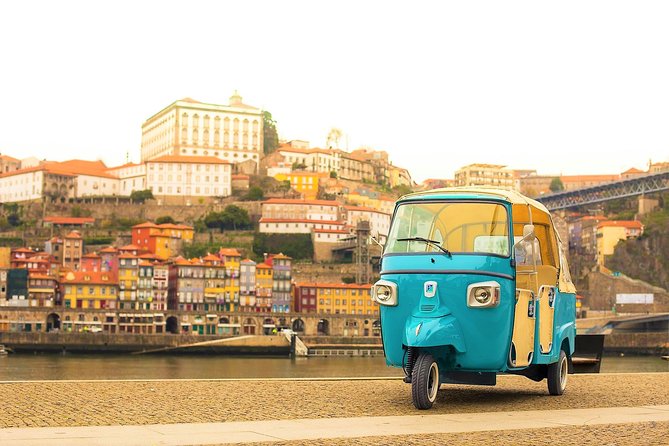
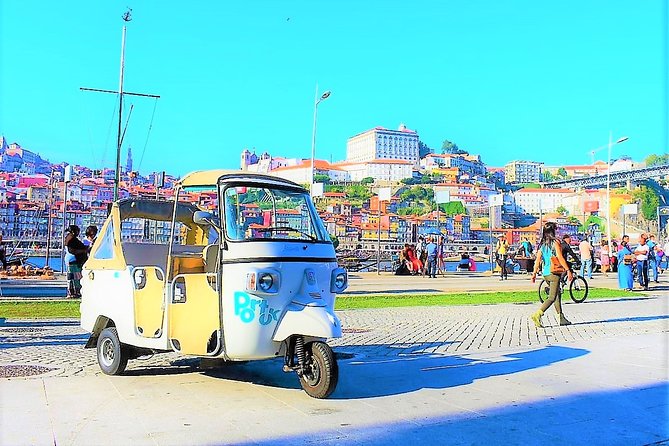
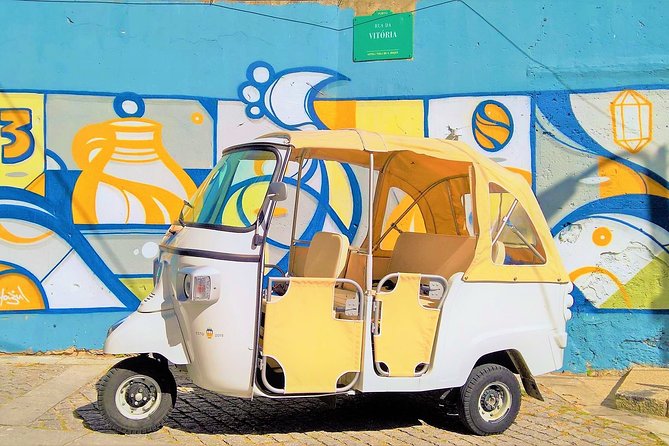
Tiny tuk-tuk, big Porto day. This full-day private all-around Porto tour is a fun way to get your bearings fast without getting stuck on slow, crowded bus routes. I love how the plan balances major landmarks with quieter corners, so the city doesn’t feel like a checklist. I also like that you can shape the pace to your group, since you’re not sharing the day with a giant crowd. One consideration: the tuk-tuk can feel tight over long stretches, especially if you’re sensitive to cobblestones or you’re riding in less-than-ideal weather.
The best part is the flow: a driver and local guide move you through dense historic streets while onboard narration keeps the stories clear (and short). You’ll also get wine tasting and a tasting-style lunch with regional flavors, which turns the day from sightseeing into a real food-and-culture experience. I’ve seen guides like Gabby and Bernardo work hard to make the day feel relaxed, with smart stops that give you time to look, not just snap photos.
The route is also packed with buildings that are famous for a reason—São Bento’s painted tile lobby, the gold interior of São Francisco, and the views from Serra do Pilar and Porto’s gardens. Just keep in mind: monument entrances are not included, so if you want inside access everywhere, you’ll want to budget for tickets.
In This Review
- Key Things I’d Book This Tour For
- Tiny Roads, Big Sights: Why a Tuk-Tuk Works in Porto
- What the Tour Price Covers (and What You Pay Extra For)
- Start at 9:30: How the Route Plays Across Porto and Gaia
- Teatro Nacional São João and the Tile-Lined Start of Old Porto
- São Bento Railway Station: The 20,000 Tile Lobby You Can’t Skip
- Climb Into the Cathedral Story: Porto’s Medieval Layers
- Igreja do Carmo and the Old Prison Turned Photography Center
- Fonte dos Leões: A Copy That Still Works as a Quick Break
- Livraria Lello and the Art Nouveau Stairs Factor
- Cordoaria Garden (Jardim de João Chagas): Rope Makers and Slow Time
- São Francisco, Clérigos, and Porto’s “Church of Gold” Feeling
- Dom Luís I Bridge and Serra do Pilar: The River View Combo
- Ponte Infante Dom Henrique and the Modern Arch Moment
- Bolsa and Mercado Ferreira Borges: Porto’s Business Side, Styled
- Alfândega Porto Congress Centre: An Iron, Neoclassical Blend by the River
- Igreja dos Carmelitas and the Final Stretch
- Tuk Tuk Comfort, Rain Gear, and Lunch Reality Check
- The Guides Matter: Names You’ll Hear and What They Tend to Do
- Should You Book This Private All-Around Tuk Tuk Tour in Porto?
- FAQ
- How long is the Porto private tuk-tuk tour?
- What time does the tour start, and where is the meeting point?
- Is this tour private?
- What language is the tour offered in?
- What’s included in the price?
- Are monument entrances included?
- Is the tour dependent on weather?
- Is mobile ticketing used?
- Is free cancellation available?
- Do I need a minimum number of people per booking?
Key Things I’d Book This Tour For
- Private, guided tuk-tuk touring with live commentary to connect the dots quickly
- Avoiding bus crowds while still hitting the big-name Porto sights
- Wine tasting + regional tasting lunch that gives you more than just photos
- Photo-friendly stops at viewpoints and river crossings, including Gaia
- A flexible route that can match your group’s timing at key stops
Tiny Roads, Big Sights: Why a Tuk-Tuk Works in Porto
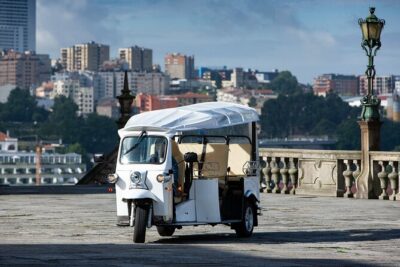
Porto’s old center is narrow, steep, and full of twists. A walking-only day can be exhausting, but a bus day can feel like you’re watching the city through glass. A tuk-tuk hits a sweet spot: close enough for atmosphere, fast enough to cover real ground, and small enough to reach spots bigger vehicles can’t.
What makes this style of touring especially useful on your first day in Porto is how it stitches together different neighborhoods. Instead of repeating the same streets, you get a broader sweep—historic squares, churches, river viewpoints, and the transition to Vila Nova de Gaia. That variety is what helps Porto feel like Porto, not just “a few famous churches.”
You can also read our reviews of more private tours in Porto

What the Tour Price Covers (and What You Pay Extra For)
At $166.99 per person for about 8 hours, the value comes from the package, not just the ride. You’re paying for a guided day that includes live on-board commentary, a driver/guide plus a local guide, wine tasting, and lunch with regional products (with some wines from small local producers).
You are not paying for monuments entrance fees. Several stops on the day are listed as ticket-not-included, which usually means you’ll spend time outside, in lobbies, or in areas that don’t require entry fees. If you’re the type who wants to go inside every church, tower, and landmark, plan to add a bit more on the spot.
Start at 9:30: How the Route Plays Across Porto and Gaia
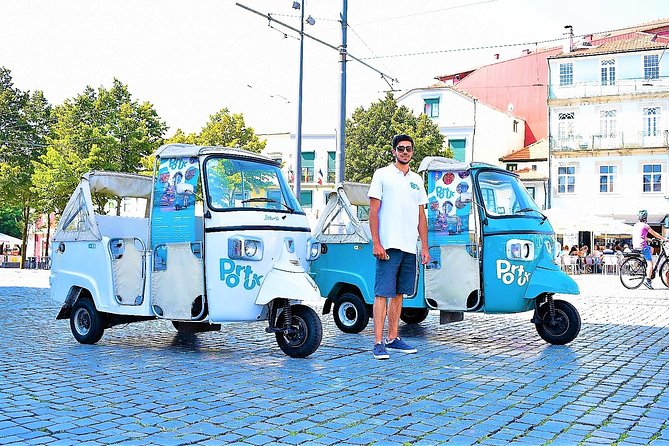
You start at R. de Augusto Rosa 180 (4000-528 Porto) at 9:30 am, and the tour ends back at the meeting point. Expect a day that moves through the city in a logical loop rather than random hops. The stop times are usually short enough that you keep momentum, but long enough that you’re not just driving past things.
Also, bring a practical mindset. The tuk-tuk day is fast, but it still includes moments to pause and look closely—especially at the tile work, the staircases, and the viewpoints where the city suddenly opens up.
Teatro Nacional São João and the Tile-Lined Start of Old Porto
The day opens with Teatro Nacional São João, a grand theatre building constructed in 1910 on top of ruins from an earlier theatre that burned down in 1908. It’s not just a theatre façade photo op; the details matter. The exterior includes stylistic emblems tied to strong themes like pain, hate, love, and quality. The main façade also reflects a renovation influence inspired by Luís XVI styles—an interesting reminder that Porto’s architecture doesn’t develop in a vacuum.
From there, you head into the kind of Porto that feels lived-in and layered. If you like buildings with backstory and you enjoy noticing how one era stacks on top of another, this first stretch sets the tone.
São Bento Railway Station: The 20,000 Tile Lobby You Can’t Skip
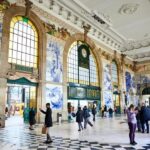
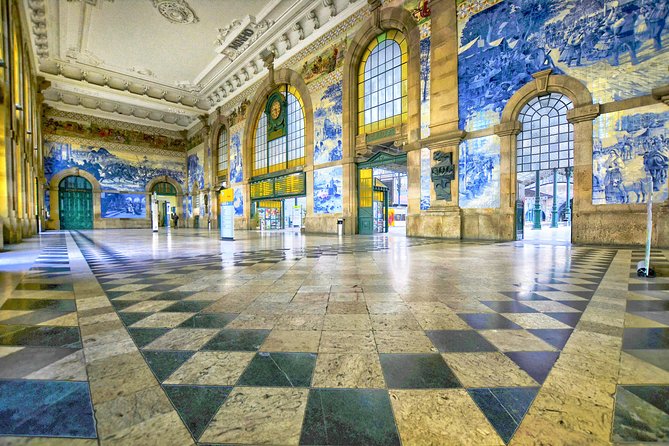
Next up is São Bento Railway Station, one of Porto’s best-known interiors. It was built in the early 1900s and designed with a striking roof structure by architect Marques da Silva. Then comes the real star: the lobby is covered with around 20,000 narrative tiles painted by Jorge Colaço.
You’ll likely spend about 10 minutes here, which is just enough time to see the overall wall scenes and pick out a few panels for closer viewing. If you only have one rail-station moment in Porto, this is the one worth caring about.
One practical tip: if you’re photographing tiles, arrive with your camera ready, because you’ll want to shoot while you still have the light and crowds are minimal.
You can also read our reviews of more tours and experiences in Porto

Climb Into the Cathedral Story: Porto’s Medieval Layers
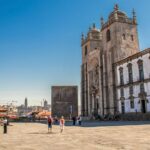
Catedral do Porto is a great stop if you love churches that grew over time. Construction began in the 12th/13th century in Romanesque style, then expanded and renewed through the centuries, ending with what feels like an intentionally “reconstituted” medieval cathedral.
The most interesting feature mix here includes:
- The Gothic São João Evangelista Chapel
- A 14th-century cloister
- Expansions like the Santíssimo Sacramento Chapel and its silver altar
- Baroque frescos credited to Nicolau Nasoni
- Cloister tiles by Vital Rifarto
- Sculpture in the Baptism Chapel by Teixeira Lopes (father)
This is one of those places where 10 minutes can feel both short and just-right. You’ll see enough to understand the layers without getting trapped in a long ticket line.
Igreja do Carmo and the Old Prison Turned Photography Center
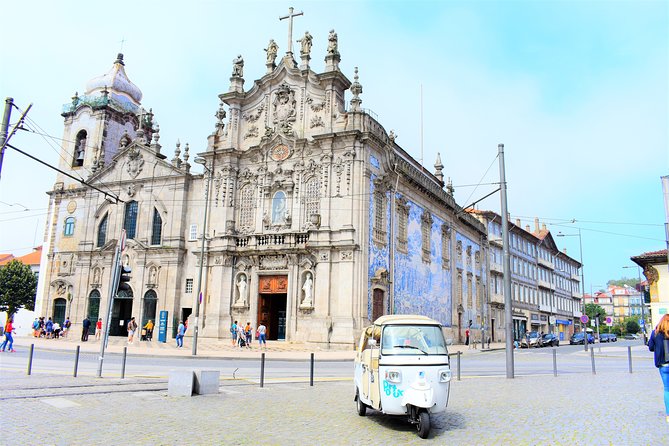
The route then shifts from medieval to baroque-and-rococo Porto. Igreja do Carmo is noted for being one of Porto’s standout rococo interiors. Built in the second half of the 18th century, it earned national monument status. In 1912, a lateral façade was covered with tiles whose drawings were designed by Silvestre Silvestri, showing figurative compositions tied to the cult of Nossa Senhora (Our Lady).
After that, you’ll stop at Antiga Cadeia da Relação, an especially memorable contrast. This granite building dates to 1582 and was rebuilt in 1767 in a neo-classical style designed by Eugénio dos Santos. What makes it visually distinct is the geometry—103 windows across a polygonal footprint. It’s also historically loaded: Camilo Castelo Branco and Zé do Telhado were held here. Today it functions as the Portuguese Centre for Photography, restored in 1999–2002 under Eduardo Souto de Moura and Humberto Vieira.
If you like Porto that isn’t just pretty, this is the emotional “real city” stop.
Fonte dos Leões: A Copy That Still Works as a Quick Break
Then it’s a quick breather at Fonte dos Leões, the Fountain of the Lions. It’s a 19th-century fountain built by a French company and cast by a foundry in France. It’s described as a copy, in most part, of a fountain from Leicester, England.
It’s not the heavy emotional stop, but it’s useful on a long tour because it gives you a clean, short, scenic reset—ideal when you’ve been walking between steep lanes.
Livraria Lello and the Art Nouveau Stairs Factor
Porto’s Livraria Lello stop is all about the building itself: the façade, the staircase, and the skylight. The building opened in 1906, and it’s famous for its Art Nouveau look with neo-gothic details. Inside, you’ll find painted plaster designed to imitate wood, and a prominent staircase connecting levels—one of the first reinforced concrete works in Porto.
If you’ve ever wanted to understand why this library is so widely discussed, this is your chance. Even without going deep into a long visit, you’ll likely get a good sense of the main design features, including the huge stained-glass skylight with the monogram and motto Decus in Labore.
Note: entrance isn’t included here, so treat the time as a guided look rather than a guaranteed full interior ticket experience.
Cordoaria Garden (Jardim de João Chagas): Rope Makers and Slow Time
A garden stop breaks up all the stone. Jardim de João Chagas, also known as Cordoaria Garden, takes its name from the rope makers who worked in the area for about 200 years.
It’s a public garden shaped by a municipal transformation around 1865/1866, credited to German landscaper Emile David. You’ll also find statues of Ramalho Ortigão and António Nobre, plus sculptures by Juan Muñoz from 2001. This garden is a nice change of pace after busy monuments, and it gives you space to reset for the churches and river views ahead.
São Francisco, Clérigos, and Porto’s “Church of Gold” Feeling
Iglesia de San Francisco is one of the most impressive stops on the day. Construction began in the 14th century, and it’s famous for its Baroque interior, including gilded carved wood work from the 17th and 18th centuries. It’s often described through the idea of the gilded interior being so rich that it overwhelms you—in a good way. The Tree of Jesse and the catacombs are standout references, and it’s been a National Monument since 1910. It also carries UNESCO World Cultural Heritage recognition.
After that, you’ll likely head to Torre dos Clerigos, the tall Baroque bell tower that’s one of Porto’s best-known silhouettes. The tower itself is listed as not included for admission, so you’ll get time around it and the exterior experience, with any inside access depending on ticket availability and what your guide chooses in the flow of the day.
If you love skyline landmarks, this stretch sets up the next part perfectly: the bridges.
Dom Luís I Bridge and Serra do Pilar: The River View Combo
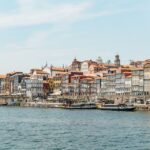
Porto’s river crossing moment is built around Dom Luís I Bridge. Inaugurated in 1886, it was planned by engineer Teófilo Seyrig, a disciple of Eiffel. The bridge’s defining feature is its two overlapping iron decks. Today, the upper deck carries the Metro of Porto, linking the area of Porto’s Cathedral to the Jardim do Morro and Avenida da República in Vila Nova de Gaia.
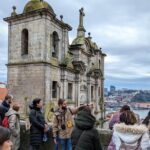
Then the tour shifts to Mosteiro da Serra do Pilar, a UNESCO-listed monastery with a circular church plan. Construction began in 1538 and finished around 1670. The cloister is circular too, with 36 Ionic columns, described as the only example in Portugal. From the terrace, you get broad views of the riverside from Porto to Gaia, including the historic center and Dom Luís I Bridge. In the other direction, you can spot Fontainhas and the São João bridge area.
This is where the tuk-tuk really earns its keep. The driver gets you close to viewpoint angles that would take ages to reach on foot.
Ponte Infante Dom Henrique and the Modern Arch Moment
Next comes Ponte Infante Dom Henrique, inaugurated in 2003. It replaced the upper deck lane of Dom Luís I Bridge that now carries the metro line. This bridge is described as a Maillart-type arch bridge with a high-altitude design. One standout detail is the 280 m arch span, noted as a world record. It’s also connected to areas like Fontaínhas in Porto and Oliveira do Douro in Vila Nova de Gaia.
Even if bridges aren’t your thing, this stop gives you a sense of Porto moving forward while still respecting the old iron-deck story.
Bolsa and Mercado Ferreira Borges: Porto’s Business Side, Styled
Palácio da Bolsa is next, a National Monument and the headquarters of the Commercial Association of Porto. It’s neoclassical, designed in 1842, and one of the highlights is the Arabian Room. The palace also functions as a cultural and conference center, and it’s listed as part of the Urban Wine Route. It’s not always a quick stop if you want deep interior viewing, but this tour keeps it timed so you get what you need without losing the whole day.
Then you’ll reach Mercado Ferreira Borges. Built in 1885, it’s a landmark of iron architecture. The market had a short life as a traditional market, then shifted into other uses. Today, the iron structure has been renovated into an entertainment venue with Hard Club located there.
If you want Porto that feels both historic and practical, this part of the route delivers.
Alfândega Porto Congress Centre: An Iron, Neoclassical Blend by the River
A very Porto move is turning functional buildings into memorable ones. Alfândega Porto Congress Centre is a neoclassical building from the 19th century with two main facades—one toward the Douro river and one toward the city. The structure uses iron along with stone, brick, and wood depending on space needs.
You’ll also hear about the building’s later role: in 1987, it was chosen to house the future Museum of Transport and Communications, and restoration/adaptation work followed under architect Eduardo Souto Moura. The congress center is managed by the Transport and Communications Museum association.
This isn’t always the first thing people pick for a Porto checklist, but it works well on this day because it’s a calmer, less-intense stop before the final church notes.
Igreja dos Carmelitas and the Final Stretch
To wrap up the religious architecture portion, you’ll stop at Igreja dos Carmelitas, a church with a seventeenth-century structure and a classical façade dating from the 1850s. The project is attributed to architect/painter Nicolau Nasoni. Inside, the Porto rococo altarpiece is described as stylistically revolutionary, and the building is a National Monument.
From there, you return back to the meeting point, and you’re done with a day that covers a lot of Porto in a way that still leaves space to breathe.
Tuk Tuk Comfort, Rain Gear, and Lunch Reality Check
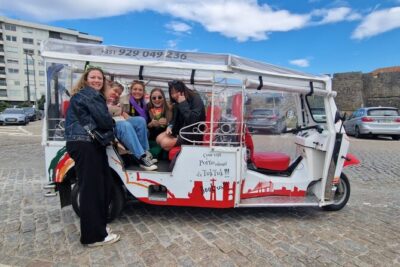
This tour is fun, but it’s also physical in a quiet way. The tuk-tuk rides over cobblestones can leave you stiff by the end of the day. If you’re a bigger-sized rider, keep in mind that the vehicle can feel tight. One guest specifically noted tight seating for three adults, and I’d treat that as a heads-up.
Weather matters too. The experience requires good weather, and if it’s canceled due to poor weather you’ll be offered a different date or a full refund. On a rainy day, one past guest described missing side covers to block rain. So pack a small plan: a compact umbrella, rain poncho, and phone protection.
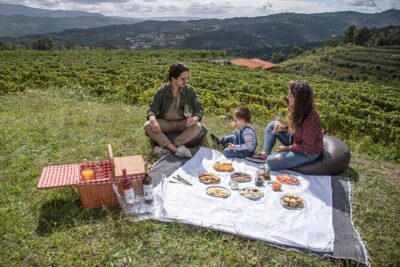
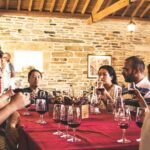
Food is generally a highlight. The included lunch is a tasting-style meal with items like cheeses, sausages, and canned fish, plus wines from small local producers. In practice, the exact lunch location can vary in the flow of the day, and one guide-powered experience I saw was a lunch stop at a place around Mercado Lendário. I’ve also had people describe getting taken to a local fish spot. Dietary needs can be tricky on short notice, though: if you need vegetarian accommodations, confirm clearly at booking and ask again the day before.
The Guides Matter: Names You’ll Hear and What They Tend to Do
This kind of tour runs on the guide’s rhythm. Some people had great days with guides like Gabby/Gabi, Bernardo, Fabio, Gonçalo, and Leonardo. What stands out across those experiences is pacing: waiting while you explore, adding extra context on the fly, and steering you toward photo angles and off-the-main-street areas.
If you’re choosing this tour for day-one orientation in Porto, pick the version that matches how you travel. If you want a guide who can steer you to quieter spots and make time feel flexible, this is the type of experience that can deliver that.
Should You Book This Private All-Around Tuk Tuk Tour in Porto?
I’d book it if you want:
- A first-day Porto sweep that mixes big sights and local-feeling stops
- Less time stuck in crowds and more time moving through neighborhoods
- A guided day with wine tasting and a regional tasting lunch
- A way to see bridges, viewpoints, and churches without turning the day into a 20-mile walk
I’d think twice if:
- You hate tight seating or you’re very sensitive to cobblestones
- You expect inside access for every site without extra ticket costs
- You’re traveling at a moment when weather is uncertain and you don’t want to risk schedule changes
If you want Porto in one day without the usual bus-drama, this private tuk-tuk format is a smart choice—especially when you’re open to quick stops, guided context, and making a few photo moments count.
FAQ
How long is the Porto private tuk-tuk tour?
It’s listed as approximately 8 hours.
What time does the tour start, and where is the meeting point?
The start time is 9:30 am. The meeting point is R. de Augusto Rosa 180, 4000-528 Porto, Portugal.
Is this tour private?
Yes. It’s described as a private tour, meaning only your group will participate.
What language is the tour offered in?
The tour is offered in English.
What’s included in the price?
Included items are the driver/guide, live commentary on board, a local guide, wine tasting, and lunch (a tasting lunch of regional products with some wines from small local producers).
Are monument entrances included?
No. Monument entrance fees are not included.
Is the tour dependent on weather?
Yes. The experience requires good weather. If it’s canceled due to poor weather, you’ll be offered a different date or a full refund.
Is mobile ticketing used?
Yes. A mobile ticket is included.
Is free cancellation available?
Free cancellation is available up to 24 hours in advance for a full refund.
Do I need a minimum number of people per booking?
Yes. A minimum of 2 people is required per booking.