REVIEW · PORTO
Downtown Porto Acrylic Painting Workshop for Groups or Individual
Book on Viator →Bookable on Viator
First time you paint in Porto—this helps. In a downtown acrylic workshop, you get practical guidance on color, acrylic layering, and brush technique, then leave with a finished canvas. It’s built for beginners too, with instruction offered in English and a small class size.
Two things I really like: the session starts with a clear color theory mini-lesson (light/shade, blending, complementary tones), and you have real creative options—either replicate a provided base design or build your own composition. That mix keeps it fun for friends who don’t all draw the same way.
One consideration: the workshop runs about 2 hours, so if you’re hoping for an ultra-detailed, “months-long” style painting, you’ll want to keep expectations geared toward a solid first piece.
In This Review
- Key things to know before you go
- Meeting Downtown Porto: Domus Arte 2 and a Calm Start
- What Actually Happens During the 2-Hour Acrylic Workshop
- Color Theory That Turns Paint Into Choices
- Acrylic Skills: Layering, Drying, and Brush Control
- Pick a Base Design or Create Your Own Composition
- Guidance That Feels Patient, Not Pushy
- The Social Bonus: Workshop + a Fun, Friendly Vibe
- Value in the Real World: Why ~$47.66 Can Make Sense
- How to Fit It Into Your Porto Day (Without Stress)
- Who This Workshop Is Best For
- Should You Book This Porto Acrylic Painting Workshop?
- FAQ
- Where is the workshop meeting point?
- How long is the acrylic painting workshop?
- Is the workshop taught in English?
- Do I have to draw my own idea, or can I follow a design?
- What size is the canvas?
- How large are the groups?
- Is there a mobile ticket?
- Is it easy to get to using public transportation?
- What’s the cancellation policy?
Key things to know before you go
- Color theory first, so your paint choices make sense instead of feeling random
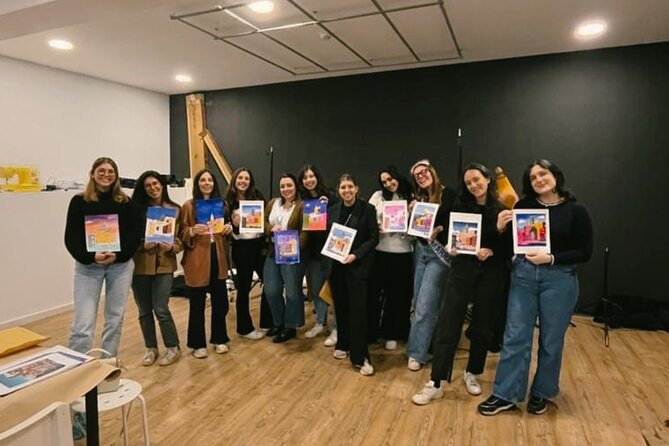
- 21×30 cm canvas format that’s big enough to feel satisfying, not so big it takes forever
- Acrylics taught step-by-step, including drying layers and how to dilute paint with water
- Two paths: copy a base design or create your own composition from scratch
- Small group max of 12, which keeps the instructor’s attention on you
- Rita’s teaching style is described as patient and helpful, even when people arrive late
Meeting Downtown Porto: Domus Arte 2 and a Calm Start
You’ll start at Domus Arte 2, on Rua de Antero de Quental, inside a concept-store setting. The location is central enough that you can slot it into a day around downtown without it feeling like a long detour. It also helps that it’s near public transportation, so you’re not stuck hunting for parking.
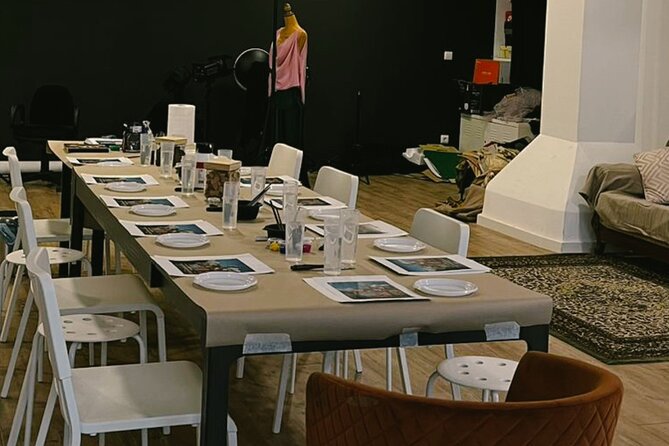
This is a small class—up to 12 people—so you won’t get lost in a sea of strangers. You’ll also be back where you started at the end, which makes scheduling easier. And since you get a mobile ticket, you can keep things simple and show up with your phone in hand.
If you’re using Porto’s downtown as your navigation system, this area is also tied to Avenida dos Aliados (a good landmark when you’re planning meals or a quick walk before/after). Basically: you can make this workshop part of a normal Porto day, not a whole production.
You can also read our reviews of more tours and experiences in Porto


What Actually Happens During the 2-Hour Acrylic Workshop
The structure is beginner-friendly and very hands-on. You’re not just watching someone paint. You’re learning a few core skills, practicing them, then applying them to your own canvas while an instructor gives guidance as you go.
The day moves in a logical order:
- First you get the basic “how to see color” lesson.
- Then you learn acrylic behavior—how it layers and dries.
- Finally you apply those rules to either a base design or an original composition.
You’ll work on a canvas sized 21×30 cm, which is a smart sweet spot for a two-hour class. Big enough to feel like a real artwork, small enough to finish in one session without rushing every step.
The pacing is also social in a good way. People chat, compare palettes, and help each other with small technique questions. If your group includes non-art people, don’t worry—you’re still doing real painting, not sitting on the sidelines.
Color Theory That Turns Paint Into Choices
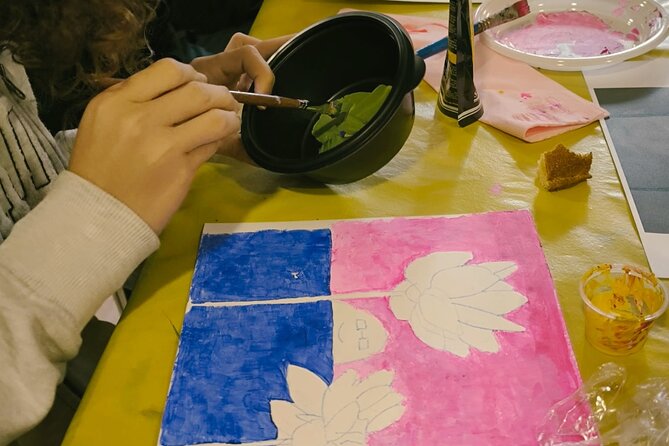
The workshop begins with color theory, and I like that it’s practical instead of academic. You cover light and shade, blending, and complementary tones—the basics that make your painting look intentional, even if your drawing skills are brand new.
Here’s what this does for you in real life:
- When you know how light and shade work, you stop thinking in flat colors.
- When you understand blending, you can create smooth transitions instead of harsh blocks.
- When you use complementary tones, your colors can feel richer without you needing a perfect “artist” eye.
If you’ve ever stared at a blank canvas and thought, I don’t know what to do, this part helps you get unstuck. It gives you a simple set of rules you can apply immediately while you’re holding the brush.
Acrylic Skills: Layering, Drying, and Brush Control
After the color primer, you focus on acrylics themselves—how they behave and how to work with them effectively. The workshop covers key points like brush pressure and angles, diluting acrylic with water, and working with drying layers.
This is the part that quietly changes everything. Acrylics can feel fast and unforgiving if you don’t know the basics. But once you understand layering and how to manage drying between steps, you can build depth on purpose instead of guessing.
You’ll also practice techniques such as:
- background painting
- color veiling (softening or layering colors to create depth)
- other visual effects tied to the composition you choose
Even if you end up painting something simple, these skills add that “this was planned” look. And if you make a mistake, it’s not usually the end of the world—layering and veiling are meant for refining what you’ve already put down.
Pick a Base Design or Create Your Own Composition
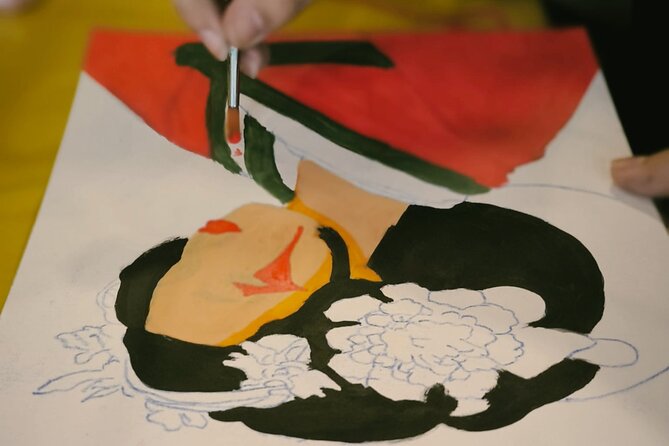
One of the best parts of this workshop is that you don’t have to choose between two extremes: “be creative from zero” or “follow a template with no freedom.”
You can:
- Replicate a base design that’s provided, then personalize it with your palette and brushwork, or
- create an original composition from scratch, guided step-by-step by the instructor.
This is especially useful for groups, because people arrive with different comfort levels. The confident painters can push for their own version, while the first-timers can lean on the base design and still make it feel like theirs.
A small but meaningful detail from the experience notes: Rita is described as flexible with theme ideas. For example, one group working on a wedding-themed bachelorette souvenir got picture suggestions aligned with their theme. That’s the kind of tailoring that turns a generic class into something more personal.






Guidance That Feels Patient, Not Pushy
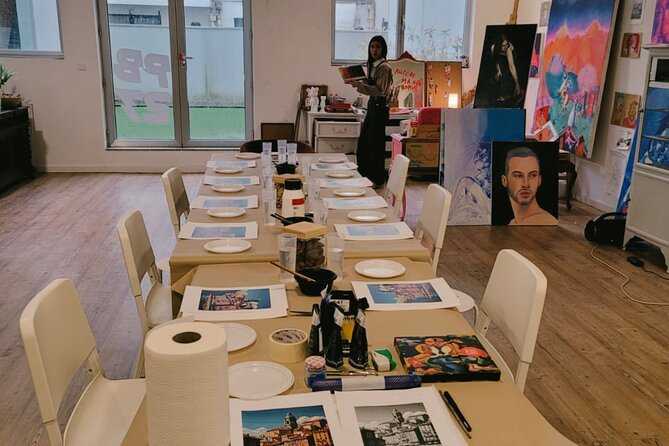
This workshop seems to thrive on good teaching energy. The instructor is described as very helpful, with ongoing suggestions on color and technique as people paint.
Two practical ways this matters:
- You don’t have to interrupt your flow to ask for help at random times. You get coaching as you go.
- If you’re unsure about what to do next, the guidance helps you make decisions quickly and keep moving.
Also, there’s a real-world detail worth knowing: the instructor is described as waiting patiently when people arrive late. That tells me this is run with a calm, human pace—not a strict “you missed it, too bad” vibe.
In a small class, that kind of patience is priceless. It’s what helps non-art people feel capable.
The Social Bonus: Workshop + a Fun, Friendly Vibe
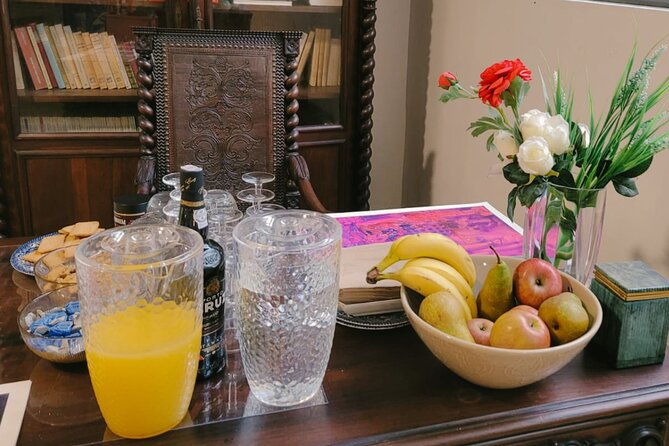
This doesn’t feel like a quiet museum activity where you’re expected to be silent and perfect. It’s more like a friendly art hangout with structure.
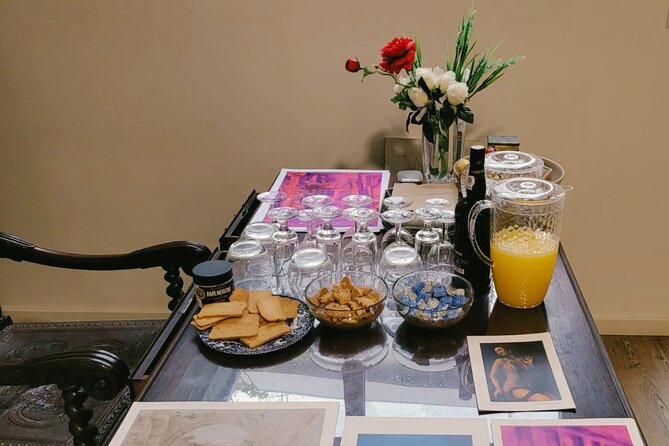
In the experience notes, the shop staff are described as loving and attentive, including mention of a quality cocktail that pairs well with the workshop. That suggests there’s a relaxed social angle in the concept-store environment, not just paint tables and nothing else.
You can treat that as a bonus, not a requirement. The real core is the painting instruction and your take-home canvas. But if your group wants a celebratory feel, this setting fits.
Value in the Real World: Why ~$47.66 Can Make Sense
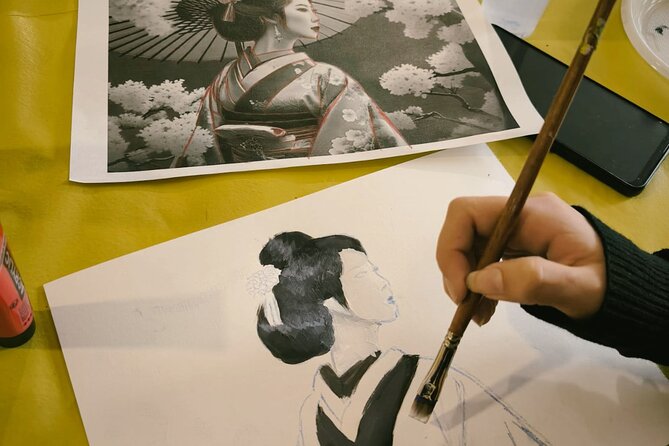
At about $47.66 per person for roughly 2 hours, you’re paying for three things that are hard to replicate alone:
- A guided lesson on color and acrylic technique
- Instructor support while you paint
- A tangible souvenir: your finished canvas on a 21×30 cm surface
Is it cheap? Not really. But it’s also not just “renting a room.” You’re buying the kind of feedback that helps your painting look finished instead of unfinished. For a group trip—especially one with a mix of skill levels—it often lands as good value because everyone leaves with something concrete.
And because the class size is max 12, you’re not paying for a huge crowd where you get no help. You’re paying for personal coaching time.
How to Fit It Into Your Porto Day (Without Stress)
Since you meet at Domus Arte 2 in downtown, you can plan this as a mid-day or afternoon activity. The workshop is long enough to create a full experience, but short enough that you can still do real exploring before dinner.
A simple plan I’d recommend:
- Arrive a bit early to get oriented around Rua de Antero de Quental.
- Use Avenida dos Aliados as your landmark for the rest of the day.
- Book something nearby afterward, so you’re not racing across town with a canvas in tow.
Because the activity ends back at the meeting point, it’s easy to continue exploring the downtown core. You don’t need a complicated exit strategy.
Who This Workshop Is Best For
This is a strong fit if:
- you want a beginner-friendly art activity with clear instruction
- you’re traveling solo and want a structured social experience
- you’re in a group celebration like a bachelorette or friends trip
- you need something that feels creative but still relaxing
It also works for people who aren’t trying to become “artists.” The workshop is designed around practical painting skills—color basics, acrylic behavior, and layering—so you can make progress fast.
And if you’re traveling with a service animal, service animals are allowed. The location is also near public transportation, which helps a lot in Porto.
Should You Book This Porto Acrylic Painting Workshop?
I’d book it if you want a guided, low-pressure way to make your own artwork in Porto. The strongest selling points for me are the way the class starts with usable color theory and the fact that you’re not locked into one style. You can copy a base design or go original, and you still get coaching.
You might skip it only if you’re looking for a long, deep artistic process or you’re set on something extremely technical. Two hours is enough for a first finished piece, not a slow-burn masterpiece.
If your group wants a memorable, take-home souvenir that doesn’t require previous talent, this is the kind of activity that delivers.
FAQ
Where is the workshop meeting point?
You’ll meet at Domus Arte 2, Rua de Antero de Quental 228, 4050-052 Porto, Portugal, at the Concept Store.
How long is the acrylic painting workshop?
The session lasts about 2 hours.
Is the workshop taught in English?
Yes, the workshop is offered in English.
Do I have to draw my own idea, or can I follow a design?
You can choose to replicate a base design provided or create your own composition from scratch.
What size is the canvas?
The workshop uses a 21×30 cm acrylic canvas.
How large are the groups?
The workshop has a maximum of 12 travelers.
Is there a mobile ticket?
Yes, the experience includes a mobile ticket.
Is it easy to get to using public transportation?
Yes, the meeting area is near public transportation.
What’s the cancellation policy?
Free cancellation is available. You can cancel up to 24 hours in advance of the experience for a full refund, and changes within 24 hours aren’t accepted.