REVIEW · PORTO
Customizable Full Day Porto Tour: Choose Your Perfect Experience
Book on Viator →Operated by Endless Weekend Tours · Bookable on Viator
Porto can feel like a lot at once, but this day plan keeps it organized. I like how the route strings together Porto’s signature landmarks and Gaia river viewpoints without wasting time, and I also like that you get a private group setup with a certified driver and regional interpreter guiding the flow. One thing to think about: most museum/church/attraction entry fees are not included, so you’ll want to budget for a few paid stops you may feel like doing.
You’ll also get real-world help from the way the day is run. Guides such as Delfina and Carlos have been praised for meeting people quickly and adapting when plans change, including cruise passengers getting picked up right at the terminal. The possible drawback is simple: with a 10-hour day and some stairs (hello, Clérigos), you’ll want comfortable shoes and a steady pace.
In This Review
- Key highlights worth planning for
- What You Really Get From This 10-Hour, Custom Porto Day
- Porto’s Center First: Praça da Liberdade, Avenida dos Aliados, and City Hall Energy
- Mercado do Bolhão and Medieval Porto: Markets, Praça da Batalha, and Muralhas de D. Fernando
- Porto Cathedral and São Bento Station: Ceramic Art on the Way to the Past
- Belle Époque Stop: Café Majestic, Rua Santa Catarina, and Teatro Rivoli
- Churches, the Hidden House, and Clérigos Tower’s 240-Step View
- Livraria Lello and Porto Bookish Glamour (Tickets Cost Extra)
- Art Museum + Palácio de Cristal Gardens + Porto Tram Museum
- Church of Gold and Palácio da Bolsa: Porto’s Big Performance Spaces
- Bridges and Gaia Views: Ponte Maria Pia, Ponte do Infante, Jardim do Morro, Serra do Pilar
- Lunch in Afurada or Matosinhos: Ocean Views, 1h30 Free Time, and No Included Meal
- Coast Forts and the Atlantic: São João Baptista Fortress, Castelo do Queijo, and Arrábida Bridge
- Optional Extras That Can Make the Day Feel Like Two Trips
- Tickets, Walking, and How to Keep the Day Smooth
- Should You Book This Custom Full Day Porto Tour?
- FAQ
- FAQ
- How long is the Porto full-day tour?
- Is pickup offered?
- Is this tour private?
- What does the lunch break include?
- Are attraction entrance tickets included?
- Are there optional extras like wine tasting or a cruise?
- What’s included in the tour besides sightseeing?
- What’s the price per person?
- What happens if the weather is bad?
Key highlights worth planning for
- Customizable day in a private format: only your group, built around what you want to see
- Wi‑Fi, water, and comfort in luxury vehicles: a less exhausting way to cover big distances
- Clérigos Tower panoramic climb (240 steps): one of the best viewpoint payoffs in Porto
- São Bento’s azulejo station hall: art and history in one quick, easy stop
- Lunch choice with ocean views: Afurada (fisher village) or Matosinhos (seafood hub), 1h30 on your own
- Big Porto-to-Gaia river moments: multiple bridges, Jardim do Morro, and Serra do Pilar
What You Really Get From This 10-Hour, Custom Porto Day
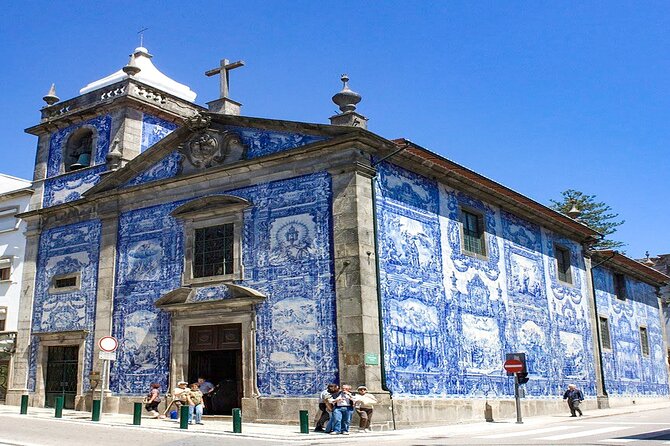
This is a full-day Porto experience designed for people who want a complete “best of” loop but still like control. With a duration of about 10 hours, you’re moving through major sights in a logical order while still having moments of free time—especially around lunch.
The big practical win is the transportation setup. You’ll travel in luxury vehicles with Wi‑Fi, bottled water, and refreshments, plus a certified tourism driver. Your guide role is handled by an official regional interpreter guide, which matters because Porto’s landmarks come with context: what you’re looking at, why it matters, and how to read the city fast.
For value, the tour price (listed at $207 per person) is really buying you time and structure. You’re not paying extra every time you need to jump between neighborhoods—your guide smooths out the day. The one caution: entry tickets for several stops are not included, so the total cost can creep up if you choose lots of paid add-ons.
You can also read our reviews of more tours and experiences in Porto

Porto’s Center First: Praça da Liberdade, Avenida dos Aliados, and City Hall Energy
You start in the administrative and civic heart of Porto around Praça da Liberdade and Avenida dos Aliados. This is a smart opening choice because it gives you an instant sense of scale: grand boulevards, historic facades, and the city’s “main stage” vibe.
At Praça da Liberdade, you’ll find the statue of King D. Pedro IV (inaugurated in 1866). Then you move north along Avenida dos Aliados to see the Porto City Hall area. Even if you don’t go inside, this part of town is about orientation—where the city’s public life happens and how the neighborhoods connect.
Tip for your day: this opening section is a good moment to adjust your pace. If you’re traveling with anyone who needs frequent breaks, you’ll usually have easier movement here than later when the route heads into churches, stair climbs, and viewpoint edges.
Mercado do Bolhão and Medieval Porto: Markets, Praça da Batalha, and Muralhas de D. Fernando
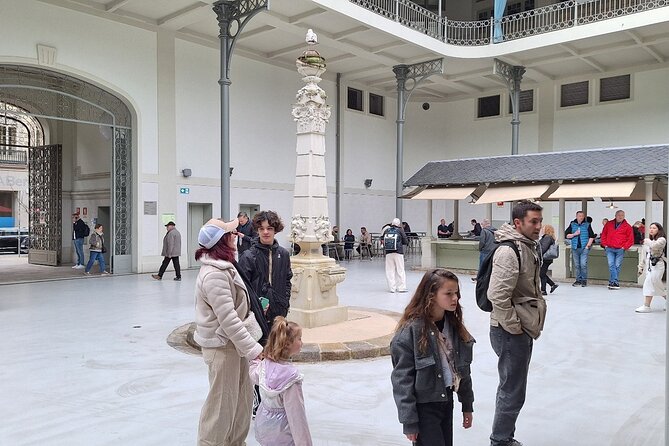
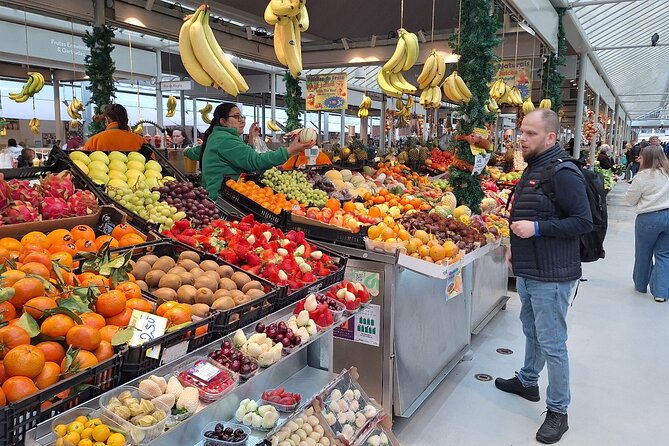
Next comes the sensory hit of Mercado do Bolhão. It’s Porto’s best-known market, established in 1850, spread across two floors, and known for specialized sections for fish, meats, vegetables, and flowers. The neoclassical architecture makes it feel like a landmark even before you step into the stalls.
From there, the route shifts to Praça da Batalha, a historic square tied to older conflict in the region and later urbanized around 1861. It’s a quieter kind of stop, but it matters because it connects you to Porto’s older story in a way that feels grounded, not forced.
Then you’ll see remnants of Muralhas de D. Fernando, medieval walls built between 1368 and 1437. Even though only parts remain today, these stretches give you an idea of how Porto’s population growth once required big defensive solutions funded by a wine transfer tax.
Practical note: the market stop is free entry, but it’s still worth arriving with a plan. If you want photos, give yourself time—markets move fast.
Porto Cathedral and São Bento Station: Ceramic Art on the Way to the Past
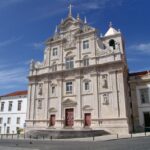
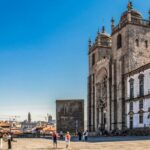
Porto Cathedral is a short stop that packs a lot of centuries. The structure dates to the 12th and 13th centuries, then got reshaped over time. Highlights include the São João Evangelista Chapel, the 14th-century cloister, and later 18th-century additions such as the enlarged main chapel and the Santíssimo Sacramento Chapel.
If you’re deciding where to spend your paid-entry budget, this is one of the stops people often prioritize because it’s a concentrated mix of Romanesque roots plus later gothic and baroque influence. The listed time is 15 minutes, so you’re not stuck in a long line if you choose the quick route.
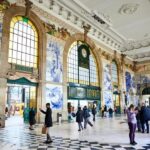
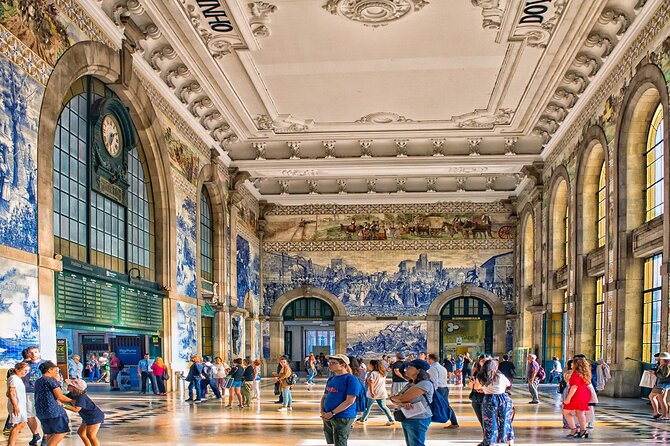
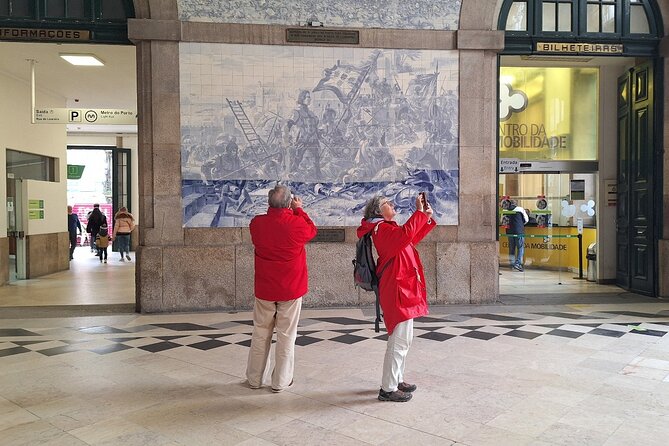
Right after that, you hit one of Porto’s easiest wow moments: São Bento Railway Station. The grand vestibule is covered with 20,000 hand-painted azulejos made by Jorge Colaço. You don’t need a long visit to get the impact—the tile scenes make Portuguese history and daily life feel “readable” at a glance. Entry here is free, and the time you’re given is again about 15 minutes.
Wear good shoes: this portion is mostly walking through iconic indoor spaces where surfaces can be slick when it rains.
Belle Époque Stop: Café Majestic, Rua Santa Catarina, and Teatro Rivoli
Around Café Majestic, you get a classic Porto break that’s also visually rewarding. It opened in 1921 and is known for its Art Nouveau style—marble, gilded mirrors, and detailed interior woodwork. This is a great pause if your group wants something familiar and comfortable before the day ramps into more churches and towers.
Just nearby, there’s the Relógio das Galerias Palladium, an ornate clock with a carillon and four statues that perform every three hours. Even if you don’t catch the full show, the clock itself is a fun photo stop because it looks like machinery plus theater.
Then the route moves through cultural architecture like Teatro Rivoli. It was opened in 1932, later expanded after a 1992 renovation, and today it has two auditoriums plus a café-concert and restaurant. You’re not there to “do” theater; you’re there to see how Porto’s entertainment history is embedded in the streets.
If you’re sensitive to crowds, use this moment to slow down. It’s one of the best places in the day to reset without feeling like you’re abandoning the itinerary.


Churches, the Hidden House, and Clérigos Tower’s 240-Step View
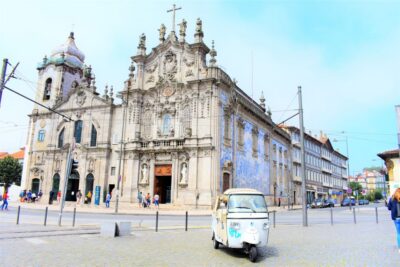
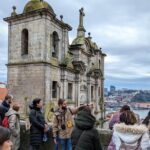
This is where Porto turns dramatically baroque. You’ll stop at Igreja de Santa Clara (Baroque with a 15th-century origin and later remodels). It’s especially known for gilded woodwork and beautiful azulejos, and it works well as a calmer pause between busier points.
Next you’ll look at Igreja do Carmo and Igreja das Carmelitas, both baroque landmarks, and the small curiosity between them: Casa Escondida (Hidden House). It’s a tiny “how did they fit this in?” stop, wedged between dense buildings—exactly the kind of Porto detail you’d miss if you only used a guidebook list.
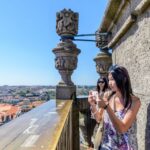
Then comes the day’s biggest vertical challenge: Clérigos Tower. You’ll climb 240 steps to reach major panoramic views from the top at 75 meters. You’ll also have access to the Clérigos Church area, but the tower ticket isn’t included unless you book the optional paid skip-the-line/ticket add-on.
My advice: treat the tower climb as the one moment you don’t rush. Even if you skip other paid tickets later, this is one of the best payoff-to-effort choices in Porto. And if weather is questionable, you might want to prioritize this earlier in the day.
Livraria Lello and Porto Bookish Glamour (Tickets Cost Extra)
Livraria Lello is on the route for a reason. It’s been captivating since 1906, known for dramatic staircases, stained glass, and rotating exhibitions. If you like architecture that feels like a movie set, you’ll get it here quickly.
But here’s the practical reality: the stop time is 10 minutes, and admission is not included. The tour offers a paid premium ticket option (priority access) as an extra. If you care about walking in, plan that cost ahead so you’re not deciding last minute while you’re standing in the area.
One more angle: this is a “look closely” stop. Even in 10 minutes, you can do two things well—take photos in the main interior areas and then step back and appreciate how the building controls the flow of your eye.
Art Museum + Palácio de Cristal Gardens + Porto Tram Museum
After towers and churches, the itinerary gives you an arts-and-nature breather.
First is Museu Soares dos Reis, noted as the first public art museum in Portugal. It’s housed in Palácio dos Carrancas, a historic 18th-century palace. Collections include ceramics, sculpture, engravings, gold and silver work, plus paintings and textiles. If your group likes indoor cultural time without feeling like a lecture, this stop is a good fit.
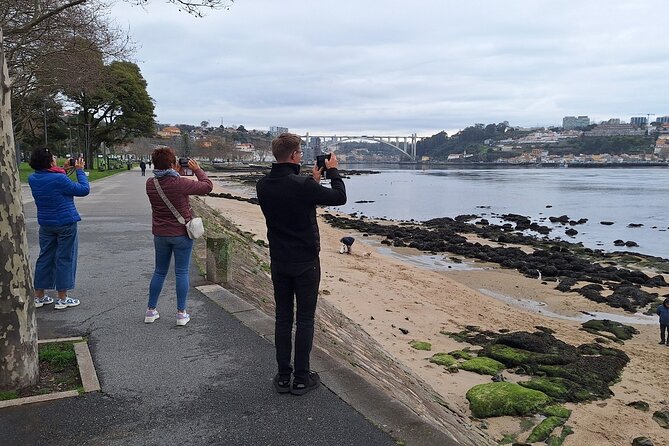
Then you move to the Romantic Gardens of Palácio de Cristal. The gardens cover 8 hectares and were designed in the 19th century as part of the Crystal Palace project. Expect Douro river balconies, the avenue of limes, forest paths, and the main entrance garden space. It’s the kind of stop where you can “just be,” especially if you’ve been walking since morning.
Finally, there’s Museu do Carro Eléctrico (Tram Museum), located in the old Massarelos power station. This is a free-entry stop and a fun change from churches: you’ll see trams and auxiliary vehicles that once ran along Porto streets, plus an example of an 1872 horse-pulled American trolleybus.
If you’ve got train lovers or history nerds in your group, this is where they quietly win the day.
Church of Gold and Palácio da Bolsa: Porto’s Big Performance Spaces
For baroque intensity, the itinerary includes Igreja de São Francisco, listed as a UNESCO site. The church’s highlight is its extraordinary gold-gilded woodcarvings inside—one of those Porto sights that makes you stop walking even if your schedule says you shouldn’t. It also includes the Chapel of the Tree of Jesse and a Catacombs and Museum component, though entry tickets aren’t included unless you add them.
Then you’ll head to Palácio da Bolsa. This is one of Porto’s most iconic monuments, built starting in 1842 as a commercial splendor statement and now tied to the local Commercial Association. The palace includes spaces like the Hall of Nations and the Arab Room. The guided tour is an optional paid add-on, since entry isn’t included in the base pricing.
This combination works well because it gives you two kinds of “performance.” Churches show spirituality through craft. Palácio da Bolsa shows commerce through architecture. Together, you get a fuller picture of what drove the city.
Bridges and Gaia Views: Ponte Maria Pia, Ponte do Infante, Jardim do Morro, Serra do Pilar
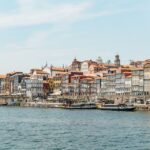
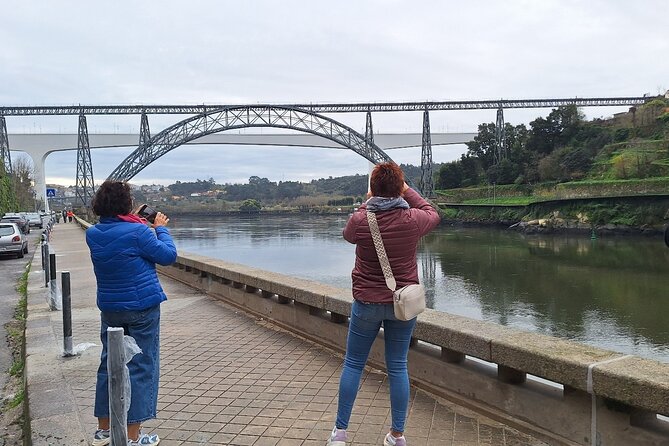
Porto is a city of water decisions, and the bridges prove it. You’ll pass the suspension bridge called D. Maria II, cross modern connections like Ponte do Infante, and also see Ponte D. Maria Pia—the Eiffel-era bridge inaugurated in 1877.
Ponte do Infante is modern engineering with a Maillart-type arch design and a noted long span. The itinerary also points out that it replaced the upper deck of D. Luís I Bridge now used by Metro Line D. It’s a “how design changed” moment.
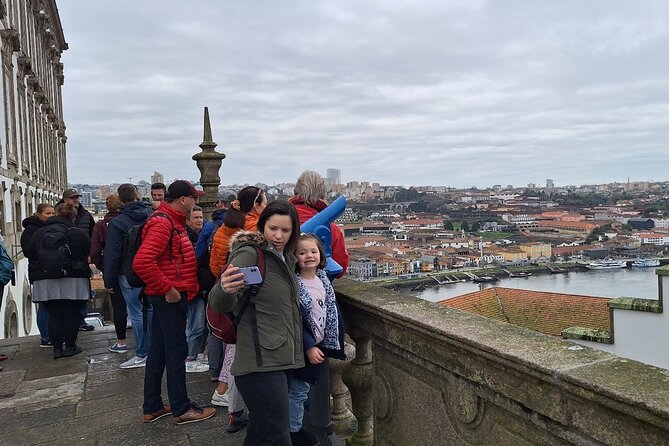
Then you’ll look at Jardim do Morro, a hill garden with panoramic viewpoints, and finish with Mosteiro da Serra do Pilar. Serra do Pilar is famous for its distinctive circular-shaped church and cloister, built beginning in 1537. It later served military purposes during the Peninsular War, and the hill location gives you wide Douro river views.
If your legs are tired, prioritize the viewpoint stops here. This part of the route is where the scenery makes the earlier walking feel worth it.
Lunch in Afurada or Matosinhos: Ocean Views, 1h30 Free Time, and No Included Meal
This is one of the most personal parts of the day: lunch is 1h30, and you choose between Afurada or Matosinhos.
Afurada is described as a fisherman’s village at the mouth of the Douro. The vibe here is traditionally simple: freshly grilled fish and seafood from local restaurants right by the water.
Matosinhos is called the seafood capital of Portugal, with a lively mix of seafood dishes and restaurants. It’s a great choice if you want variety and a busier dining scene compared to Afurada.
Important: lunch is not included in the tour price. You’re getting time and location, not a set meal. That’s good value if you enjoy choosing your own restaurant and pacing. If you want a guaranteed “sit-down” plan, you’ll need to pick a spot quickly once you arrive.
Coast Forts and the Atlantic: São João Baptista Fortress, Castelo do Queijo, and Arrábida Bridge
After lunch, the day stretches toward the coastline and fortifications.
You’ll pass Arrábida Bridge, described as a former world record long reinforced concrete arch bridge, with tall pillars rising about 70 meters above the Douro River. It’s modernist and dramatic in a “steel meets stone” way.
Next is Fortress São João Baptista, built in the late 16th century to protect the Douro River entrance and the coastline. Over time, it gained additional fortifications and an elegant access gate in the 18th century. It’s not about comfort here; it’s about seeing how Porto defended itself.
Then comes Castelo do Queijo, built in the 16th century with the “cheese castle” name used by locals due to its appearance. The best part today is the setting: you get panoramic ocean and coastline views, and it’s now a public space.
This whole stretch works if you like transitions: city tiles and towers in the morning, then military architecture and salty air later.
Optional Extras That Can Make the Day Feel Like Two Trips
The tour has add-ons that are worth considering if you want a more complete Porto/Douro evening plan.
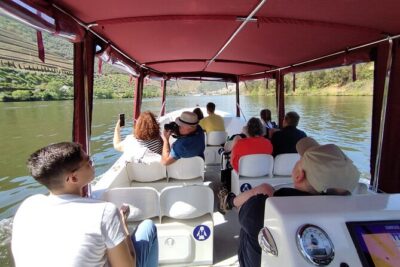
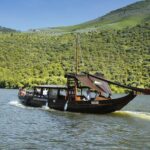
Private Douro River Cruise (sunset): listed as around 2 hours. It’s positioned as an exclusive sunset experience with views of the six bridges and riverside neighborhoods. This can be a strong follow-up if your Porto day ends still wanting water views. It’s an additional cost and can extend the day.
Exclusive Dona Antónia Port Wine cellar tour: duration about 1h30, and the tasting includes five Port wines. This is a very specific choice for wine lovers who want story plus sampling, centered on Dona Antónia Adelaide Ferreira.
Fado night with dinner and transfers: transport included, around 2h30, starting at 20:00. If you want the classic Porto night out with food and music together, this is the simplest “all-in-one” way.
Fado show with Port wine: about 1 hour, daily at 18:00 and 19:30, and it includes Port wine tasting. This is the better pick if you don’t want a full dinner plan attached.
The balance: these extras are not mandatory, but they can turn a city tour into a Porto-by-night experience. If you’re already feeling packed, choose one add-on, not three.
Tickets, Walking, and How to Keep the Day Smooth
A key detail for your planning: guided visits and attraction entrance fees are not included. Some stops are listed as free (like Mercado do Bolhão and São Bento Station, plus the tram museum), while others require paid entry if you want to go inside fully.
Also, this day includes physical moments. Clérigos Tower is a climb of 240 steps, and you’ll be on foot in multiple historic zones. If you’re managing mobility limits, you’ll want to discuss which paid stops you’ll actually enter so your energy matches the plan.
Weather matters too. The experience states it requires good weather. If conditions aren’t right, you’ll be offered a different date or a full refund—so keep an eye on forecasts and don’t schedule this as your only outing.
Finally: gratuities aren’t included, left to your discretion. If you’re happy with a guide’s pacing and choices, budgeting a bit for that is normal.
Should You Book This Custom Full Day Porto Tour?
Book it if you want a one-day Porto master route with flexibility, comfortable transport, and a guide who can steer you through major sights efficiently. It’s a strong match for first-timers, cruise passengers, and anyone who wants both the landmark hits and the local texture—markets, church craft, tile art, and real waterfront lunch choices.
Skip it or adjust expectations if you’re planning to do many paid entries in one day. Since ticketed attractions aren’t bundled, your final spend may be higher than the base price. And if your group hates stairs, decide early about Clérigos Tower so the rest of the day doesn’t feel like punishment.
FAQ
FAQ
How long is the Porto full-day tour?
The tour lasts about 10 hours (approx.).
Is pickup offered?
Yes. Pickup is offered.
Is this tour private?
Yes, it’s a private experience. Only your group participates.
What does the lunch break include?
Lunch itself isn’t included. You get free time for about 1h30 in either Afurada or Matosinhos to choose your own meal.
Are attraction entrance tickets included?
No. Guided visits and attraction entrance fees are not included in the base tour price.
Are there optional extras like wine tasting or a cruise?
Yes. Options include a sunset Douro River cruise, a Port wine cellar tour with Dona Antónia tasting, and Fado experiences (with or without dinner).
What’s included in the tour besides sightseeing?
You get an official regional interpreter guide, certified tourism driver, transport in luxury vehicles with Wi‑Fi and bottled water/refreshed, and personal accident and liability insurance.
What’s the price per person?
The price is listed at $207.00 per person.
What happens if the weather is bad?
The experience requires good weather. If it’s canceled due to poor weather, you’ll be offered a different date or a full refund.
If you want, tell me your travel month and whether you’re doing Clérigos, Lello, and São Francisco. I’ll suggest which paid add-ons usually feel worth it on a tight 10-hour day.