REVIEW · PORTO
The Sunset Porto Bike Tour
Book on Viator →Operated by Biclas & Triclas - Rent a Bike and Tours · Bookable on Viator
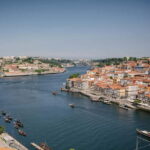
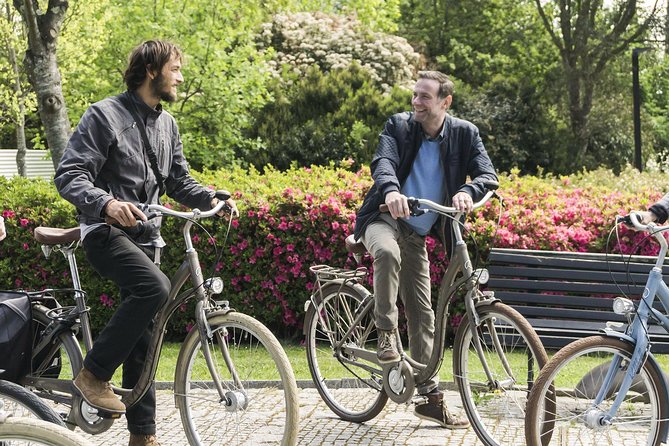
Porto at sunset is made for wheels. This 3-hour Sunset Porto Bike Tour takes you through classic viewpoints plus areas most visitors skip because cars and buses simply can’t reach everywhere. You’ll see the Douro river from multiple angles, then swing out toward the Atlantic at Foz, finishing back in the historic center.
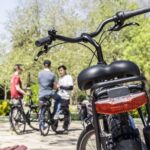
I especially like that you get bike + helmet hire included, so you’re not hunting rental shops or guessing gear quality. I also like how the route spreads across real neighborhoods and famous landmarks instead of circling the same handful of photos. If your guide is the type folks rave about—Felipe for calm pacing and safety checks, Helio for humor and solid explanations—you’ll feel looked after from stop to stop.
One possible drawback: this is a group ride, so at a few spots where roads tighten up, you’ll still need to pay attention and stick with your guide’s crossing plan. It’s not a slow parade; it’s paced for motion, and the sunset light can make shadows and cobbles a bit sneaky.
In This Review
- Key highlights to expect
- Golden hour timing: what the 3 hours actually feel like
- Price and what you get for $58.81 in Porto
- Route goals: car access limits, river focus, and neighborhood variety
- Leaving the start point: Biclas & Triclas and the first “set your bearings” moments
- Miragaia and Porto’s 19th-century riverfront changes
- Porto Tram Museum: why trams still matter in a river city
- Ponte da Arrábida and Cantareira: the Douro from the engineering side
- Foz do Douro stops: Jardim do Passeio Alegre, fort views, and lighthouses
- Pergola da Foz and the “Cheese Castle” coast
- Matosinhos beach: the Atlantic edge, with surfing-friendly waves
- CityPark and Pasteleira: when the ride turns into a green break
- Jardim do Cálem and the return arc through UNESCO-listed Luís I Bridge
- Praça da Ribeira: the old port heart and the 1809 tragedy marker
- Who should book this, and who might want a different plan
- Should you book the Sunset Porto Bike Tour?
- FAQ
- FAQ
- How long is the Sunset Porto Bike Tour?
- What time does the tour start?
- Is the tour guided in English, and what does the group size look like?
- What’s included in the price?
- Are food and drinks included?
- What do I need to bring, and what if the tour gets canceled for weather?
Key highlights to expect
- Douro river views from several “you can’t see this from a bus” angles
- Car-free-feeling riding in stretches with safer lanes and mostly flat terrain
- Old Town + Gaia connections via major bridges
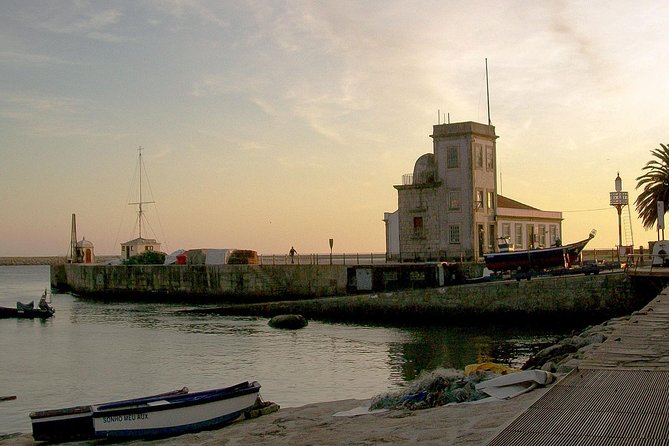
- Foz do Douro stops with fort, lighthouse, and seaside viewpoints
- CityPark and other big green spaces, not just waterfront
- English guide time with bottled water included
Golden hour timing: what the 3 hours actually feel like
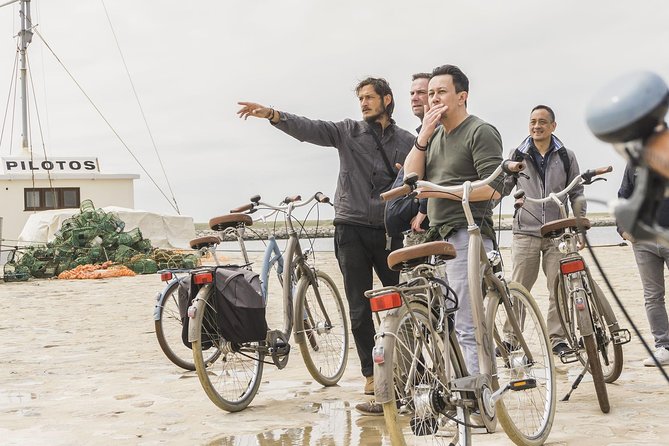
The tour starts at 5:00 pm, which is a smart move in Porto. You’re not stuck in harsh daylight for the best waterfront photos, and you avoid the hottest part of the day. In about 3 hours, you’ll cover a lot of ground—enough to feel you made real progress even if Porto is just a quick stop on your trip.
Because the stops are short (often a few minutes each), the experience feels like a moving guided walk—except you’re on a bike. That can be great if you’re the type who wants context without spending an hour inside any one place. The trade-off is you won’t have time for long museum-style visits at every stop. Think of it as a route designed to give you a map of Porto’s “greatest hits,” plus some detail you can use later when you explore on your own.
You can also read our reviews of more cycling tours in Porto

Price and what you get for $58.81 in Porto
At $58.81 per person, this tour lands in the mid-range for Porto bike experiences. What helps the value is what’s bundled: bicycle and helmet use, bottled water, and a local guide, plus taxes and fees. You also get a mobile ticket, which makes check-in less of a hassle than older-school tours.
If you’ve ever paid for a bike rental and then still needed a guide, you know how quickly costs stack up. Here, you’re paying for a plan: the bike is the transport, and the guide turns the ride into a story about the city. That’s especially useful in Porto, where you can easily miss the “why” behind viewpoints—like how the riverfront changed over time.
Route goals: car access limits, river focus, and neighborhood variety
A big selling point is that the route reaches places that can’t be reached by car or bus. You feel that right away when you’re cycling through streets that don’t behave like classic tourist corridors. It’s one of those Porto quirks: the city is compact, hilly in spots, and layered with history—so the best access often comes from walking or biking.
The ride also doesn’t trap you in only one theme. You’ll get:
- Old Town and riverfront history
- Douro crossings on major bridges
- Atlantic-side Foz views
- Large parks once you’re away from the densest center
And you’re riding with the goal of comfort. The experience is offered for all ages and skill levels, and bike comfort shows up in the way the tour gets described—most of it is mostly flat and uses safer-feeling lanes. That matters if you’re not a confident cyclist.
Leaving the start point: Biclas & Triclas and the first “set your bearings” moments
You’ll begin at Biclas & Triclas – Port Rent a Bike and Tours, at R. Nova da Alfândega 108 R/C. Starting in this area makes sense: it sets you up close to the Douro and the river crossings, so you’re not spending your best sunset minutes just commuting.
Early on, you’ll get settled with your guide and gear. Even if you’re an experienced cyclist, it’s worth taking those first few minutes seriously—adjust the helmet, check brakes, and get your comfort level before you pick up speed. Guides here tend to do a safety and comfort check (Felipe-style calm pacing is a recurring theme), and that sets the tone for the rest of the ride.
Miragaia and Porto’s 19th-century riverfront changes
The tour’s first named stop is Miragaia, a picturesque area known for cobbled streets, villas, and small places serving typical Portuguese dishes. It’s the kind of neighborhood where you get the Porto vibe fast: stone textures, hillside views, and streets that look like they were built for slow wandering—not buses.
Right after that, you’ll get a historical “how did Porto change?” moment connected to the riverfront. The route points out major 19th-century modifications tied to the huge platform at the pier where the Customs is based, which replaced what had been the old Miragaia beach. This is the sort of stop that’s easy to overlook if you’re only looking for pretty angles. With a guide’s explanation, you start noticing how infrastructure shapes the city’s look and daily life.
You can also read our reviews of more evening experiences in Porto


Porto Tram Museum: why trams still matter in a river city
Next up is the Porto Tram Museum (Museu do Carro Eléctrico), set in a former thermoelectric power station near the Douro in Massarelos. It opened in 1992, and the point of this stop isn’t to make you a tram expert. It’s to show you how Porto’s transport and industry were tied together—and how the river powered the city’s growth.
Because the tour is timed, expect this as a quick, guided orientation more than a full museum afternoon. Still, it’s a fun angle if you like machinery, public transport history, or just want something different from the usual churches-and-views loop.
Ponte da Arrábida and Cantareira: the Douro from the engineering side
Then comes Ponte da Arrábida, an arched bridge over the Douro connecting Porto (Arrábida side) to Vila Nova de Gaia (Candal side). Built in 1963, it’s famous for having had the largest reinforced concrete arch of any bridge in the world at the time. Even if you don’t care about engineering trivia, it changes how you look at Porto: bridges here aren’t just crossings; they’re landmarks.
You’ll also get Cantareira, a riverside area tied to the old tradition of water fetching from fountains. It also still carries a fishing heritage, with spots that shelter small boats and store gear. From the bike, you can actually connect the daily life of the river to the views you’re seeing—water isn’t just scenery here, it’s a working system.
Foz do Douro stops: Jardim do Passeio Alegre, fort views, and lighthouses
Once the tour swings toward Foz do Douro, the vibe changes. You’re moving toward sea air and open sightlines, and that’s when Porto’s “coastal city” character gets real.
You’ll pass by Jardim do Passeio Alegre (described here through Casa de Repouso Jardim da Foz). This garden area is listed as a Property of Public Interest, and it sits near heritage sites. It’s a nice break in the ride—green, calmer, and a visual reset before the forts and beaches.
Then there’s Fortress São João Baptista (São João Baptista da Foz / São João da Foz Fortress). You’re in a dominant spot on the river bar—useful strategically when the goal was controlling access. One of the best things about this stop is that forts on the coast can look like props unless someone explains their purpose. With a guide, you’ll understand why the views and the walls go together. People also specifically mention cannons still pointing toward the water, which is the kind of detail that turns a photo moment into a story.
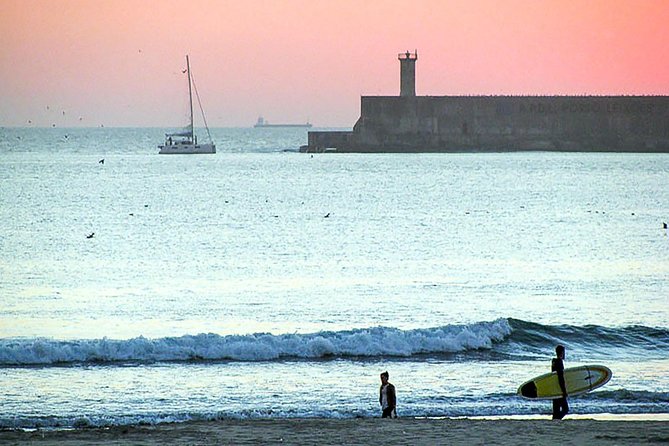
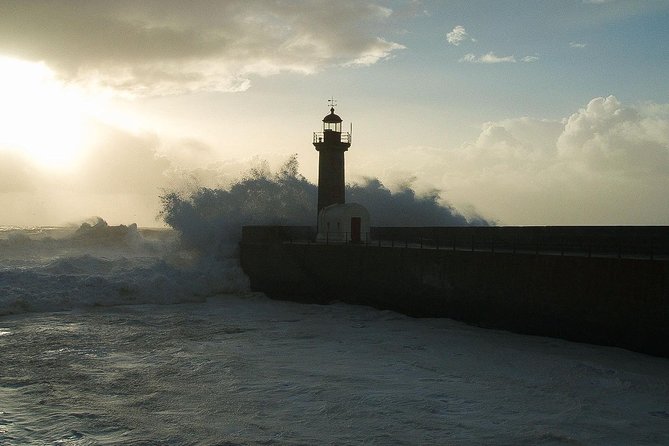
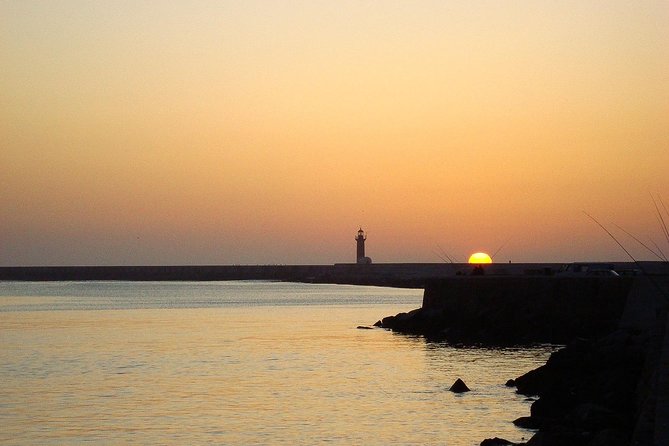
From there, you’ll reach Farolim de Felgueiras, a lighthouse at the tip of the pier. Lighthouse stops are quick by nature, but they’re valuable because they teach you what to look for: the city’s relationship to navigation and the coastline’s role as a boundary.
Pergola da Foz and the “Cheese Castle” coast
Next you’ll cycle through the Pergola da Foz area, linked with Praia da Foz, which covers beaches like Ourigo, Ingleses, and Luz. The route gives you quick vantage points rather than long beach time, which is fine: at sunset, your best use of time is vantage over lounging.
After that is Praia do Castelo do Queijo, known as the Cheese Castle because it sits on a rocky hill shaped like a cheese wedge. The fortification there was built in the 17th century to protect the coast from pirates from North Africa. This stop gives you a real sense of why Porto keeps returning to the sea for both danger and opportunity.
Matosinhos beach: the Atlantic edge, with surfing-friendly waves
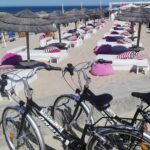
You’ll also pass by Praia de Matosinhos, described as the largest beach with easy access from central Porto. It’s known for wide sands and waves suitable for surfing. If you’re the type who only thinks of Porto as a river city, this is a good correction. You’re reminded that Porto’s identity stretches from the Douro’s sheltered world to the open Atlantic’s weather and energy.
Because the tour remains timed, don’t plan on full beach time here. Use it for the view, the sea-change feeling, and a quick reset before the big green spaces.
CityPark and Pasteleira: when the ride turns into a green break
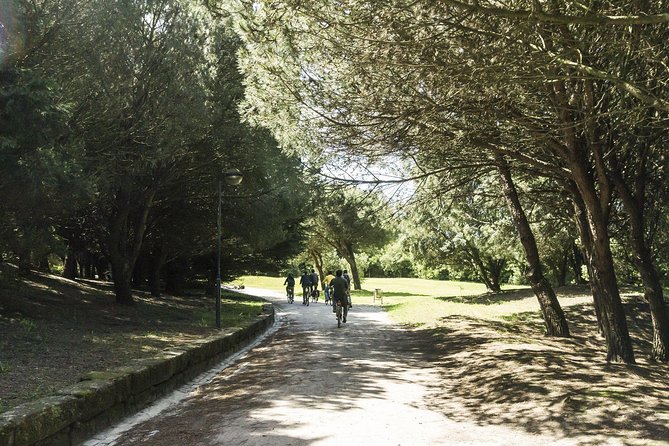
One of the biggest surprises on this tour is how much park time is built in. CityPark is the largest urban park in the country, covering 83 hectares with about 10 km of paths. The route treats it like a highlight, not a filler.
If you’ve only seen Porto from viewpoints, CityPark helps you understand the city’s daily texture. Lakes, flora, and fauna are part of the design, and you get a break from hard city lines. It’s also where a mostly-flat ride feels even better—your body gets a breather, and your mind gets a chance to take in the scale of Porto beyond the riverfront.
You’ll also visit Parque Urbano da Pasteleira, a public park in Lordelo do Ouro described as extending over a forest area split by Afonso de Paiva Street, with wooden pontoons connecting parts. It’s another of those spots that feels like local life rather than postcard Porto.
Jardim do Cálem and the return arc through UNESCO-listed Luís I Bridge
As you come back toward the center, you’ll stop at Jardim do Cálem, a small garden near the mouth of the Douro with views across the river. It’s brief, but it’s the kind of stop that makes the later landmarks hit harder—you’re re-centering on the river as you re-enter the city core.
Then comes Luís I Bridge (commonly called D. Luís I). It’s been part of the UNESCO World Heritage Site since 1996, and it’s described with that small name detail that locals care about. Either way, you’ll experience it as Porto’s signature crossing. If your timing is good, you get a mix of bridge lines, river movement, and skyline angles that are hard to recreate on foot.
Praça da Ribeira: the old port heart and the 1809 tragedy marker
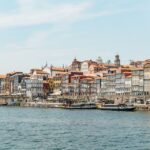
The tour wraps with Praca da Ribeira, a historic square right by the quay in the old center. It’s mentioned in royal letters as early as 1389, and it’s tied to the city’s commercial growth through its connection with the Douro River.
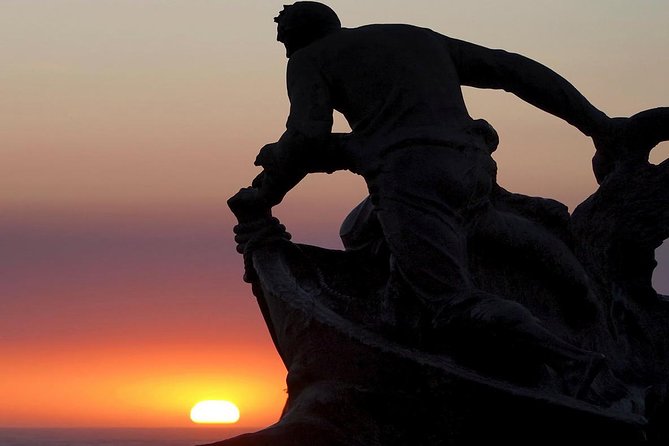
There’s also a sobering layer here. The area includes reference to the Ponte das Barcas, where in 1809 more than 4,000 people died during an onslaught of French troops. Today, a bronze bas-relief marks the moment. This is one of the reasons I like a guided bike route at sunset: you get the romance of the river, but you also get the reminders that history here has weight.
From there, you return to your starting point at Biclas & Triclas to end where you began—so you’re not scrambling to coordinate your own transportation after a long pedal.
Who should book this, and who might want a different plan
This tour is a great fit if:
- You have limited time and want many Porto highlights in one go
- You like movement and prefer seeing neighborhoods rather than just viewpoints
- You want the “Porto story” explained by a guide, not only read on signs
- You’re comfortable cycling at a reasonable pace and want mostly flat, safer-lane riding
It may be less ideal if:
- You expect long, unhurried museum time at each stop
- You’re extremely anxious about intersections (even with good guidance, group rides need your attention)
- You need fully flexible pacing, since the route is designed as a 3-hour arc
Should you book the Sunset Porto Bike Tour?
I’d book it if you want a smart, time-efficient way to see Porto from river to coast and back again—especially at 5:00 pm, when the light helps make the views feel extra memorable. The strong value is the bundle: bike, helmet, bottled water, and an English guide—all tied together by a route that hits both famous landmarks and “how Porto works” details.
If you’re deciding between this and a slower walking tour, choose this when you care more about coverage and perspective than lingering in one spot. If you’re choosing between it and a longer cycling day, choose this when you still want highlights without committing to a full morning or afternoon.
FAQ
FAQ
How long is the Sunset Porto Bike Tour?
It’s about 3 hours long.
What time does the tour start?
The start time is 5:00 pm.
Is the tour guided in English, and what does the group size look like?
Yes, it’s offered in English. The tour has a maximum of 10 travelers and a booking can include up to 8 people.
What’s included in the price?
Included are bottled water, a local guide, use of a bicycle and helmet, and all taxes, fees, and handling charges.
Are food and drinks included?
Food and drinks are not included, unless the tour specifies otherwise.
What do I need to bring, and what if the tour gets canceled for weather?
You need to bring a current valid passport on the day of travel. The tour requires good weather; if it’s canceled due to poor weather, you’ll be offered a different date or a full refund. You also can cancel for a full refund up to 24 hours before the start time.