REVIEW · PORTO
Private Tour to Santiago de Compostela and its stunning Cathedral
Book on Viator →Operated by Endless Weekend Tours · Bookable on Viator
Santiago de Compostela hits like a movie scene. This private outing from Porto is built around the big religious sights, with time to understand what you’re looking at while someone else handles directions. You’ll also move through the old town at an easy pace, from markets to cathedral square, without the stress of finding your own meeting point.
Two things I really like: hotel pickup and drop-off (no awkward rendezvous) and the chance to see the cathedral complex with context—where details like the sculpted stone work and carved wood matter. I also like that the ride is comfortable, with Wi‑Fi and refreshments onboard. One drawback to plan for: the day includes optional add-ons and separate ticket costs that can change your final spend, so you’ll want to confirm what’s included for your exact package.
In This Review
- Key highlights worth your time
- A smooth Porto-to-Santiago start, minus the logistics headache
- Mercado de Abastos de Santiago: where Galicia’s food culture starts
- San Martin Pinario monastery: baroque details you can actually spot
- Portico de la Gloria: three arches, 200+ granite figures
- Plaza del Obradoiro: the cathedral square that anchors everything
- Cathedral of Santiago de Compostela: the Camino’s heart in stone
- The royal hospital now a 5-star hotel: Hostal de los Reyes Católicos
- Palacio de Raxoi and Rúa Nova: architecture and culture between the big moments
- Rúa do Franco: the pilgrim-street food story in your walk
- Rúa do Vilar and the pilgrimage certificate: a small ritual with big meaning
- Museo del Pueblo Gallego: when you want a Galicia deepening
- A realistic look at timing: 8–10 hours can feel full
- Price and what to confirm: tickets and optional guide costs
- Who this private Santiago tour fits best
- Should you book this Santiago Cathedral day trip from Porto?
- FAQ
- How long is the private tour?
- What time does the tour start?
- Where is the meeting point in Porto?
- Do you offer hotel pickup and drop-off?
- Is this a private tour?
- What language is the tour offered in?
- Is there Wi‑Fi and refreshments during the drive?
- Are cathedral and museum tickets included in the price?
- Is lunch included?
- Is there an option for an official Spanish guide?
- Is cancellation free?
Key highlights worth your time
- Hotel pickup in Porto and Gaia keeps the day simple from start to finish
- San Martin Pinario: late-15th baroque church spaces tied to early Santiago legend
- Portico de la Gloria: three arches and 200+ granite figures by Maestro Mateo (1168–1188)
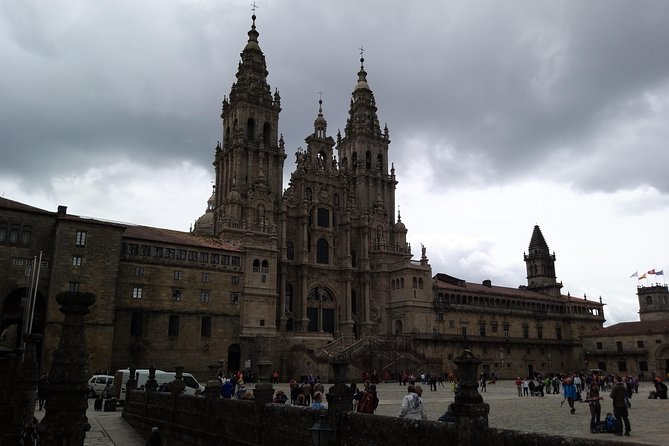
- Plaza del Obradoiro + Cathedral views with Romanesque structure plus later Gothic and Baroque elements
- Pilgrim-world streets like Rúa do Franco and Rúa do Vilar for food history and certificates
- Comfort on the road: luxury transport with onboard Wi‑Fi, bottled water, and refreshments
A smooth Porto-to-Santiago start, minus the logistics headache
This is a private tour, so the day works around your group. You start at 8:00 am from Praça da Liberdade 19, Porto, and if you’re staying in downtown Porto or Gaia, pickup is offered from hotels and B&Bs. That matters more than people think: Santiago is not a “hop on, hop off” kind of place. You want a calm arrival, not a scavenger hunt for where to meet.
The drive is handled in a comfortable vehicle with extra gear, Wi‑Fi, bottled water, and refreshments. That’s a big quality-of-life upgrade for a long 8–10 hour day. Your guide handles navigation, so you can focus on the scenery as you move north into Galicia.
And because it’s offered in English with a mobile ticket, you’re not stuck with piles of paperwork. Just keep an eye on the timing for the day’s main stops.
You can also read our reviews of more private tours in Porto

Mercado de Abastos de Santiago: where Galicia’s food culture starts
Your first stop is Mercado de Abastos de Santiago, and it’s a smart opener. Markets set the tone fast: you get the feel of local rhythms before you plunge into monuments.
What makes this one interesting is the mix of old and new. You’ll see traditional stalls tied to surrounding farm life—run by ladies from nearby areas—alongside newer, more modern stalls and restaurant openings. The point isn’t to turn the day into a food tour. It’s to get oriented to how people in Santiago actually live, shop, and eat.
If you’re the type who likes to understand a place beyond photos, this market is a practical start. You’ll also get to sample Galicia products later with better context, since you’ll know what you’re looking for.
A small consideration: this stop is short (about 20 minutes), so think of it as a taste of the culture rather than a full meal plan.
San Martin Pinario monastery: baroque details you can actually spot
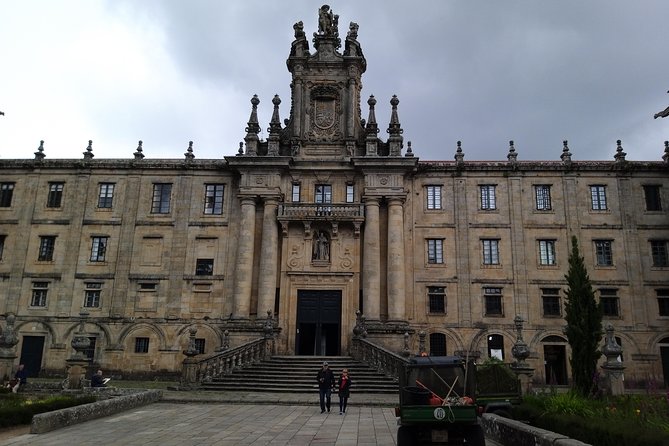
From the market, you step into Monasterio de San Martin Pinario, a place that connects Santiago’s religious story to what you can see today. The monastery was founded in the 9th century by Benedictine monks who came after news of the discovery of St. James’ remains. That early link is the backdrop—but the building you’re visiting is what makes the stop unforgettable.
What you see dates from the late-15th century, and it’s described as a powerful baroque architectural piece. This matters because baroque isn’t just style. It’s about craftsmanship, display, and devotion in a physical form.
You’ll get time to step up toward the choir to see the wood-carving and admire altarpieces by Fernando de Casas Novoa (an 18th-century architect). If you’ve ever looked at a grand church and felt like you were just staring at walls, this kind of stop helps your eyes find a “map” inside the building.
Another plus: it’s typically a quick visit (about 30 minutes). It’s long enough to appreciate the detail, short enough that you’re not rushing through the day’s bigger moments.
Portico de la Gloria: three arches, 200+ granite figures
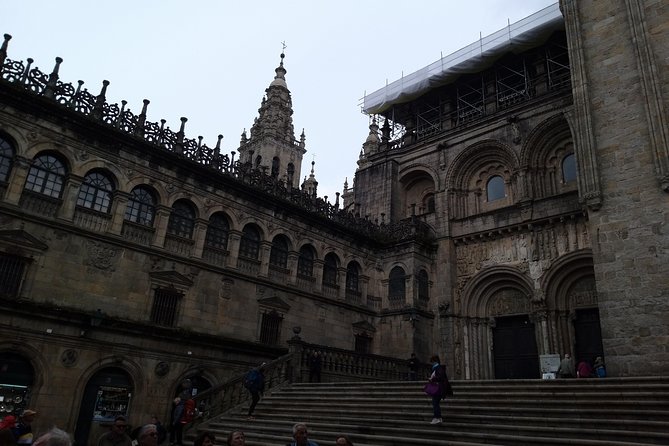
Next comes Portico de la Gloria, and this is where the stone sculpture becomes the star. The work was conceived as a portico (or narthex) of the cathedral. It was sculpted by Maestro Mateo between 1168 and 1188, which is exactly the kind of date detail that makes a sight feel less vague.
The scale is the first thing that hits: three arches and more than 200 granite figures. Even if you don’t speak the language, you’ll feel the human drama of the carved scenes. The “wow” here is not only the artistry. It’s the storytelling density—so many figures packed into a structured layout.
This stop is about 15 minutes, which means you should plan for a focused look: don’t spend your entire time trying to read everything. Instead, slow down for one arch area, then move on. That’s the trick to enjoying sculpture fast.
If you care about architecture and medieval craft, this is one of the best stops on the day.
Plaza del Obradoiro: the cathedral square that anchors everything
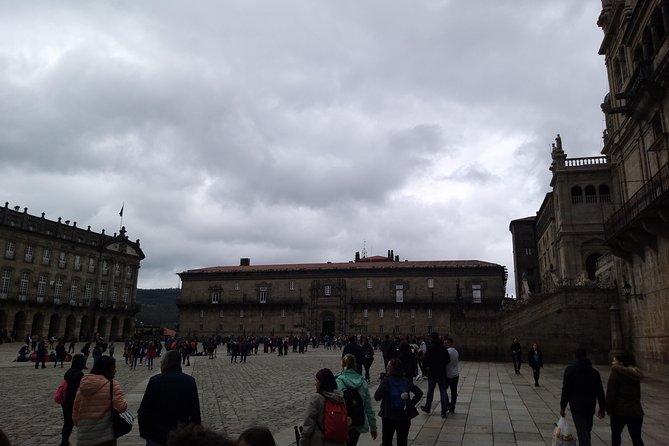
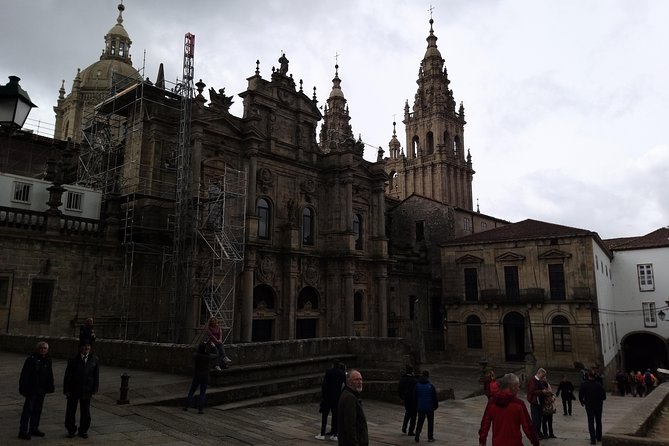
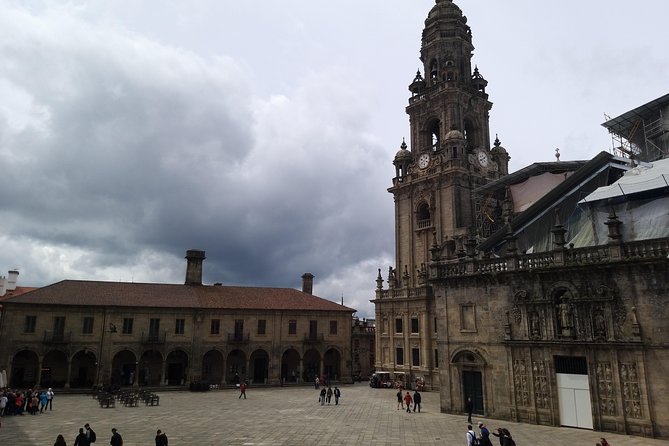
Then you reach Praza del Obradoiro, Santiago’s main square. It’s not tucked away in a tiny lane—this one acts like the stage set for the cathedral, which is why it works as a landmark. The cathedral’s presence shapes the square more than any signpost.
The cathedral itself combines Romanesque structure with later Gothic and Baroque elements. That mix is part of Santiago’s identity: a living religious site that changed over centuries instead of a single “frozen” monument.
Your time here is around 10 minutes, so treat it like an orientation moment. Get your bearings, then head into the cathedral area with your eyes already trained on the major forms.
If you’re planning to take photos, do it early in your square moment. Once people crowd in, the best angles can get harder to find.


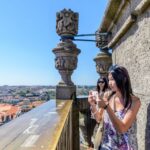
Cathedral of Santiago de Compostela: the Camino’s heart in stone
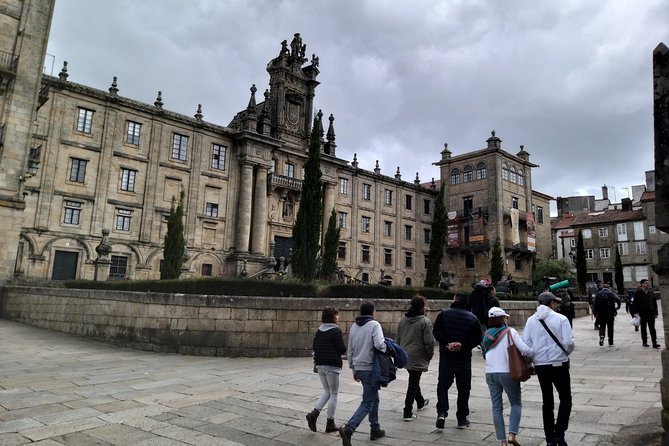
The day’s main event is Cathedral de Santiago de Compostela, a Catholic temple connected to the tomb of the Apostle Santiago. According to tradition, this is what made the cathedral one of Europe’s key pilgrimage destinations during the Middle Ages through the Camino de Santiago.
One detail worth knowing before you go in: the Camino is described here as an initiatory route tied to the Iberian Peninsula and wider Europe—so the cathedral wasn’t just a local church. It was the gravitational center for a whole movement of people.
Inside, the cathedral’s interior impact can be dramatic. One standout from a recent private-tour experience: the altarpiece and the pipe organ left a lasting impression. If those are your priorities, it’s worth slowing down once you’re inside and giving them your full attention rather than trying to see everything in a rush.
Practical note about tickets: the plan lists the cathedral admission as free within the stop structure, but the overall ticket section also notes a cathedral and museum ticket cost of €20 per person. That mismatch is the kind of thing that can affect your final bill. Before your day starts, confirm what’s actually included in your booking and what you may need to pay on the ground.
The time here is around 1 hour, which is enough to feel the scale and take in major features, as long as you don’t get stuck in a single corner.
The royal hospital now a 5-star hotel: Hostal de los Reyes Católicos
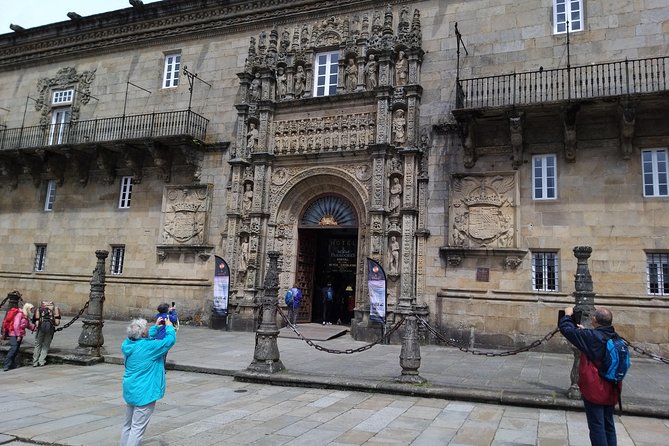
Next is Hostal de los Reyes Catolicos, also known as the building that became a famous stay. The original Royal Hospital began in 1501, ordered by the Catholic Monarchs after their visit to Santiago in 1486 and their sense that pilgrims and residents needed better healthcare.
Today, that structure is converted to a 5-star hotel. You won’t be using the hotel service during this stop; you’ll simply get a look at the way religious-era infrastructure evolved into a grand hospitality space.
Admission here is not included, so you’re likely just seeing it from the outside or in a limited way. Still, it’s a meaningful stop because it shows Santiago wasn’t only about worship—it also cared for people along the pilgrim road.
Palacio de Raxoi and Rúa Nova: architecture and culture between the big moments
A little further along, you’ll visit Palacio de Raxoi, a neoclassical building named after the archbishop who founded it. The building helped enclose the square in the 18th century. This is one of those stops that rewards you for looking past the main attraction. The surrounding architecture explains how Santiago shaped public spaces over time.
Then it’s on to Rúa Nova, a street where you can spot palaces and two cultural anchors: Teatro Principal and Salón Teatro. This is a quick stop (about 15 minutes), but it’s a good reminder that Santiago still functions as a living city, not only a pilgrimage destination.
If you’re the kind of traveler who likes to know what a place is doing today, these “in-between” stops do real work.
Rúa do Franco: the pilgrim-street food story in your walk
Then you move to Rúa do Franco, described as the old town’s top gastronomic street. This is where practical history meets real eating habits. The street’s restaurants continue a tradition tied to medieval innkeepers who catered to pilgrims.
The naming matters: Franks was used for pilgrims from beyond the Pyrenees—essentially the Frankish Nation term for those “free men” from outside. That’s why the street carries a medieval label even now.
This stop is about 15 minutes and admission is free. It’s ideal if you’re hungry for ambiance more than a full sit-down lunch. If your group wants a meal, you can plan where to eat next based on your energy level, since the day still includes other stops.
Rúa do Vilar and the pilgrimage certificate: a small ritual with big meaning
On Rúa do Vilar, you’ll find the Santiago Cathedral Foundation, where pilgrims can get a certificate of their pilgrimage. This is one of those details that makes the Camino feel real and present, even if you’re doing it as a day trip.
You’ll have about 15 minutes here, so it’s a “see and understand” type of moment rather than a full procedure walkthrough. Still, it’s a strong stop for anyone who likes to connect a place’s symbols to what people actually do there.
If you want a souvenir that feels like more than a magnet, this kind of certificate culture is exactly that.
Museo del Pueblo Gallego: when you want a Galicia deepening
You also have the option of visiting Museo del Pueblo Gallego, which focuses on Galicia’s culture and traditions. Expect extra cost: €4 per person for admission here.
This is not a must-do if your time is tight and your group wants cathedral-only focus. But it can be a smart choice if you’re leaving with one big takeaway about religious monuments and you’d like a second layer: how Galicia’s identity is expressed through traditions, not only churches.
The museum stop is about 30 minutes, so it fits without stealing the whole day.
A realistic look at timing: 8–10 hours can feel full
With an 8–10 hour duration, you’ll want to go in with the right expectations. You’re not strolling at leisure for the entire day. You’re moving through a set of high-impact points with short to medium stays.
That style works well for a first visit because it helps you hit the most significant sights efficiently. The trade-off is that you’ll likely want to come back for a slower, more repeat-focused wandering session—especially if you fall in love with the cathedral area.
Comfort on the bus helps here. You can use the in-car time to rest, refresh, and get ready for the next walking segment.
Price and what to confirm: tickets and optional guide costs
The tour price is $337.39 per person, with private luxury transport and guide service included as part of the experience. That’s a meaningful price, but it can be good value if you’re comparing it to the cost of doing multiple taxi rides plus the time you’d lose managing connections.
Still, the extra charges matter:
- A typical lunch (starter, main, drink, dessert, coffee) with Alvarinho wine is listed at €30 per person.
- Cathedral and museum tickets are listed as €20 per person.
- An official Spanish guide for the cathedral and a 2-hour walking tour is €200 per booking.
- Museo del Pueblo Gallego has an extra €4 per person admission.
There’s also an important quirk: some stops are listed with free admission in the route notes, yet the ticket section lists separate charges. That doesn’t automatically mean something is wrong—it often means packages and on-the-ground access vary. What I’d do: ask your provider what you personally pay during the day, especially for the cathedral and museum.
If you get that clear, the rest is straightforward: the hard part—transport and routing—is handled.
Who this private Santiago tour fits best
This is ideal if you:
- want a private day trip instead of a crowded group bus
- like the big sights but also want the context for what you’re seeing
- value hotel pickup and an easy return to Porto
- care about religious art and architecture details like carved wood, baroque design, and major sculpture
It may be less ideal if you:
- want lots of free time to wander without a schedule
- dislike days that require ticket add-ons and pre-planning around costs
- prefer to eat only where you choose last minute (because there’s a planned structure around the day’s stops)
For couples, small groups of friends, and families who want history without the hassle, this hits a sweet spot.
Should you book this Santiago Cathedral day trip from Porto?
I’d book it if you want a high-value, low-stress route to Santiago’s most important sights—especially the cathedral complex, Portico de la Gloria, and San Martin Pinario. The combination of comfortable transport, pickup convenience, and short, well-chosen stops makes it a strong first visit.
But I’d also go in prepared to clarify what you’ll pay for once you’re there. The cathedral and museum ticket situation in the price details can affect your total cost, and it’s better to have that nailed before the day starts.
If your group loves architecture, sculpture, and pilgrim-world streets, this is the kind of day trip that feels like it gives you more than just photos. And if you luck into a great driver-guide like Carlos, the day tends to run smoother and feel more personal.
FAQ
How long is the private tour?
It runs about 8 to 10 hours.
What time does the tour start?
The start time is 8:00 am.
Where is the meeting point in Porto?
The meeting point is Praça da Liberdade 19, 4000-322 Porto, Portugal.
Do you offer hotel pickup and drop-off?
Yes. Pickup is offered to downtown Porto and Gaia hotels and B&Bs, and the tour ends back at the meeting point.
Is this a private tour?
Yes. It’s a private tour/activity, meaning only your group participates.
What language is the tour offered in?
It’s offered in English.
Is there Wi‑Fi and refreshments during the drive?
Yes. The luxury vehicle includes Wi‑Fi, bottled water, refreshments, and a relaxing atmosphere.
Are cathedral and museum tickets included in the price?
No. Ticket to Cathedral and Museum €20 per person is listed as not included.
Is lunch included?
No. A typical lunch with Alvarinho wine is listed as €30 per person and is not included.
Is there an option for an official Spanish guide?
Yes. An official Spanish guide for the cathedral and a 2-hour walking tour is listed at €200 per booking (not included).
Is cancellation free?
Yes. You can cancel for a full refund up to 24 hours in advance. Within 24 hours, it’s not refunded.