REVIEW · PORTO
Discover Porto A Private Walking Tour with Authentic Tasting
Book on Viator →Operated by Mati Experiences · Bookable on Viator
Porto is best understood on foot. This 3-hour private walking tour links the city’s most famous sights with real local rhythm, plus an authentic wine and Port tasting at the end.
I especially like how the route mixes big-name places with calmer corners, so you get both wow-factor and context. I also like the guide interaction—Thiago Costa is known for clear, patient answers and a style with humor that keeps the walk moving.
One possible drawback: Porto is hilly, so plan for uphill stretches and bring shoes you trust.
In This Review
- Key things to know before you go
- Starting at Loja Interativa Porto and ending near Pátio d’as Marias
- São Bento Station’s azulejo story panels
- Avenida dos Aliados: Porto’s grand boulevard for people-watching
- Mercado do Bolhão: real market noise, not just shopping
- A Belle Époque café and an 18th-century theater stop for culture context
- Clérigos Tower complex: why Porto reaches upward
- Catedral da Sé do Porto: mixing styles you can actually spot
- Ponte Luiz I over the Douro: the view that ties Porto to Gaia
- The wine and Port tasting: the payoff you’ll remember
- Price and value: $72.09 for a private, guided walk
- A note on pace, hills, and how the guide handles real life
- Should you book this Porto private walking tour?
- FAQ
- FAQ
- How long is the Porto private walking tour?
- Is this tour private or shared?
- What language is the tour offered in?
- Does the tour include a tasting?
- Where do I meet the guide?
- Where does the tour end?
- What is the cancellation policy?
Key things to know before you go
- Private group, not a big bus tour: only your group joins this walk.
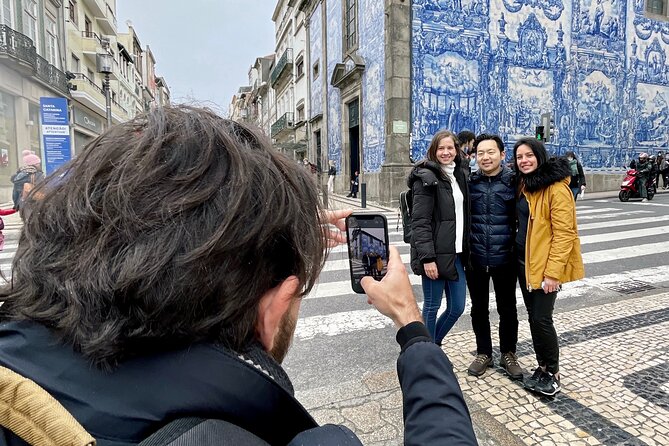
- Classic Porto anchors: São Bento, Avenida dos Aliados, Mercado do Bolhão, Sé Cathedral, Clérigos, and Ponte Luiz I.
- Food and drink payoff: a wine and Port tasting wraps up the tour.
- English-led: the experience is offered in English.
- Smart, street-level pacing: it’s designed for walking, orientation, and lots of on-the-spot questions.
Starting at Loja Interativa Porto and ending near Pátio d’as Marias
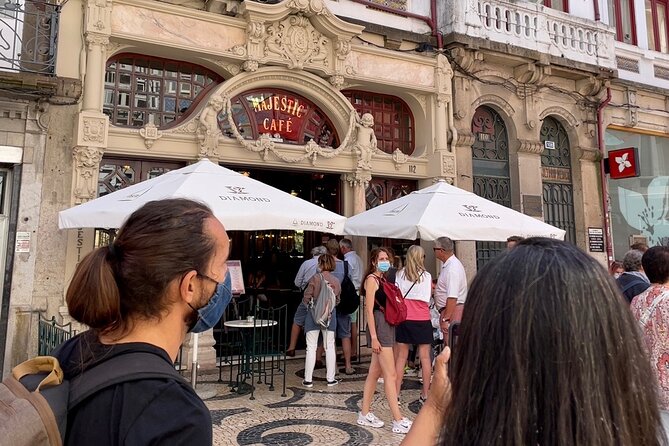
The tour begins at Loja Interativa Porto Welcome Center, Praça de Almeida Garrett 27, which is a handy spot to find and a good launch point for understanding Porto’s layout. You’ll finish at Pátio d’as Marias, R. de Cedofeita 269, which conveniently places you near central areas for dinner and a post-walk wander.
Because it’s a 3-hour walking format, it works best if you treat this as your first or second “get my bearings” outing. You’ll come away with street-level directions, not just photo stops. Also, you’ll get a mobile ticket, which is convenient for showing up without paperwork.
You can also read our reviews of more walking tours in Porto


São Bento Station’s azulejo story panels
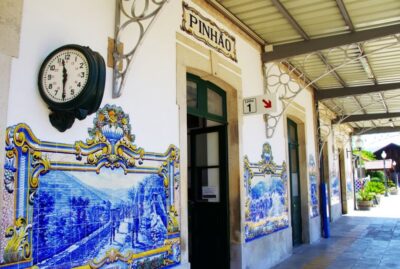
São Bento Railway Station is where Porto flexes its identity. The big draw is the famous azulejo tile panels that visually tell parts of Portugal’s story. It’s also still a functioning station, so you’re not looking at a museum piece behind velvet rope—you’re watching history meet everyday life.
What I’d focus on here: don’t just glance up. Step into an open area near the main viewing sections and take a slow minute to connect what you’re seeing with what the guide explains. This stop sets a tone for the whole walk: Porto doesn’t separate “culture” from daily routine.
A small practical note: even though this stop is free to enter, it can feel crowded at peak times. Give yourself a little patience and use it as your quiet pause to settle in.
Avenida dos Aliados: Porto’s grand boulevard for people-watching
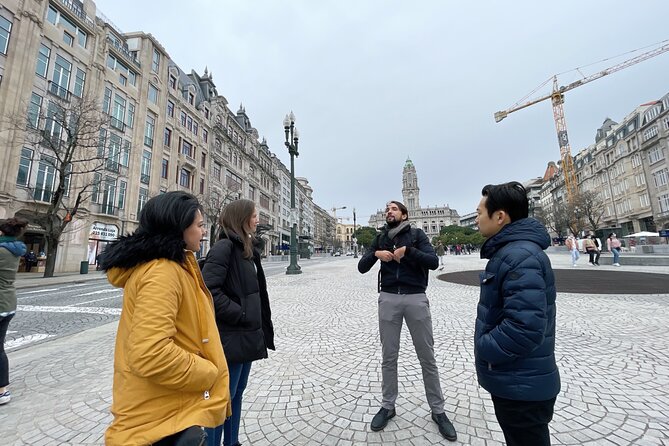
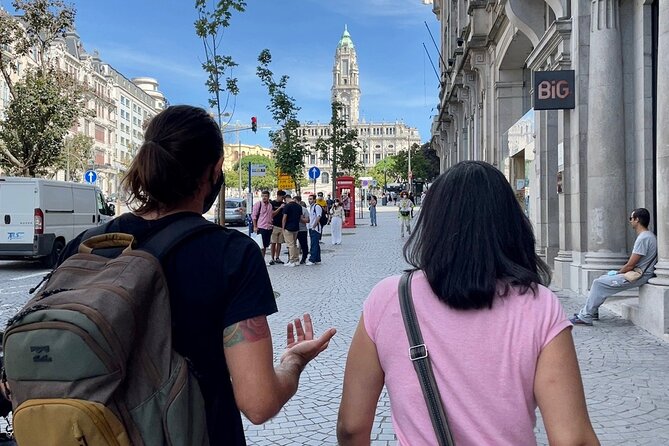
Next comes Avenida dos Aliados, Porto’s central boulevard and a classic stage for city life. The avenue is lined with imposing buildings, including the City Hall area, and it’s where you start to feel how Porto holds formal architecture and street energy in the same view.
Why this stop matters for your trip: once you know the boulevard’s orientation, it’s easier to understand how the rest of the city connects. Think of it as the “spine” of central Porto—helpful for navigating later without constantly checking maps.
This stop is also free, so you can enjoy it even if you’re moving on quickly. If you like architecture, linger for a minute at one side, then switch to the other side and compare facades and angles.
Mercado do Bolhão: real market noise, not just shopping
Mercado do Bolhão is the next key piece: a traditional market in Porto’s center where the air smells like food, and the action moves fast. You’ll see stalls selling fresh produce, meats, fish, and regional items—exactly the kind of place that makes the city feel like a living system.
What you’ll get from this moment: not just things to buy, but a sense of how locals structure meals and errands. The best market tours help you notice details like how people talk to vendors, what looks freshest, and what’s being prepared.
This stop is also free, and it’s short on purpose—just enough time to sample the atmosphere and learn what to look for. If you’re the kind of person who likes to come back later and buy something specific, this is a good “warm up” before you head out on your own.
A Belle Époque café and an 18th-century theater stop for culture context
Midway through the walk, the route shifts to two historic cultural buildings: a café with an ornate Belle Époque interior and a theater dating back to the 18th century.
The café matters because it represents Porto’s social side—since it opened in the 1920s, it’s been a meeting place for intellectuals, artists, and locals. You can read that as style, sure, but it’s also a clue about Porto’s creative energy: people have gathered here for a long time, and the décor wasn’t an accident. It’s “designed for conversation.”
The theater stop adds another layer: it’s known for its architecture and artistic heritage, and it’s one of the city’s older, respected performance venues. Even if you don’t go inside, the value is in learning what to notice—shape, proportion, and why certain buildings become cultural anchors over centuries.
You can also read our reviews of more food & drink experiences in Porto






Clérigos Tower complex: why Porto reaches upward
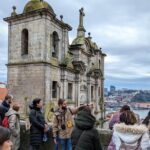
No Porto skyline walk is complete without the Clérigos Church complex. The tower is a signature silhouette, tied to the clergy’s influence in the city, and it’s beloved for good reason: it makes Porto’s vertical character obvious.
How to use this stop on your own future walks: after you’ve seen the tower area, you’ll start recognizing where you are relative to other landmarks. That alone saves time later, especially if you’re trying to plan viewpoints without guessing.
If you’re sensitive to heights or want steady footing, remember that the surrounding streets can include uneven surfaces and short climbs. The tour is designed for walking, but you’ll still want to take it slow in places with a steeper feel.
Catedral da Sé do Porto: mixing styles you can actually spot
The Sé Cathedral is a major landmark dating back to the 12th century, and it’s famous for blending Romanesque, Gothic, and Baroque elements. That mix makes it more than just a single-style postcard. You can use the cathedral as a “timeline you can see.”
What you should look for: don’t treat it like one uniform façade. Notice the changes—where the stonework and design shift over time. The guide helps connect those details to what they mean for Porto’s religious and cultural role as the seat of the Bishop of Porto.
This stop is also a good reminder that Porto’s identity isn’t only about rivers and views. It’s also about institutions—how the city organized power, worship, and community across time.
Ponte Luiz I over the Douro: the view that ties Porto to Gaia
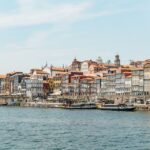
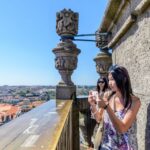
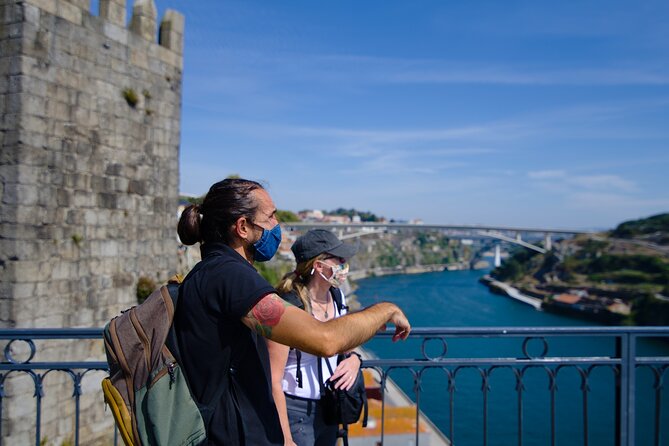
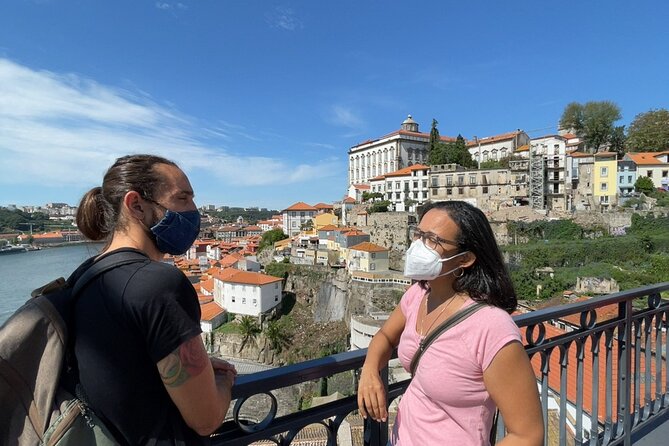
Ponte Luiz I is the double-deck iron bridge that crosses the Douro River, connecting Ribeira with Vila Nova de Gaia. Cars go on the lower deck, and pedestrians use the upper deck for panoramic views—so you’ll feel the river more directly than from most other viewpoints.
You don’t need to be a train-spotter or architecture nerd to enjoy this. The practical value is the geometry: the bridge frames Porto in a way that helps you understand the city’s geography fast. And since this bridge is recognized as a UNESCO World Heritage Site, you get a sense of why it’s protected and celebrated.
Watch your footing. It’s an easy place to want to stop and look up, but you’ll be walking and leaning at the same time. Keep your pace steady, then do your photo breaks when you’ve got a clear spot.
The wine and Port tasting: the payoff you’ll remember
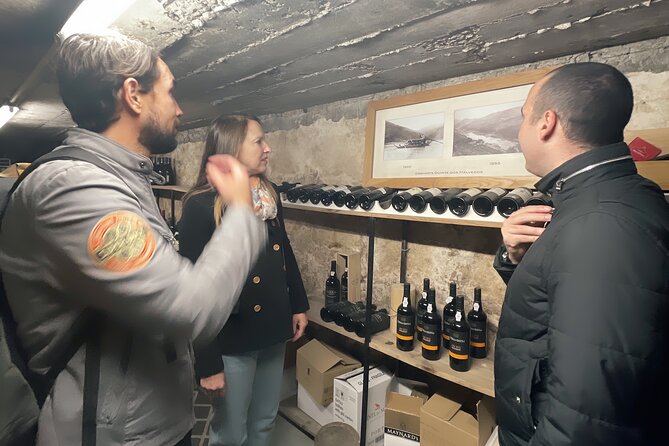
The tour’s name includes authentic tasting, and it’s not just a token sip. At the end, you’ll get an opportunity to do a wine and Port tasting in a tasting room linked with a local wine shop.
This is a smart finish for two reasons. First, after three hours of sights—tile panels, cathedral stone, river views—your brain is ready for a sensory reset. Second, Port and wine tasting in Porto has extra meaning because you’re tasting from the home context, not an imitation experience.
If you’re a cautious sipper, you’ll still like this. The tasting format usually gives you room to compare styles and learn what to look for, and a guide can help you avoid common newbie mistakes like thinking all Port tastes the same.
Price and value: $72.09 for a private, guided walk
At $72.09 per person for about 3 hours, this sits in the mid-range for Porto private guiding. Is it worth it? For me, value comes from what you avoid: wasted time hunting the right photo angle, missing key architectural clues, or doing a market stop without understanding what you’re looking at.
Because it’s private, the “per person” math can get better if you travel with friends or family. And because the guide can answer questions on the fly, you’re not stuck with a scripted path that doesn’t match your interests.
One more plus: the tour is offered in English, and you’ll be walking a route that hits multiple landmarks rather than just one neighborhood. That’s useful if you’re short on time.
A note on pace, hills, and how the guide handles real life
Porto’s hills are real. Even with a well-planned route, your legs will feel it. This is a walking tour, so choose supportive shoes and expect uphill moments.
Also, one of the most praised elements here is how the guide handles spontaneity. There’s a memorable example of a surprise bird moment handled calmly with napkins, and that’s funny, but it also signals something more important: the guide stays present and keeps the experience moving without turning mishaps into drama.
Thiago Costa is also noted for being flexible—starting later if there’s a delay and adjusting when schedules are different. If you like asking questions, this kind of guide style matters. You’ll get patient answers, not a quick shut-down.
Finally, you should look for follow-up recommendations after the walk. Some participants mention receiving a helpful list afterward, including places to go and eat, and it’s smart to set up your inbox so you don’t miss it.
Should you book this Porto private walking tour?
Yes, if you want a guided introduction that blends major sights with street-level understanding and finishes with something you can taste. I’d especially recommend it if you’re trying to connect Porto’s buildings to the people who used them—stations, markets, churches, theaters, bridges—then cap it with a wine and Port tasting.
Skip it or rethink if you know you won’t handle hills or you want a purely outdoors-only itinerary with no cultural-building stops. Otherwise, this is a strong way to start seeing Porto like a local: with context, not just photos.
FAQ
FAQ
How long is the Porto private walking tour?
It runs for about 3 hours.
Is this tour private or shared?
This is a private tour/activity, so only your group participates.
What language is the tour offered in?
The tour is offered in English.
Does the tour include a tasting?
Yes. The experience includes an authentic wine and Port tasting at the end.
Where do I meet the guide?
You meet at Loja Interativa Porto Welcome Center, Praça de Almeida Garrett 27, 4000-069 Porto, Portugal.
Where does the tour end?
The tour ends at Pátio d’as Marias, R. de Cedofeita 269, 4050-180 Porto, Portugal.
What is the cancellation policy?
You can cancel for a full refund up to 24 hours in advance. If you cancel less than 24 hours before the start time, the amount paid is not refunded.