REVIEW · PORTO
Private tour to Ponte de Lima, Vinho Verde region
Book on Viator →Operated by Endless Weekend Tours · Bookable on Viator
Ponte de Lima feels like a history shortcut. In one long day from Porto, you’ll move through Roman and medieval stone, step into chapels and churches, and end with Vinho Verde culture and tastings. The pace is built for wandering, not rushing, and the private setup helps you actually ask questions.
I like the way the day is anchored by recognizable landmarks you can picture right away: the Ponte Romana e Medieval and the clustered churches around the Lima River. I also like the practical comfort factor—door-to-door pickup from central Porto and Gaia, plus a luxury ride with Wi‑Fi, bottled water, and refreshments.
One consideration: not every tasting or interior visit is included. The Vinho Verde tasting at the interpretation center has a fee, lunch isn’t included, and the most in-depth cellar options are add-ons—so your final total depends on how wine-focused you want the day to be.
In This Review
- Key highlights
- A private day that mixes Roman stone and Vinho Verde
- Getting to Ponte de Lima from Porto: comfort and timing
- Ponte Romana e Medieval: where the bridge becomes the town
- Capela do Anjo da Guarda: the restored chapel by the old bridge
- Santo António da Torre Velha: tiles, towers, and a church with a moving identity
- Vinho Verde at the Centro de Interpretação: what you’re tasting and why
- Taverna Vaca das Cordas: why tradition shapes the town’s mood
- Dona Teresa’s statue: a charter you can connect to the map
- Igreja Matriz de Ponte de Lima: late Gothic, layered over earlier eras
- Misericórdia church and the Marquês Palace: faith meets civic power
- Town walls, towers, and the Pelourinho: the defensive and legal heart
- Largo de Camões and Fonte Nobre: a Renaissance fountain with a tax story
- Optional wine and monastery add-ons: Calheiros, Refoios, and the defensive tower
- Quinta do Paço de Calheiros cellar visit (optional)
- Mosteiro de Santa Maria de Refoios do Lima (optional)
- Quinta da Torre de Refoios (optional)
- Price and value: what $211.84 buys you in a long private day
- Should you book this private Ponte de Lima and Vinho Verde tour?
- FAQ
- How long is the private tour to Ponte de Lima and Vinho Verde?
- Where does pickup happen for this day trip?
- Is the tour offered in English?
- Is lunch included in the price?
- What wine-related tastings are included versus extra-cost?
- Can I cancel for a full refund?
Key highlights
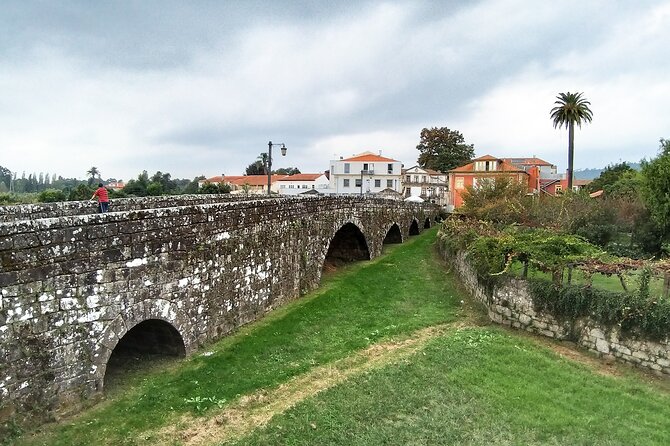
- Ponte Romana e Medieval: two-bridge structure (medieval + Roman arches) and a National Monument (since 1910)
- Capela do Anjo da Guarda: restored (reopened March 2022) near the river and old bridge section
- Vinho Verde stop with tasting: exhibition, film about the demarcated region, terrace vineyards, then a regional wine tasting
- Local tradition context: the Vaca das Cordas is tied to Corpus Christi and explains why the historic center and river area matter
- Best-of-town architecture loop: Gothic Igreja Matriz, Misericórdia church, and the fortified wall towers
A private day that mixes Roman stone and Vinho Verde
This is the kind of trip that works when you want a full day with strong variety and zero stress. You get a concentrated tour of Ponte de Lima’s older core, then a Vinho Verde experience that’s more than just a quick sip.
The Roman-to-medieval storytelling is unusually clear here. You’re not only seeing monuments; you’re learning how the town’s identity grew from the river crossing—and how religious buildings cluster around that old passage.
And because it’s private, you’re not stuck at someone else’s speed. In a recent review, the guide Carlos took extra time to travel at the group’s pace, explained everything in detail, and added practical recommendations for restaurants near where they were staying. That’s the difference between a “drive-by” and a day you can actually enjoy.
You can also read our reviews of more private tours in Porto

Getting to Ponte de Lima from Porto: comfort and timing
Pickup is from hotels and B&Bs in central Porto and Gaia, starting at 8:00 am. The whole day runs about 8 to 10 hours, which is enough time to visit multiple sites without feeling like you’re sprinting across town.
The ride is part of the value. You’re in a luxury vehicle with Wi‑Fi, bottled water, refreshments, and a relaxed setup—so you arrive ready to look at stone, tiles, towers, and church interiors instead of spending your morning stressed about logistics.
You should still plan your energy for a long day. Even with the comfort, you’re walking through a compact historic area with several stops, some of them outdoors along the river. Comfortable shoes matter.
Ponte Romana e Medieval: where the bridge becomes the town
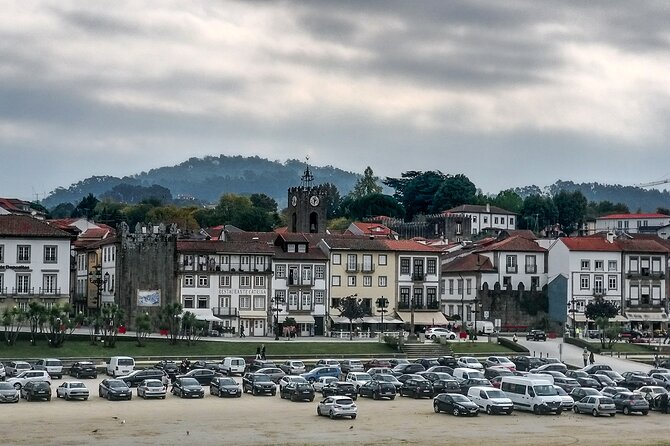
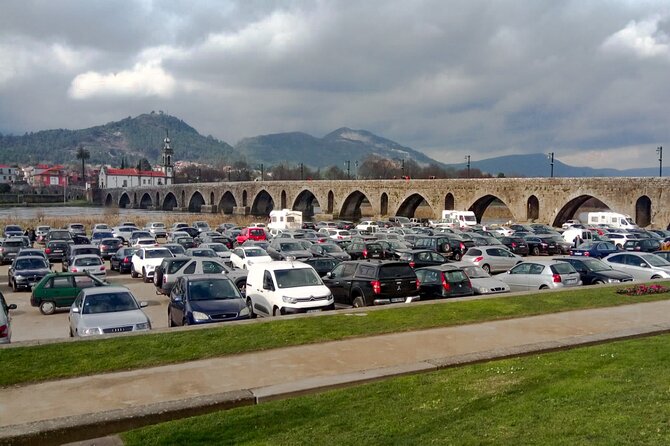
The day starts with Ponte Romana e Medieval, the ex‑libris that shaped the town’s name. What I like is the clarity of the structure: it’s not one single bridge. It’s a set with two parts.
- A medieval section begins on the left bank and runs toward the Church of Santo António da Torre Velha, passing it in two arches.
- A Roman section follows with five arches starting from the great arch in the dry part of the riverbed.
This is why the stop works so well. You can stand there and understand how the river crossing mattered enough to build, rebuild, and expand across centuries. It was declared a National Monument in 1910, so you’re looking at a protected piece of the town’s physical memory.
If you like photography, this is the easiest win. The bridge and river give you natural framing, and the architecture changes as you shift your position.
Capela do Anjo da Guarda: the restored chapel by the old bridge
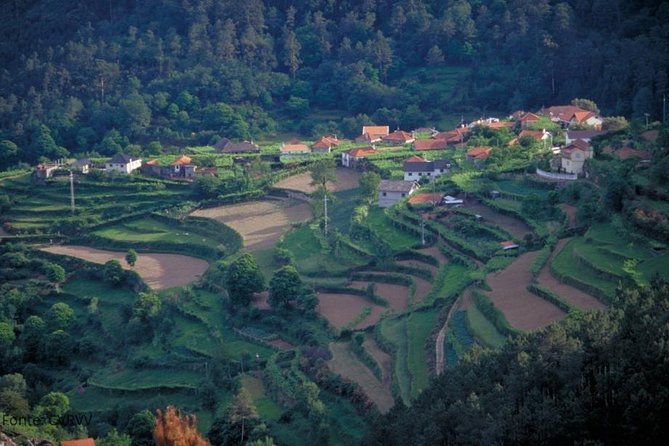
Right next to the Lima River and beside the old bridge section is Capela do Anjo da Guarda (also known as Padrão de São Miguel). It’s classified as a National Monument from 1978, and it may date back to the late Romanesque or early Gothic period, with possible roots in the 17th century.
A practical detail: it was restored in 2021 and the intervention reopened in March 2022. That means you’re likely to see the chapel in good condition, which makes the visit more meaningful than it would be for a site awaiting repairs.
This stop is short, but it adds a layer that many bridge-and-river tours miss: the bridge isn’t only infrastructure. It’s also tied to spiritual landmarks right where people crossed and gathered.
Santo António da Torre Velha: tiles, towers, and a church with a moving identity
The Igreja de Santo Antonio da Torre Velha looks like it belongs to the medieval landscape, but the story is more specific. The temple is linked to an older hermitage documented since the 18th century, dedicated to Nossa Senhora da Esperança, yet its current appearance reflects a 19th-century reformulation ordered by the confraternity of Santo António.
Here’s one detail I’d keep an eye out for: the church is associated with tile panels, which appeared during that period. If you’re the type who likes to spot materials and craftsmanship, this is a great place to slow down and look at surface work rather than just shapes.
The name itself came from history, too. The church and a tower part of the early medieval fence coexisted until the mid‑19th century, when the structure was demolished, and the church took the Torre Velha name. That’s a small clue that the town’s fortifications and religious life weren’t separate chapters.



Vinho Verde at the Centro de Interpretação: what you’re tasting and why
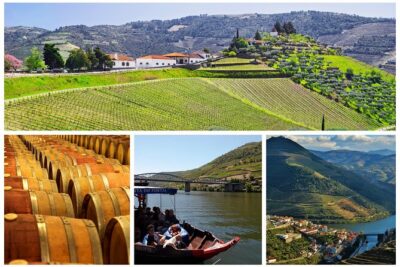
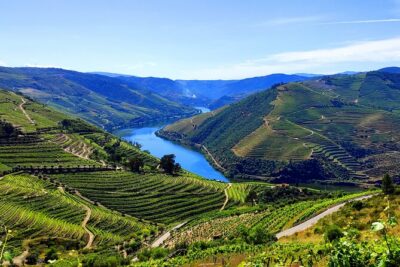
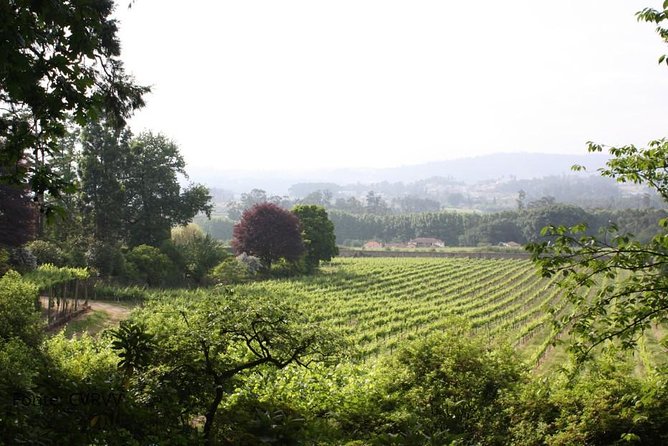
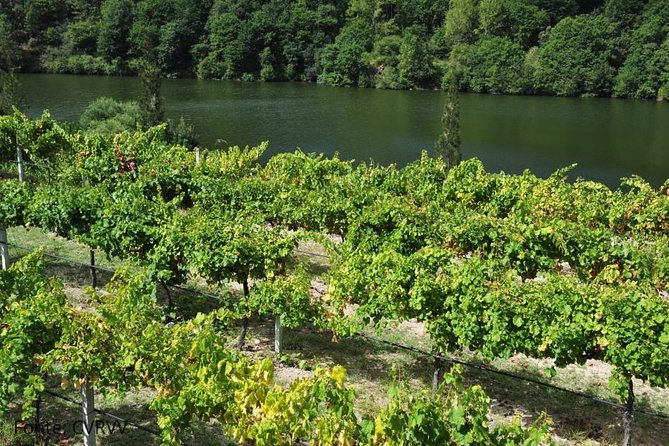
Next comes the Vinho Verde experience at the Centro de Interpretação e Promoção do Vinho Verde. This stop has a smart mix of learning and enjoying: you get access to a permanent exhibition, a terrace with a small vineyard plantation, and a promotional film about the demarcated region.
Then there’s the tasting of a regional wine. The key thing is that this isn’t fully free: the admission/tasting is listed as not included, and the add-on cost is shown as €3 per person tied to visiting the center with proof of Alvarinho. So if you care about tastings, budget for it.
Why this is worth it: Vinho Verde can feel like a vague category until someone frames what makes the demarcated region specific. The terrace vineyard and the museum context make it easier to understand what you’re drinking later in the day.
If your goal is purely value and minimal extras, you can treat this stop as the “learn and sample” component. If your goal is wine depth, you’ll probably want to add the optional cellar tour later (more on that below).
Taverna Vaca das Cordas: why tradition shapes the town’s mood
This is one of the more fun stops because it’s about people, not just buildings. You’ll visit Taverna Vaca das Cordas, tied to a secular tradition dating back to the 15th century.
The important context: the event happens on the eve of Corpus Christi in the late afternoon. Thousands travel from across Portugal—and even into Spain—flooding the historic center and the sands along the Lima River.
The centerpiece is the traditional race:
- It starts on Rua do Arrabalde heading toward Largo da Matriz
- It follows the tradition of going around the church three times
- Then it continues through historic streets to the beach, where thousands try to dribble the animal or just watch
Even if your visit doesn’t match Corpus Christi timing, this stop gives you the town’s “why.” You’ll understand why the river sands and central streets matter, and you’ll read the town with more personality.
Dona Teresa’s statue: a charter you can connect to the map
After the tradition stop, you get a quick but meaningful pause at Estátua de Dona Teresa. It’s a tribute to Queen D. Teresa, who granted Ponte de Lima the charter of Vila in 1125.
This works well because it ties the town’s growth to a named person you can remember. You can connect the charter idea to what you’re seeing: a fortified, church-centered community with a real reason to exist and prosper along the river crossing.
A short stop like this can be a lifesaver for pacing. It resets your brain after a more story-heavy place and keeps the day from feeling like one long lecture.
Igreja Matriz de Ponte de Lima: late Gothic, layered over earlier eras
The Igreja Matriz de Ponte de Lima is the town’s major church presence. It succeeded an older church and evolved from one nave to three over time. The standout interior feature is the Chapel of Nossa Senhora da Conceição, which belonged to the Solar de Bertiandos.
The church has a clear origin date: it was built by D. João I in 1425, with completion in 1446. Still, what you’ll notice is the visible mix of styles—Romanesque, Gothic, and Neoclassical—showing how the building changed alongside the town.
This is a good stop for anyone who likes “read the architecture” travel. You can literally watch the centuries stack on top of each other.
Like many major churches in Portugal, it’s free entry on this tour, which helps keep costs predictable if you’re not adding extras.
Misericórdia church and the Marquês Palace: faith meets civic power
Two more major stops add contrast.
First is Igreja da Misericórdia de Ponte de Lima, connected to the Santa Casa da Misericórdia institution that dates back to 1530. The church is classed as a Property of Public Interest and shows a mannerist and baroque character. It has a single nave, a coffered vault in the chancel dated 1638, and a main portico that opens laterally over the old cemetery (now a churchyard).
Second is Paço do Marquês de Ponte de Lima, a splendid 15th-century stone building that today houses the Military History Interpretation Center. Entry here is listed as not included, so if you’re curious about the interior exhibits, you’ll need an extra ticket.
Together, these stops broaden the day beyond churches that are purely religious. You start to see civic life, elite patronage, and institutional power in stone and space.
Town walls, towers, and the Pelourinho: the defensive and legal heart
Ponte de Lima still carries visible traces of its defenses and authority.
You’ll see Torres de São Paulo e da Cadeia Velha along with the remaining wall segments. These are classified as Buildings of Public Interest, tied to the old fortifications of the town. The pair of towers date to the 14th century, built during the reign of D. Pedro I.
The Torre de Cadeia Velha (also called Porta Nova) connects to the prison district. The site evolved from an older tower in the walled structure and was improved after a decision by King Manuel, with completion in 1511.
Then there’s the Pelourinho de Ponte de Lima, the pillory. It’s attributed to the 16th century and was originally built on the beach almost in front of the São Paulo tower. Later, in the early 19th century, weapons from the United Kingdom of Portugal, Brazil, and the Algarve were added. It was demolished at the end of the liberal struggles and rebuilt during the Estado Novo in front of the city hall using fragments from the primitive monument.
That’s a lot of politics in a small object. If you pay attention, the pelourinho becomes a quiet lesson about how law and power shifted over time.
Largo de Camões and Fonte Nobre: a Renaissance fountain with a tax story
In Largo de Camoes, you’ll find the Fonte Nobre (Noble Fountain), completed in 1603. The interesting part is the backstory: it was built after a false tax was levied in 1580 on consumer goods like precious salt, and the revenue funded what you see today.
Architecturally, it’s Renaissance in design and execution, attributed to Limiano master João Lopes. The fountain moved locations over time: it was built at Largo Dr. António Magalhães, then transferred to Largo de Camões in 1929, when that area was already part of the town’s wall gateway zone.
This stop is short, but it gives you an easy “pause with a purpose.” You’re no longer only walking through old stone. You’re learning how money, infrastructure, and public works worked in everyday life.
Optional wine and monastery add-ons: Calheiros, Refoios, and the defensive tower
If you want to go deeper than the basic Vinho Verde cultural stop, this tour gives you smart add-on choices.
Quinta do Paço de Calheiros cellar visit (optional)
This is the most wine-forward upgrade: 25€ per person for a cellar visit and a tasting of three wines:
- Paço de Calheiros
- 100% Loureiro fermented and aged in stainless steel
- Conde de Calheiros (100% Loureiro aged in oak barrels)
- plus a red sparkling wine from the Quinta
The way this is described matters: you’ll taste different styles of the same grape, then compare how aging choices change the wine. If you’re a Loureiro fan, or you want to learn without taking a full wine course, it’s a good use of extra time.
Mosteiro de Santa Maria de Refoios do Lima (optional)
This monastery is set within a larger educational context today. Founded in the 12th century by D. Afonso Ansemondes for the canons of the state of Santo Agostinho, it has been changed over centuries and currently houses facilities for the Escola Superior Agrária de Ponte de Lima. It’s near the parish church that gives the group its name, Refoios de Lima, and it’s been classified as a Property of Public Interest since 1939.
Quinta da Torre de Refoios (optional)
This is for medieval defense fans. The 14th-century tower is one of the first known medieval defensive towers in Portugal, classified as a Property of Public Interest since 1996. It’s described as very well preserved and located inside a housing tourism estate.
Both monastery/tower options aren’t included, so they’re only worth it if you enjoy slower historical spaces and you want to trade a bit of wine time for extra architecture.
Price and value: what $211.84 buys you in a long private day
At $211.84 per person, this isn’t a budget hop-and-shop. It’s a private day trip, and you’re paying for that comfort and time investment.
Here’s what you get that justifies the cost:
- Private luxury transport with Wi‑Fi, bottled water, and refreshments
- Pickup from central Porto and Gaia
- Personal accident and civil liability insurance
- A route built around major free-entry sights—bridge and multiple churches are marked free in the tour plan
- A guide experience in English
Where the value can shift is in the add-ons. Lunch is listed at €30 per person (not included), and the most wine-intensive choices (like Calheiros) are optional. Even the interpretation center tasting has an additional cost component (shown as €3 in the not included section).
So for best value, decide what kind of day you want:
- If you want culture first, you can keep extras light.
- If you’re seriously wine-curious, plan for the cellar upgrade and tasting fees.
If you like the idea of having your questions answered in real time, the guide matters too. The feedback about Carlos is a strong signal that explanation quality is part of what you’re buying here.
Should you book this private Ponte de Lima and Vinho Verde tour?
I think this is a great pick if you want an organized, comfortable day with clear historical anchors and a genuine Vinho Verde component. Ponte de Lima’s old bridge and church cluster give you a natural walking loop, and the private transport makes it easy to do without fatigue or planning.
Book it if:
- You’re staying in Porto or Gaia and want a full day outside the city
- You like architecture with names and dates tied to what you’re seeing
- You want wine time without building your own route
Skip or rethink if:
- You’re trying to keep the day strictly free of extra charges beyond what’s included
- You only want a short, low-walking experience and don’t want a full 8 to 10 hour day
FAQ
How long is the private tour to Ponte de Lima and Vinho Verde?
The experience runs about 8 to 10 hours and starts at 8:00 am.
Where does pickup happen for this day trip?
Pickup is offered from all hotels and B&Bs in central Porto and Gaia.
Is the tour offered in English?
Yes, it’s offered in English.
Is lunch included in the price?
No. Typical lunch with entry, main dish, drink, dessert, and coffee is listed as €30 per person and is not included.
What wine-related tastings are included versus extra-cost?
The Vinho Verde interpretation center visit includes a regional wine tasting, but the tasting/center admission is listed as not included, with €3 per person shown in the not included details. A more detailed Calheiros cellar visit and tasting is optional at €35 per person (25€ is shown for the cellar optional visit).
Can I cancel for a full refund?
Yes. Cancellation is free up to 24 hours before the experience’s start time for a full refund. If it’s canceled due to poor weather, you’ll be offered a different date or a full refund.