REVIEW · PORTO
Porto private morning Tour, discover the most iconic attractions
Book on Viator →Operated by Endless Weekend Tours · Bookable on Viator
Porto in one morning is a lot. This private tour strings together the city’s biggest UNESCO hits, plus smart local stops, with a guide in the driver’s seat and onboard Wi-Fi so you can keep your phone working.
I especially like the pacing: short photo-and-stroll moments at the landmarks, then quick re-positioning by luxury van so you’re not wasting time in traffic or hunting parking. I also like the mix—markets and tiled stations, then churches, then the bridges over the Douro where Porto turns into a view postcard.
One consideration: it’s packed. Some major interior sights (like Livraria Lello, Clérigos Tower, and the Church of Gold) cost extra, and with only about 4 hours, you’ll need to pick what’s worth your money and your time.
In This Review
- Key things to know before you go
- Your fast-track Porto orientation, starting at Praça da Liberdade
- D. Pedro Square and the Avenida look: Porto’s civic “before the postcard”
- Mercado do Bolhão: the market that still feels like a market
- Praça da Batalha and Teatro São João: a square with a name-story
- Fernandine Wall vibe: city expansion written in stone
- Cathedral of Porto: quick exterior first, then the chapels if you add time
- São Bento Railway Station: 20,000 painted tiles that tell stories
- Café Majestic and Rua Santa Catarina: Belle Époque for a coffee pause
- Carmo and Carmelitas: Baroque churches plus Casa Escondida
- Torre dos Clérigos: the 240 steps skyline trade
- Livraria Lello: the inside ticket choice
- Museu and gardens interlude: fine arts, then Palácio de Cristal greenery
- Church of Gold (Igreja de São Francisco): the “Tree of Jesse” moment
- Palácio da Bolsa: neoclassical power and the Arab Room
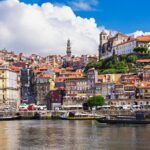
- Bridges over the Douro: from the old suspension to Eiffel’s first masterpiece
- Jardim do Morro and Serra do Pilar: views with a slower tempo
- Coastal fortress energy: São João Baptista and Castelo do Queijo
- When the city shifts toward design: Serralves and Casa da Música
- Optional add-ons after the morning: Douro sunset, port wine, and fado
- Price and logistics: what the $185.02 buys you (and what it doesn’t)
- Who this private Porto morning tour is perfect for
- Should you book this Porto private morning tour?
- FAQ
- How long is the Porto private morning tour?
- Is pickup offered, and where does the tour start?
- What language is the tour available in?
- Is Wi-Fi available during the tour?
- Are tickets for Livraria Lello and Clérigos Tower included?
- Are tickets for the Church of São Francisco and Palácio da Bolsa included?
- Does the tour include a Douro River cruise or port wine tasting?
- What is the cancellation policy?
Key things to know before you go
UNESCO-focused routing across Porto’s historic center and the Douro bridge area
Private guide-led experience that’s built for a smoother, personalized pace
Onboard Wi-Fi + bottled water so the morning feels easier than a walking-only hop
Most stops are quick (often 5–15 minutes), so plan for outside views too
Important ticketed interiors cost extra at places like Lello and Clérigos Tower
Your fast-track Porto orientation, starting at Praça da Liberdade
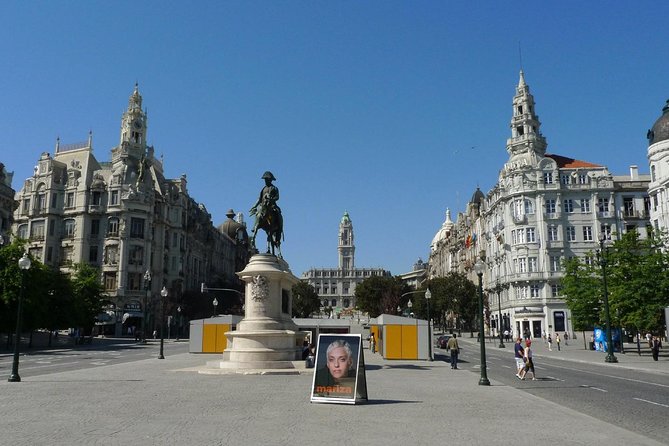
This tour starts at Praça da Liberdade (19), a central, easy-to-find spot in Porto. If you want pickup, the operator offers it for downtown hotels and B&Bs across Porto and Gaia, which is a big deal here because Porto’s streets can be steep, tight, and unpredictable.
The most useful part of the morning is that you don’t just get sights. You get context while moving. That means when you stand in front of a cathedral or a tiled train station, you’re not staring at random old stone—you know what you’re looking at and why it matters in Porto’s story. And if you’re traveling with limited time, this is one of the best ways to get your bearings fast.
You can also read our reviews of more private tours in Porto

D. Pedro Square and the Avenida look: Porto’s civic “before the postcard”
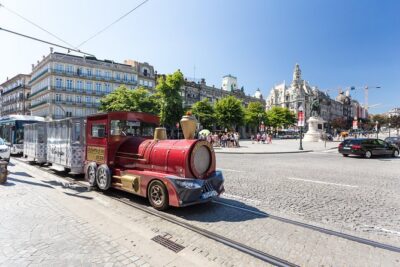
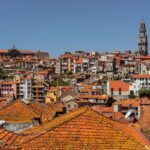
Early on, you pass through the grand civic setting around Avenida dos Aliados and D. Pedro Square. You’ll see the sweep of the avenue bordered by buildings from the 1920s and 1940s, and the older references that frame the space, like the Cardosas building (19th century). In the center sits the statue of D. Pedro IV (the Liberator).
This is a good warm-up stop because it shows you two Porto styles at once: the city’s older layers and the more formal, modern-city planning feel that took hold later. It’s also practical—being on foot for a few minutes here helps you understand the geography for the rest of the route.
Mercado do Bolhão: the market that still feels like a market
Next is Mercado do Bolhão, Porto’s classic market scene dating back to 1850. The structure is famous for its two-floor layout and neoclassical architecture. Even if you don’t go inside, the outside is busy with real commerce—fish, butchers, vegetables, and floral stalls arranged around the streets that border the market.
I like this stop because it grounds Porto in everyday life. Porto’s monuments are the headline, but markets are how locals keep living the city. Also, the time here is manageable: about 10 minutes, and the admission ticket is free.
Tip for your photo planning: if you want sharper shots, move closer to the entrances and focus on stall details rather than trying to capture the whole building at once.
Praça da Batalha and Teatro São João: a square with a name-story
Praça da Batalha is one of those places where the meaning sneaks up on you. The name is tied to an old battle around the 10th century, where Porto was defeated and the city suffered destruction—so the square’s name reflects that older setback, not some dramatic modern event.
On the edge sits Teatro São João, inaugurated in 1798. Its history includes a fire in April 1908 that destroyed the theatre. Urbanized around 1861, the square became an important public space, and you can still feel that “meeting point” role today.
This stop works well because it’s short, but it teaches you how names and buildings in Porto carry long memories.
Fernandine Wall vibe: city expansion written in stone
You’ll then get a view of the old wall system that was started in the 14th century during the reign of D. Afonso IV, built to replace an earlier wall as the city expanded. It was almost completed around 1370, but finished later in the reign of D. Fernando, which is why it carries that naming logic.
By the 18th century, it was no longer useful for military purposes and parts were demolished. What survives today gives you a tangible sense of how Porto once protected itself—and how the city’s growth kept outgrowing its own boundaries.
If you like history that you can actually see (not just read about), this is a great “architecture logic” stop.
You can also read our reviews of more tours and experiences in Porto

Cathedral of Porto: quick exterior first, then the chapels if you add time
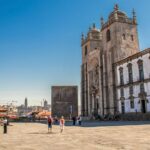
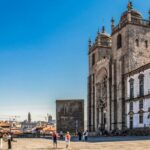
The Catedral do Porto is a 12th/13th-century building that expanded and renovated over time, reaching its final configuration in the 20th century while keeping the medieval cathedral structure. It’s the kind of place where you can feel layers of different centuries working together.
The standout interior mentions include:
- Gothic Chapel of St. John the Evangelist and its cloister
- The expansion of the chancel
- Chapel of the Blessed Sacrament with a silver altar
Admission isn’t included, so your best move is to treat the stop as a “see what you want to pay for” moment. If you love church interiors, you’ll likely want to add the cathedral time. If you’re more about the street-and-station route, you can enjoy the setting and keep moving.
São Bento Railway Station: 20,000 painted tiles that tell stories
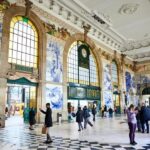
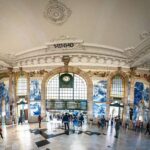
São Bento Railway Station is one of Porto’s “hard to believe it’s free” experiences. The station was built in the early 20th century on the site of the former Convent of São Bento de Avé Maria. You’ll notice the glass-and-iron structure designed by Marques da Silva.
Inside the vestibule, the star is the tilework—around 20,000 painted tiles by Jorge Colaço that illustrate the evolution of transport and Portuguese life and history in the region.
This stop is about 10 minutes, but it’s also the kind of place you could spend an hour in if you weren’t on a schedule. If you’re short on time, focus on reading the tiles in sections: start wide for the overall narrative, then zoom in on a few panels that interest you.
Café Majestic and Rua Santa Catarina: Belle Époque for a coffee pause
Café Majestic opened in 1921 and is famous for its Art Nouveau style inside. It sits on Rua Santa Catarina, and the interior—marble, gilded mirrors, and intricate woodwork—makes it feel like a time capsule from Porto’s Belle Époque era.
This is where you can reset your energy. The stop is short (about 5 minutes), and you’ll probably want to come back later for an actual coffee and pastry. But even from the threshold, you get the point: this café isn’t just a café, it’s a cultural landmark.
Just nearby is Relógio das Galerias Palladium, an ornate clock with a carillon and four statues that move and perform every three hours. It’s the kind of detail that can become a quick highlight if your timing lines up.
Carmo and Carmelitas: Baroque churches plus Casa Escondida
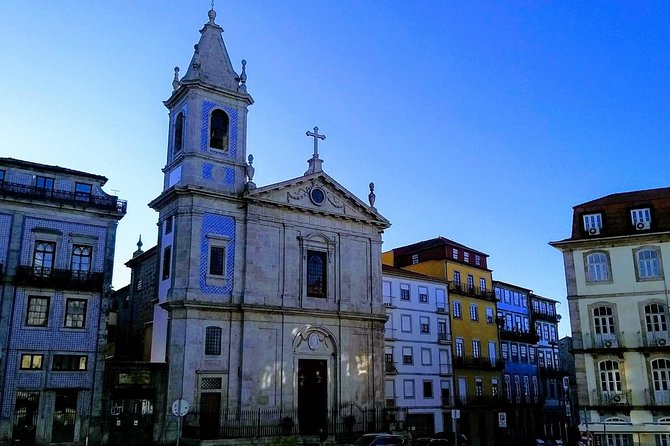
One of the best “Porto architecture puzzle” areas is around Igreja do Carmo and Igreja das Carmelitas. These are Baroque churches, and the Igreja do Carmo is known for impressive azulejos on the exterior. Across the street, Igreja das Carmelitas brings an ornate facade and a dramatic presence.
Between them sits Casa Escondida, often called the Hidden House. It’s wedged into the space between the two church buildings—small, clever, and easy to overlook if you’re rushing. This is one of those stops where you slow down even if the clock doesn’t.
Admission is listed as free for this stop area, and the time is about 10 minutes, so it’s very doable.
Torre dos Clérigos: the 240 steps skyline trade
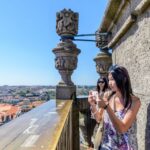
Then comes Torre dos Clérigos, Porto’s emblematic Baroque tower by Nicolau Nasoni, built in the first half of the 18th century. Climbing the tower means 240 steps, and the payoff is a panoramic view over Porto and the Douro River.
Admission for the tower isn’t included, and that matters because with a limited 4-hour schedule, you need to decide if the climb matches your energy level. If you’re someone who loves viewpoints, this is usually the kind of ticketed moment worth paying for.
Also: the tower shows up in pop culture—so if you recognize it from Suicide Squad, that’s not your imagination.
Livraria Lello: the inside ticket choice
Livraria Lello sits in a building opened in 1906, with an Art Nouveau façade and Neo-Gothic details. Inside, the magic is the painted plaster that imitates wood and a magnificent staircase connecting the floors, plus a huge stained-glass skylight.
Admission isn’t included, and the listing specifically notes a gold ticket option for priority plus booking. If you’re a bookshop fan or you want the full interior experience, plan extra money and a bit of patience. If you’re more about views and outdoor scenes, you can enjoy the exterior and keep the schedule tight.
In a private setting, you can usually decide on the spot based on how your morning feels.
Museu and gardens interlude: fine arts, then Palácio de Cristal greenery
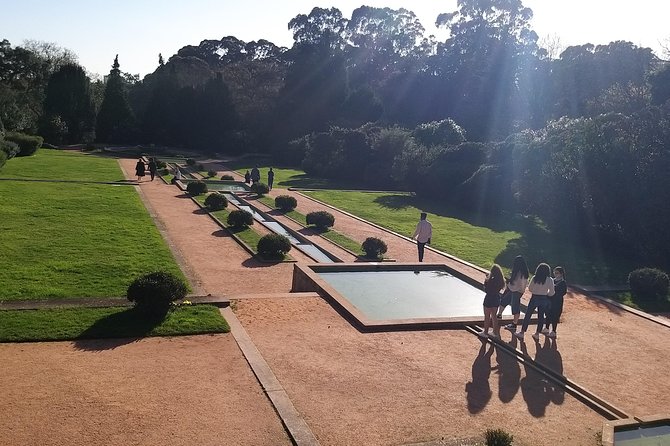
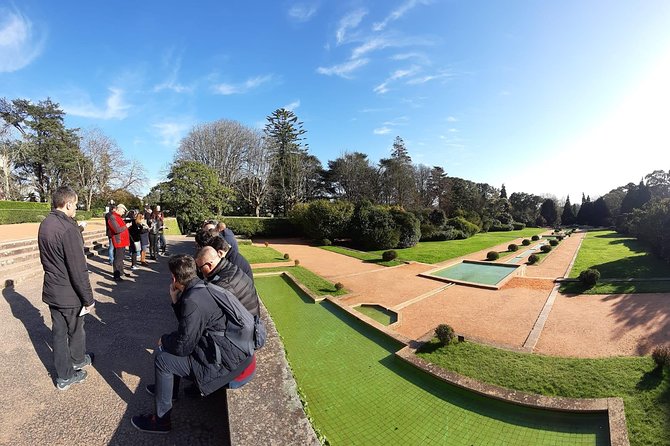
A good break comes next with a stop around Palácio de Cristal’s gardens. These gardens date from the Romantic period and were designed by German landscape architect Émille David in the 19th century. The area covers about 8 hectares, and it’s still preserved according to the original design.
Then you’ll also pass through the museum complex areas tied to transport and local collections, including:
- Electric Car Museum (with trams and other light rail history items)
- A Museum of Transport and Communications setting in a neoclassical 19th-century building
These are the kind of stops that don’t look like “main attraction” on a poster, but they make the Porto story feel real. Porto has always been about moving—people, goods, and ideas along the river.
Church of Gold (Igreja de São Francisco): the “Tree of Jesse” moment
If you want one stop that signals why Porto’s interiors matter, it’s the Church of São Francisco. Construction began in the 14th century, and it’s described as one of the city’s most important Gothic temples. The interior is famed for its golden woodwork from the 17th and 18th centuries, which led a famous observer (Count Raczinsky) to call it a Church of Gold.
You should know about two specific sights here:
- The Tree of Jesse
- The catacombs
Admission isn’t included, so you’ll be deciding whether to pay. If you love religious art, woodcarving, and atmosphere, this is usually the best interior use of your limited time and money on the route.
Palácio da Bolsa: neoclassical power and the Arab Room
Another ticketed moment is Palácio da Bolsa, classified as a National Monument and owned by the Commercial Association of Porto. The building is neoclassical, designed by Joaquim da Costa Lima in 1842, built on the site of a former convent destroyed in the Siege of Porto.
It’s one of the most visited monuments, with the Arab Room as a highlight. There’s also a note that it functions as a cultural and conference center—so it’s not only a museum-like stop.
Since the guided tour of Palácio da Bolsa isn’t included in price, you may want to add the entry if you’re the type who enjoys rooms-as-architecture. Outside viewing is nice, but the famous rooms are the whole point.
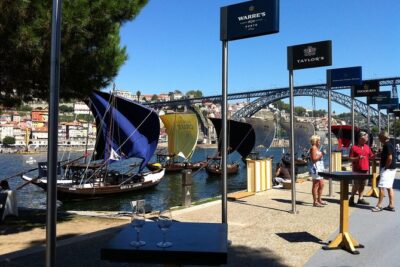
Bridges over the Douro: from the old suspension to Eiffel’s first masterpiece
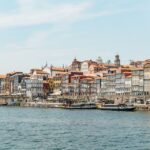
This tour gets dramatic when it starts treating the river crossings like a history lesson. You’ll see multiple bridge stories across the UNESCO-listed historic center.
You’ll get references to:
- The suspension bridge called D. Maria II (created 1843, later deactivated for insecurity fears; now only two stone pillars remain)
- The replacement bridge project that led to the large wrought iron arch world-famous status (the historic bridge is linked with the 1886 and 1888 inaugurations)
- São João Bridge (inaugurated 2003, with a deck and an arch described as a slender record in its typology)
Then, there’s Ponte D. Maria Pia, Gustave Eiffel’s first masterpiece. It was inaugurated in Porto in 1877 and later replaced by São João Bridge. It uses a biarticulated arch supporting a single-track rail board through truss pillars.
This segment is where the tour becomes more than sightseeing. Porto’s identity is tied to the Douro, and bridges are how the city learned to scale its own geography.
Practical note: bridge areas can be windy and bright, so sunglasses help. Also, if you want a clear skyline photo, check the sun direction with your phone camera before you commit to standing in one spot.
Jardim do Morro and Serra do Pilar: views with a slower tempo
Jardim do Morro gives you a public park feel with panoramic views. It developed in the 20th century and complements the monastery setting nearby. This is the kind of stop that lets you breathe—paths, greenery, and a calm moment after the intensity of towers and stations.
Then across the river side you reach Mosteiro da Serra do Pilar in Vila Nova de Gaia. It belongs to the Order of St. Augustine, with construction beginning in 1538 and happening in stages over centuries. The circular shapes of the church and cloister are the signature features, and it currently functions as a religious, cultural, and military site.
Admission isn’t included here, so you’ll likely see the exterior and surroundings unless you choose to add time.
Coastal fortress energy: São João Baptista and Castelo do Queijo
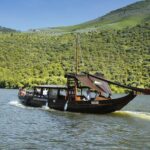
As the route moves toward the coast side, you’ll visit Fortress São João Baptista, built at the end of the 16th century to protect the coast and the Douro entrance. Later additions in the 17th century and the access gate (18th century) add to the layers.
Next is Castelo do Queijo (Fort São Francisco Xavier), built in the 17th century to defend against pirates from North Africa. The fort sits on a rocky hill shaped like cheese, which explains the name. Both fort stops are listed as free and take about 15 minutes each.
These are fun if you like military architecture or if you simply want something different from churches and squares.
When the city shifts toward design: Serralves and Casa da Música
The route also includes modern Porto design landmarks, including Serralves. You’ll see the Serralves House, built in the 1930s as one of Europe’s best examples of Art Deco, plus Serralves Park, a landscape built over about 18 hectares with gardens, a traditional farm, and a forest-like area.
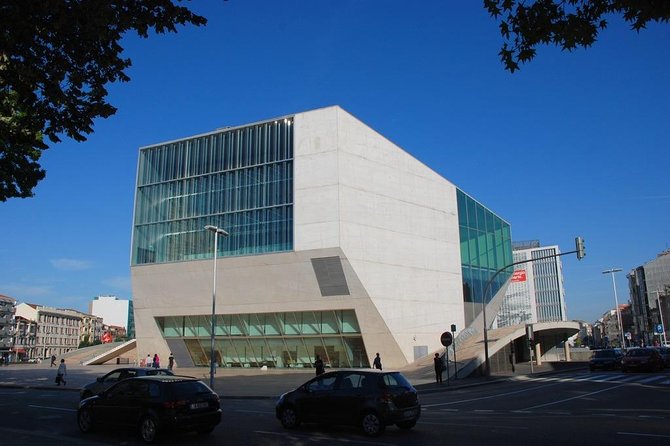
Then there’s Casa da Música, designed by Dutch architect Rem Koolhaas. It opened in 2005 and is treated as Porto’s contemporary architecture icon.
These aren’t just “pretty buildings.” They show how Porto changed from trading city to cultural-city-of-today—still shaped by the river, but expressing itself with modern materials and forms.
Optional add-ons after the morning: Douro sunset, port wine, and fado
The morning tour itself is a strong overview, but the listing gives three popular ways to turn it into a full day or full evening.
- Private Douro River Cruise (sunset experience): a private two-hour cruise focused on the six bridges and the Porto and Vila Nova de Gaia views.
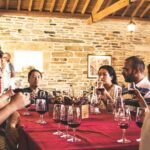
- Port wine cellars: Exclusive Dona Antónia tour with a 5-port tasting, including story time about Dona Antónia Adelaide Ferreira.
- Fado: a traditional dinner with fado culture and transport included, or a simpler one-hour fado show with port wine.
If you’re planning a first trip to Porto, I like the logic of this: do the city bones in the morning, then add sensory experiences in the evening. Porto does both very well.
Price and logistics: what the $185.02 buys you (and what it doesn’t)
At $185.02 per person for about 4 hours, you’re paying for three things:
- Time savings: you cover a lot of ground without getting stuck in Porto’s logistics
- Comfort: luxury vehicles with Wi-Fi, bottled water, and refreshments
- Guided context: history and story while you move, not after you’ve already missed the meaning
This is not a “every ticket included” price. Several major interior stops are listed as not included:
- Lello Library gold ticket option
- Clérigos Tower ticket
- Palácio da Bolsa guided tour
- Church of São Francisco (Church of Gold)
- Optional port wine and Douro cruise experiences
So the value is highest when you’re decisive: pick the paid interiors you care about most, and use the rest as exterior-and-street understanding.
Also, the tour is private, meaning only your group participates. That matters when you want a calmer pace, fewer photo-stress moments, and more flexible stopping for a view.
Who this private Porto morning tour is perfect for
This works best for you if:
- You’re in Porto for a short time and want the city’s main landmarks without losing half the day to travel logistics.
- You like history explained as you stand in front of the site, not as a written brochure experience.
- You want a plan that includes both iconic scenery and local texture, like Mercado do Bolhão plus the tilework in São Bento.
If you hate schedule pressure, you can still enjoy it, but you’ll want to mentally prepare for quick stops rather than long museum sessions.
A helpful note from real experiences: the driver-guide Carlos has earned strong praise for being courteous, very informed, and generous with practical tips, including how to choose a restaurant. If you can request him (when available), it’s a good bet for a smoother, more thoughtful day.
Should you book this Porto private morning tour?
If your goal is to see the iconic Porto set in one smart morning, yes, I’d book it. The combination of private comfort, onboard Wi-Fi, and a route that hits UNESCO-level highlights plus everyday Porto stops makes it a good value choice—especially when you keep ticket add-ons selective.
Skip it only if you want a slow, deep museum day with long interior stays at every major site. This tour is built for a fast, guided overview, not for lingering for hours in each building.
FAQ
How long is the Porto private morning tour?
The duration is approximately 4 hours.
Is pickup offered, and where does the tour start?
The tour starts at Praça da Liberdade 19, 4000-322 Porto. Pickup is offered to downtown hotels and B&Bs across Porto and Gaia.
What language is the tour available in?
The tour is offered in English.
Is Wi-Fi available during the tour?
Yes. Wi-Fi is included in the luxury vehicles, along with bottled water and refreshments.
Are tickets for Livraria Lello and Clérigos Tower included?
No. Livraria Lello gold ticket and Clérigos Tower tickets are not included in the tour price.
Are tickets for the Church of São Francisco and Palácio da Bolsa included?
No. The Church of São Francisco (Church of Gold) ticket and guided tour of Palácio da Bolsa are listed as not included.
Does the tour include a Douro River cruise or port wine tasting?
Those are optional add-ons and are not included unless you book them in the final booking.
What is the cancellation policy?
You can cancel for a full refund if you cancel up to 24 hours in advance. If you cancel less than 24 hours before the start time, the amount paid is not refunded.