REVIEW · PORTO
Private Tour to Peneda-Gerês National Park, for nature fans
Book on Viator →Operated by Endless Weekend Tours · Bookable on Viator
Gerês in one day starts with waterfalls and ends with views. This private Peneda-Gerês National Park tour from Porto mixes culture stops with swim-ready falls, so you’re not just driving and stopping for photos.
What I like most is the easy round-trip pickup from Porto/nearby and the fact that the route stays focused on nature. The other big win is the private-group pace, so each stop feels more relaxed.
One thing to consider: it’s very weather-dependent. If it’s a washout, the day can be rescheduled or refunded, so plan to stay flexible.
In This Review
- Key highlights worth your attention
- Private, nature-heavy day trip from Porto: what the 8–10 hours really delivers
- Fafião and the Barroso Eco-Museum: a calmer start before the falls
- Fafião: medieval traces in a pastoral village
- Barroso Eco-Museum: daily life turned into something you can actually visit
- Fojo do Lobo de Fafião: a living relic of wolf trapping
- Cascata Tahiti and Cascata do Arado: where swimming fits into the plan
- Cascata Tahiti: the popular waterfall stop that still earns its reputation
- Cascata do Arado: natural pool energy and a good hot-day option
- Miradouro da Ermida, Rocas, and Pedra Bela: viewpoints that feel like real stops
- Miradouro da Ermida: panoramic mountain views in 15 minutes
- Rocas Viewpoint: a 360-degree look with Caniçada reservoir in the mix
- Miradouro da Pedra Bela: the big “natural amphitheatre” moment
- Gerês village stop + the 4845-075 area: a taste of local food culture
- Leonte and Portela do Homem: two waterfalls with different water-flow realities
- Cascata de Leonte: 19 meters of granite cliff, but watch drought seasons
- Cascata da Portela do Homem: a river fall with a natural swim pool
- Optional Lobios SPA in Spain: the thermal twist if you still have energy
- Price and value: is $248.53 per person a fair deal?
- What to bring for waterfalls, viewpoints, and quick village stops
- Who this Gerês private tour suits best
- Should you book this Peneda-Gerês private tour from Porto?
- FAQ
- Where does the tour start and how does pickup work in Porto?
- How long is the private tour?
- Is lunch included in the price?
- Does the tour include entry tickets?
- Can I swim during the tour?
- What happens if the weather is bad?
Key highlights worth your attention
- Private, limited-to-your-group route with hotel pickup and a dedicated driver-guide
- Waterfall time with swims at Cascata Tahiti, Cascata do Arado, and Cascata da Portela do Homem
- Culture and old-world techniques in Fafião and the Barroso Eco-Museum
- Fojo do Lobo de Fafião shows a rare, traditional wolf-trapping method still visible today
- Big viewpoint stops at Miradouro da Ermida, Rocas, and Pedra Bela for photos
- Optional thermal break in Spain (Lobios SPA) if there’s time and it’s available
Private, nature-heavy day trip from Porto: what the 8–10 hours really delivers
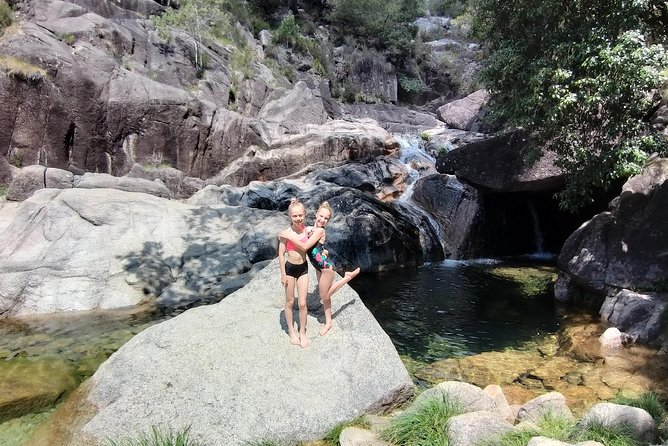
This is built for people who want Gerês in a single shot, without the hassle of renting a car or juggling bus connections. You’re picked up from downtown Porto and Gaia hotels and B&Bs, then you spend the day moving through a set of nature and village stops, with time built in at each place.
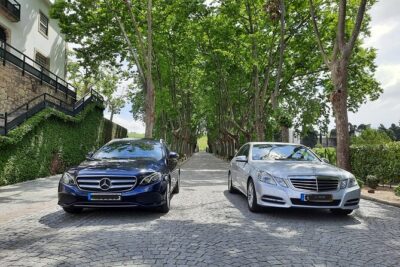
The vehicle setup matters more than you might think. You travel in a comfortable luxury car or van with Wi‑Fi, bottled water, and refreshments, plus personal accident and liability insurance. That means you can focus on the views and not on the small stresses that add up on long driving days.
The tour runs about 8 to 10 hours, starting at 8:00 am from Praça da Liberdade 19 in Porto. The pacing is tour-like (you’re not wandering all day), but it’s also not the rushed “stop for 5 minutes, next!” style—each stop is scheduled for time, typically around 15–20 minutes depending on the point of interest.
Private tours sound like a buzzword until you feel it: you’re limited to your own group. That usually translates to fewer interruptions, less waiting around, and more room to ask questions—especially important when you’re mixing viewpoints, waterfalls, and cultural sites.
You can also read our reviews of more private tours in Porto

Fafião and the Barroso Eco-Museum: a calmer start before the falls
Most Gerês itineraries lead with scenery. This one starts with people and place.
Fafião: medieval traces in a pastoral village
Fafião is one of 15 places in the parish of Cabril. It’s described as a community-based pastoral village that cares about preserving its identity and culture. The payoff here is that you’re not just seeing a park—you’re seeing how the land has shaped local life for generations.
You’ll get a short stop to walk around and look for physical and architectural traces connected to medieval times. Even if you don’t go deep into research-mode history, it gives you a human “why” behind the scenery: mountains and rivers are not just scenery. They’re the backbone of how people farmed, built, and lived.
Barroso Eco-Museum: daily life turned into something you can actually visit
Next is the Barroso Eco-Museum, set across several restored buildings: a traditional house, a water mill, and a threshing floor. The idea is simple and effective—local agricultural practices, handicrafts, and folklore are taught through the spaces where those tasks happened.
This stop is only about 15 minutes, so don’t expect a full museum day. But it’s a good course-correction away from only waterfalls and viewpoints. It also helps you “read” what you’re seeing later, since Gerês culture is tied to land use.
Fojo do Lobo de Fafião: a living relic of wolf trapping
This is one of the most distinct stops on the list: Fojo do Lobo de Fafião. A “fojo” is a traditional hunting method used in Portugal and Spain, using a funnel-shaped pit designed to trap wolves and other predators.
The practical value of this stop is that you see an old system still physically present. It’s not just a story; it’s an architectural method made of walls and shapes, and it survives in only a few examples across Portugal.
If you don’t like anything tied to hunting or predators, this might feel heavy. But if you’re a nature fan who also likes human history and how people interacted with wildlife, it’s a memorable contrast.


Cascata Tahiti and Cascata do Arado: where swimming fits into the plan
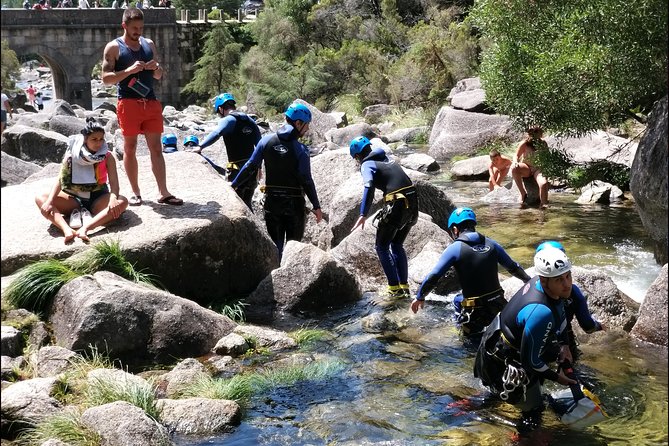
Then the tour shifts into what you probably booked for: water.
Cascata Tahiti: the popular waterfall stop that still earns its reputation
Cascata Tahiti is one of the most popular waterfall destinations in the park. That can sometimes mean crowded and rushed. In this private setup, you have scheduled time (about 15 minutes) to take it in and move at a reasonable pace with your group.
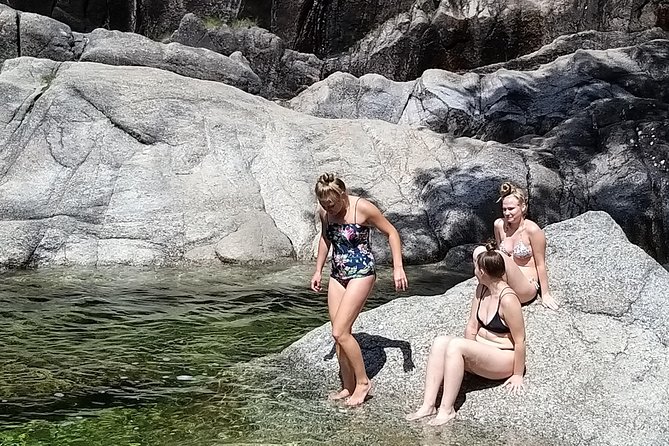
What makes it especially appealing is the chance to cool off. It’s described as offering a refreshing swim in crystal-clear waters. If you plan ahead, this is the moment to have your swimsuit ready—swimming is one of the few true “active” parts of the day, not just a photo break.
Cascata do Arado: natural pool energy and a good hot-day option
Cascata do Arado is described as a beautiful waterfall with a natural swimming pool. That phrasing matters. This isn’t just misty scenery; it’s a spot where water collects naturally in a pool-like area.
You’ll usually have about 15 minutes here. So think “quick rinse and enjoy,” not “spend hours.” The best value comes from timing—get in, cool down, take a few photos, then move on while everyone is still fresh.
Miradouro da Ermida, Rocas, and Pedra Bela: viewpoints that feel like real stops
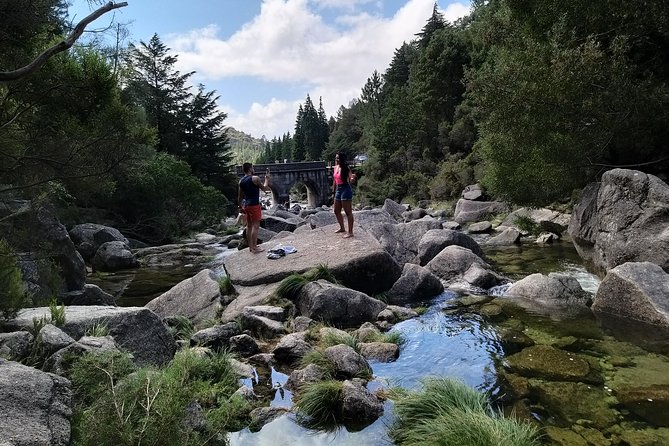
Gerês viewpoints can be hit-or-miss depending on how they’re handled. Here, the viewpoint sequence is built as short, meaningful photo and panorama moments rather than a single “look and leave” glance.
Miradouro da Ermida: panoramic mountain views in 15 minutes
Miradouro da Ermida gives you panoramic views of the Gerês mountains and surrounding scenery. You’re scheduled for about 15 minutes, which is long enough to step back from the crowd, find your angles, and take in the layers of rock, forest, and valleys.
This is the stop that often helps you understand the park’s scale. From here, waterfalls and rivers don’t feel random—they look connected.
Rocas Viewpoint: a 360-degree look with Caniçada reservoir in the mix
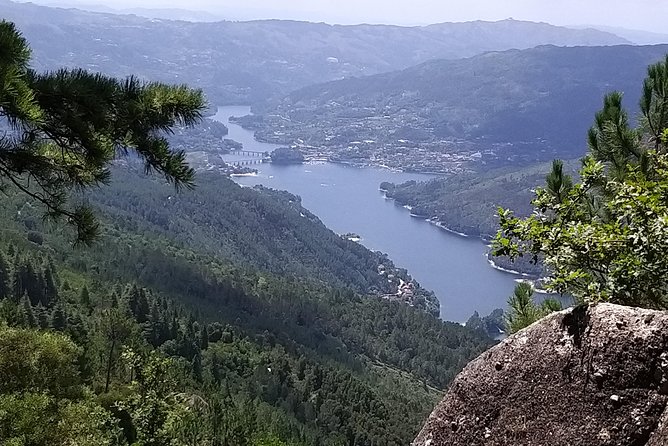
Viewpoint Rocas is noted for a 360-degree view, including the lush greenery of the Gerês mountains and the crystal-clear waters of the Caniçada reservoir. That kind of sweeping sightline is exactly where a private pace helps. You don’t have to constantly shift around other groups to get a decent angle.
Miradouro da Pedra Bela: the big “natural amphitheatre” moment
Miradouro da Pedra Bela is described as an authentic natural amphitheatre. You also get views tied to bridges of Rio Caldo and the full expanse of Caniçada reservoir.
One practical detail that helps: there’s shade from cedars and birches, plus a small fountain and tables for a snack. If you didn’t opt for lunch (or you want a mini break before lunch), this is a nicer place to pause without feeling like you’re standing in the wind.
Gerês village stop + the 4845-075 area: a taste of local food culture
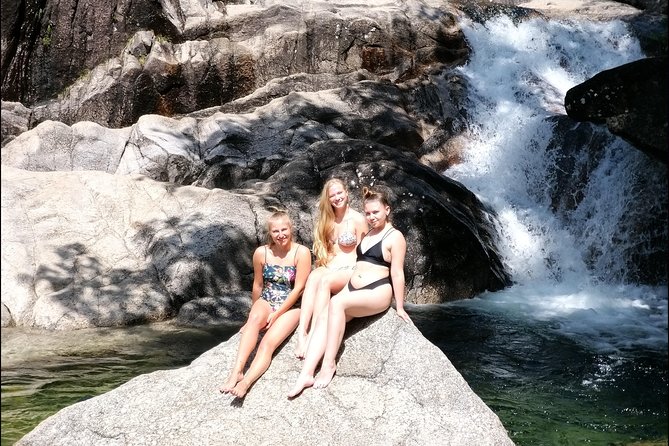
Midway through, the route includes exploring a Gerês village located on the banks of the Homem River. The point here is simple: you’re in the park, but you’re not only in the park.
This stop is described as a place to taste local cuisine, with a strong emphasis on the meat of Gerês cows. It’s noted for tenderness and flavor and shows up in traditional dishes like cozido (a stew with various meats and vegetables) and churrasco (grilled meat).
You’ll have about 15 minutes. That means don’t plan a full meal here unless you’re able to order fast. Think of it as a “sampling and atmosphere” stop—enough time to read menus, grab a small bite if you want, and connect the day to food that comes from the region’s farming.
Leonte and Portela do Homem: two waterfalls with different water-flow realities
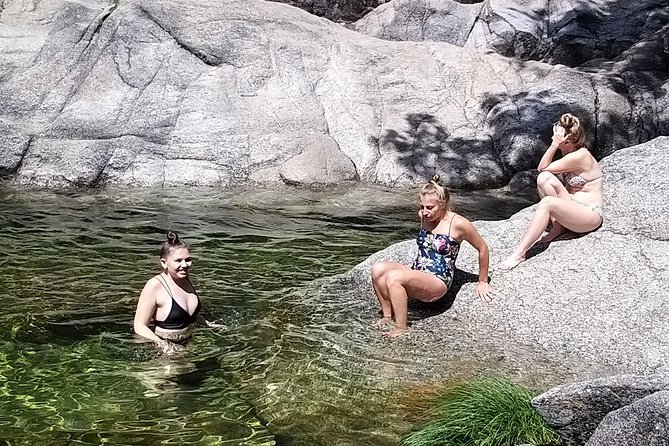
The day keeps moving to more waterfalls, and two of them come with important details about water conditions.
Cascata de Leonte: 19 meters of granite cliff, but watch drought seasons
Cascata de Leonte forms from the collapse of the Taleira stream waters, dropping from the top of a granite rock cliff at 19 meters into the bed of the Gerês River. That’s a real physical detail—height and geology—so you can “see” what the waterfall is doing rather than just staring at water.
There’s also a heads-up: in summers with periods of drought, the flow may disappear. That doesn’t mean you won’t see anything, but it does mean this is not a guarantee of a roaring waterfall all the way through dry spells.
Cascata da Portela do Homem: a river fall with a natural swim pool
Cascata da Portela do Homem is formed by the Homem River descending a rocky slope into a stunning cascade. Like Tahiti and Arado, it includes the option to relax and take a refreshing swim in the natural pool at the base.
This is one of the better “end-of-day reward” stops. By the time you arrive, you’ve already built up your appetite for water and cool air. And because it’s still described as having a swim area, it’s a good place to use that swimsuit again—if you’ve managed to keep it from becoming a damp inconvenience in your bag.
Optional Lobios SPA in Spain: the thermal twist if you still have energy
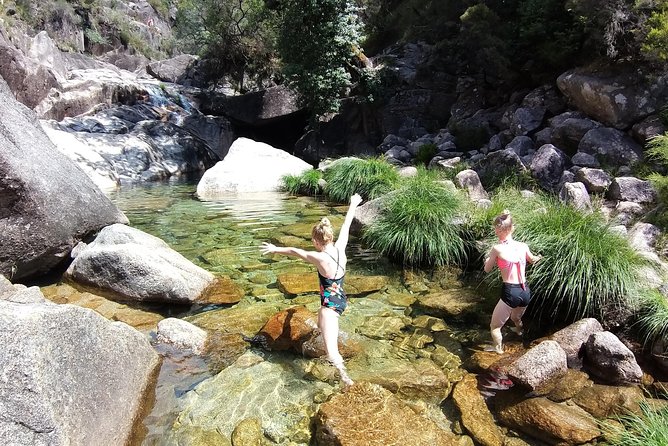
Here’s the curveball that makes the day feel bigger than a single-country outing. If there’s still time, the itinerary includes a stop in the Province of Ourense area of Spain at Lobios SPA.
This thermal resort is in Lobios, near the Portugal border, and is built around mineral-rich thermal waters. The waters are described as having therapeutic properties, and the main relaxation feature is an outdoor thermal pool heated by natural thermal water with mountain views. The resort is surrounded by lush vegetation, which matters because it’s not just soaking in hot water—it’s soaking in a calmer environment.
Two practical points based on how it’s presented:
- It’s conditional on free time. So don’t count on it if you’re arriving expecting it.
- The tour notes that it’s an optional addition, so you’re not paying for it as part of the core waterfall-and-viewpoint run.
If you want the day to end with comfort and warmth after hours of outdoor walking and possible swims, this is a smart bonus.
Price and value: is $248.53 per person a fair deal?
At $248.53 per person, this sits in the “private day trip” category, not the cheap-bus-excursion category. The value depends on what you measure.
Here’s what you’re getting that tends to justify the price:
- Hotel pickup and round-trip transfers from Porto and Gaia downtown areas
- Luxury vehicle comfort with Wi‑Fi, bottled water, and refreshments
- Insurance coverage (personal accident and liability)
- A private setup limited to your group
- An English-speaking service
- A route with multiple major natural features: multiple waterfalls, multiple viewpoints, and cultural stops
What costs extra:
- Lunch is available as a paid option (starter, main, drink, dessert, coffee, plus wine) for €30 per person
- Gratuities are not included
So the real question is: would you be comfortable paying for convenience and comfort to stitch together distant stops? If you’re driving yourself, you’d pay for a rental, fuel, and parking stress, plus you’d still need to find a workable route and time your stops. If you’d rather spend your energy on the views and photos, this price can feel reasonable.
Also, the lunch option is handled in a way that you should treat as flexible. In one past experience, vegetarian needs were handled—just make sure you mention dietary preferences early when possible.
What to bring for waterfalls, viewpoints, and quick village stops
This tour is short-stop intense. You’ll be switching environments—village streets, museum spaces, viewpoint climbs, and waterfall areas—often within the same hour.
Bring:
- Comfortable shoes with grip. Some paths near waterfalls can be slick.
- Swimwear and a quick-dry towel if you want to use the natural swim spots (Tahiti, Arado, and Portela do Homem are listed with swimming time).
- A light layer for the viewpoints. Mountain weather can shift fast.
- Sunscreen and water. You’ll have bottled water in the vehicle, but you’ll still be outside at multiple stops.
If you’re considering the paid lunch, plan to arrive ready for it. The lunch is described as including wine, dessert, and coffee along with the meal structure.
Who this Gerês private tour suits best
This experience fits best if you:
- Want a nature-first day but still like human culture stops
- Prefer private-group pacing over bus crowds
- Enjoy photography at viewpoints like Rocas and Pedra Bela
- Plan to cool off with waterfall swims when conditions allow
It also tends to work well for people who don’t want to drive in unfamiliar mountain roads. And since the tour notes that most travelers can participate and service animals are allowed, it’s built with general practicality in mind.
Should you book this Peneda-Gerês private tour from Porto?
If your ideal day is waterfalls + viewpoint time + a couple of culture stops, and you want pickup and comfort handled for you, I’d lean toward booking. The route is structured so you’re not waiting around, and the swim-ready stops make it feel more like an experience than a checklist.
I’d hold off or plan extra flexibility if:
- You’re traveling in a time of drought, since at least one waterfall (Leonte) can have little or no flow
- You can’t change plans for weather, since the tour requires good weather
- You’re purely budget-driven and want a cheaper self-guided option
If you like nature but also enjoy a bit of local texture—Fafião, the Eco-Museum, and the Fojo—this private day from Porto is a strong match.
FAQ
Where does the tour start and how does pickup work in Porto?
The meeting point is Praça da Liberdade 19, 4000-322 Porto, and the start time is 8:00 am. The tour also offers pickup from all Porto and Gaia downtown hotels and B&Bs.
How long is the private tour?
It runs about 8 to 10 hours, depending on the day and timing across the stops.
Is lunch included in the price?
Lunch is not included in the base price. A typical lunch option (starter, main, drink, dessert, coffee, with wine) is available for €30 per person.
Does the tour include entry tickets?
Most stops list free admission tickets, and the tour indicates admission ticket costs for those points are free. (You can still confirm any site-specific requirements with the provider.)
Can I swim during the tour?
Swimming is described as possible at Cascata Tahiti, Cascata do Arado, and Cascata da Portela do Homem, where there are refreshing waters or natural pools at the waterfall sites.
What happens if the weather is bad?
This experience requires good weather. If it’s canceled due to poor weather, you’ll be offered a different date or a full refund.