REVIEW · PORTO
Private Tour to Lamego and Viseu, the Dão wine region
Book on Viator →Operated by Endless Weekend Tours · Bookable on Viator
A long stairway and a wine day in one.
This private outing links Lamego’s baroque grandeur and views with Viseu’s cathedral—then hands you a choice of Dão tastings. I love how the morning starts with Douro-area stops that set the scene, and I also like the mix of serious architecture plus optional wine culture. One thing to plan for: you’ll be moving between towns and several sites, and the highlight at Nossa Senhora dos Remédios is the kind of climb where good shoes matter.
If you want a day that feels organized but not rushed, this fits well. The private format means your driver/guide can work around your group pace, and the vehicle is set up for comfort (Wi‑Fi, water, refreshments). The only real trade-off is that some of the best-value extras—palace interiors and wine experiences—cost extra on top.
In This Review
- Key Highlights Worth Knowing
- A Private Day Trip From Porto to Lamego and Viseu
- Douro Bridge Stops: Why They Matter Before the Churches
- The metal bridge linked to King D. Luís I
- The Régua road bridge (1934)
- Castelo de Lamego: Medieval Walls at 543 Meters
- Lamego Cathedral: Gothic Meets Renaissance, With Nasoni’s Ceiling
- The façade: João Lopes’ early 1500s design
- Inside: painted ceilings and a quiet cloister
- Nossa Senhora dos Remédios: 686 Steps, Baroque Theater, Big Views
- The staircase is the main character
- Is it doable?
- Se Catedral de Viseu: A Fortified Gothic Cathedral You Can See From Afar
- How it evolved
- Palacio dos Condes de Anadia: Grand Rooms, Baroque Details, Optional Ticket
- What you’ll see
- The catch: it costs extra
- Dão Wine Region Choices: How to Pick Your Tastings
- Solar do Vinho do Dão: the low-pressure starting point
- Quinta do Santar / Vila Jardim: a guided estate visit with history
- If you’re deciding between wine add-ons
- Grão Vasco Museum in Viseu: Art for the People Who Want One More Layer
- Timing, Pace, and Getting Value From the $304.85 Price
- What’s included vs. what’s optional
- How to prevent an overstuffed day
- Who This Tour Suits Best
- Should You Book This Private Lamego and Viseu Tour?
- FAQ
- Is pickup in Porto included?
- How long is the private tour?
- What’s included in the price?
- Do I need to pay for the palace or the museum?
- Are there wine tastings during the day?
- Is lunch included?
- Can I cancel if weather is bad?
Key Highlights Worth Knowing
- Douro bridges on footpath networks: you’ll see two notable bridge stories tied to road and pedestrian use.
- Lamego’s baroque stairway: 686 steps to the Sanctuary of Nossa Senhora dos Remédios.
- Cathedrals with layered styles: Lamego Cathedral’s Romanesque roots plus later Gothic/Renaissance changes.
- Viseu Cathedral’s fortified look: towers give it a church-fort feel on a promontory.
- Dão tastings built into the day: wine stops range from low-key to more structured.
- Private day trip control: only your group, starting around 8:00 am from Porto with pickup offered.
A Private Day Trip From Porto to Lamego and Viseu
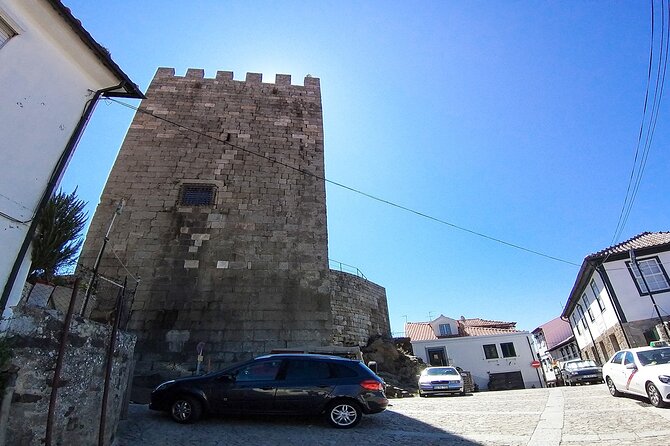
This is a classic Portugal combo: historic towns, big churches, and time for Dão wine culture. The day runs about 8 to 10 hours, starting at 8:00 am, and it’s a private tour, so you’re not sharing the schedule with strangers.
You’ll ride in a luxury vehicle with Wi‑Fi plus bottled water and refreshments. That matters more than it sounds. Between Porto, the Douro area, and two different city centers, the comfort payoff is real—especially if you’re booking for two couples or a small family group.
You can also read our reviews of more private tours in Porto

Douro Bridge Stops: Why They Matter Before the Churches
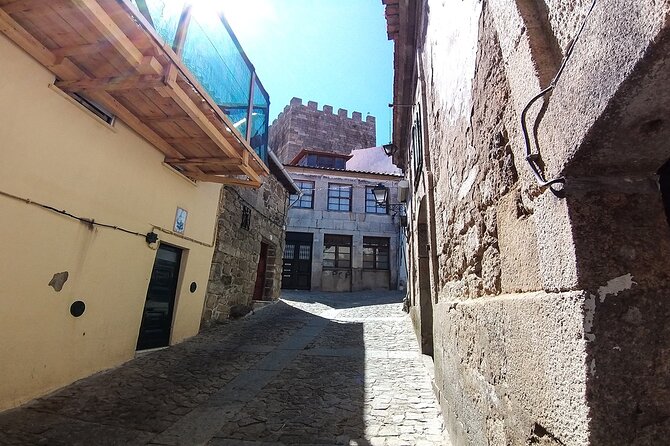
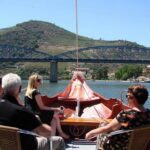
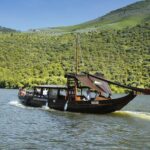
Before you even hit Lamego’s main sights, the tour includes two bridge viewpoints that explain how this region adapted over time.
The metal bridge linked to King D. Luís I
One stop is the metal bridge built by King D. Luís I in the late 1800s to cross the Douro by road. It later shut down because the wooden deck degraded. Then, rehabilitation works gave it a new purpose tied to its original character—so it became part of the footpaths network along the Douro.
Why I like this early stop: it sets context. You’re not just hopping from building to building; you’re seeing how the Douro has been connected—and how those connections get repurposed.
The Régua road bridge (1934)
The second bridge stop is the Régua road bridge, built in 1934 by the Companhia Nacional de Caminhos de Ferro. The rail plan didn’t fully work out, so the bridge was adapted for road use. It’s also notable for its masonry construction, unlike the iron bridges common at the time.
Practical tip: bring a camera and plan for short legs between viewpoints. These stops are brief (about 30 minutes), so it helps to move with purpose.
Castelo de Lamego: Medieval Walls at 543 Meters
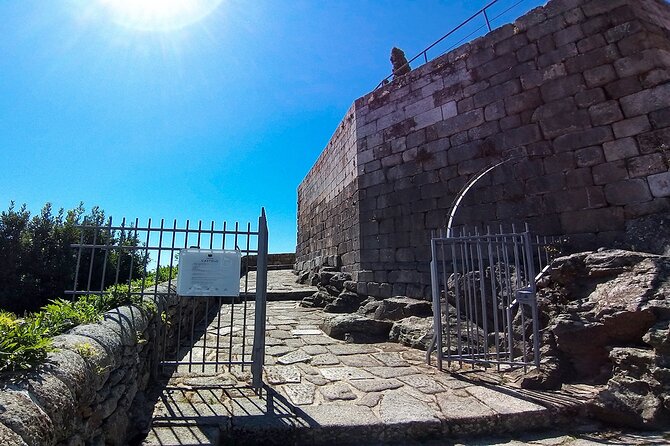
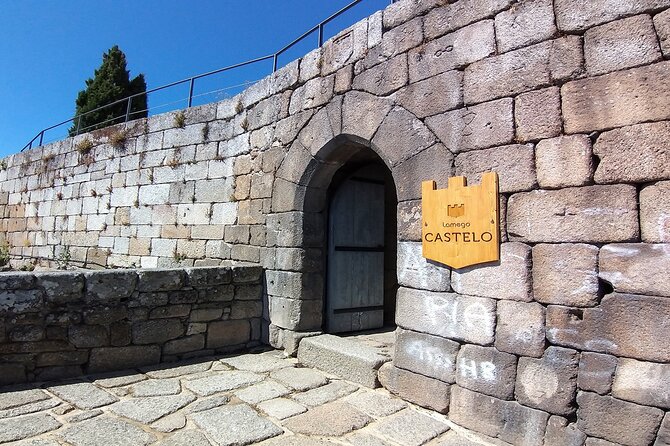
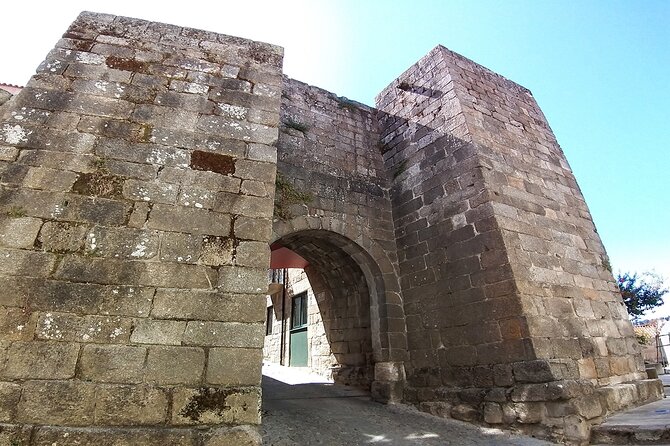
Lamego Castle is a National Monument (classified in 1910). Construction started in the 12th century, and the site has had layers long before that: a Lusitanian fort, Visigoth presence between the 5th and 7th centuries, and Muslim rule starting from the 18th century onward until the Christian Reconquest.
That timeline is part of why the castle feels interesting even if your visit is short. You’re standing on a defensive footprint that’s been reused across major eras.
Expect a medieval mountain castle with a walled perimeter and an irregular plan that matches the terrain. It sits at 543 meters above sea level, which is why the views feel like a reward rather than a background.
What to know: this stop is about 30 minutes, and admission is free. If you love quick architectural hits with good photo angles, this is a strong start.
You can also read our reviews of more wine tours in Porto



Lamego Cathedral: Gothic Meets Renaissance, With Nasoni’s Ceiling
Lamego Cathedral dates to the 12th century, likely connected with D. Afonso Henriques. The catch is that the building wasn’t frozen in time. It went through reconstructions in the 14th, 16th, 17th, and 18th centuries, shifting its original Romanesque profile.
The façade: João Lopes’ early 1500s design
The main façade, built in the early 16th century by architect João Lopes, is a highlight. It blends flamboyant Gothic forms with early Renaissance touches. If you like façades that look carved rather than painted, don’t rush past the front.
Inside: painted ceilings and a quiet cloister
Inside, you can see painted ceilings done in the first half of the 18th century by Italian painter-architect Nicolau Nasoni. The ceiling painting uses an architectural frame around biblical episodes. It’s one of those details you only notice if you slow down for a minute.
There’s also a 16th-century cloister and two magnificent chapels from the same period.
Time and ticket: about 30 minutes, and admission is free. That makes it an easy win inside a longer day.
Nossa Senhora dos Remédios: 686 Steps, Baroque Theater, Big Views
If you only do one “wow” moment in Lamego, make it this sanctuary.
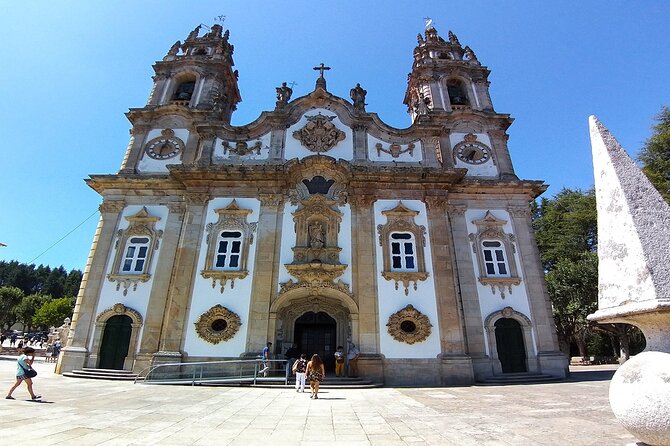
The Sanctuary of Nossa Senhora dos Remédios is often considered an ex libris of the city and is listed as a Property of Public Interest. What you’ll feel immediately is the theatrical design: fountains, chapels, obelisks, and the famous approach built to create a slow reveal as you climb.
The staircase is the main character
The big draw is the 686-step staircase that takes you to the church at the top of the mountain. It was built in the 18th century to replace an earlier 14th-century chapel, and it’s modeled as a version of the famous church tradition in Braga (Bom Jesus style).
Nicolau Nasoni also influenced parts of the sanctuary’s works, including a granite fountain near the sanctuary.
Is it doable?
A note from real-world experience: the climb is steep, but it’s accessible to many people. Still, be honest about your limits. If you plan to climb, wear shoes with grip, and take breaks if you need them. There’s no prize for suffering.
Time and ticket: about 30 minutes, admission free.
Se Catedral de Viseu: A Fortified Gothic Cathedral You Can See From Afar
Viseu’s cathedral—Se Catedral de Viseu—looks like a fortified church. Those large towers create that castle-like silhouette, especially when you view it from a distance around town.
It’s also one of Viseu’s oldest buildings, built on the site of a primitive temple tied to the Suevo-Visigothic era. Archaeological excavations have revealed parts of that earlier structure.
How it evolved
The cathedral began taking shape in the 12th century under D. Afonso Henriques. Then came a major renovation in the 13th century during the reign of D. Dinis. The work lasted many years, so the complex includes elements from different periods.
Time and ticket: about 30 minutes, admission free.
Practical tip: if you’re into architectural layers, spend your time looking outward first (towers and massing), then move inward for details like sculptural work and stained-glass windows when you can.
Palacio dos Condes de Anadia: Grand Rooms, Baroque Details, Optional Ticket
Next up is the Palácio dos Condes de Anadia, an 18th-century estate tied to one of Portugal’s wealthier families. This is not just an exterior stop. You get a guided tour of the palace interior.
What you’ll see
The palace has a Baroque-style façade with detailed carvings. Inside, it’s all about ornate ceilings, frescoes, and period furniture from the 18th and 19th centuries. There’s also a chapel dedicated to Saint Francis of Assisi.
The catch: it costs extra
The guided visit is an optional add-on. The palace ticket is not included and is listed at €15 per person.
When it’s worth it: If you want interior atmosphere rather than just quick photos, this is the add-on to prioritize. If your group prefers lighter schedules and more wine time, you can skip it and keep the day moving.
Dão Wine Region Choices: How to Pick Your Tastings
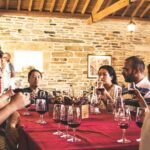
This tour ties in Dão wine culture in a way that gives you flexibility. Some stops are quick and easy; others are structured with a guided estate feel.
Solar do Vinho do Dão: the low-pressure starting point
One option is the Solar do Vinho do Dao – Rota dos Vinhos do Dao. It’s the reception center for the Dão Wine Route, housed in the former episcopal palace. It functions like a tourist information hub—but it’s also a small wine cellar with wines from the farms tied to the route.
You’ll find leaflets and addresses, and the tasting setup includes eight highlighted references for tasting at no cost or at a symbolic price. You also get a glass at the counter.
Time and ticket: about 30 minutes, ticket not included (though tastings are set up with free or symbolic pricing).
Why it’s a smart move: if you’re not sure what you like in Dão yet, this is a good place to orient yourself. You can start tasting without turning the whole day into a full-day wine class.
Quinta do Santar / Vila Jardim: a guided estate visit with history
Another optional stop is Casa do Santar / Vila Jardim, a historic wine estate in the Dão region. The property dates to the 16th century and is known for high-quality Dão wines, especially Dão red wines made from Touriga Nacional.
The estate includes a 17th-century mansion, a chapel, and a vineyard. The visit is designed around the history of winemaking and includes a tasting experience (with the guided visit priced as an optional add-on).
Time and ticket: about 1 hour, €25 per person listed for the optional guided visit with wine tasting.
If you’re deciding between wine add-ons
Pick based on your group’s energy:
- If you want a light touch and a few tastings: choose Solar do Vinho do Dão.
- If you want deeper background on winemaking and a more guided feel: choose Vila Jardim at Quinta do Santar.
Grão Vasco Museum in Viseu: Art for the People Who Want One More Layer
If your group likes art tied to place, the Museu Grão Vasco is the optional match.
It’s in Viseu’s historic center, in a former bishops’ palace from the 16th century, next to the cathedral. The museum’s core collection is famous for altarpiece paintings by Vasco Fernandes (c. 1475–1542), known as Grão Vasco, plus works by collaborators and contemporaries.
The museum also includes objects originally intended for liturgical practice, spanning painting, sculpture, goldsmithery, and ivory from Romanesque to Baroque periods. Additional collections include archaeology items, Portuguese earthenware, jewelry, and other cultural objects like numismatics and furniture.
Time and ticket: about 30 minutes and the admission is extra (listed as €4.00).
My take: this is a good optional pivot if you’ve already reached your cathedral quota for the day, but you still want a meaningful stop in Viseu.
Timing, Pace, and Getting Value From the $304.85 Price
At $304.85 per person (private), the value comes from two things: the time efficiency and the comfort of a full day of driving in one vehicle with Wi‑Fi, water, and refreshments.
This isn’t just a “drive and drop.” The plan is built like a route: you see Douro bridges, then move into Lamego for castle/church/sanctuary, then head to Viseu for cathedral and optional interiors and wine culture.
What’s included vs. what’s optional
Included features cover:
- Transport in luxury vehicles (with comfort gear, Wi‑Fi, bottled water, refreshments)
- Personal accident and civil liability insurance
Not included add-ons include:
- Grão Vasco Museum admission
- Palace of the Counts of Anadia guided interior ticket
- Vila Jardim / Casa do Santar guided wine tasting
- Lunch (starter–main–drink–dessert–coffee with red or white wine) listed at €25
- Other optional cellar/tasting items (listed as separate extras)
How to prevent an overstuffed day
With an 8–10 hour window, I’d choose based on one “big ticket” interior and one wine experience:
- If you book the palace (€15), consider skipping a second estate wine visit.
- If you choose the Sant ar estate tasting (€25), keep the palace as optional and lean on quick cathedral/sanctuary time.
- If you go museum (€4), keep wine stops short (Solar do Vinho do Dão is the easier fit).
Who This Tour Suits Best
This tour works especially well if you:
- Like architecture but still want a real break for views and atmosphere
- Prefer private pacing over public-group schedules
- Want Dão wine exposure without having to plan your own driver and ticket chain
- Are traveling with two couples or small groups who want comfort and control
It’s less ideal if you hate stairs or long walking segments. The sanctuary staircase is a signature part of the day, and that’s not something you can fully “opt out” of if you want the main reward.
Should You Book This Private Lamego and Viseu Tour?
I’d book it if your ideal day has three ingredients: historic towns you can actually walk around, at least one big interior (cathedral or palace), and a Dão wine stop that feels built-in rather than tacked on.
Skip or modify if your group wants everything hands-off. While the base tour includes several free cathedral/sanctuary sites, the most memorable “inside” moments and tastings are optional and can add up. Still, that flexibility is a strength: you control the emphasis.
If you care about smooth organization, the experience is run by Endless Weekend Tours, and the driver named Carlos has been noted as responsive during the booking process and able to handle pickup smoothly.
FAQ
Is pickup in Porto included?
Pickup is offered, and the tour starts at 8:00 am. Your exact pickup setup depends on the arrangement made at booking.
How long is the private tour?
The duration is about 8 to 10 hours.
What’s included in the price?
Transport is included in luxury vehicles with Wi‑Fi, bottled water, and refreshments, plus personal accident and civil liability insurance.
Do I need to pay for the palace or the museum?
Yes. The Palácio dos Condes de Anadia guided visit is an optional ticket (listed at €15 p/person), and the Museu Grão Vasco has extra admission (listed as €4.00).
Are there wine tastings during the day?
There are optional wine stops. For example, Solar do Vinho do Dão offers tastings with free or symbolic pricing, and Casa/Santar Vila Jardim is a guided option with wine tasting (listed at €25 p/person).
Is lunch included?
Lunch is not included. A typical lunch option is listed as €25.00.
Can I cancel if weather is bad?
The tour notes that it requires good weather. Cancellation is free up to 24 hours in advance for a full refund, and if canceled due to poor weather you’ll be offered a different date or a full refund.