REVIEW · PORTO
Private Tour to Guimarães and Braga, two incredible cities
Book on Viator →Operated by Endless Weekend Tours · Bookable on Viator
Medieval Portugal, in two towns, one easy day. This private tour strings together Guimarães, tied to Portugal’s origins, and Braga, famous for churches and hilltop devotion, with a licensed guide/driver plus a comfortable Wi‑Fi vehicle and cold bottled water to keep the long day pleasant.
I especially like how Carlos (when you’re assigned him) adjusts the route to what matters to you, instead of rushing everyone through the same script. You also get the practical comfort extras—Wi‑Fi, refreshments, and room to breathe—so you spend your energy on monuments, not logistics.
One consideration: it’s a full 8 to 10 hours, and several of the big-ticket sights in Braga and Guimarães are optional paid entrances, so your final total depends on what you choose to add.
In This Review
- Key things I’d bet you’ll notice
- Why Guimarães and Braga work so well in one Porto-based day
- Price and what you actually get for $198.25 per person
- Meeting point, pickup, and timing you should build your day around
- Guimarães essentials: churches, squares, and the feel of the medieval core
- Igreja de Nossa Senhora da Oliveira: start where the story begins
- Largo da Oliveira and the old town hall
- Padrão do Salado and medieval memory
- Praca de S. Tiago and Rua de Santa Maria: where the medieval street grid shows up
- Guimarães castle country: Santa Miguel, the fortress views, and optional museum time
- Igreja de Sao Miguel do Castelo: Romanesque, small but important
- Guimarães Castle: the views are the main event (and tickets are optional)
- Paco dos Duques de Braganca: the palace-museum choice
- Largo do Toural and Arco da Porta Nova: optional heart and city commerce artery
- Crossing into Braga: a medieval city with cathedral-scale architecture
- Largo do Paco: a long construction timeline and modern institutions
- Santa Barbara Garden: a preserved medieval wing you can appreciate quietly
- Braga Tower (Torre de Menagem): what’s left of the castle’s defense
- Santa Maria de Braga Cathedral: mix of styles and optional paid access
- Bom Jesus do Monte: UNESCO sanctuary plus the funicular mechanics
- Bom Jesus funicular: the 274-meter ride that saves your legs
- Bom Jesus do Monte sanctuary: UNESCO since 2019
- How long is too long? Lunch, walking, and pacing for a smooth day
- Should you book this private Guimarães and Braga tour?
- FAQ
- What time does the tour start, and where does it begin?
- Is pickup available from hotels or B&Bs?
- How long is the tour?
- Is this a private tour?
- What language is the tour offered in?
- What is included in the tour price?
- What is not included?
- How much is the optional lunch?
- What if the weather is poor?
Key things I’d bet you’ll notice
- Carlos as guide/driver: English described as excellent, with real flexibility on the day.
- Comfort inside the vehicle: Wi‑Fi, bottled water, and refreshments for a long sightseeing stretch.
- Most entries are free: many stops are National Monuments or public areas where tickets aren’t required.
- Optional entrances are clear: palace, castle, cathedral add-ons, and the Bom Jesus funicular cost extra.
- UNESCO at Bom Jesus do Monte: you get both the funicular ride and the sanctuary setting.
- Designed for a private pace: you can slow down for coffee, photos, or a longer look at details.
Why Guimarães and Braga work so well in one Porto-based day
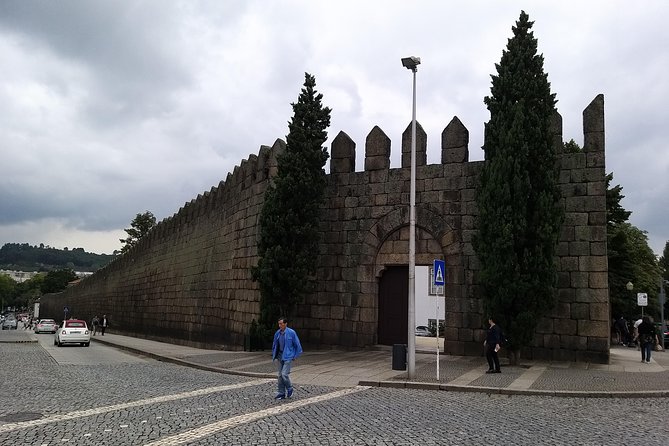
If you want one outing that feels like Portugal showing you its “before and after,” this is it. Guimarães gives you the early story—monasteries, Romanesque churches, and the medieval core tied to the start of Portuguese identity. Braga then shifts the tone toward cathedral-scale religious architecture and one of the Iberian Peninsula’s most famous devotion hills.
The real value is that the tour doesn’t treat these cities as checkboxes. It’s private, so your guide can keep the focus where you care most: sacred buildings, medieval streets, views from the castle, or the dramatic approach to Bom Jesus. When a day is this structured, that flexibility is what keeps it from feeling like a factory line.
Also, the morning start matters. Rolling out at 8:00 am helps you get into the cities while streets are calmer. You’ll be walking and looking on “city time,” not late-afternoon scramble time.
You can also read our reviews of more private tours in Porto
Price and what you actually get for $198.25 per person
At $198.25 per person, you’re paying for three things more than ticketed attractions. First, it’s private guide attention with a licensed guide/driver. Second, it’s comfortable transport in vehicles with Wi‑Fi, bottled water, and refreshments. Third, you get the convenience of a day organized into a single flow, with pickup options from downtown Porto and Gaia hotels and B&Bs.
What you should watch is that your total can rise (or stay modest) based on optional entrances. Many stops are free—church exteriors, squares, viewpoints, and National Monument sites with no ticket required on the time slots listed. But if you add the Palace of the Dukes of Braganza, Guimarães Castle, Braga Cathedral entry options, and the Bom Jesus funicular, you’ll spend extra.
So is it good value? For a private day that spans two cities plus a hilltop sanctuary, it often is. Especially if you’d otherwise pay for separate guides, deal with transport planning, and lose time. If you’re the type who loves details and hates waiting in lines, this format usually feels worth it.
Meeting point, pickup, and timing you should build your day around
The day starts at 8:00 am from Praça da Liberdade 19 in Porto. The tour also returns to the same meeting point at the end, so you’re not stuck transferring to a second vehicle to get home.
Pickup is offered from many downtown Porto and Gaia hotels and B&Bs. That’s a small detail, but it’s one of the reasons this tour feels easy: you’re not coordinating buses or taxis before you even start sightseeing.
Duration is listed as about 8 to 10 hours. That range gives you room for a slower pace, but it also means you should plan your expectations like an all-day outing. Wear comfortable shoes. Bring a layer for morning shade and possible late-day chill. And if you have strong preferences—like spending more time on the castle views versus the cathedral interiors—tell your guide early so the day can bend.
Weather matters too. The experience requires good weather, and if conditions aren’t right, you’ll be offered a different date or a full refund.
Guimarães essentials: churches, squares, and the feel of the medieval core
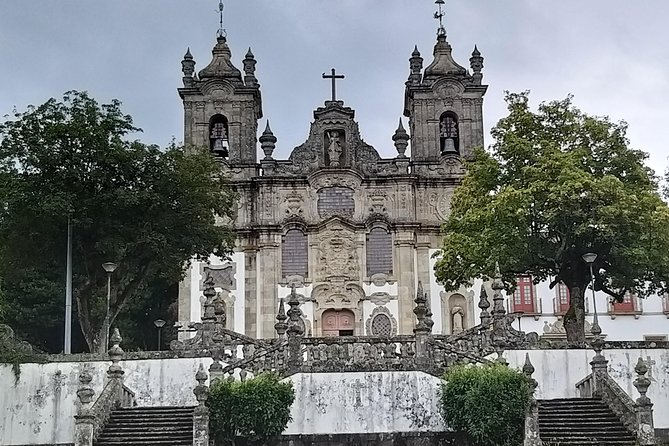
Guimarães is the Portugal-origin story on stone. The tour starts right away in the historic center with stops that show you how religious power and civic life overlapped in medieval times.
Igreja de Nossa Senhora da Oliveira: start where the story begins
This church sits on a site with roots that go back to a pre-Romanesque monastery. The origin is connected to Mumadona Dias, founded in 949. It’s classified as a National Monument, and the stop is free on the schedule.
What you’ll get here is atmosphere more than ticketed inside access. Even when you only get a short look, the setting helps you understand why later buildings and street layouts evolved around it.


Largo da Oliveira and the old town hall
A few minutes away is Largo da Oliveira, with Antigos Paços do Concelho—old town hall—construction spanning from the 14th century into the mid-15th. Today, the Delegation of the Cultural & Landscape Touring and Heritage is installed there.
This is one of those stops that can feel quick, but it’s useful. It connects the sacred sites to the civic administration that powered local life.
Padrão do Salado and medieval memory
Next is the Padrão do Salado, a Gothic porch built in the 14th century as a memorial of the Salado Battle. Another free stop, designed for brief viewing rather than a long interior moment.
If you like symbolism, this is the kind of structure that tells you medieval people cared about identity, not only conquest. It also gives you a visual change of pace before heading into the older streets.
Praca de S. Tiago and Rua de Santa Maria: where the medieval street grid shows up
Praca de S. Tiago preserves medieval features. Then comes Rua de Santa Maria, described as one of the first streets opened in Guimarães. It historically linked the Monastery of Guimarães (now the Museum Alberto Sampaio) and the castle.
The payoff here is walking-scale. You get to see how the city’s medieval bones direct your attention—toward monastery and fortification. It’s also where you’ll likely slow down naturally for photos.
One practical note: because this is older urban fabric, expect uneven surfaces in places. It’s not dramatic, but comfortable shoes are your best friend.
Guimarães castle country: Santa Miguel, the fortress views, and optional museum time
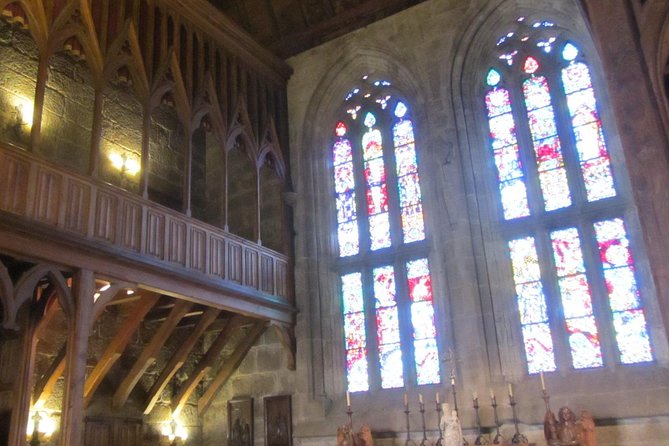
Guimarães stops keep a strong medieval thread right up to the viewpoints.
Igreja de Sao Miguel do Castelo: Romanesque, small but important
This is a 12th-century Romanesque church with small dimensions and a big role tied to the period of the foundation of nationality. It’s also a National Monument and free on the schedule.
Don’t treat this like a “quick church glance.” Even with limited time, look at proportions and the feel of the structure. Romanesque style often signals strength through simplicity, and this stop is a good example.
Guimarães Castle: the views are the main event (and tickets are optional)
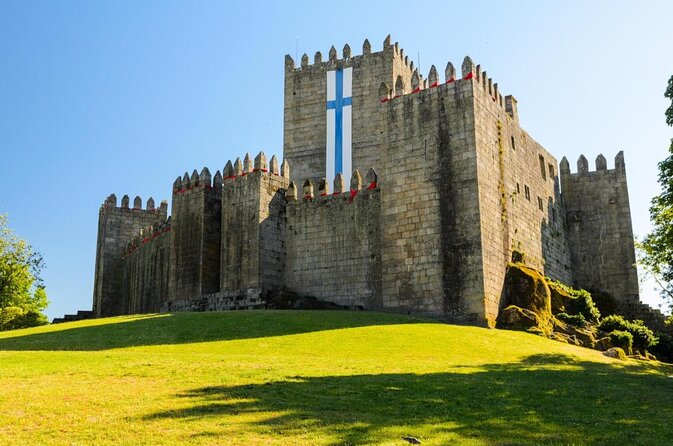
The castle itself is described as a medieval fortress built in the 10th century, tied to the birthplace of the Portuguese nation. It also offers stunning city views.
Entry is optional with a small extra cost listed for the castle ticket. If you care about the big panorama and dramatic walls, add it. If your priority is churches and streets, you could still enjoy the area without paying extra—just plan for shorter time for the viewpoints.
Paco dos Duques de Braganca: the palace-museum choice
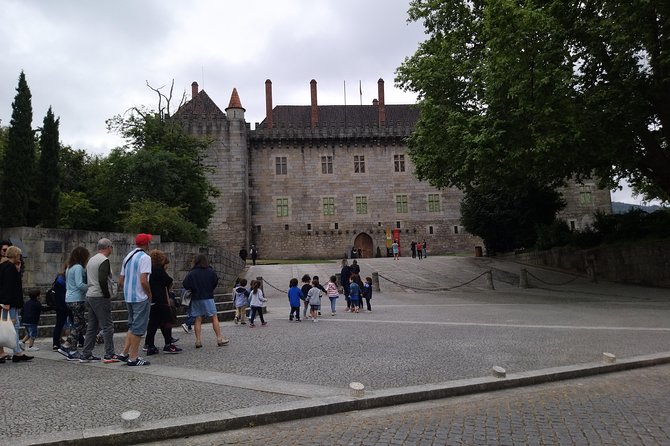
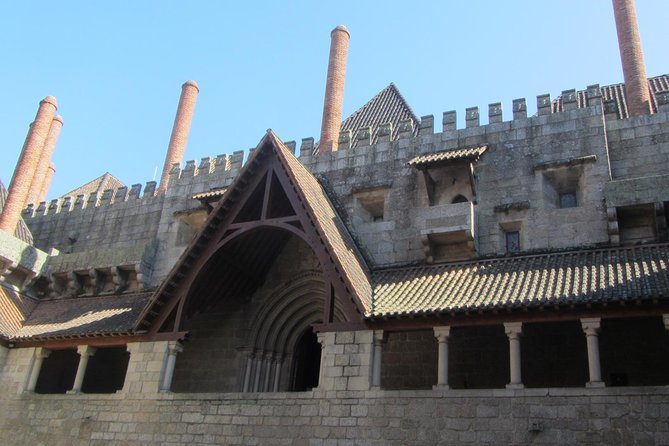
Another optional stop is the Palace of the Dukes of Braganza, a 15th-century palace once residence of the Dukes and now a museum showcasing regional history. The ticket is €6 per person.
This is a good add-on if you enjoy material culture and power structures: how noble families lived, how their legacy was preserved, and how museums interpret that story. If you’d rather use your time on outdoor views and the sanctuary at Bom Jesus, you can choose to skip.
Largo do Toural and Arco da Porta Nova: optional heart and city commerce artery
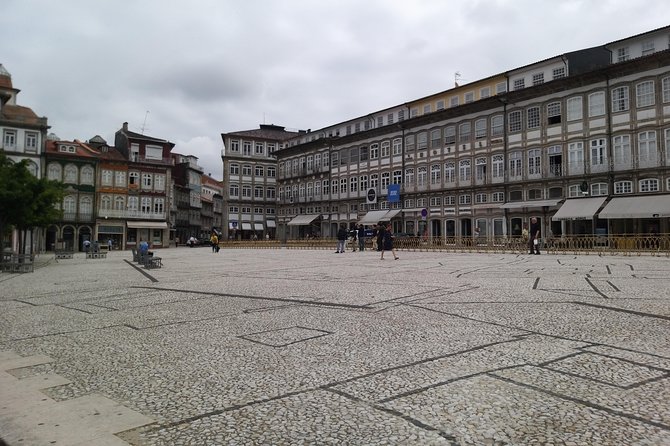
Toward the center, Largo do Toural is an optional stop described as the heart of the city today. In the 17th century it was outside the main village door, where cattle fairs and other products were held.
Arco da Porta Nova is another free stop. It’s known as New Door (Porta Nova) and sits near the top of Souto Street, a major commerce artery. The arch’s current configuration took its shape in the 18th century.
These two work nicely as a “human scale” finish to the Guimarães portion—less fortress, more daily life.
Crossing into Braga: a medieval city with cathedral-scale architecture
Braga is where the tour shifts from medieval origins to religious monumentality. The timing works because you’re not doing an all-castles day. You get variety: palaces, gardens, defensive remnants, and church interiors.
Largo do Paco: a long construction timeline and modern institutions
Largo do Paco is free and connects you to a building constructed from the 14th into the 20th century. It’s currently occupied by the rectory of the University of Minho and the Public Library of Braga.
This is a useful pause because it reminds you how historic structures stay alive. The building isn’t just frozen. It’s used.
Santa Barbara Garden: a preserved medieval wing you can appreciate quietly
Santa Barbara Garden faces the Garden of Santa Barbara and includes a preserved medieval wing of the archepiscopal palace, dated to the 14th and 15th centuries. It’s a free stop.
If you like calmer moments during a packed day, this is it. You’re not rushing through another door. You’re getting a sense of space and how power and gardens coexisted.
Braga Tower (Torre de Menagem): what’s left of the castle’s defense
The Torre de Menagem is the remaining donjon and pieces of the Castle of Braga, tied to a 14th-century construction campaign. The tour frames it as part of an intense military construction period, creating medieval defense structures like castles and urban fences.
Entry is optional here with no ticket included in the base price. Even if you don’t add it, the idea matters: you’re seeing how defensive design influenced the city’s form.
Santa Maria de Braga Cathedral: mix of styles and optional paid access
Santa Maria de Braga Cathedral dates back to the 12th century and is described as iconic. Architecturally it has a mix of Gothic, Baroque, and Romanesque styles. Entry is optional, with ticket fees listed.
The best way to use this part of the day is to decide what you want inside. If you’re aiming for cathedral interiors or specific sections like the treasury/museum and chapels/high choir, plan for the extra ticket costs listed for those items. If you mainly want the exterior feel and the big landmark presence, you can keep spending lower.
A short time limit can also make this stop feel tight, so if cathedral details are your priority, choose those optional sections wisely. You’ll get more satisfaction from fewer paid add-ons than from trying to cover everything.
Bom Jesus do Monte: UNESCO sanctuary plus the funicular mechanics
This is the tour’s big “wow” setting. It’s also where you get a clear mix of engineering and devotion.
Bom Jesus funicular: the 274-meter ride that saves your legs
The Lift of Bom Jesus is a funicular with two booths moving over railways connected by cable. It works as a counterbalance and travels 274 meters. It’s a 19th-century lift and described as the first funicular built in the Iberian Peninsula.
The ride is optional and priced per person. If you’re even mildly tired at this point of the day, I’d treat the funicular as a value buy. It keeps energy for the sanctuary walk and viewpoints instead of turning the hill into a workout.
Bom Jesus do Monte sanctuary: UNESCO since 2019
Bom Jesus do Monte is UNESCO World Cultural Heritage (since 8 July 2019). The site is believed to have devotion roots going back to the 14th century, while the construction of the sanctuary took shape from the 18th century into the 19th.
This stop is free on the schedule. That makes it a smart way to finish a paid-day tour: you can enjoy the setting without adding another ticket. The key here is pacing. The sanctuary area rewards slow looking—chapels, paths, and the way the approach creates a sense of arrival.
How long is too long? Lunch, walking, and pacing for a smooth day
A typical lunch isn’t included. There is an optional typical lunch package listed at €30 per person, with starter, main course, drink, dessert, and coffee, plus wines.
If you don’t choose that lunch option, the tour still runs on a schedule of short stops, so you’ll want a plan for food. I’d treat lunch as either part of the included optional package or a quick bite around your chosen breaks. The important point is that you won’t have a free-form half-day. This is organized sightseeing time.
Walking time is spread across many brief stops. Still, you should expect cobbles and some stairs near churches and viewpoints. This is why the transport and the short scheduled stop durations matter. You’re constantly moving, but not for hours at a time without breaks.
Finally, remember that weather affects the tour. If the day depends on clear conditions, keep your expectations flexible. If it’s canceled for poor weather, you’ll be offered a different date or a full refund.
Should you book this private Guimarães and Braga tour?
Book it if you want a private, guide-led day that covers Portugal’s early identity in Guimarães and the major devotional architecture of Braga. It’s a strong pick when you value planning help, comfortable transport, and a guide who can shift to your interests. Having Carlos as your guide/driver can be a big plus, especially if you appreciate explanations and room for personal pace.
Skip or downsize the add-ons if you’d rather pay as little as possible on entrances and only focus on free stops. The optional ticket costs listed for things like the palace, castle, cathedral sections, and the Bom Jesus funicular can add up fast, so choose based on what you truly want to step into.
My practical call: this is best for people who like structured sightseeing with flexibility, and who want one long day to feel like two cities with a clear thread connecting them. If that’s your style, you’ll likely feel satisfied by the amount you cover without feeling trapped inside a rigid route.
FAQ
What time does the tour start, and where does it begin?
It starts at 8:00 am at Praça da Liberdade 19, 4000-322 Porto, Portugal.
Is pickup available from hotels or B&Bs?
Yes. Pickup is offered from downtown Porto and Gaia hotels and B&Bs.
How long is the tour?
The duration is listed as approximately 8 to 10 hours.
Is this a private tour?
Yes. It’s private, and only your group participates.
What language is the tour offered in?
The tour is offered in English.
What is included in the tour price?
Transport in luxury vehicles with Wi‑Fi, bottled water, and refreshments is included, along with personal accident and liability insurance.
What is not included?
Lunch is not included (an optional lunch package is available for €30 per person). Several admissions are not included, including optional tickets such as the Palace of the Dukes (€5.00), Guimarães Castle (€2.00), Braga Cathedral (€3.00 or €4.00 depending on the ticket), and the Bom Jesus funicular (€2.00). Gratuities are also not included.
How much is the optional lunch?
The typical lunch option is priced at €30.00 per person.
What if the weather is poor?
The experience requires good weather. If it’s canceled due to poor weather, you’ll be offered a different date or a full refund.