REVIEW · PORTO
Porto Private Sidecar Tour
Book on GetYourGuide →Operated by Porto Sidecar Tours · Bookable on GetYourGuide
Porto looks different from a sidecar. You get slow cruising, lots of photo stops, and a route that trades the center’s crowds for real neighborhoods. I love that this feels personal: after a short safety talk, your guide asks what you want to see and then steers the tour around your pace and interests.
I also like how the ride itself does the work. You trace the river Douro toward the ocean, then return back into town, with viewpoints and local spots that are hard to reach on foot. One drawback to consider: if you are truly uneasy around motorcycles, even a safe sidecar might make you hesitate, so be honest with yourself before you book.
In This Review
- The Sidecar Factor That Makes Porto Feel Personal
- What You Get for $129 and 3 Hours (and Why It Works)
- Where You Meet: Vincci Ponte de Ferro and the Easy Start
- The Route That Connects the River and the Ocean
- Miragaia: A Photo Stop with Real Neighborhood Feeling
- Foz do Douro: Where the River Meets the Atlantic Mood (30 Minutes)
- Cais de Gaia: Riverfront Sightseeing with Quick Stops (15 Minutes)
- Jardim do Morro: Porto Viewpoints Without the Full Crowd Energy (15 Minutes)
- Vintage Car Stop: A Brief Style Moment (15 Minutes)
- What Makes the Stops Feel Worth It: Time for Photos and Local History
- Feeling Safe in a Sidecar: Helmet, Slow Driving, and Control
- Tailor-Made Porto: Your Preferences Actually Change the Ride
- Comfort Rules That Keep the Tour Smooth
- Price vs. What You Skip: Museums, Churches, and Other Paid Detours
- Who This Porto Sidecar Tour Is Best For
- Quick Practical Tips Before You Book
- Should You Book This Porto Private Sidecar Tour?
- FAQ
- FAQ
- How long is the Porto Private Sidecar Tour?
- What does it cost?
- Is this a private tour?
- Do you get hotel pickup and drop-off?
- Where do you meet?
- What’s included in the tour?
- What is not included?
- What languages are available?
- Who should avoid this tour?
- Can the tour be tailored to my interests?
The Sidecar Factor That Makes Porto Feel Personal
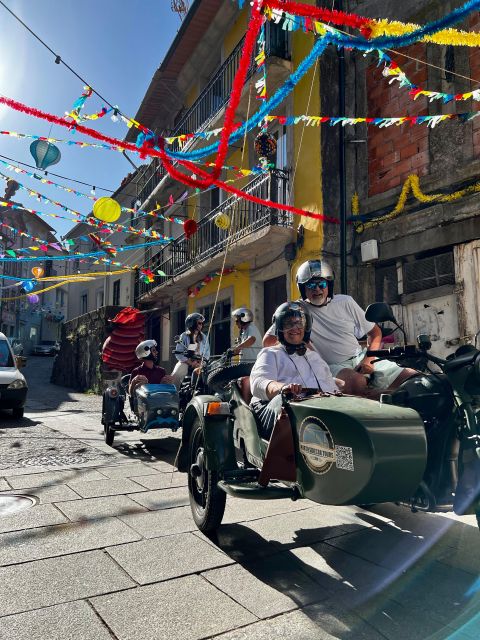
This isn’t a sit-and-listen city bus tour. It’s you, a private guide and driver, and a sidecar with just enough thrill to make every stop feel like a find. The best part is the rhythm: slow driving, frequent pull-offs, and time to look closely instead of rushing past the good stuff.
Guides such as João and Pacio show up in the feedback as big reasons people loved the experience. You’ll hear clear explanations, plus personal context about the places you pass—stories that make Porto feel lived-in, not staged.
What You Get for $129 and 3 Hours (and Why It Works)
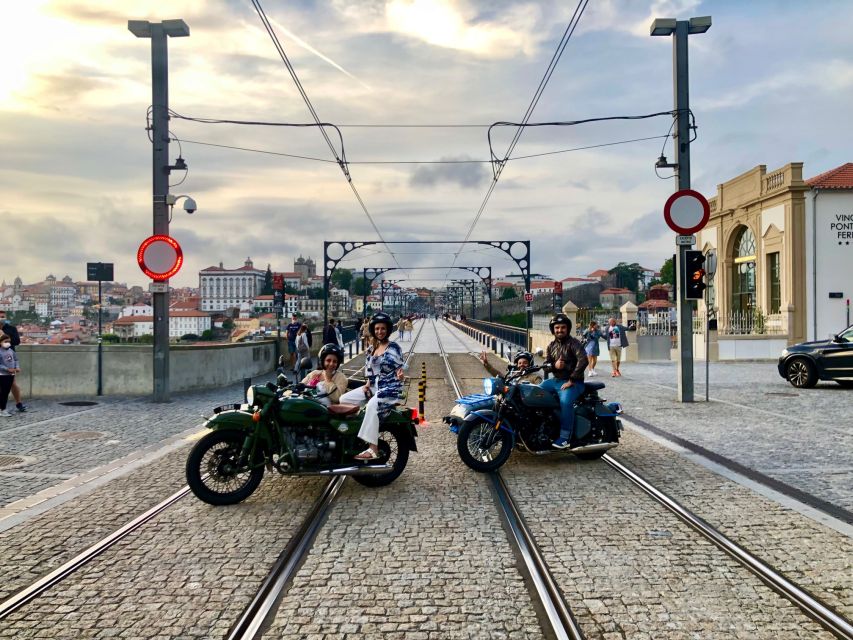
At $129 per person for a 3-hour private tour, you’re paying for a few things that don’t happen in standard sightseeing:
- A private guide and driver who can adjust the plan on the fly
- A ride that connects the Douro to the Atlantic without you changing transportation repeatedly
- Lots of photo and viewpoint stops, where time matters more than speed
That value shows up in the way the tour is paced. The driving is intentionally slow, so you can absorb what you’re seeing and actually get pictures you’ll keep. And because it’s private for one or two passengers, you don’t have to share the best moments with strangers.
You can also read our reviews of more private tours in Porto


Where You Meet: Vincci Ponte de Ferro and the Easy Start
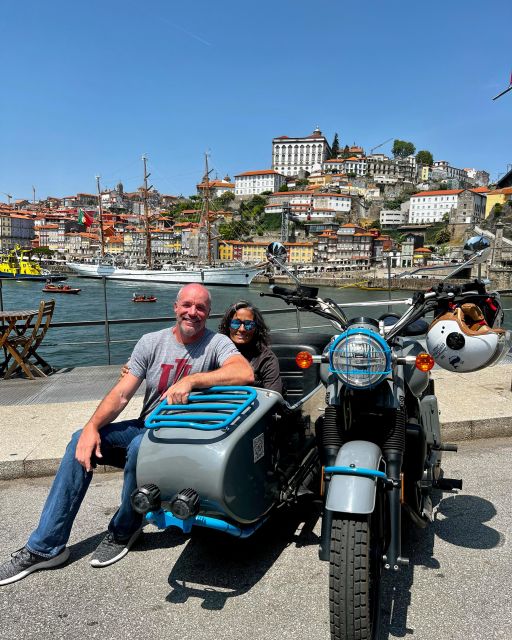
You’ll meet at Vincci Ponte de Ferro. The operator keeps it simple: look for the sidecar and the setup starts from there. Expect a short safety briefing first, then the real fun—conversation, preferences, and route planning.
If you’re the type who likes knowing the flow before you go, this is one of those tours where that helps. You’ll be able to ask what kind of Porto you want: river views, Atlantic coastline, viewpoints, history behind everyday streets, or photo-heavy stops.
The Route That Connects the River and the Ocean

The tour is built around one big idea: Porto is not just the center. The city’s personality stretches from the Douro River edge all the way to where the coast takes over. Your guide will take you that way, then circle back into town.
Miragaia: A Photo Stop with Real Neighborhood Feeling
You start with Miragaia, where the plan is a photo stop plus time to visit (about 30 minutes). This is where you start to see Porto’s layers—streets that feel local, angles that reveal why people photograph this city from multiple directions, and corners that don’t look like typical postcard framing.
You’ll get enough time to step out, reposition for photos, and still hear context from your guide. The goal isn’t to sprint; it’s to see.
Foz do Douro: Where the River Meets the Atlantic Mood (30 Minutes)
Next is Foz do Douro for another photo stop and visit (also about 30 minutes). This is a different Porto mood. Expect a coastal feel and a stronger sense of the city’s geography—how the river’s story leads toward the ocean’s.
Even if you’ve seen Porto photos online, this stop tends to land because it changes the visual atmosphere. The guide’s explanations help you connect the dots instead of treating the coastline as just another view.



Cais de Gaia: Riverfront Sightseeing with Quick Stops (15 Minutes)
Then you head to Cais de Gaia in Vila Nova de Gaia for photo and sightseeing (about 15 minutes). This is a shorter segment, but it matters. You’re shifting viewpoints and perspective—seeing the riverfront from another angle and understanding how Porto and Gaia relate.
Fifteen minutes sounds quick, but on a sidecar tour, that’s the point. You’re constantly moving through the city’s story, not stuck at a single point all day.
Jardim do Morro: Porto Viewpoints Without the Full Crowd Energy (15 Minutes)
Your next stop is Jardim do Morro, Porto for photo, visit, and sightseeing (around 15 minutes). Viewpoints are where Porto really clicks for many people, and this kind of stop gives you what you came for: a moment where the city spreads out and you can take your time capturing it.
Because you’re not doing it in a bus-load schedule, you usually feel less squeezed. The pace stays conversational.
Vintage Car Stop: A Brief Style Moment (15 Minutes)
There’s also a vintage car stop built into the route (about 15 minutes). It’s not a long museum-style detour. It’s more of a visual break—something to watch, photograph, and move through without losing momentum.
If you like your tours with variety, this kind of add-on makes the experience feel less repetitive. If you’re the type who wants nonstop driving time, you’ll still get plenty of that; it’s just punctuated with these short, meaningful breaks.
What Makes the Stops Feel Worth It: Time for Photos and Local History
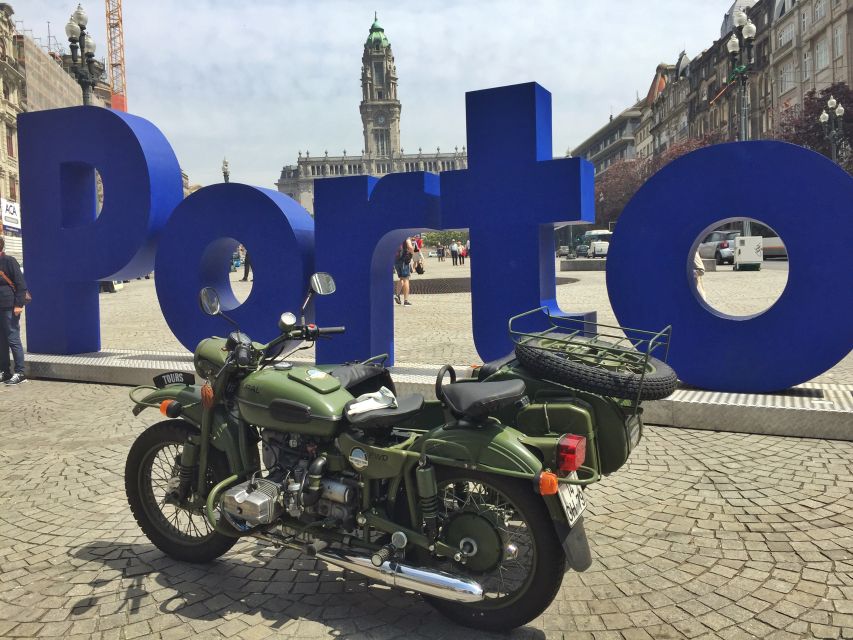
The tour is designed around slow pacing and frequent pull-offs. That’s not just for comfort. It changes your photo results and your understanding of the city.
Here’s what that looks like in practice:
- You get time to reposition, not just raise your phone and go
- You can look around and absorb street-level context while the guide explains history
- You stop at viewpoints and spots where access or parking would be tricky on your own
The best feedback focuses on exactly that: the guide explaining things clearly, showing you streets you’d likely skip, and taking the best photos of the group. Even if you’re usually the person who has to say, Take one more picture, this kind of setup removes that friction.
Feeling Safe in a Sidecar: Helmet, Slow Driving, and Control
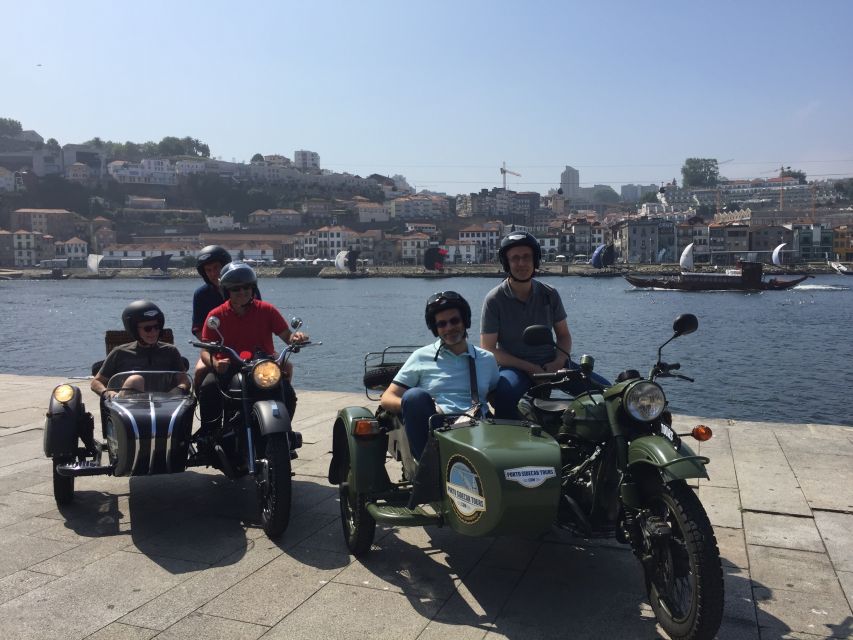
Sidecar riding is inherently different. It can feel a little cinematic, especially when you’re not used to motorcycles. The good news is that the tour emphasizes safety and slow-paced driving.
You’ll receive a helmet and you’ll ride with a private driver who keeps the pace steady. People who were nervous explicitly said they never felt concern or fear during the ride, which is the sort of signal you want if you’re on the fence.
The sidecar itself may even come with a name in the guide’s world—one driver referenced it as Bruta. If you like a bit of personality in your experience, those little touches help make it feel less like a transaction and more like a story.
Tailor-Made Porto: Your Preferences Actually Change the Ride
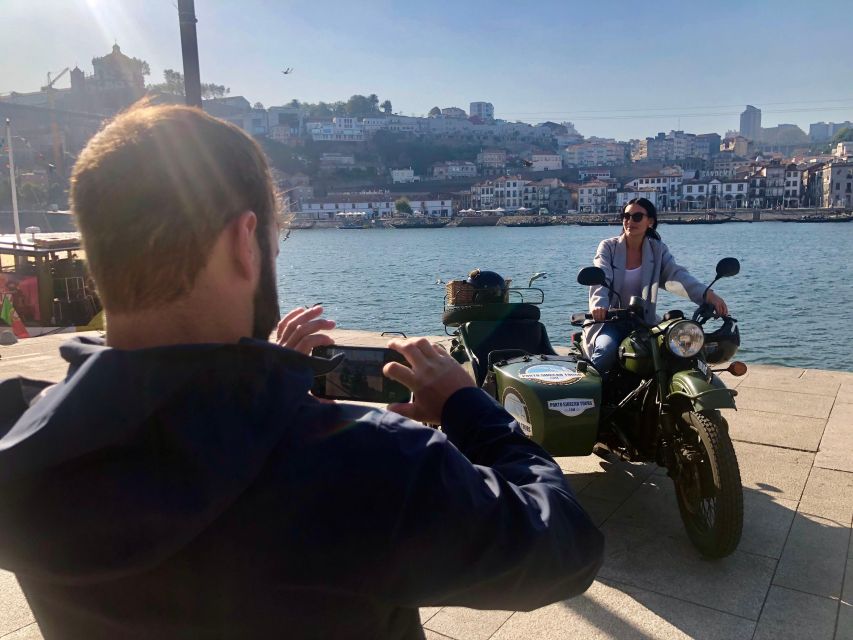
This is one of those tours where you shouldn’t just show up and hope. The guide talks with you after the safety briefing, and then the route adjusts to your interests.
That matters because Porto has multiple ways to spend three hours:
- River-and-viewpoint focus
- Coastal-atmosphere focus
- Street-level neighborhood history
- Photo-first planning
When the tour is customized to your answers, the experience stops feeling generic. You’re not just collecting stops; you’re collecting reasons.
Comfort Rules That Keep the Tour Smooth
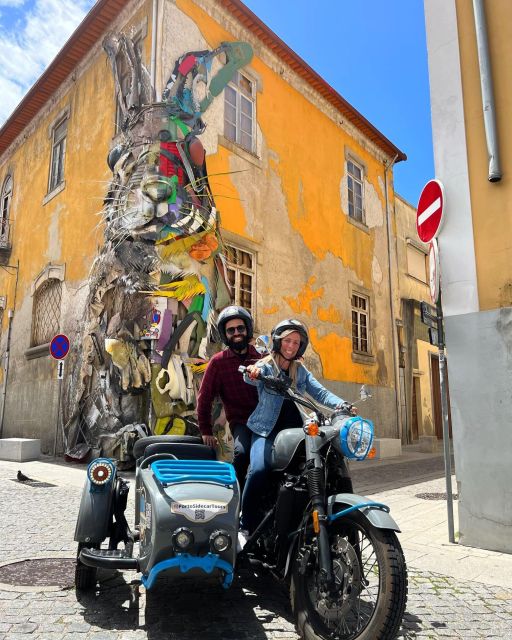
Before you go, keep the practical stuff in mind:
- Wear comfortable shoes.
- Bring sunglasses and sunscreen.
- Plan on long pants.
- Don’t bring luggage or large bags, and pets aren’t allowed.
Also, this tour isn’t for everyone. It’s listed as not suitable for children under 7 and not suitable for people with mobility impairments. If you fall into either category, it’s worth choosing an alternative format that better matches your needs.
One more angle: the tour notes the sidecar tours are carbon neutral. If that matters to you when deciding between experiences, it’s nice to see a statement like that included.
Price vs. What You Skip: Museums, Churches, and Other Paid Detours
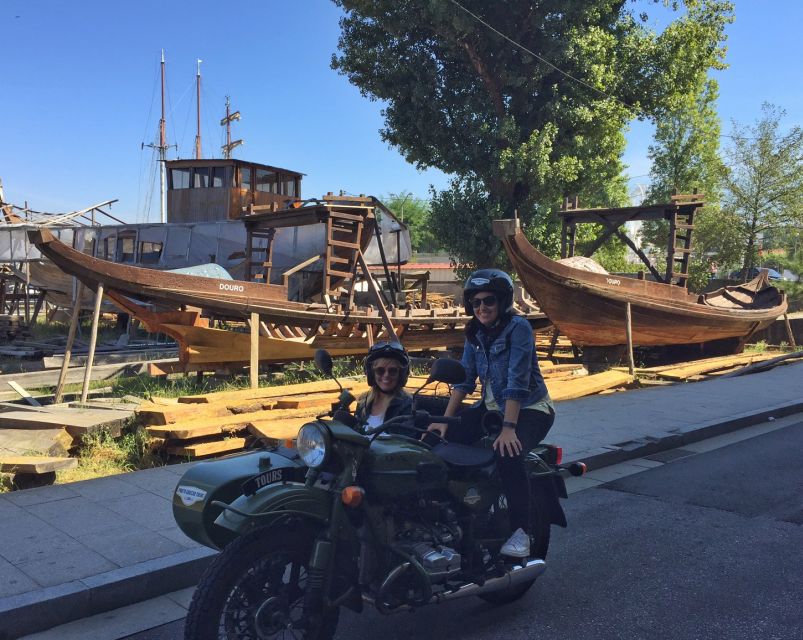
You’re not buying this tour for museum tickets. Meals are not included, and paid museum/church visits are not included either.
That can be a positive. It means your 3 hours are protected for riding, photos, and street-level seeing. If you want a tour that drops you at major attractions for ticketed entry, this may feel limited.
But if you want Porto’s rhythm—river to ocean, viewpoints, neighborhood streets—this structure makes sense.
Who This Porto Sidecar Tour Is Best For
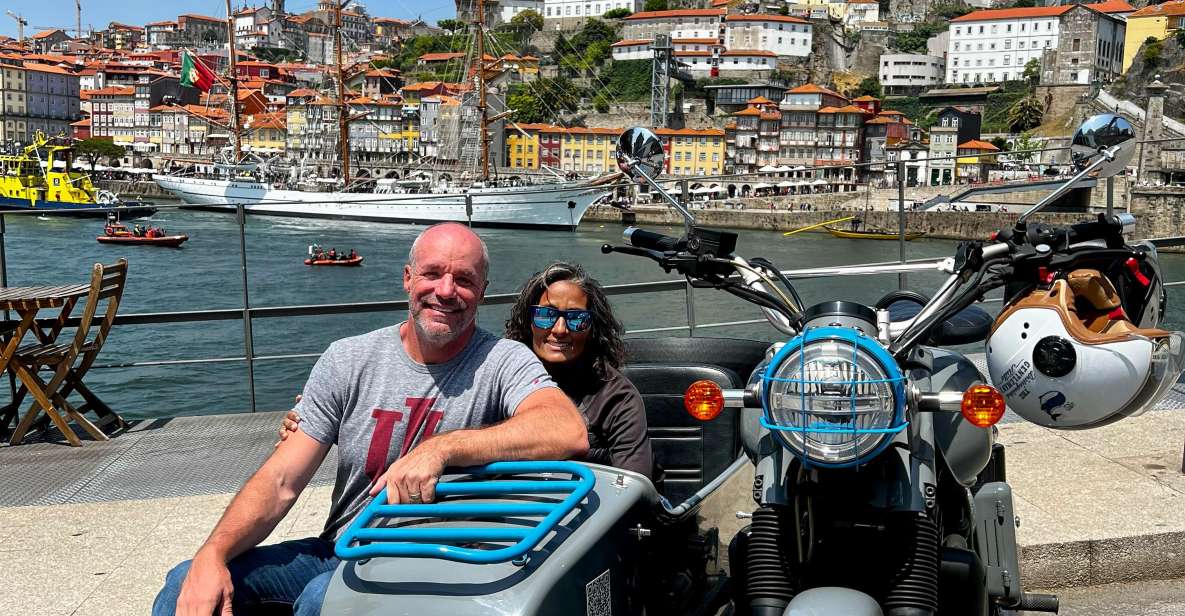
This is a strong match if you:
- Want something less mainstream than a city-center walking loop
- Like photos but also want explanations, not just scenes
- Enjoy a slow-paced experience with time to talk
- Prefer a private tour where your questions shape what happens next
It also helps if you’re traveling with a partner. The tour is built for a premium experience suitable for one or two passengers, so you can spread out a bit and enjoy the ride without feeling crowded.
If you’re traveling solo and want a more lively, personalized way to see Porto fast, this can also work well because the guide’s attention is focused.
Quick Practical Tips Before You Book
- Have your expectations set: you’re riding, not touring inside attractions.
- Bring the clothing basics (shoes, sunscreen, sunglasses, long pants).
- If motorcycles make you anxious, think it through carefully and discuss it upfront with the operator.
- Since there are frequent stops, you’ll get the most out of it if you’re willing to step out and look around when the sidecar pulls over.
Should You Book This Porto Private Sidecar Tour?
Book it if you want Porto in a way that’s hard to replicate on your own: Douro-to-ocean views, photo-friendly stops, and a guide who tailors the story to you. The strongest selling point is how personal the ride feels—clear explanations, plenty of conversation, and time where it counts.
Skip or reconsider if you need a museum-and-church itinerary, have mobility limitations, or you’re uncomfortable riding near motorcycle traffic even with helmets and slow driving.
If your goal is to leave Porto with not only pictures, but also a sense of the city’s geography and local personality, this is a smart use of three hours.
FAQ
FAQ
How long is the Porto Private Sidecar Tour?
It lasts 3 hours.
What does it cost?
The price is $129 per person.
Is this a private tour?
Yes. It’s a private group experience.
Do you get hotel pickup and drop-off?
Yes. Pickup and drop-off at your hotel are included, and you contact the guide with your hotel details.
Where do you meet?
Meet at Vincci Ponte de Ferro and look for the sidecar.
What’s included in the tour?
Included are the sidecar motorcycle ride (two available seats), a private guide and driver, a custom-made tour, lots of stops for photos, a helmet, and a water bottle.
What is not included?
Meals are not included, and paid visits to museums, churches, or other attractions are not included.
What languages are available?
The live tour guide speaks English, French, and Spanish.
Who should avoid this tour?
It’s not suitable for children under 7 and not suitable for people with mobility impairments. Pets are not allowed, and luggage or large bags are not allowed.
Can the tour be tailored to my interests?
Yes. After the safety briefing, your private guide will discuss your preferences to create a tour that matches what you want to see.