REVIEW · PORTO
Porto Half-Day Guided Historical Tour with Port Cellar Visit and Tasting
Book on Viator →Operated by Living Tours · Bookable on Viator
Porto hits different when you swap random wandering for a tight plan plus port wine. This half-day historical tour gives you a guided orientation on foot and by van, with smart photo stops and real stories behind places like São Bento Station and the Church of Clérigos. I especially liked the port tasting in a historic cellar and the chance to hear local context from guides such as Martin, Paul, Nuno, or Yorick when schedules line up. One thing to keep in mind: the walking can be a bit more “street-level” than some people expect, and exact stops can vary with timing and crowd flow.
You’ll spend about 4 hours moving through central Porto, then finish near Rua de Alexandre Herculano. If you’re choosing this as your first day plan, it helps you understand the city’s layout fast, without dealing with parking or wasting time.
In This Review
- Key things to know before you go
- Why this half-day Porto tour works so well
- Price and logistics: what you’re actually paying for
- Starting at Living Tours: how the tour begins
- São Bento Railway Station: the 1900 cornerstone detail that makes it click
- Santa Catarina and the Elite Café: a quick Art Nouveau clue
- Church of Clérigos: Nicolau Nasoni’s baroque fingerprints
- Port wine cellar visit and tasting: learning, then tasting two styles
- The pace, photo stops, and crowd reality
- Guides make a difference here
- How the free Porto walking tour fits in
- Who should book this tour (and who might not)
- Should you book this Porto half-day guided tour?
- FAQ
- How long is the Porto half-day guided historical tour?
- Where does the tour meet and where does it end?
- Do I need to print a ticket?
- What language is the tour offered in?
- What port experience is included?
- Is hotel pickup included?
- What’s included besides the wine tasting?
- Are monument entrance fees included?
- Is the tour near public transportation?
- Can I cancel for a full refund?
Key things to know before you go
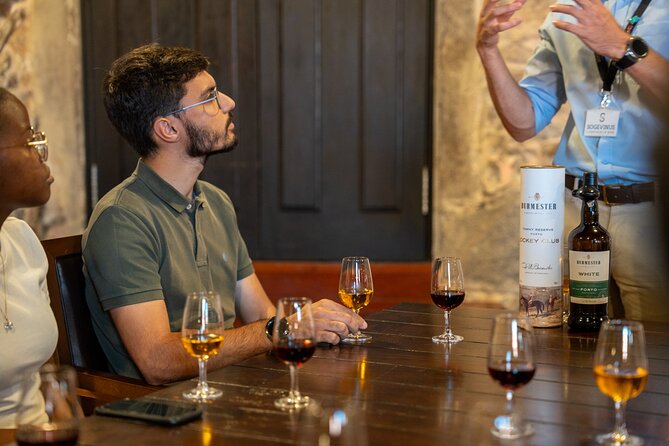
- Historic cellar tasting: you’ll get a guided tour of port basics and sample two types of port
- Photo-friendly pacing: frequent stops on foot, so you’re not stuck taking pictures only from inside a vehicle
- Central landmarks, explained: São Bento, the Santa Catarina area, and Clérigos come with specifics like dates, architects, and the why behind the design
- Small group size: up to 27 travelers, which tends to keep the experience from feeling rushed
- Strong guide factor: multiple guides (Martin, Paul, Nuno, Alexandre, Yorick) have been singled out for being professional, courteous, and informative
- Next-day bonus walking tour: Living Tours offers a free Porto walking tour from the day after your experience
Why this half-day Porto tour works so well
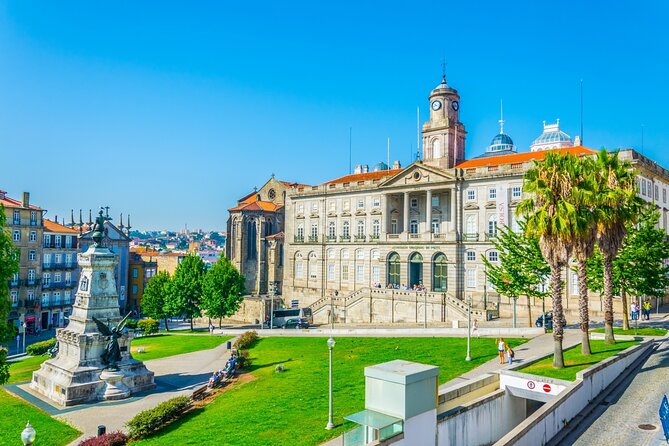
Porto is one of those cities where the details matter. A short tour only feels worth it when it gives you two things at once: context for what you’re seeing, and a reward that’s hard to replicate on your own.
This one does both. You get a guided historical circuit through key spots in the city center, including the origins and design background of major landmarks. Then you end with port tasting in the cellar where it all started in spirit, with a guided explanation before you pour.
It’s also good value for a single-ticket afternoon. At $41.13 per person, you’re not just paying for a walk—you’re paying for a guide, a structured route, and an included cellar visit and tasting.
You can also read our reviews of more food & drink experiences in Porto



Price and logistics: what you’re actually paying for
Let’s be straight about the money. The tour price covers:
- a local guide
- the port cellar visit + tasting
- the city walking tour that’s available from the day after your experience (offered as a free walking tour by Living Tours)
What you don’t pay for (so budget a little buffer) includes:
- monument entrance fees (if any apply during your route)
- hotel pickup/drop-off
- food and drinks
- personal expenses
Duration is listed as about 4 hours and can shift with local traffic and visit schedules. That matters, because short tours succeed or fail on timing. The upside here is that the plan is designed to keep you moving while still giving you time to look and take photos.
If you’re traveling light and want a plan that doesn’t require parking, this route is built for you.
Starting at Living Tours: how the tour begins
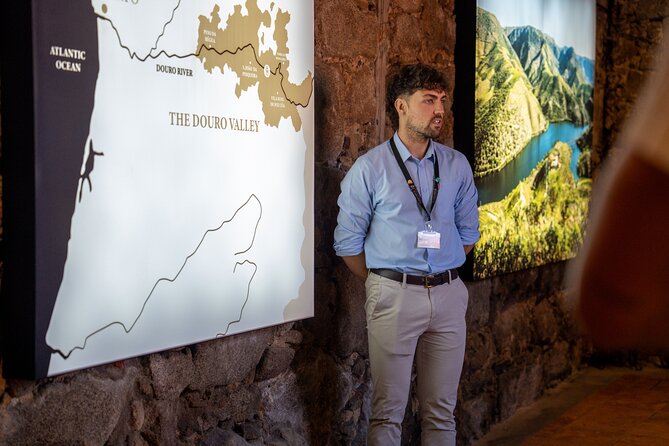
Your meeting point is at Living Tours, Rua de Mouzinho da Silveira 352–354, Porto. The process is simple but important: when you arrive, you hand over your ticket to the official who’s waiting.
You’ll also have a mobile ticket, and the tour is offered in English (and sometimes a second language depending on scheduling). It runs near public transportation, so you’re not relying on a complicated arrival plan.
The end point is Rua de Alexandre Herculano, Porto. That’s handy because you’re finishing in a central area where it’s easier to keep exploring on your own after the tour.
São Bento Railway Station: the 1900 cornerstone detail that makes it click
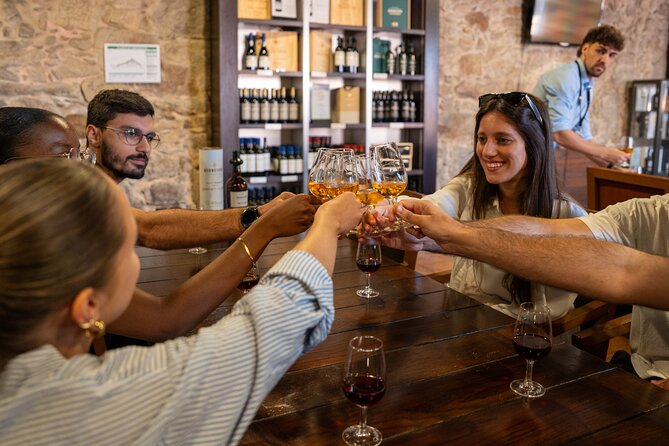
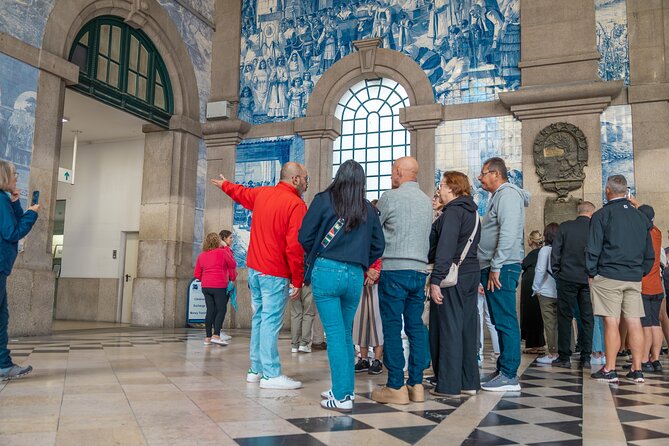
This is the kind of stop that turns a famous building into a story you can remember. You start with São Bento Railway Station, and the tour gives you a solid origin timeline:
- The cornerstone was unveiled in 1900 by King Carlos I
- It sits on the former convent S. Bento de Avé Maria
- The initial project was designed by architect Marques da Silva
- The station’s external lines show French influences from that era
Why this matters for you: if you’ve never studied Porto architecture, it’s easy to walk past grand sites without knowing what to look for. This stop arms you with the “what year, who, and why” so you can connect the building’s look to its context.
Time-wise, you get about 30 minutes here. That’s enough to slow down, take photos, and not feel like you’re sprinting to the next landmark.
Santa Catarina and the Elite Café: a quick Art Nouveau clue
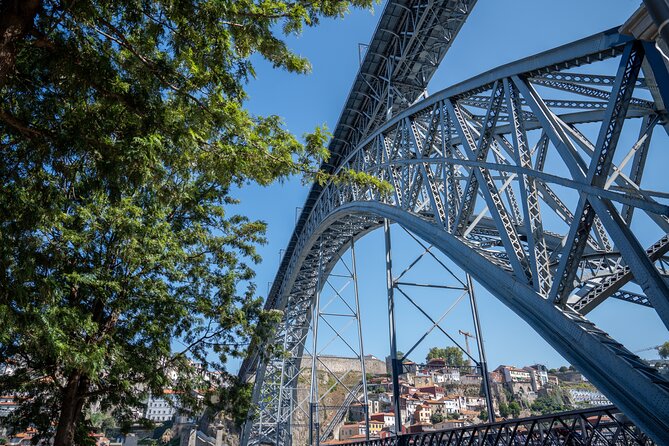
Next you’ll hear the story of Elite Café, which opened on 17 December 1921. The tour places it in the rhythm of Porto’s social life:
- It was on Santa Catarina street, known as a pedestrian shopping walkway for the finest members of society
- The café was decorated in Art Nouveau
- The decoration was by architect João Queiroz
- The street’s role then and now ties to why the building mattered
This stop is small but smart. It helps you see Porto as a lived-in city, not just a list of monuments. Even if you’re not obsessed with café culture, this kind of fact gives you a lens for the neighborhood feel—why certain streets attract attention and why design styles show up where they do.
You can also read our reviews of more guided tours in Porto






Church of Clérigos: Nicolau Nasoni’s baroque fingerprints
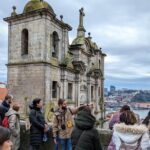
Then you’ll move into one of Porto’s most distinctive baroque landmarks: the Church of Clérigos. The tour focuses on the “people behind the shape” story:
- It’s a baroque masterpiece from the mid-18th century
- Designed by Italian-origin architect Nicolau Nasoni
- Nasoni left his mark on many monuments across Oporto and northern Portugal
- On request, Nasoni was buried in a small chapel connected to the church
- The chapel gateway sits at the same level as the top of the double bolster stairway
This is the sort of detail that makes you pay attention. Baroque buildings can blur together if you just look at the façade. But when you know the architect is buried on-site and how the chapel access aligns with the stairs, the building becomes more personal—and easier to understand in one visit.
Time depends on your group pacing and where you fall in the schedule, but this is one of the stops people remember after the tour ends.
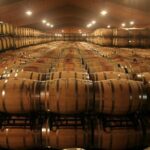
Port wine cellar visit and tasting: learning, then tasting two styles

This is the main event. Once you get through the historic sights, it’s time for the reason Porto is on your calendar: port wine.
You’ll get:
- a guided tour focused on port basics and what you’re tasting
- the tasting itself, where you sample two types of port
Cellar tasting is different from tasting in a storefront. In a cellar setting, you get the physical sense of the product’s origin and aging culture. And the guided part matters because port isn’t one single thing—you’re learning how styles differ enough that two samples don’t feel like “more of the same.”
One detail from past tour runs: some groups have tasted at Graham’s, with praise for the experience there. Since the tour is described more generally as a Porto wine cellar visit, I can’t promise the exact estate every time—but the takeaway is consistent: the tasting is the highlight.
Practical tip: go in ready to slow down. This is not a quick sip-and-go. If you’re the type who likes asking questions, the guide’s explanations make those questions feel useful.
The pace, photo stops, and crowd reality
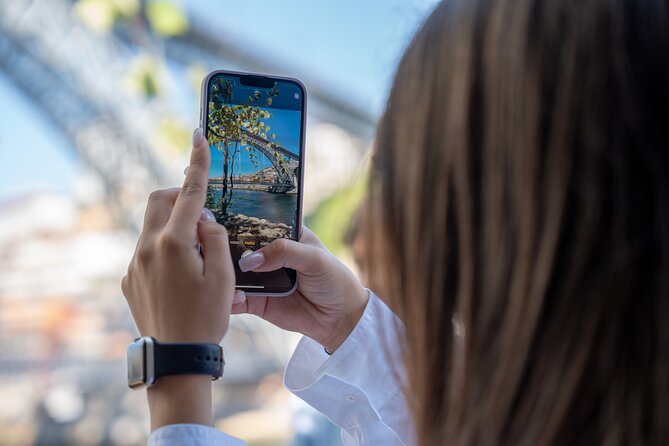
The tour’s “how it feels” is part of why it earns high marks. The format includes stops frequently enough that you can:
- snap photos on foot without the headache of parking
- avoid feeling trapped behind glass for long stretches
- get a steady flow of context rather than one big information dump
Group size is capped at 27, which is large enough that you’ll hear the guide well, but small enough that the experience can still feel controlled. In at least one case, groups have been routed in ways that helped around coach crowding near major sights—so you’re not only competing with other buses for the same angles.
That said, one drawback can show up if bilingual scheduling or timing changes cause slower pacing, or if the itinerary has to shift due to walking constraints. If walking sites feel challenging for you, plan to go into the tour with realistic expectations and be ready for short bursts of movement.
Guides make a difference here
A short tour lives or dies by the guide. This one has built-in strengths because the guides can connect architecture and street life to real stories, not just dates.
From past experiences, names that have come up with strong praise include:
- Martin (extended a tour and scored it highly)
- Paul (called fantastic for getting the real deal on Porto)
- Nuno (praised for good French and some fado music added during the walk)
- Alexandre (praised for excellent guiding)
- Yorick (asked for specifically by repeat visitors)
That’s not a guarantee of who you’ll get, but it’s a good sign that the company invests in guide quality and that the tours can feel personal rather than scripted.
How the free Porto walking tour fits in
One smart value add: after your half-day, you can join a free Porto City Walking Tour available from the day after.
Living Tours describes this free walking tour as:
- offered daily
- in English and Spanish
- departing at 9:30 a.m. and 4:30 p.m.
- starting from Rua Mouzinho da Silveira 352, 4050–418 Porto
Why this helps you: if the half-day tour gives you the backbone, the next-day walk can build your confidence. You’ll be better at deciding where to go next—because you already know the city’s basic logic.
Who should book this tour (and who might not)
This tour makes the most sense if:
- you want a first-day orientation that doesn’t eat your whole day
- you care about history but don’t want a marathon lecture
- you want a structured port experience with a guided tasting of two styles
- you like photo stops and hate parking logistics
It might be less ideal if:
- you need strict control over exact stops every time (routes can shift with timing and crowds)
- you’re very sensitive to longer or frequent walking segments
- you expect hotel pickup (it’s not included)
If you’re traveling as a couple, solo, or in a small group, the small group cap helps keep things friendly and organized.
Should you book this Porto half-day guided tour?
I think you should book it if you want your Porto day to feel productive without feeling like work. The combination is the winning formula: city stories on foot, then a real cellar tasting where you get to try two types of port with guidance.
At $41.13, it’s a fair deal when you factor in the cellar tasting and the guided structure. And the bonus free walking tour the next day makes it easier to turn a half-day into a full learning arc.
My final advice: if you do book, pick a departure time that matches your energy. Arrive a little early so handing over your mobile ticket is smooth. Wear shoes you’re comfortable walking in, because Porto is not designed for “I will stand still all day” sightseeing.
If you like port and you want your bearings fast, this is a solid way to start.
FAQ
How long is the Porto half-day guided historical tour?
It lasts about 4 hours. The exact time can vary based on local traffic, visit schedules, and local conditions.
Where does the tour meet and where does it end?
The tour starts at Living Tours, Rua de Mouzinho da Silveira 352–354, 4050-418 Porto and ends at Rua de Alexandre Herculano, 4000-053 Porto.
Do I need to print a ticket?
No. You’ll receive a mobile ticket, and when you arrive you’ll hand it over to the official waiting for you.
What language is the tour offered in?
The tour is offered in English. Tours are usually in one language, but a second language may be used depending on the group.
What port experience is included?
You get a Porto wine cellar visit and tasting, including a guided explanation and tasting of two types of port.
Is hotel pickup included?
No. Hotel pick-up and drop-off are not included.
What’s included besides the wine tasting?
You get a local guide and the Porto city walking tour that you can take from the day after your experience.
Are monument entrance fees included?
No. Monument entrance fees are not included.
Is the tour near public transportation?
Yes, it’s listed as being near public transportation.
Can I cancel for a full refund?
You can cancel for a full refund if you cancel at least 24 hours before the start time. If you cancel less than 24 hours before, the amount paid is not refunded.