REVIEW · PORTO
Porto: Flexible Walking Tour in Medieval Area
Book on GetYourGuide →Operated by Travelbox, Lda. · Bookable on GetYourGuide
Porto’s medieval lanes are easier with a guide. With the Walkbox app, you get story-led walking through Porto’s old core at your pace, plus offline audio that helps you notice details you’d likely miss. I especially like how the tour keeps you moving between the big sights and the quieter streets without feeling rushed.
Two things I really liked: 40+ points of interest along a simple route, and the fact that the audio comes in English, Portuguese, French, and Spanish. Also, you’re not on your own if something goes sideways—the tour’s curator sends clear instructions and stays available by WhatsApp or SMS during your experience.
One consideration: it’s not a live-guided tour, so if you need real-time conversation, you may prefer a human guide. And the walk has a noticeable climb (70m over about 500m, plus stairs), so it’s not for people with mobility impairments.
In This Review
- Key highlights that matter on your feet
- Walkbox in Porto: the smart way to do the medieval core
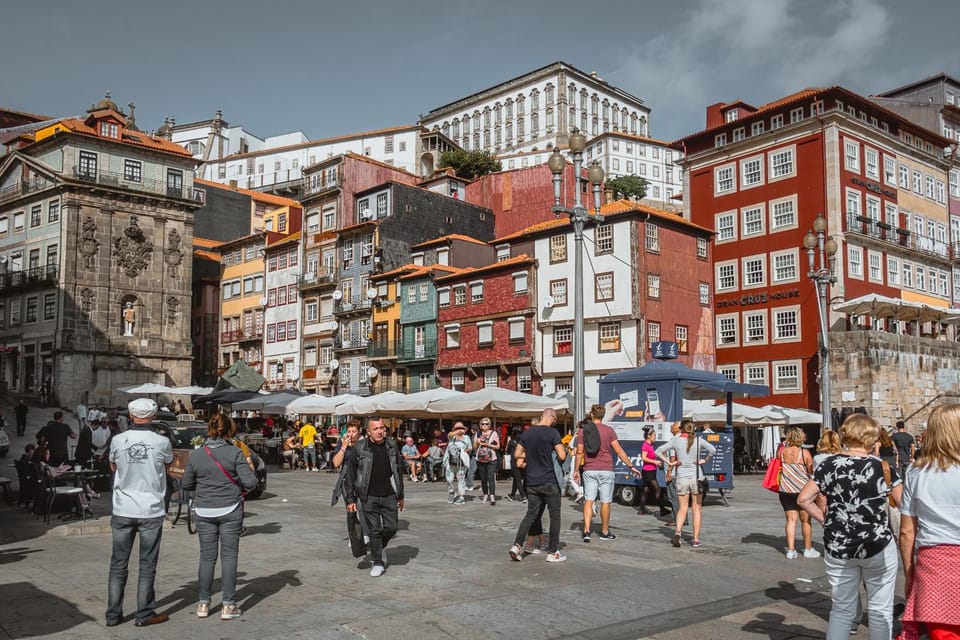
- Praça da Ribeira to Bacalhoeiros Wall: start with riverside Porto
- Mercadores Street climb: where the walk earns its views
- Pena Ventosa Square: low-door medieval Porto living
- Grilos Church and the Colégio Square viewpoint
- Sé Cathedral Square: the big stop with the right pacing
- Oldest streets between Aldas and Pena Ventosa
- Verdades and Barredo Stairs: the scenic return to Ribeira
- Timing, route length, and how to pace your day
- Languages, offline audio, and smartphone reality checks
- Value and price: what $7 gets you (and what it doesn’t)
- Who should book this medieval Porto walk
- Should you book this tour?
- FAQ
- What is the duration of the Porto medieval area tour?
- Where does the tour start and end?
- Do I need tickets for attractions on the route?
- Is there a live guide with this experience?
- What languages are available for the Walkbox audio?
- Does the app work offline?
- Can I start the tour at any time?
- How long is the route and is it difficult?
- Is the tour suitable for people with mobility impairments?
Key highlights that matter on your feet
- Offline Walkbox audio plays automatically as you walk, so you can focus on the street scene.
- A loop starting and ending at Praça da Ribeira keeps you oriented.
- Grilos Church as a National Monument stop gives the route a strong anchor.
- Pena Ventosa Square and low-door houses show off the feel of medieval Porto.
- Sé Cathedral Square (cathedral + Episcopal Palace complex) is the centerpiece.
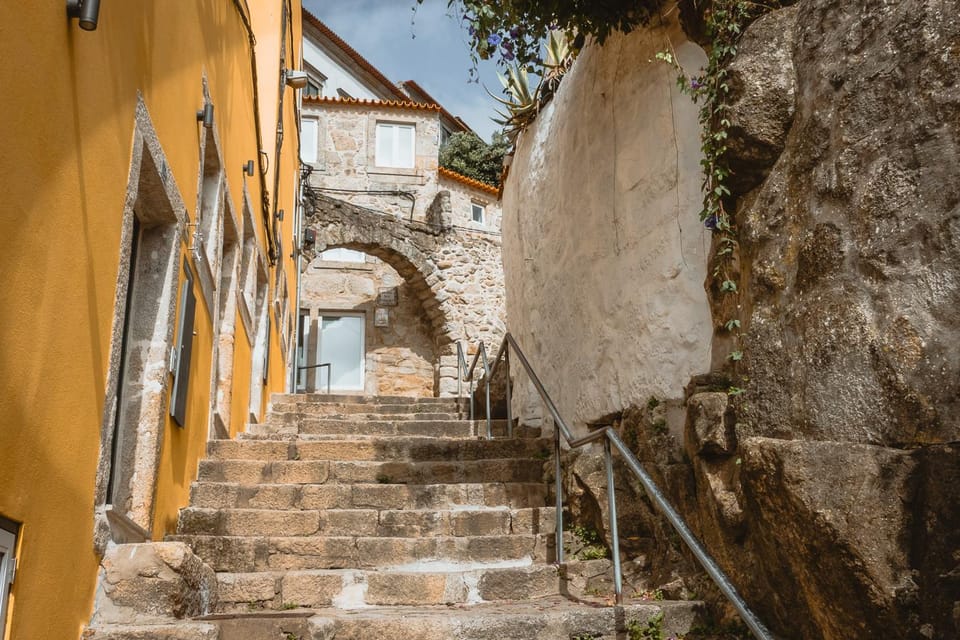
- Barredo and Verdades Stairs make the return route pretty but step-heavy.
Walkbox in Porto: the smart way to do the medieval core
This experience is built for people who like their travel a little looser. Instead of meeting a group and following a schedule, you follow the Walkbox app’s turn-by-turn narration at your own rhythm. The payoff is simple: you can stop for photos, pause to read a sign, or keep going when you’re feeling energetic.
The audio is designed to work offline, which matters in old cities where signal can be spotty. You also get natural-sounding guidance that plays automatically as you explore. Practically, this means you’re not constantly pulling up directions or squinting at your phone to figure out what’s next.
And because the content is available in multiple languages, you can match it to your comfort level. If you want to learn a little along the way, switch on the English audio. If you’re trying to practice, Portuguese audio is there too. Having French and Spanish options is a nice bonus if you’re traveling with friends or family.
You can also read our reviews of more walking tours in Porto



Praça da Ribeira to Bacalhoeiros Wall: start with riverside Porto
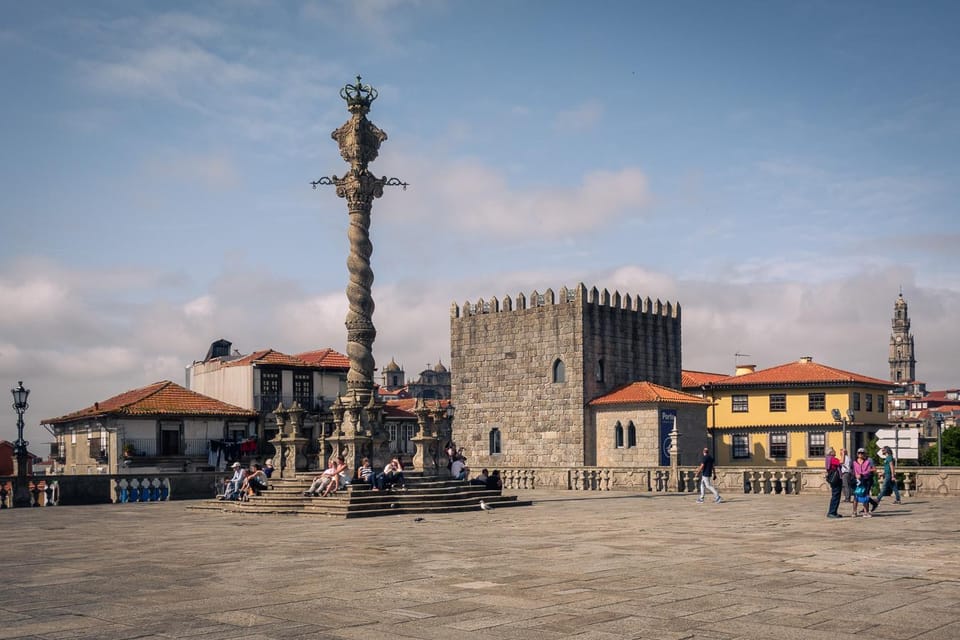
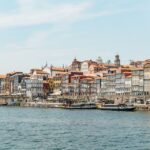
Your walk begins at Praça da Ribeira, near the Douro. I like starting there because it immediately gives you context—Porto’s medieval core is never far from the river story. The route takes you into the riverside area first, including the Bacalhoeiros Wall.
From there, you get a stretch where your eyes can do what your legs are saving up for. You’re meant to enjoy the views, then you’ll start the climb. If you’re timing your day, I’d try to start earlier rather than later, since you’ll be walking uphill and the steps later will feel more intense when you’re tired.
This first segment also sets the tone for the whole tour: it’s not only about monuments. It’s about understanding how the town sits and how people move through it—river frontage, then ascent into the old streets.
Mercadores Street climb: where the walk earns its views
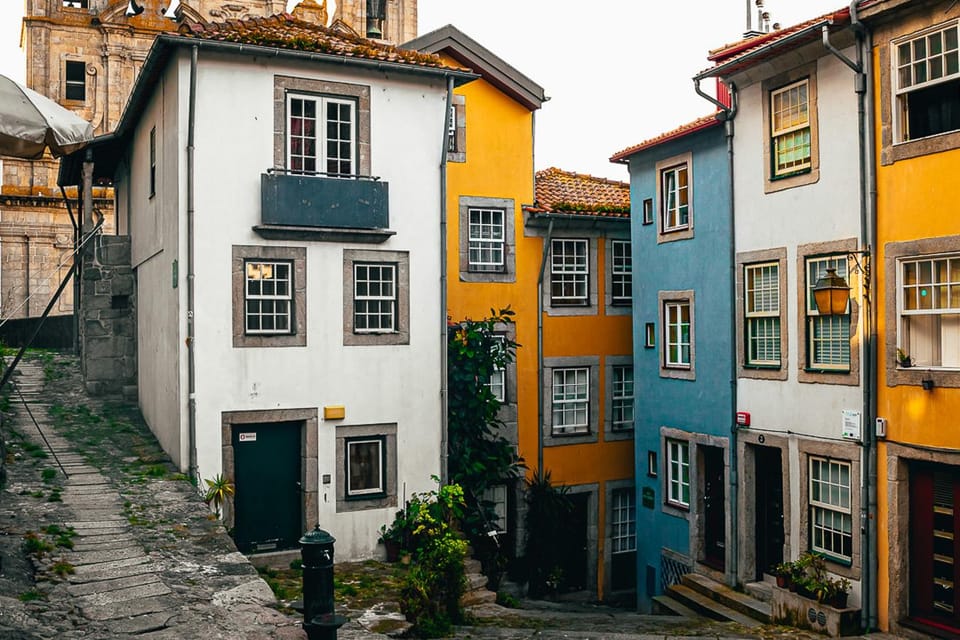
After the riverside portion, you’ll ascend via Mercadores Street toward the medieval heart. The route is only about 2 km total, but don’t let that number fool you. The experience includes a 70m climb over roughly 500m (about a 14% average slope).
So what does that mean for you? Plan for a steady pace. Take a breath on the steeper sections. If you’re tempted to power-walk, you’ll pay for it later when the stairs come. Think of this part as the warm-up for the walk’s better reward: the higher viewpoints and the cathedral area.
A self-guided route like this is good for climbing because you can slow down when you need to. No one is waiting for you, and no one is tugging you forward.
Pena Ventosa Square: low-door medieval Porto living
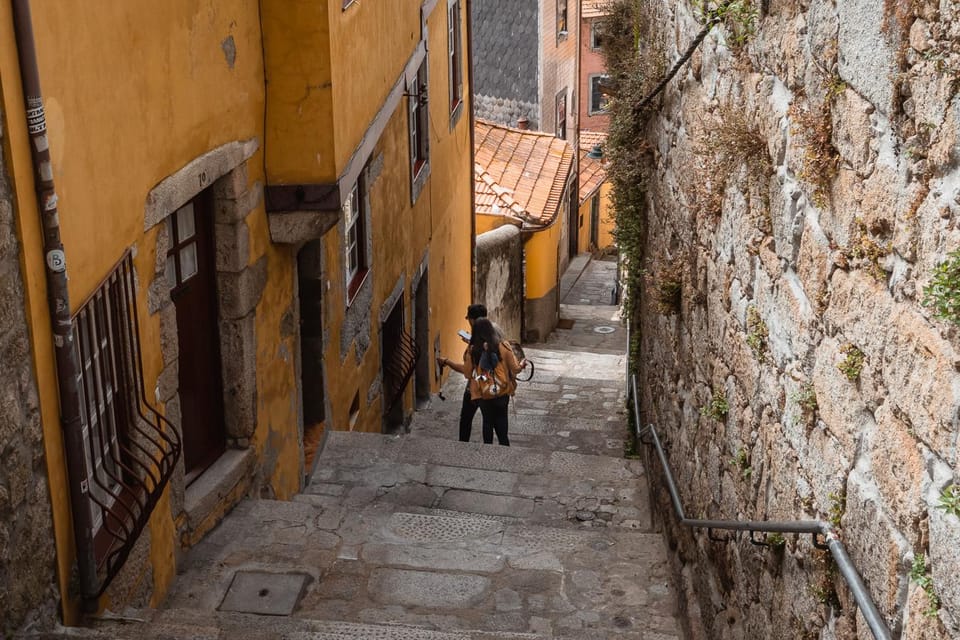
Once you reach Pena Ventosa Square, the experience shifts from river-and-ascent to street-level medieval charm. The standout here is the look of the neighborhood, especially the low-door houses. These are the kinds of details you usually rush past unless someone points them out. On this walk, they’re part of the story you’re following.
Pena Ventosa is also a natural place to reset your brain. You’ve worked up a bit of effort climbing, and then the square makes it easier to slow down: look around, take photos, and get your bearings before you move deeper.
This stop also matters because it connects the route’s themes. The tour isn’t just listing famous buildings. It’s showing how the older town layout affects daily life—narrow streets, compact building forms, and the way streets step up and down.
Grilos Church and the Colégio Square viewpoint
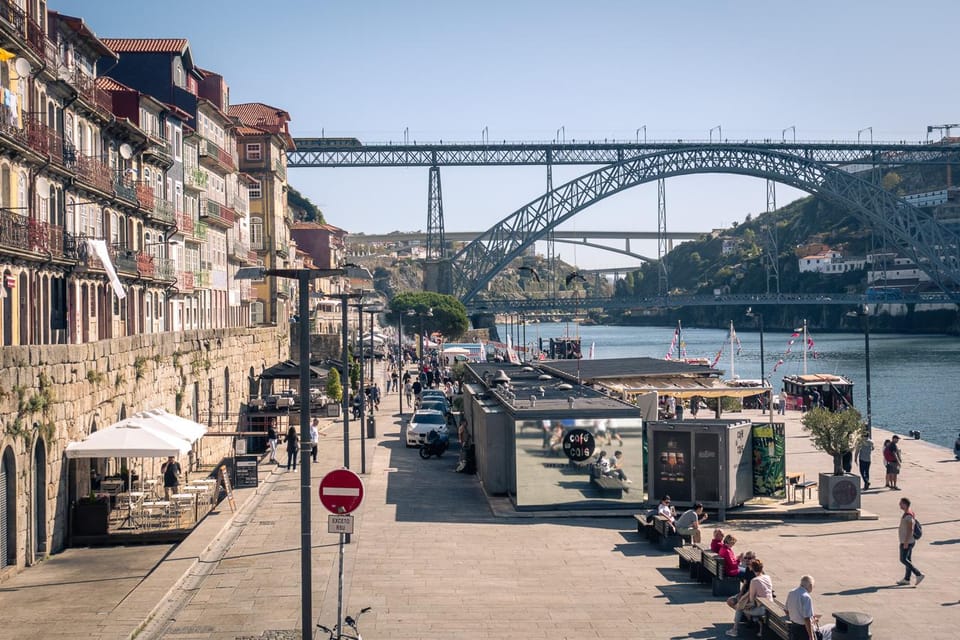
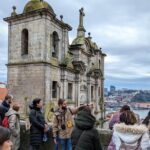
Next up is Grilos Church, identified as a revered National Monument. Even without going inside for a long visit, having it on the route gives the walk a clear moment to focus. National Monument status is usually a sign that the place is meaningful beyond its street corner.
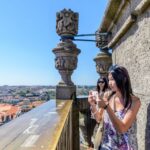
After that, the route includes Colégio Square viewpoint. This is where the climb pays off. You get a moment designed for looking—over the rooftops and the city’s layered shape. In Porto, that kind of viewpoint moment is often what turns a good walk into a memorable one.
If you’re a photo person, this is when you’ll want both hands free. Keep your phone charged, and consider a small pause for framing shots, because the next part moves you into major landmark territory.



Sé Cathedral Square: the big stop with the right pacing
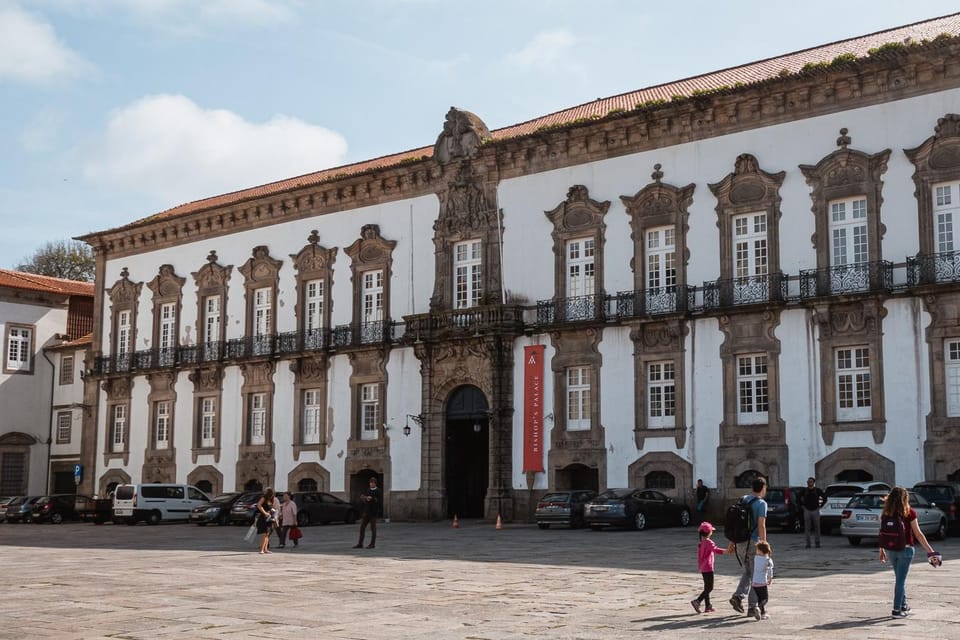
Eventually you reach Sé Cathedral Square, and this is the centerpiece of the route. The walk points you to Porto Cathedral and the Episcopal Palace area, including nearby sights like the Cloister, Treasury Museum, and the Bishop’s Palace.
The value of this stop on a self-guided route is pacing. You don’t have to rush through the area just to keep up with a group. You can give the cathedral square the attention it deserves, even if that attention is just lingering at a good angle and reading what you can.
If you’re planning your schedule, note that paid sites may require tickets. This tour doesn’t include tickets to attractions, but it does include prices and opening hours for attractions in the route where applicable. That helps you decide on the spot rather than guessing.
For some people, this is where you’ll want to spend extra time. For others, it’ll be a quick but satisfying landmark check. Either way, it anchors the loop.
Oldest streets between Aldas and Pena Ventosa
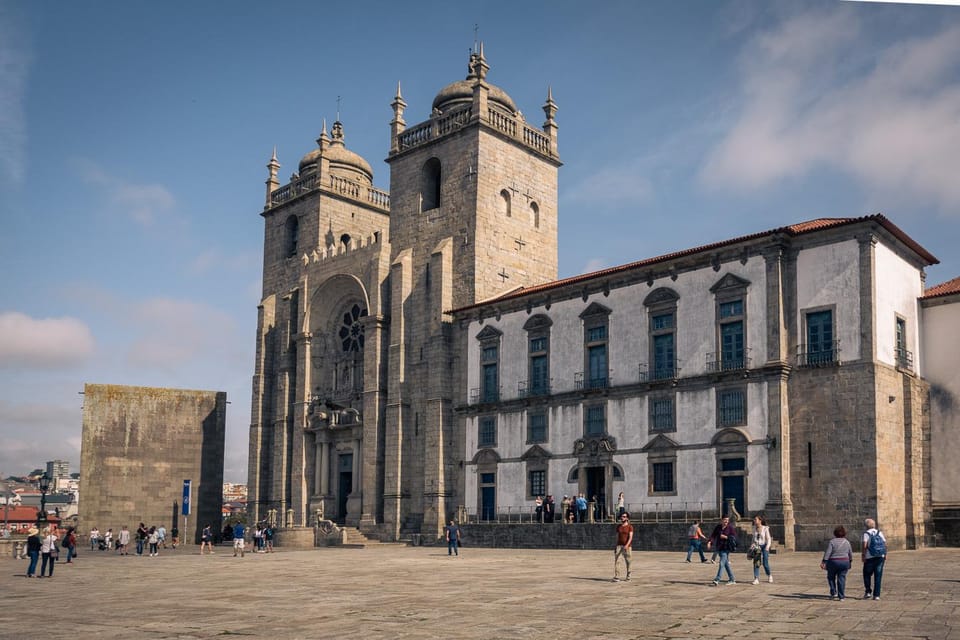
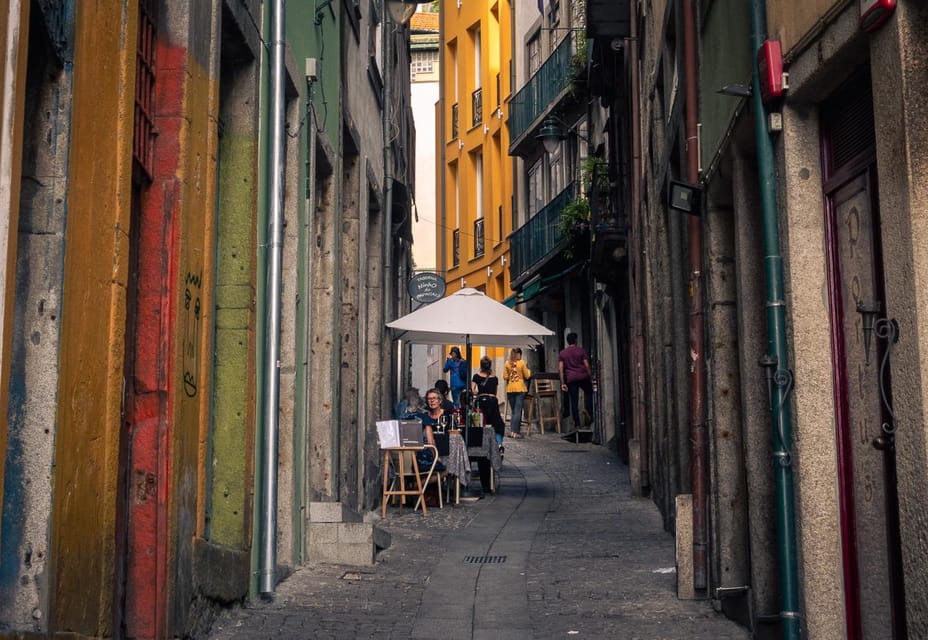
From Sé, you’ll move back through the older street network, including Aldas and Pena Ventosa again. Here the focus is on the street character—especially those low-door homes—and the feeling of Porto’s medieval layout.
This segment is also where a lot of self-guided walks either work or fail. If the content is boring, you’ll feel like you’re just walking between stops. But here, the route has enough named points of interest that you keep getting “reasons” to look up and notice details.
It’s also a good mental shift. By now you’ve seen the cathedral square. The streets afterward feel more intimate. If you like atmosphere and not only highlights, this is your payoff stretch.
Verdades and Barredo Stairs: the scenic return to Ribeira
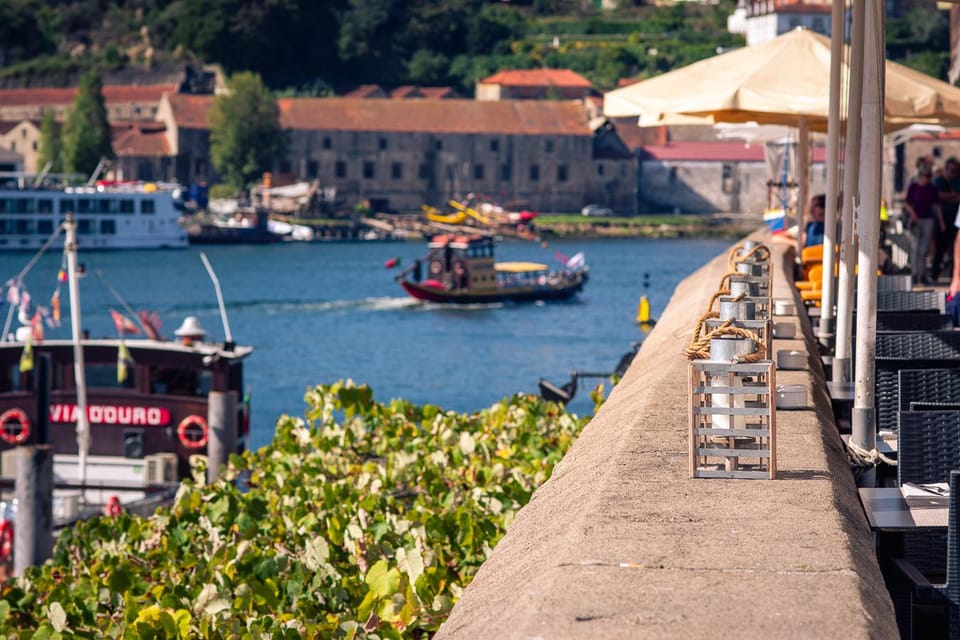
The final act is descending. You’ll go down Verdades and Barredo Stairs, returning toward Ribeira and finishing back at Praça da Ribeira.
This is the part to treat with respect. Even if your legs feel okay at the top, stairs can surprise you on the way down. Move slowly, especially if the steps are slick or crowded. The route describes the stairs as scenic, and that’s true—but scenery shouldn’t make you forget where your feet are going.
Why this ending works so well: you get closure without backtracking. Instead of trudging the climb again, you earn a downhill route that brings you back to the river setting where you started.
Timing, route length, and how to pace your day
A full loop is set up to take about 2 to 3 hours, depending on your pace and how many stops you linger at. The route is easy to follow, but remember the route’s climb and stairs. Easy to follow doesn’t mean effortless. It means you’ll generally know where you’re going.
You’re also free to do the walk whenever you like within 5 days of your booking date. You can do it all in one go or in parts. I like that flexibility because Porto days rarely go exactly as planned. Weather changes, breakfast runs late, and suddenly you’re glad you can start on your schedule.
Within those days, you can begin anytime within your availability window. The main thing is that you should set aside enough time for the ascent and the stair descent. If you try to cram it between appointments, you’ll feel rushed and miss the point.
Languages, offline audio, and smartphone reality checks
The app includes content in English, Portuguese, French, and Spanish, and it works offline. That combo is great for two reasons: you don’t have to rely on mobile data, and you can stay comfortable even if you’re tired.
Before you start, you’ll want a charged smartphone. That sounds obvious, but old-town walking plus app audio can drain batteries quickly. Also, check your volume and headphone setup so you can actually hear the narration. If you can’t, you lose one of the main benefits of the experience.
One practical rule that matters: you book based on the number of participant smartphones that will be used, not just the number of people. So if you’re traveling with friends, make sure everyone knows who’s using which device.
Value and price: what $7 gets you (and what it doesn’t)
At $7 per person for a 2-hour-style walking experience, the value is strong—especially because you’re paying for a full route with 40+ points of interest and guided audio content in multiple languages.
What you’re not getting is a live guide. That’s the trade-off. Instead, you’re getting a self-paced companion that doesn’t require a group to form and doesn’t stop for questions. If you’re the type who likes to explore independently, that’s a perfect match.
Also, tickets are not included for paid attractions. That doesn’t make the tour bad—it just means you should be selective. If you want to step into museum spaces or other paid stops, you’ll want to plan for those costs separately. The good news is the route information includes prices and opening hours for attractions in the path, so you’re not guessing.
Who should book this medieval Porto walk
This tour is a good fit if you:
- Want to explore Porto’s medieval center without joining a live group
- Like a clear route with meaningful stops (not random wandering)
- Prefer to control your own pace, including stopping for views and photos
- Travel with a smartphone and are comfortable using an app-based guide
It’s not a good fit if you:
- Have mobility impairments or difficulty with steep slopes and stairs
- Need a live guide for constant Q&A
If you’re traveling solo, this also works well because you can pause as needed and still feel guided. And if you’re traveling with others, just make sure you’re set up for multiple devices if that’s how the booking is set.
Should you book this tour?
If you’re doing Porto for the medieval core and you want an easy way to hit the right highlights—Praça da Ribeira, Grilos Church, Pena Ventosa’s low-door streets, Sé Cathedral Square, and the Barredo stairs—this is a smart use of your time. For the price, it’s like renting an audio guide that keeps you on track while letting you linger when you want to.
I’d book it if you’re comfortable with a phone-led experience and you’re willing to handle hills and stairs. Skip it if you need step-free routes or constant human assistance. Otherwise, you’ll get a really satisfying loop that helps you understand Porto’s old streets, not just photograph them.
FAQ
What is the duration of the Porto medieval area tour?
It’s listed as a 2-hour experience, though it typically takes about 2 to 3 hours depending on your pace and the stops you choose to spend time at.
Where does the tour start and end?
The tour starts and ends at Praça da Ribeira, near the Douro river.
Do I need tickets for attractions on the route?
Tickets are not included. The tour route information includes prices and opening hours for attractions where applicable.
Is there a live guide with this experience?
No. You use the Walkbox app for guidance, not a live guide.
What languages are available for the Walkbox audio?
The content is available in English, Portuguese, French, and Spanish.
Does the app work offline?
Yes. Walkbox is designed to work offline.
Can I start the tour at any time?
You can begin anytime within 5 days of your booking date. Starting times depend on availability.
How long is the route and is it difficult?
The route is about 2 km and it’s described as easy to follow, but it includes a 70m climb over about 500m (average slope around 14%).
Is the tour suitable for people with mobility impairments?
No, it’s listed as not suitable for people with mobility impairments.