REVIEW · PORTO
Porto Experience: History, Culture and Tasting Tour
Book on GetYourGuide →Operated by InsighTours · Bookable on GetYourGuide
Porto starts on a hill, then tastes better. I like this tour because it gives you a guided, high-impact start at Sé do Porto and the Bishop’s Palace, and then shifts gears to MMIPO where charity and art explain a big part of Portuguese culture. The walk links key neighborhoods with enough context that the city doesn’t feel like random stops.
One thing to keep in mind: the museum and explanation-heavy parts can run long for some people, and the tasting experience may vary from what you expected. If you prefer a lighter, street-first pace, plan to tell your guide early what you want more of.
In This Review
- Key things you’ll actually notice on this Porto tour
- Starting on Catedral Hill at Terreiro da Sé
- Sé do Porto and Paço Episcopal: the city’s medieval “why”
- Rua das Flores and Rua de Sant’ Ana: streets that tell you how people shop
- São Bento Station in 15 minutes: the azulejos you can’t ignore
- MMIPO Museu da Misericórdia do Porto: charity and art with a point
- The tasting break: local delicacies, drinks, and an easy pace
- Optional extension: Avenida dos Aliados, City Hall, and Clérigos
- Old Jail, photography center, and Miradouro da Vitória views
- Guides in real life: warmth, enthusiasm, and a possible style mismatch
- Price and value: what $53 gets you (and what it saves)
- Logistics that matter: pace, where you start and where you end
- Who should book this Porto history and tasting tour
- Should you book this tour?
- FAQ
- How long is the Porto History, Culture and Tasting Tour?
- Where do I meet the guide?
- What does the tour include?
- What are the main stops and attractions?
- Is there a way to skip waiting?
- What languages are available?
- What’s the cancellation policy?
Key things you’ll actually notice on this Porto tour
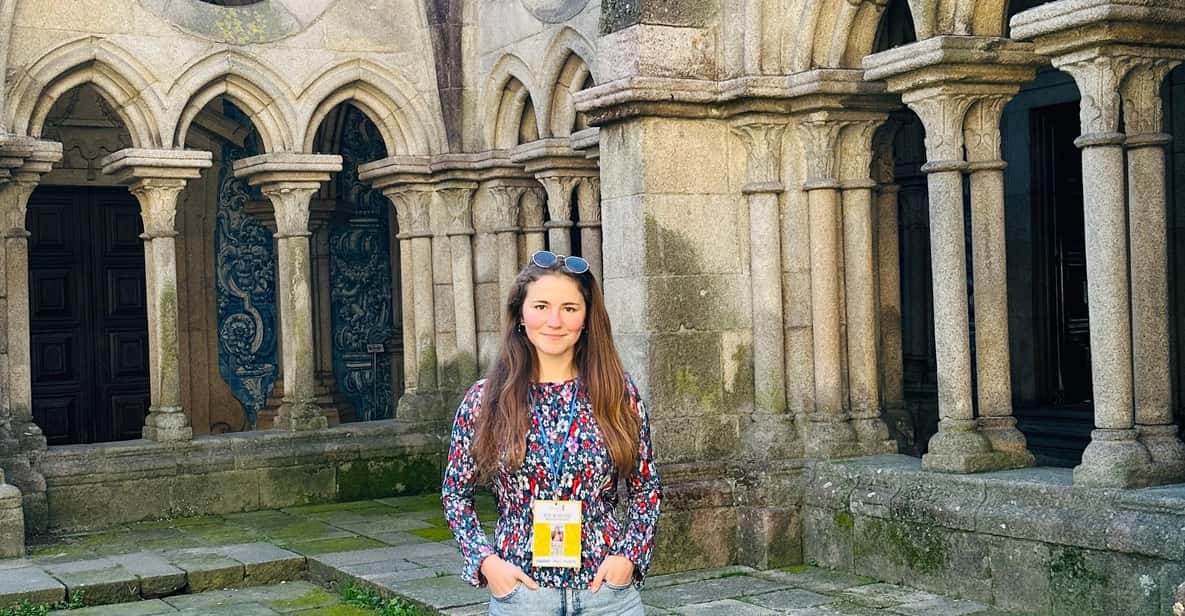
- Sé do Porto + Paço Episcopal: an early history hit in just under an hour
- São Bento Station tiles: a short guided stop with real meaning behind the famous azulejos
- Rua das Flores and Rua de Sant’ Ana: artisan-shop streets and quick photo-friendly walking
- MMIPO Museu da Misericórdia do Porto: Porto’s charity legacy told through art
- Local tasting with drinks: a set break so you can refuel without hunting
- Optional longer loop: Avenida dos Aliados, Clérigos, Old Jail, and a final viewpoint at Miradouro da Vitória
Starting on Catedral Hill at Terreiro da Sé
The tour kicks off where Porto’s story likes to begin: on and around Catedral Hill. Your meeting point is next to the pillar in front of Se do Porto (Porto Cathedral), marked with the company tag and a white umbrella. If you arrive a few minutes early, you’ll avoid the usual early-trip scramble.
What I like about this setup is that it gets you oriented right away. You start high, you get the main historic anchors, and the rest of the walking makes sense. This is a good move for first-timers, especially if you want a plan without feeling locked into a rigid schedule.
You can also read our reviews of more food & drink experiences in Porto



Sé do Porto and Paço Episcopal: the city’s medieval “why”
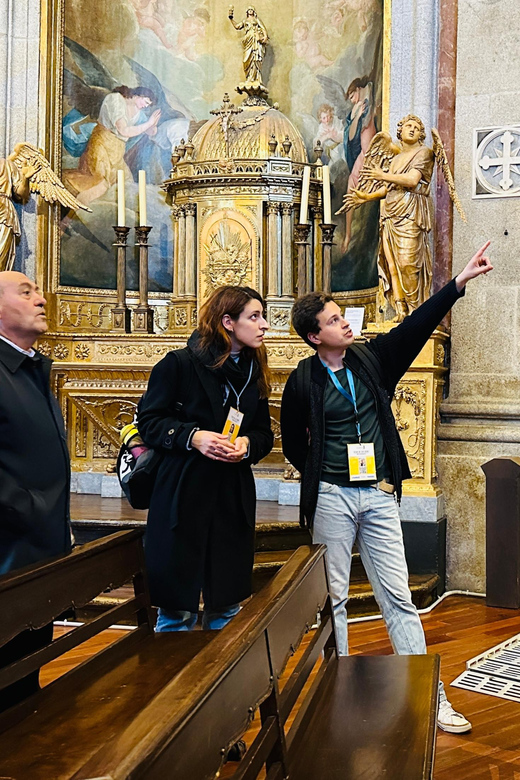
You spend about 40 minutes visiting Porto Cathedral, then 20 minutes at the Paço Episcopal (Bishop’s Palace). This is the backbone of the tour’s tone: medieval Porto, not just pretty facades.
Sé do Porto is where you learn what the cathedral area meant in the life of the city—spiritual power, political influence, and Porto’s early identity. Then the Bishop’s Palace adds the practical layer: it’s not only about worship; it’s about how authority worked and how people lived around that power.
I also appreciate that the time allocation is tight. You’re not stuck in one room forever. You get enough guided context to understand what you’re looking at before you move on.
Rua das Flores and Rua de Sant’ Ana: streets that tell you how people shop
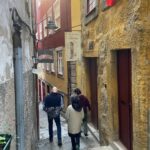
After the cathedral area, the tour shifts to Rua das Flores (about 15 minutes) and Rua de Sant’ Ana (about 20 minutes). These stops are lighter than the cathedral, but they matter. They help you see Porto as a real city with local commerce and everyday rhythm, not only as a museum of stone.
Rua das Flores is known for its artisan feel and busy street energy, and this tour uses the time well: quick sightseeing and walking rather than long, lecture-style breaks. Rua de Sant’ Ana keeps the pace moving while giving you another small visual change in architecture and street vibe.
If you care about photos, these stretches are your best “grab the shot while the light is right” moments before you hit the more structured indoor stops.
São Bento Station in 15 minutes: the azulejos you can’t ignore
Next comes São Bento Station, with a guided visit of about 15 minutes. Even if you’re not a train person, this is one of Porto’s signature moments. The famous tile murals (azulejos) aren’t just decoration; they’re storytelling in ceramic form.
What works here is the brevity. You don’t need an hour to understand why people make a beeline for this place. The guide helps you look at details and historical themes so the tiles stop being background and start being readable.
Also, this stop is a great “mental reset.” After medieval buildings and palace authority, you’re suddenly in Porto’s modern public-life stage—people coming and going.
MMIPO Museu da Misericórdia do Porto: charity and art with a point
This is one of the standout parts of the tour: about 40 minutes at MMIPO Museu da Misericórdia do Porto. The museum focuses on Porto’s legacy of charity and art through the Mercy Institution—so you’re not only learning about what powerful people built. You’re learning what the city tried to do for ordinary life.
I like this because it adds social context. Most first-time Porto tours over-focus on architecture and ignore how communities organized compassion, relief, and support. Here, the museum framework helps you connect the past to people’s needs, not just their buildings.
One practical note: some people find museum time a bit longer than expected, especially if they prefer a more street-level pace. If you’re sensitive to long indoor explanations, give your guide a quick nudge early: ask for the highlights first and then go deeper only if it matches your style.
You can also read our reviews of more historical tours in Porto





The tasting break: local delicacies, drinks, and an easy pace
You then get a 30-minute food tasting stop—plus drinks are included. The tour also frames this as a local pastry tasting experience, so expect something sweet or baked as part of the mix, even if the exact items aren’t listed here.
This is where the tour turns practical in a way that’s genuinely useful. You’re walking for hours in Porto heat or cool weather, and you don’t want to spend the day deciding between six cafes. The tasting gives you a set moment to pause, try local flavors, and keep energy steady for the rest of the route.
Worth flagging: one rating noted the tasting stop didn’t match expectations. That doesn’t mean it’ll happen to you, but it’s a reminder that tasting-style experiences can vary by day and guide flow. If you’re picky, ask at the start what kind of delicacies you’ll likely get.
Optional extension: Avenida dos Aliados, City Hall, and Clérigos
If you add the longer version (listed as a 4-hours tour extension), the pace becomes more “iconic Porto.” You’ll walk the Avenida dos Aliados—Porto’s main boulevard—where City Hall anchors the view. This part is great for understanding Porto’s civic identity and how the city presents authority in a more modern, public-facing way.
From there, Clérigos Church is a highlight, with time for sightseeing around the church’s famous decorative impact. The guide’s job here is to make the details make sense, so you’re not just staring at ornament without context.
This extension is also a good choice if you’ve already done some independent walking and want someone to connect landmarks into a story about society and politics, not just architecture.
Old Jail, photography center, and Miradouro da Vitória views
The extension adds a few “different vibe” stops that round out the day. There’s time for an evocative look at the Old Jail, and you also pass the Portuguese Center of Photography (walk-by sightseeing time). That mix matters because Porto isn’t only medieval and baroque—there’s a modern cultural layer too.
Finally, you end at Miradouro da Vitória for a photo stop and sightseeing (about 15 minutes). This viewpoint is the payoff: you get Porto’s rooftops and the river unfolding in front of you. It’s a nice punctuation mark to the walking day—history up front, then a city view that helps you picture where everything sits.
And yes, you’ll want your camera ready, because the viewpoint is the kind of stop where you’ll regret not capturing it.
Guides in real life: warmth, enthusiasm, and a possible style mismatch
The tour’s quality is strongly tied to the guide. Names that come up with praise include Rui, Arthur, Olexandra, and Damiano—with comments highlighting warmth, attentiveness, and strong historical communication.
That said, one lower rating pointed to guide-style differences: one guide was praised as engaging, while another leaned more technical and felt a bit over-long. The takeaway for you is simple: if your guide’s rhythm isn’t working, politely steer it—ask for a quicker summary first or ask what the “must-see” details are before the longer explanation.
Price and value: what $53 gets you (and what it saves)
At $53 per person for the 3-hour experience, the value is mostly in the included structure. You get tickets and guided visits for major stops like Porto Cathedral, the Episcopal Palace, and MMIPO, plus typical delicacies, drinks, and professional guiding. You also get an express approach to get going faster through security.
If you tried to piece this together yourself, you’d spend time figuring out tickets, timing, and where the best guided context fits. You’d also risk wasting time asking strangers which museum is worth your only free afternoon. This tour packages the planning effort into an organized walk.
So think of the $53 as paying for three things: guidance that makes the stops clearer, admissions that remove guesswork, and a tasting that keeps your schedule from stalling.
Logistics that matter: pace, where you start and where you end
The route is built around walking, with short sightseeing blocks and guided visits that generally range from 15 to 40 minutes. That pacing is a plus if you don’t want one mega stop eating the whole day.
You also get two drop-off locations at the end of the tour: Dworzec Sao Bento and Praça do Infante D. Henrique. That helps if you’re hopping toward other parts of town right after.
For the meeting moment: find the pillar in front of Se do Porto and the white umbrella. It’s specific, and it makes your start smoother.
Who should book this Porto history and tasting tour
This one is best for you if:
- You want a guided first-timer route that mixes medieval, civic, and cultural Porto
- You care about history and how buildings connect to society, not just architecture photos
- You like your Porto with a tasting break instead of searching for snacks mid-walk
- You want an option to extend to big landmarks like Clérigos and the final viewpoint at Miradouro da Vitória
It might not be your perfect match if you strongly prefer self-guided time, or if you’re the type who hates museums that start to feel lecture-heavy. In that case, consider skipping the museum emphasis or choosing shorter, less explanation-driven options.
Should you book this tour?
My answer: yes, if you want a smart, story-based Porto walk that includes tickets and food. The biggest win is the structure—cathedral origins, public-art station stop, a charity-and-art museum, and then the tasting and viewpoints that keep the day from turning into only indoor time.
Book it especially if you’re short on time or you want help turning Porto into a place you understand, not just one you pass through. If you do book, arrive a few minutes early at Se do Porto, and don’t be shy about asking your guide to prioritize the most important details for you. That little bit of communication can make the experience feel exactly right.
FAQ
How long is the Porto History, Culture and Tasting Tour?
The main experience lasts 3 hours. There’s also an optional 4-hours tour extension.
Where do I meet the guide?
You meet the guide next to the pillar in front of Se do Porto (Porto Cathedral). It’s identifiable by the company tag, and the guide holds a white umbrella.
What does the tour include?
Included are tickets and guided visits for Porto Cathedral, Episcopal Palace, and MMIPO, plus typical delicacies, drinks, and professional guides. Insurance and certifications are also included.
What are the main stops and attractions?
The tour covers Porto Cathedral, Paço Episcopal, walking around Rua das Flores and Rua de Sant’ Ana, a guided stop at São Bento Station, MMIPO Museu da Misericórdia do Porto, and in the extended option Avenida dos Aliados, Clérigos Church, the Old Jail, Portuguese Center of Photography, and Miradouro da Vitória.
Is there a way to skip waiting?
Yes. The tour includes skip-the-line through express security check.
What languages are available?
Guides are available in Portuguese, English, Spanish, Russian, Ukrainian, and Italian.
What’s the cancellation policy?
You can cancel up to 24 hours in advance for a full refund. You can also reserve now and pay later.