REVIEW · PORTO
Porto and Gaia: Walking Tour of Douro’s Two Riversides
Book on GetYourGuide →Operated by Guides and Tours · Bookable on GetYourGuide
Porto and Gaia feel like two chapters of the same Douro story. This walk strings together the Age of Discoveries beginnings, old riverfront neighborhoods, and the contrast between historic faith and modern street art along the two riversides of the Douro.
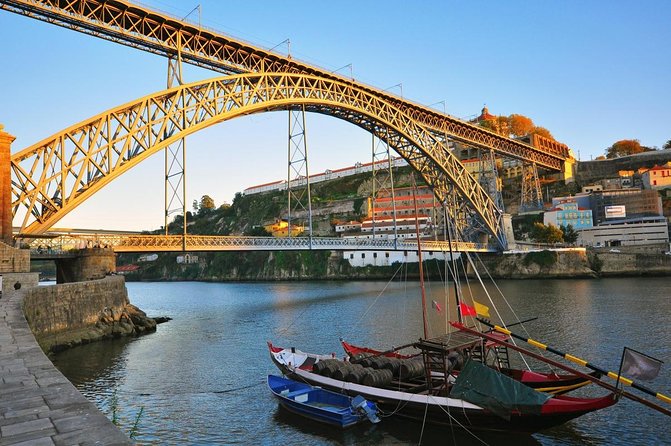
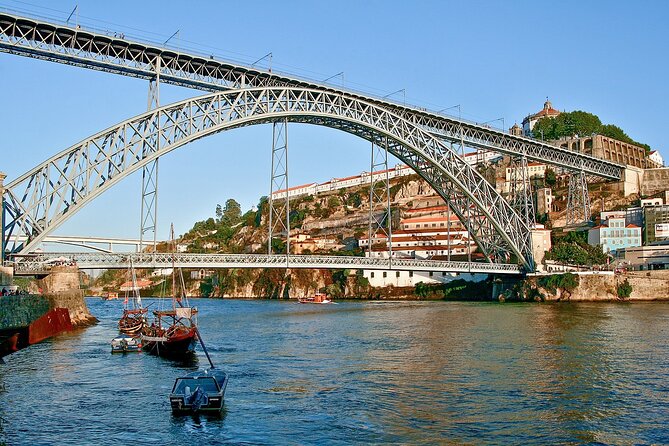
I love how the tour explains the city through key places, not just pretty views. The Casa do Infante stop ties directly to how Portugal’s seafaring reach started, and the route also uses Dom Luís Bridge to connect Porto’s side to Gaia in a way that makes the whole geography click.
One thing to plan for: it is a walking tour (and it’s not suitable for wheelchair users). If your legs or knees aren’t great, the schedule and the old-street terrain can be a lot for 2 hours.
In This Review
- Key Reasons This Tour Works So Well
- Starting at the Place That Explains Porto’s Big Idea
- Palácio da Bolsa, Saint Francis, and the Religious Tone of the City
- Casa do Infante and the Seafaring Roots You Can Actually Place
- Ribeira and Barredo: Old Streets, Real Pressure From Change
- Medieval Porto, Walls and Gates, and the Douro River as the Main Character
- Alminhas of the Bridge and the Walk That Links Two Cities
- Vila Nova de Gaia: Cellars, Serra do Pilar, and a UNESCO Stop
- Half Rabbit and Corpus Christi: When Modern Art Sits Next to Legend
- A Word on Guides: Stories Land Better With a Human Voice
- Price and Value: Why $32 Feels Fair for What You Get
- Who This Tour Fits Best (and Who Should Skip It)
- Should You Book Porto and Gaia’s Two Riversides Tour?
- FAQ
- How long is the walking tour?
- How much does the tour cost?
- Where do I meet, and where does it end?
- What languages are the guides?
- Does the tour include food and drinks?
- Is the tour wheelchair accessible?
Key Reasons This Tour Works So Well
- Begins at Jardim do Infante Dom Henrique and sets the Discoveries context right away
- Guided stops with built-in time (around 15 minutes each) so you don’t rush the sights
- Old Porto neighborhoods like Ribeira and Barredo are handled as living places, not museum pieces
- Cross the river on foot with stops that connect bridges, legends, and city legends
- Gaia adds UNESCO and wine lore through the Serra do Pilar area and famous cellars talk
- Modern urban art meets historic faith with examples like the Half Rabbit sculpture and Corpus Christi Convent
Starting at the Place That Explains Porto’s Big Idea
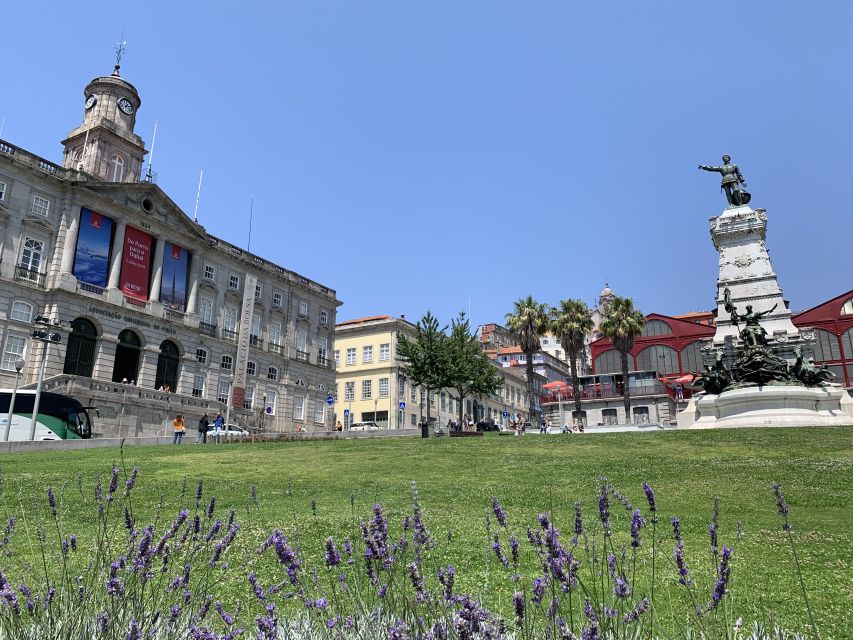
The tour begins at Jardim do Infante Dom Henrique, at the foot of the statue with a blue umbrella. That matters because you start with a person who shaped Portugal’s global story: Henry the Navigator, known here as the Infante of Sagres. You’ll hear how he links to Porto’s identity and to the Age of Discoveries, and it gives you a framework for the stops that come later.
A nice touch is how the tour uses the same square to move from discovery-era thinking to “Portugal, but modern” in the form of the Porto Stock Exchange (Palácio da Bolsa). Even if you only catch a quick glimpse, the tour’s point is clear: Porto has always been a city where trade, ships, and money mattered.
Practical tip for the start: arrive a few minutes early, scan for the blue umbrella, and settle into comfortable shoes. You’ll be on your feet soon.
You can also read our reviews of more walking tours in Porto


Palácio da Bolsa, Saint Francis, and the Religious Tone of the City
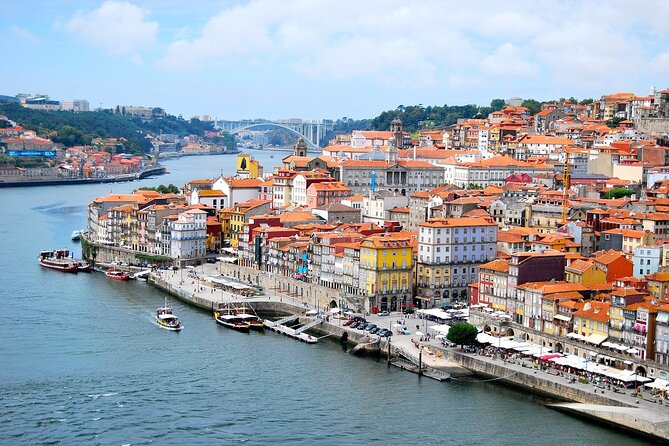
After the start square, you get a guided look at the Palácio da Bolsa. It’s the kind of building people notice from the outside, but a short guided stop helps you read it instead of just snapping a photo and moving on. The value here is time-saving: you don’t have to guess what you’re seeing.
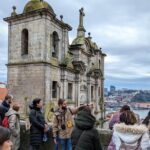
Then comes Church of Saint Francis (Monument Church of St. Francis). Faith is a defining part of Portuguese culture, and this stop is treated that way. You’ll get a guided visit (about 15 minutes), focused on why it’s considered one of the most beautiful churches in Portugal. If you’ve ever wandered into a church and felt like you were missing the point, this is the fix: you’re given context so details don’t pass you by.
One more thing I like: the tour keeps faith from feeling separate from daily life. It’s part of the city’s story, just like the river.
Casa do Infante and the Seafaring Roots You Can Actually Place
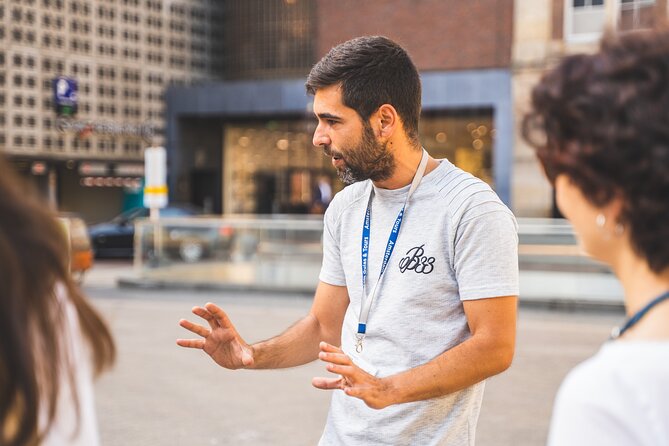
Casa do Infante is a key stop in this walk. It’s tied to the birthplace and early narrative around Henry the Navigator, and the tour uses this location to explain how Portugal came to span four continents. You’ll also get the human angle: Porto didn’t just happen to be “important,” it produced people and ideas that later shaped the wider world.
I especially like how the tour doesn’t leave you at the level of dates. It frames these buildings and names as anchors—places you can return to later and remember, even if you forget a few details.
A possible consideration here is pacing. This whole tour is tightly timed, with multiple guided segments around 15 minutes. If you’re the type who wants to linger for 30 minutes at one spot, you’ll want to plan some extra personal time after the walk.
Ribeira and Barredo: Old Streets, Real Pressure From Change
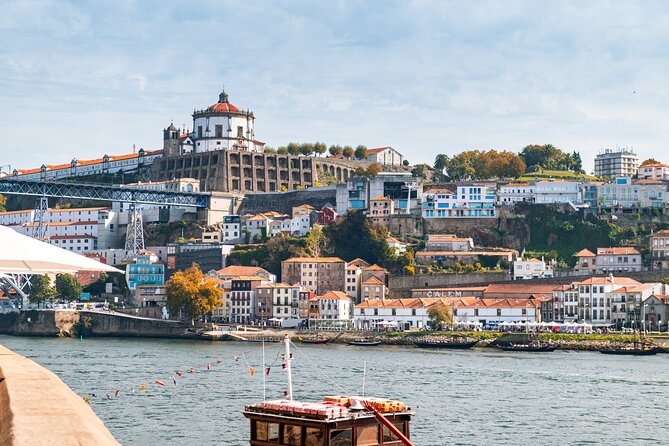
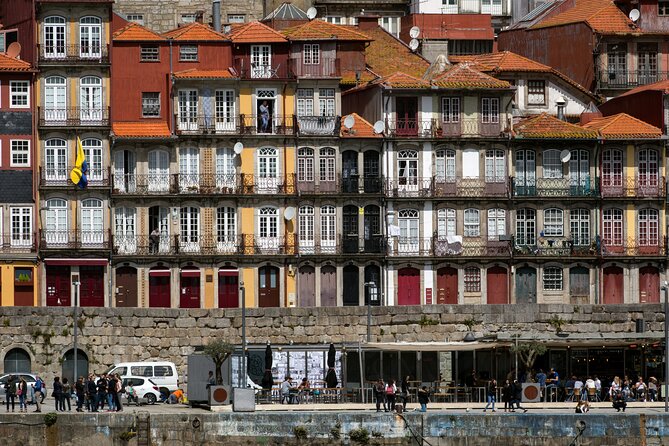
Next you move toward Ribeira and Barredo, some of Porto’s oldest neighborhoods. You’ll hear what these areas were like, how they look now, and what might come next as tourism and gentrification reshape the streets.
This part matters because Porto’s riverfront can feel like a postcard until you step a little deeper. The tour’s approach gives you a way to notice both layers: the historic form of the neighborhood and the modern pressures that come with being famous.
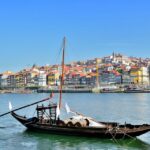
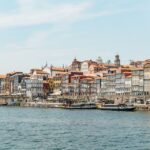
You’ll also reach Cais da Ribeira, the river quay where Porto’s relationship with the Douro becomes impossible to ignore. The Douro isn’t just scenery on this walk; it’s treated as the life source of the city, the reason Porto exists where it does, and the reason so much of the city’s power and movement flowed through the water.
Medieval Porto, Walls and Gates, and the Douro River as the Main Character
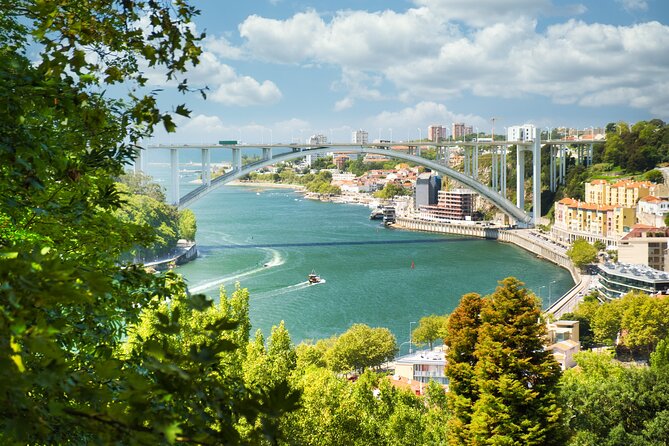
As the walk continues on Porto’s side, the tour turns toward medieval Porto: walls, gates, customs, and what life centered around the Douro meant day-to-day. You’ll hear stories that range across bridges, French invasions, royalty, legends, heroes, and villains.
That spread of topics sounds broad, but it works because it all points back to one idea: rivers create routes, routes create conflicts, and cities built on water become theaters of trade and power.
If you like history but hate lectures, this section is a good compromise. You get stories that feel like they belong to the street you’re standing on, not a timeline dumped into your lap.


Alminhas of the Bridge and the Walk That Links Two Cities
One of the most practical moments comes when you hit Alminhas of the Bridge. These small religious markers along the way give the bridge journey a local flavor, and they’re also a reminder that Porto’s landscape is shaped by belief as well as engineering.
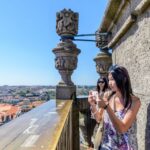
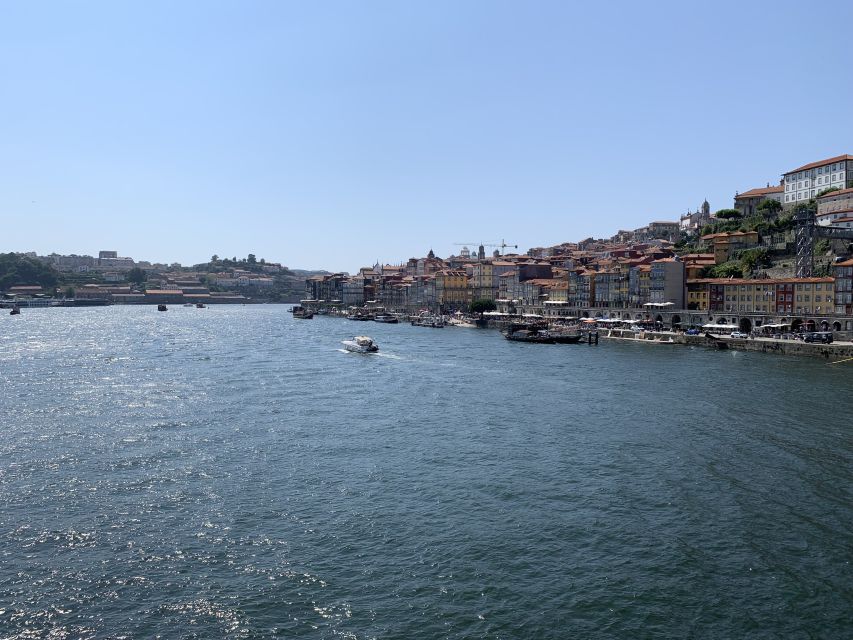
Then you cross on foot via Dom Luís Bridge. This is a highlight not just for the view, but because it makes the tour’s main point physical. Porto and Vila Nova de Gaia are technically separate, but locals treat them as inseparable. Walking the bridge gives you that connection in your legs and eyes.
If you’re afraid of heights, this is something to think about. You’re on a famous bridge, and you’ll see a lot of water from above.
Vila Nova de Gaia: Cellars, Serra do Pilar, and a UNESCO Stop
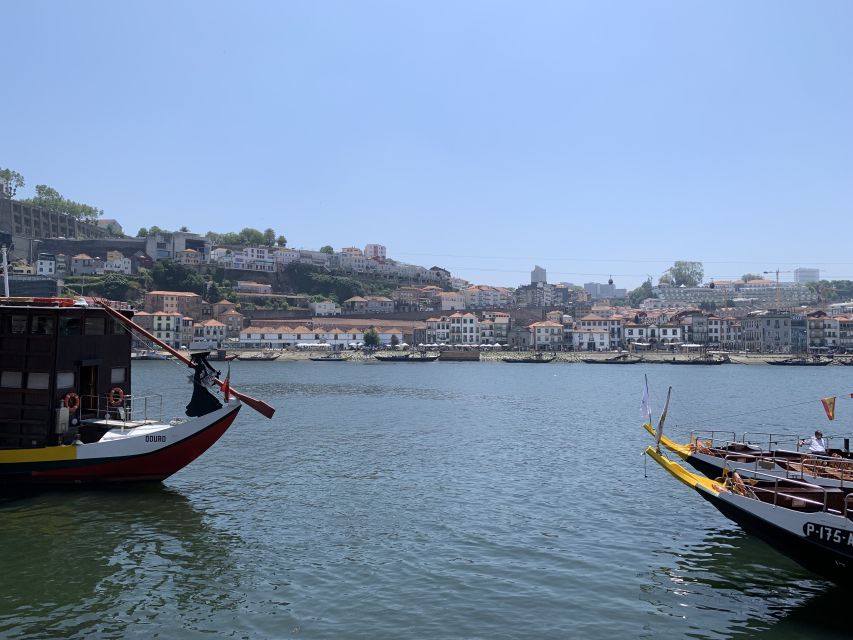
Once you reach Gaia, the tone shifts. The tour moves into the world locals associate with the river’s trade legacy, especially wine culture. You’ll explore the famous wine cellars area and also visit the Serra do Pilar Monastery, which is a UNESCO World Heritage Site.
Even without stepping into a winery, you’ll learn the unique story of Port wine—why it’s special and why it’s not just wine and not simply a thing you can label with one word. That explanation is valuable because it helps you understand why people here care so much about the product tied to the Douro.
This is also where the “two towns” idea becomes real. Porto feels like the engine of the story; Gaia feels like the storage, the tradition side, and the place where stories get kept.
Half Rabbit and Corpus Christi: When Modern Art Sits Next to Legend
Gaia also gives you a contrast that I think is one of Porto’s most interesting strengths: it can hold the old and still make room for the new. You’ll see modern urban art, including the striking Half Rabbit sculpture, while also visiting the Convento de Corpus Christi.
The convent is described as steeped in legend, and that pairing is the point. This tour keeps you from treating Porto and Gaia as fixed “history only” places. Instead, it shows how the city’s identity is constantly being rewritten—sometimes peacefully, sometimes with controversy.
If you’re trying to photograph both sides (historic stone and modern street art), you’ll probably want to keep your camera ready during Gaia. The contrasts don’t wait.
A Word on Guides: Stories Land Better With a Human Voice
This tour is led by a live guide fluent in English or Spanish, and the group is small—limited to 10 participants. That small size helps the pacing and makes questions easier.
One review highlights a guide named Eric as one of the best guides they’ve had on a tour, and the group affectionately references him with the nickname Oso. That’s not something you can count on for every guide, but it does hint at the core value: you’re paying for a person to connect details into a story you can remember.
Price and Value: Why $32 Feels Fair for What You Get
At $32 per person for about 2 hours, this is the kind of tour that can make sense even if you’re on a tighter budget. You’re not just buying walking time. You’re buying guided access to major stops—including a guided look at the Porto Stock Exchange, the Church of St. Francis, Casa do Infante, riverfront segments, Dom Luís Bridge context, and Gaia’s key heritage and art moments.
Because there are no food or drinks included, you’ll still need to plan that separately. But in exchange, you’re spending your money on interpretation. For a city like Porto—where signage and symbolism can be easy to miss if you go alone—that trade can be a smart one.
Who This Tour Fits Best (and Who Should Skip It)
This is a strong match if you want a compact way to understand Porto and Gaia’s relationship to the Douro, plus the layers of faith, medieval life, and modern street art. It’s also ideal if you like your history in story form, connected to the exact place you’re standing.
It’s likely not a good choice if you need wheelchair access, since the tour is noted as not suitable for wheelchair users. Also consider skipping or pairing with a slower day if you’re sensitive to walking time and you don’t handle multiple guided stops well.
Should You Book Porto and Gaia’s Two Riversides Tour?
I’d book it if you want one simple plan that covers both banks and explains what you’re seeing as you walk. The combination of Henry the Navigator at the start, medieval Porto themes, a foot crossing on Dom Luís Bridge, and Gaia’s UNESCO monastery plus modern art contrast makes this more than a standard sightseeing loop.
I’d pass if you’re looking for a long, slow wander or if you want a winery visit. This walk focuses on stories, heritage, and wine context, not a tasting. Also, if 2 hours of walking is too much, pick a different format.
If you do book, go in ready to look at Porto as a place shaped by water, trade, and belief, not just scenic streets. That mindset makes the whole route click.
FAQ
How long is the walking tour?
It lasts 2 hours.
How much does the tour cost?
The price is $32 per person.
Where do I meet, and where does it end?
You meet at the foot of the statue with a blue umbrella. The tour finishes at Cais de Gaia 19, 4400-245 Vila Nova de Gaia, Portugal.
What languages are the guides?
The live guide speaks Spanish or English.
Does the tour include food and drinks?
No. Food and drinks are not included.
Is the tour wheelchair accessible?
No. The tour is not suitable for wheelchair users.