REVIEW · FOZ DO DOURO
Porto: a ride along the coast in a fun eco-friendly car
Book on GetYourGuide →Operated by Eco Local Tours · Bookable on GetYourGuide
Porto by the water, minus the fuss. This ride is a smooth way to take in the Douro estuary from the river’s right bank and then glide over to the Foz do Douro coast, with a small taste of Porto culture along the way. I love how the route strings together real neighborhoods with big viewpoints, and I also love the human scale: short stops for photos and a calm pace. One thing to plan around is weather—if it turns bad, the tour may be rescheduled or canceled.
You’re paying for time well spent. At $51 per person for a 2-hour private outing, you’re not just moving from A to B; you’re getting a guided narrative across Porto’s river edge, its Atlantic avenues, and the start of the Matosinhos coastline. Plus, you get a glass of Port wine, and hotel pick-up/drop-off is possible if you arrange it ahead with the guide.
The vibe is relaxed and practical. Your guide (Portuguese, English, French, or Spanish) keeps the driving easy and the stops manageable, which matters in a city full of tight streets. Guides like Ricardo and Elio (seen on past departures) tend to keep things friendly and not over-explained—good if you want stories, not a lecture.
In This Review
- Key highlights worth aiming for
- Where you meet: Pena Ventosa and instant Porto context
- The Douro right bank: Miragaia to Massarelos to Lordelo do Ouro
- Foz do Douro: wine tasting, Passeio Alegre, and a coast that locals wanted
- Foz Velha’s narrow streets and the São João Baptista church
- Atlantic Avenues: Brazil and Montevideo into the Matosinhos direction
- Matosinhos Beach: seeing the beginner-friendly surfing energy
- Electric car time: easy cruising through tight Porto parts
- The return viewpoint: Douro estuary again, from the other angle
- Price, value, and what you really get for $51
- Who this tour suits best (and who should skip it)
- Quick FAQ
- FAQ
- How long is the Porto coastal ride?
- What’s included in the price?
- Is food included?
- Is it a private group?
- What languages do the guides speak?
- Where is the meeting point?
- What happens if the weather is bad?
- Can I cancel and get a refund?
- Can I book now and pay later?
- Should you book this coastal electric-car tour?
Key highlights worth aiming for
- Lordelo do Ouro panoramic view of the Douro estuary from a special viewpoint
- Foz do Douro + wine tasting plus the garden stop at Jardim do Passeio Alegre
- Foz Velha neighborhood streets with a São João Baptista church topping the area
- Atlantic Avenues run on Brazil and Montevideo avenues, then onward toward Matosinhos
- Electric-car segments timed to help you move efficiently through busy or narrow areas
- A second viewpoint on the return showing more of the estuary and the natural reserve
Where you meet: Pena Ventosa and instant Porto context
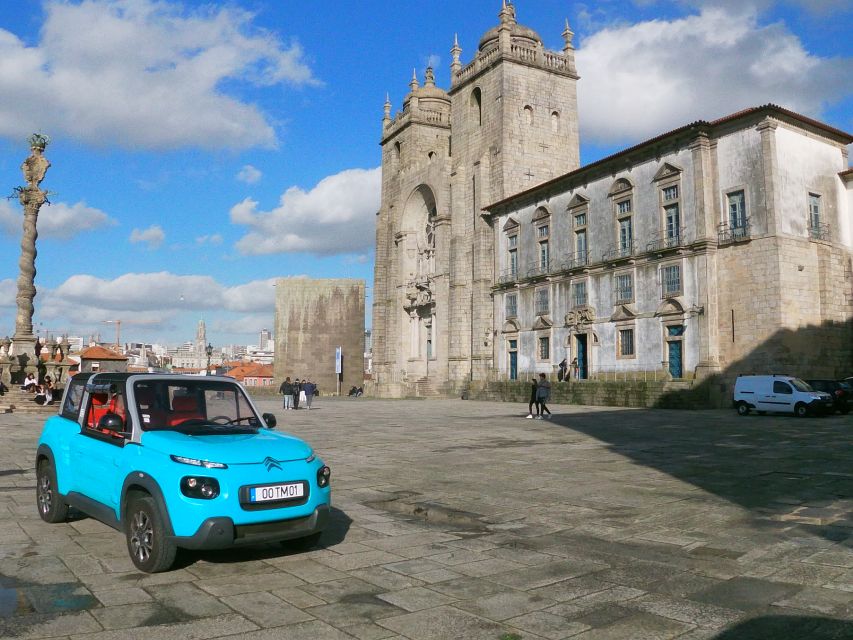
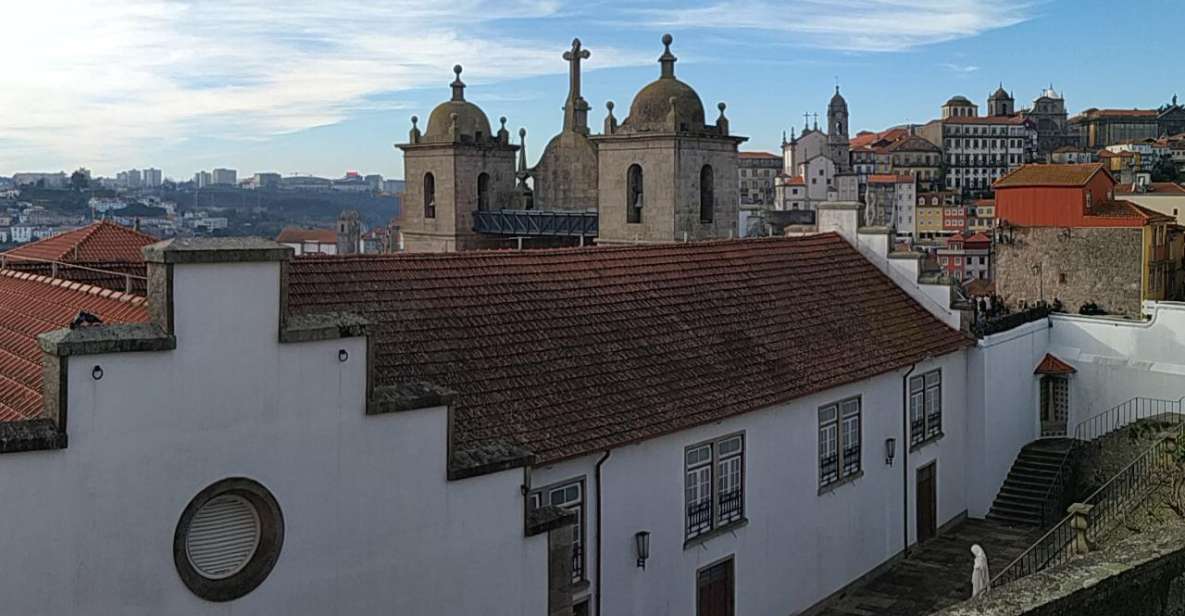
Most Porto tours start with a map and a shrug. This one starts with orientation at a real, old-school point in town. You meet at Calçada de Vandoma, on Pena Ventosa hill, where the Cathedral was built in the 12th century. The area is tied to the early fortified city—buildings grew around that strong point, shaped by the primitive wall (Cerca Velha).
It’s a smart start. Before you even drive, you’re standing in the kind of place where Porto’s “layers” feel obvious: defense first, then neighborhood growth around the center. Your guide parks the tuk-tuk right by the Cathedral access, so it’s easy to spot, even if you’re still figuring out which way you’re facing.
You also get a quick “zoom out” moment right away. There’s an aerial-style look in the first minutes, which helps you connect the dots later when you’re looking down on the river and the coast. If you like getting your bearings fast, this helps a lot.
You can also read our reviews of more tours and experiences in Foz Do Douro.

The Douro right bank: Miragaia to Massarelos to Lordelo do Ouro
Here’s the core of the experience: the ride focuses on the Douro’s right bank, the side that shapes Porto’s identity. Instead of rushing to a single viewpoint, you slide through the neighborhoods that line the water.
First comes Miragaia. You get a short break time and scenic stops on the way. Miragaia is one of those Porto names that sounds like a history book, but what you really notice is the way the streets and river edge come together—very Porto, very practical, and very photogenic.
After that, you continue to more central river-area views with another break and photo stop. This is where the driving route matters. You’re not just sitting in one place looking at water; you’re seeing the way the city “turns” as the river bends and the coastline starts to feel closer.
Then you hit the big moment: the special viewpoint in Lordelo do Ouro. This is one of the highlights for a reason. Standing where the view frames the estuary, you get the river-to-sea story in one glance—what makes Porto feel dramatic even when you’re simply looking, not climbing or hiking.
A practical note: viewpoint weather matters. Wind off the water can be real, so if it’s breezy, plan for a light layer you can pull on quickly during photo time.
Foz do Douro: wine tasting, Passeio Alegre, and a coast that locals wanted
After the river focus, the tour pivots into the coast world—Foz do Douro, the area that only became part of Porto in the 19th century. That timing tells you something: this wasn’t always a packed municipal neighborhood. It developed into a seaside destination, and it was especially popular with Porto’s aristocracy.
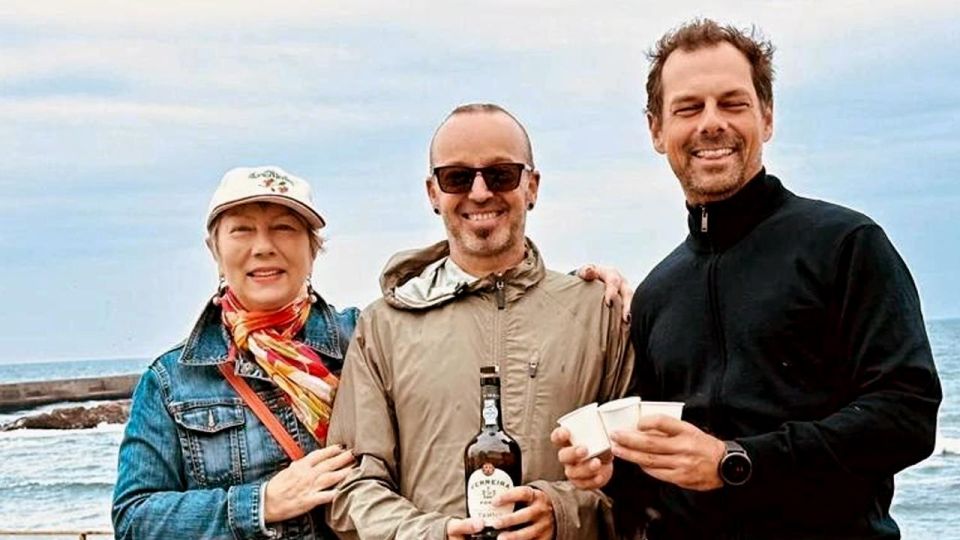
The first stop here comes with wine tasting and sightseeing time. That’s a nice change from the usual “drive-by souvenir stop” feel. A glass of Port wine fits the theme, and the small tasting gives you something to anchor the scenery to.
Next is Jardim do Passeio Alegre, a garden stop that works as a breather. You’ve been looking at viewpoints and streets; now you get a calmer pace. It’s a good place to slow your eyes down, take in the coastal mood, and reset before the route moves into the older neighborhood pockets.
Foz Velha’s narrow streets and the São João Baptista church
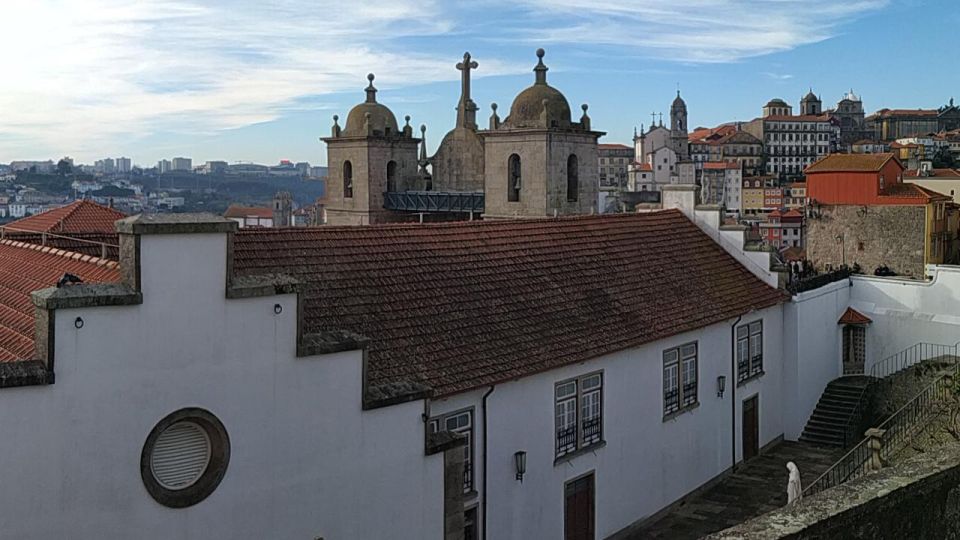
From Passeio Alegre, you’re led toward the oldest district on the western side: Foz Velha. This is where the vibe shifts again. The area is known for narrow streets, and you’ll have time to absorb the feel of a neighborhood that’s built for walking and turning corners, not for cars.
The star mention here is a São João Baptista church on top. You don’t just see it—you understand how it dominates the view and the neighborhood flow. It’s a common Porto pattern: the top of a slope holds a landmark, and everything else reads as a web beneath it.
This part is ideal if you like “small city textures.” You’re not standing in a museum courtyard. You’re seeing a living neighborhood mood—steep streets, tight passages, and views that sneak up on you.
If you’re traveling with someone who gets impatient with long photo moments, this stop is still workable. It’s short enough to keep energy up, but it has enough character to make the walking feel worth it.
Atlantic Avenues: Brazil and Montevideo into the Matosinhos direction
Now you start the push along Porto’s Atlantic Avenues, specifically Brazil Avenue and Montevideo Avenue. This is a smart section of the route because the coast isn’t just a “destination.” It’s a travel experience in motion.
From the road, you get a sense of how Porto’s urban rhythm transitions toward the seaside. You’ll stop along the way until Gonçalves Zarco Square, the roundabout area at Rotunda do Castelo do Queijo. That’s an excellent orientation point. From there, you can see Matosinhos Beach in the distance, which helps you understand the geography before you arrive.
This is also where the tour’s “coast narrative” clicks into place. Porto’s river identity flows into the Atlantic world, and Matosinhos feels close enough to imagine walking there—even if you’re staying in the car for part of the route.
Matosinhos Beach: seeing the beginner-friendly surfing energy
Then you finally reach the Matosinhos area. Your time here is built for sightseeing rather than beach marathoning. You get a short stop for what the route calls sightseeing time.
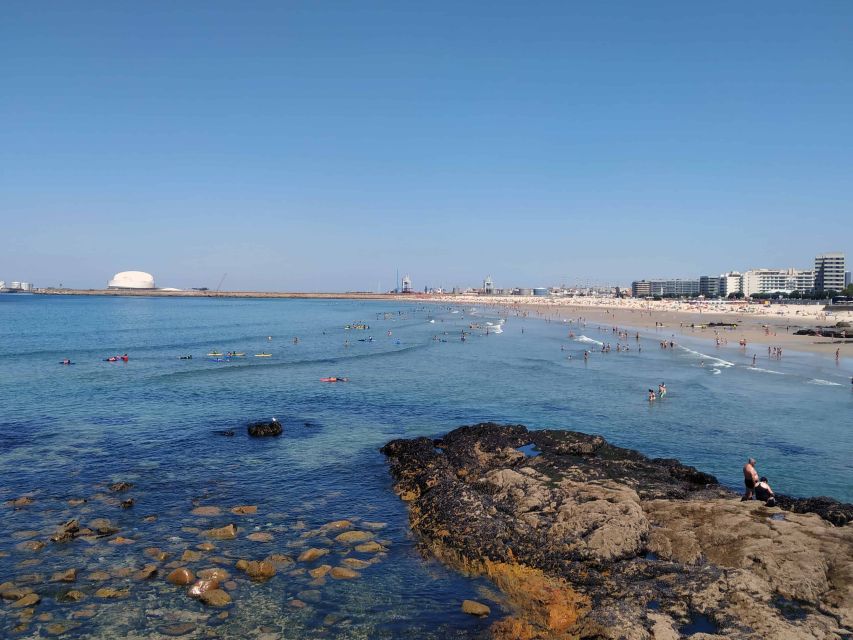
Matosinhos Beach is widely known for surfing, and the key detail for first-timers is that it’s considered one of the best north-Portugal options for beginners. That doesn’t mean you need to surf to appreciate the place. Even from the roadside viewpoint, you can read the culture in the way the beach works: open stretch, strong water activity, and a coastal feel that’s more Atlantic than river.
If you want to taste the Matosinhos vibe beyond the first glance, plan a simple add-on after the tour. The tour gets you oriented and saves you from guessing where the best angles are—then you can choose how much time you want to spend on foot.
Electric car time: easy cruising through tight Porto parts
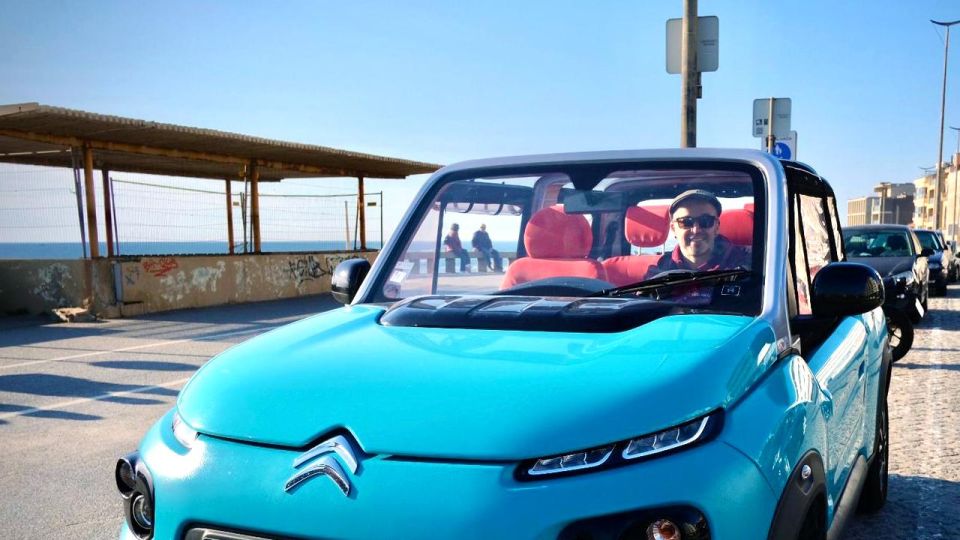
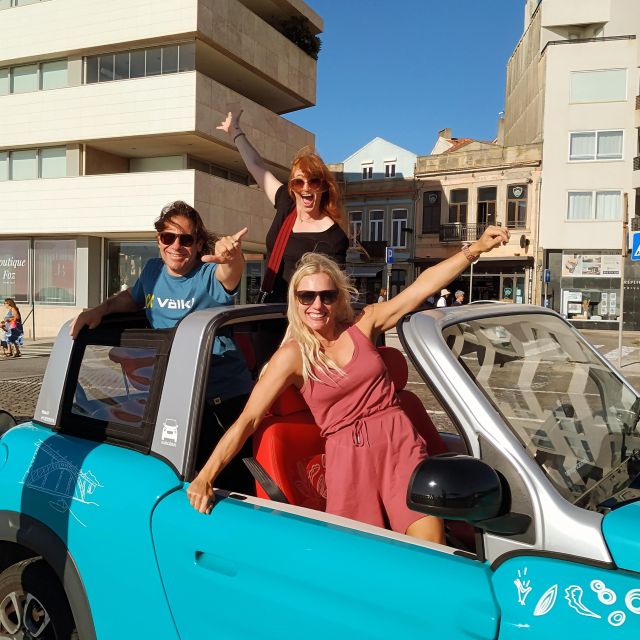
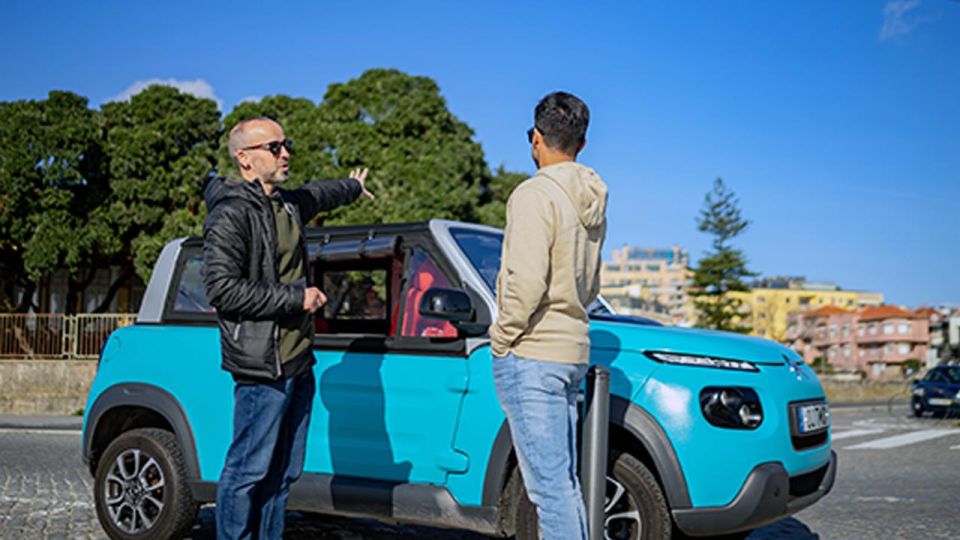
One of the best values of this tour is that it uses eco-friendly electric vehicle driving in the middle of the route. You’ll spend about 30 minutes in an electric car at one stage, then another electric-car segment later (about 20 minutes).
Why that matters: Porto’s streets can be narrow, and tight corners are no fun when you’re trying to photograph and stay aware. The compact vehicle plan helps you move without turning the outing into a parking hunt. It also gives your guide flexibility to route you efficiently toward viewpoints and coastal access points.
A small caution from real-world experience: sometimes the exact vehicle model can vary depending on the day. In one case, a departure was done with a different compact eco vehicle than expected, and it felt noisier. If you’re the type who cares about the exact ride style, it’s worth asking when you confirm your booking.
Either way, the intent is clear: keep it light, practical, and low-stress while still hitting the best views.
The return viewpoint: Douro estuary again, from the other angle
After the Matosinhos stop and the electric-car driving time, the tour makes room for a final coastal look back toward Porto. There’s a break time back in Foz do Douro before the second electric-car segment wraps up the route.
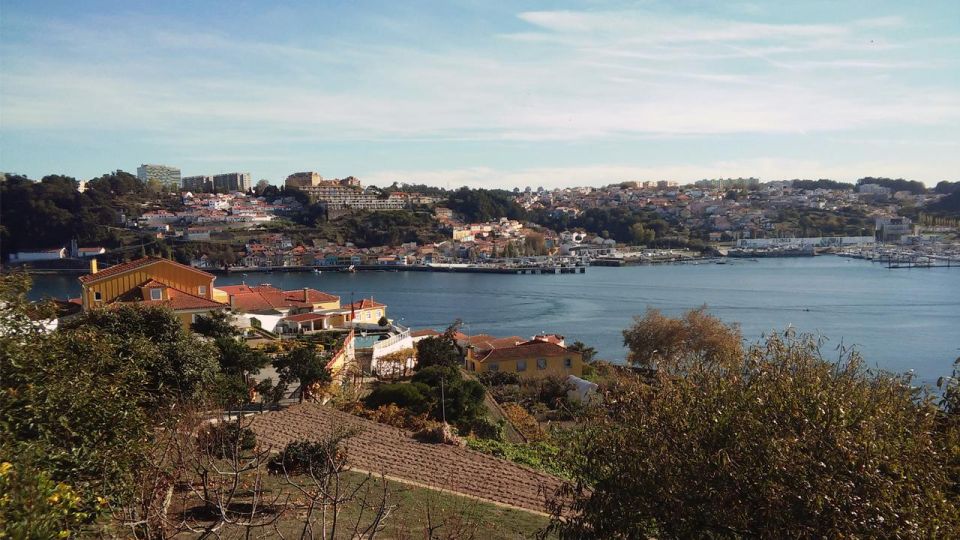
Then comes the payoff: on the way back, you stop at a special viewpoint for a panoramic view of the Douro River estuary, including the natural reserve and the left bank. This is a key moment because it doesn’t just repeat the earlier views. It helps you compare both sides—the right bank where Porto clings, and the left bank that feels more open and reserve-like from this angle.
If you love photos, this is the time to slow down and wait for a clean light moment. If you don’t, just take 2 minutes to look. When the estuary is laid out like this, the whole Porto story starts to make sense.
Price, value, and what you really get for $51
At $51 per person for a 2-hour private tour, the value comes from three things:
1) Guided pacing with real stops. You get multiple breaks—scenic pulls, photo moments, and neighborhood time—so you’re not stuck in long uninterrupted driving.
2) Port wine included. A glass of Port wine is not a random extra. It’s part of the Porto/river/coast identity you’re seeing.
3) Transportation that fits the city. Electric-car driving helps you cover ground without wrestling with parking or spending the day in taxis.
Optional hotel pick-up and drop-off is available if you arrange it in advance with the guide. Even if you meet at Calçada de Vandoma, that flexibility can be a big quality-of-life win for families or anyone who doesn’t want to play navigation roulette.
What you should mentally budget for: food isn’t included. If you’re hungry afterward, plan a post-tour meal near the Atlantic or back in Porto, where the coast-to-city transition makes it easy to choose a neighborhood.
Who this tour suits best (and who should skip it)
This ride works especially well if you:
- Want a 2-hour Porto plan that includes both the river and the Atlantic
- Like short walks and photo stops more than long guided trekking
- Prefer a small, private group setting with a live guide in languages like English or French
- Care about seeing neighborhoods like Foz Velha instead of only big “must-see” viewpoints
It may be less ideal if you:
- Need a lot of deep museum time (this is outdoor, road, viewpoints, and neighborhood streets)
- Are highly sensitive to rain and wind. Bad weather can change plans, and the tour may be rescheduled or canceled.
Quick FAQ
FAQ
How long is the Porto coastal ride?
It’s about 2 hours.
What’s included in the price?
You get pick-up/drop-off if arranged in advance with the guide, a glass of Port wine, and live guiding.
Is food included?
No, food isn’t included.
Is it a private group?
Yes, it’s a private group.
What languages do the guides speak?
Portuguese, English, French, and Spanish.
Where is the meeting point?
You meet at Calçada de Vandoma, at the access to the Cathedral on Pena Ventosa hill, where the guide parks the tuk-tuk in front.
What happens if the weather is bad?
The tour runs with weather conditions in mind, and if conditions are poor, the tour may be rescheduled or canceled.
Can I cancel and get a refund?
Yes. You can cancel up to 24 hours in advance for a full refund.
Can I book now and pay later?
Yes, you can reserve now and pay later.
Should you book this coastal electric-car tour?
If you want the most Porto-per-hour, this is a strong pick. In a short time, you get the Douro right bank story, the Lordelo do Ouro viewpoint moment, Foz do Douro with wine tasting and Passeio Alegre, and the Matosinhos direction with beach context from the road. The private pacing and electric-car approach also make it easier to enjoy without the stress of getting around.
Book it when you have a morning or afternoon free and you want a plan that feels like a guided city drive with real stops, not just a transfer. Skip it only if you’re looking for long walking time or you’re tightly locked to specific weather conditions.