REVIEW · MATOSINHOS
From Leixões: Private Porto Historic Center Tuk Tuk Tour
Book on GetYourGuide →Operated by Portuk Porto · Bookable on GetYourGuide
Porto in a tuk tuk sounds like a shortcut, and it is. You’ll get a mix of tuk tuk rides and short walks, plus the kind of skyline view you can’t fake. I also really like the focus on key neighborhoods and viewpoints, from Torre dos Clérigos to the riverfront. One heads-up: the ride can feel bumpy on cobblestones, and in some spots the street noise makes the guide harder to hear.
This 3.5-hour private tour starts at Leixões Port in Matosinhos and guides you into Porto’s historic heart at a pace that works even if you’re not feeling your best legs. You’ll drive the coastline, cross under the Arrábida Bridge, and then shift into walking for the places that are better seen up close. And yes, you’ll end with a glass of Porto wine by the Douro River, where the city looks much more cinematic than any postcard.
Because it’s private, you’re not stuck in a crowd. You can also ask for practical tweaks to how you spend the time, and you’ll get a live guide in English, Spanish, or Portuguese. Just remember that some stops may have paid entry if you choose to go inside.
In This Review
- Key takeaways before you go
- Leixões Port to Porto center: a coastal warm-up you’ll feel
- Cordoaria’s Garden and the Clérigos climb: views you earn, not buy
- Livraria Lello, churches at Praça dos Leões, and Miragaia and Vitória lanes
- Bolhão market and Rua de Santa Catarina: where you see daily Porto
- Palácio da Bolsa, São Francisco Church, and Ribeira’s river truth
- Serra do Pilar and the Porto wine finish by the Douro
- How the 3.5 hours fit real people, not just ideal walkers
- Price and value: what you’re paying for at $104 per person
- Who this Porto tuk tuk tour is best for
- Should you book? My honest take
- FAQ
- How long is the Leixões Porto Historic Center Tuk Tuk Tour?
- Where do I meet the guide?
- Is this a private tour?
- What’s included in the price?
- What languages are available for the live guide?
- Is entry to attractions included?
- Can I change the start time, and how does cancellation work?
Key takeaways before you go
- Port-to-city start at Leixões Port: You’re not just dropped in town; you ride in from Matosinhos and get the coastal lead-in.
- Torre dos Clérigos with a 360-degree reward: 225 steps for big views of Porto’s center and beyond.
- Livraria Lello as a quick, iconic stop: Built in 1906, it’s treated as a must-see pause during the tour.
- Busiest streets plus old neighborhoods: Rua de Santa Catarina and the Miragaia and Vitória lanes get you the full variety.
- Market time in the Bolhão area: Local products, shops, and the feeling of daily Porto life.
- Ribeira to Serra do Pilar to Douro wine: River views are the finish line, not just another photo stop.
Leixões Port to Porto center: a coastal warm-up you’ll feel
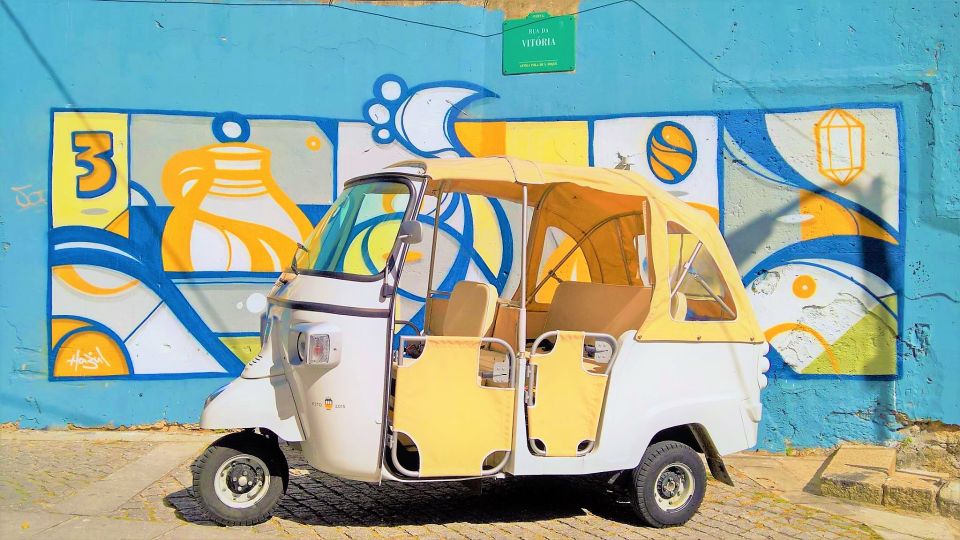
I like tours that start a bit outside the center, because Porto’s layout makes more sense when you understand where the river bends and where the city climbs. This one begins at Leixões Port, at the main gate area. You’re in Matosinhos first, a fishing zone with golden sand beaches where you can often spot surfers. That matters, because it sets a local tone right away instead of pretending everyone arrived from an airport straight into the medieval.
From there, you ride past some recognizable “wow, that’s big” landmarks without turning the day into sightseeing trivia. One of the earliest highlights is Parque da Cidade, described as the largest urban park in Portugal. It’s a useful stop because it breaks up the day visually. Then you continue along the coast toward Foz, which gives you a sense of Porto’s coastal edge before you swing around toward the river.
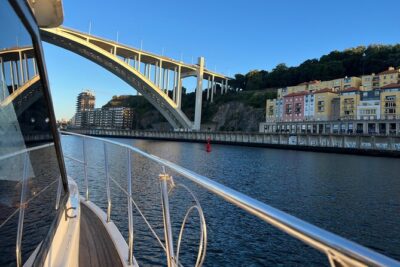
When you cross under the Arrábida Bridge and start riding the right side of the Douro riverbank, the city starts to stack up in your mind: river first, then hills, then neighborhoods. This is the part where a tuk tuk works well. You’re moving, but you’re still close enough to landmarks to connect them with what you’ll walk later.
If you’re coming from a cruise ship or you just hate long transfers, this setup is also practical. The tour returns you to Matosinhos at the end, so you’re not left stuck figuring out transport after your walking stops.
You can also read our reviews of more private tours in Matosinhos

Cordoaria’s Garden and the Clérigos climb: views you earn, not buy
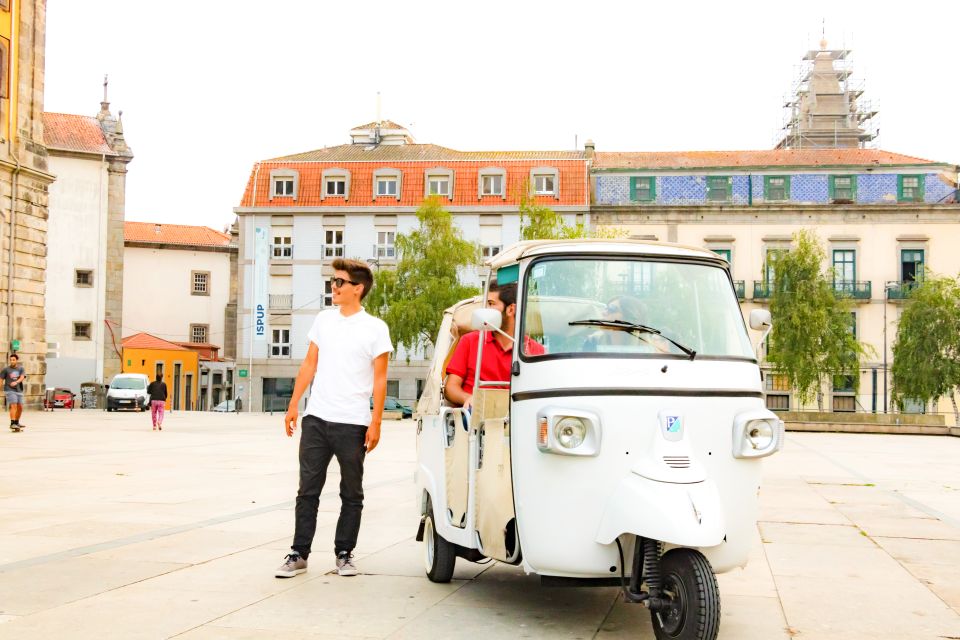
Once you reach Porto, the tour shifts from drive-by sightseeing to a “walk and look” rhythm. Your first meaningful stretch is Cordoaria’s Garden, a green space behind Porto University. It’s a smart choice early, because gardens are easier than steep streets. You catch your breath, take in the city’s layout, and get oriented before you hit taller viewpoints and tighter alleys.
In the garden’s area, you pass several city anchors that tell you Porto isn’t only pretty buildings. You’ll see the Portuguese Center of Photography nearby, plus the Justice Palace and Santo António Hospital. These stops are valuable because they show Porto as a living city. You’re not just collecting sights; you’re picking up context for why the historic center feels the way it does.
Then comes Torre dos Clérigos, built in the 18th century. The tour includes the climb of 225 steps to a 360-degree perspective. This is the kind of stop that makes the rest of the day click. From up there, Porto’s rooftops, the river curve, and the neighborhoods you’ll visit later stop feeling random. You’ll understand why Ribeira sits where it does and why certain streets feel like they always lead you into history.
Practical note: that climb is part of the experience. If you have mobility limits, you’ll want to plan around the stairs and uneven streets around the tower too. Since entry to paid attractions isn’t included, you may also find some stops have extra costs depending on what you want to do inside.
Livraria Lello, churches at Praça dos Leões, and Miragaia and Vitória lanes
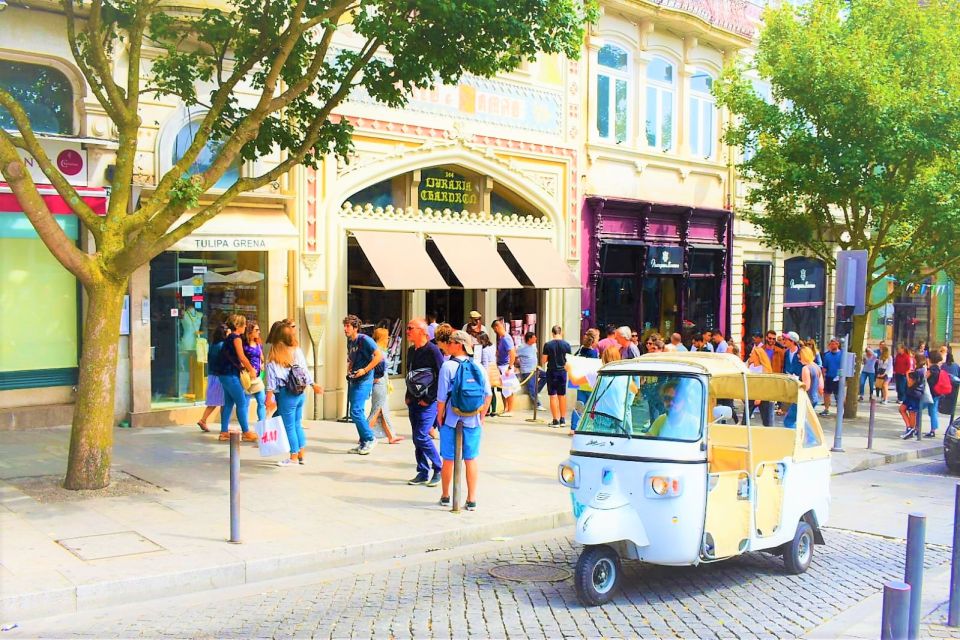
A quick pause at Livraria Lello is next. It’s described as built in 1906, and the tour treats it as a must-see on a Porto visit. Even if you’re not a book person, it’s worth a look because it shows how Porto brands itself through craft, design, and old-world flair.
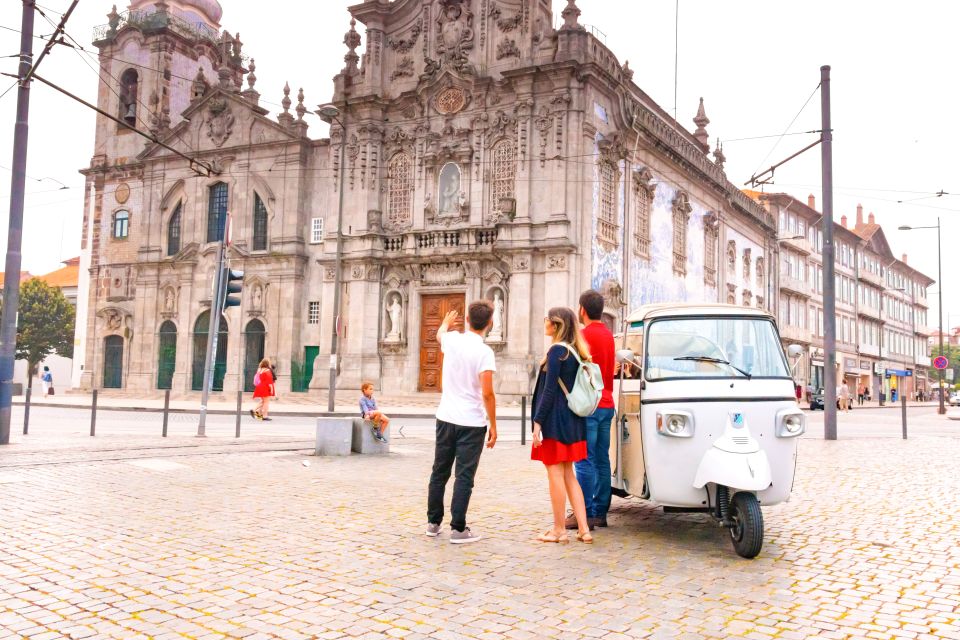
After that, you cross Praça dos Leões and take in nearby church architecture, including Carmo and Carmelitas Churches. Churches in Porto aren’t just religious stops. They’re visual landmarks that help you navigate. When you see two towers or façades clustered in different directions, you start to map the city without thinking too hard.
From there, the tour moves into narrow alleys in Miragaia and Vitória. This is where a tuk tuk can’t do all the work. Those lanes are best felt slowly, with short walks where you can notice the street feel: the twists, the small squares, the way buildings press in. It’s also a good moment to ask your guide questions. If your guide is someone like Tito, Bernardo, Ana, Anna, Andre, or Inigo (the tour operator supports English, Spanish, and Portuguese speaking guides), you’ll likely get more than the usual facts. You’ll get neighborhood reasoning: why these districts mattered, how they connect to the river, and what to look for.
One small caution: cobbled streets add character, but they also make it harder to hear if you’re seated toward the back. If you care a lot about every sentence your guide says, choose a spot that lets you hear without craning.
Bolhão market and Rua de Santa Catarina: where you see daily Porto
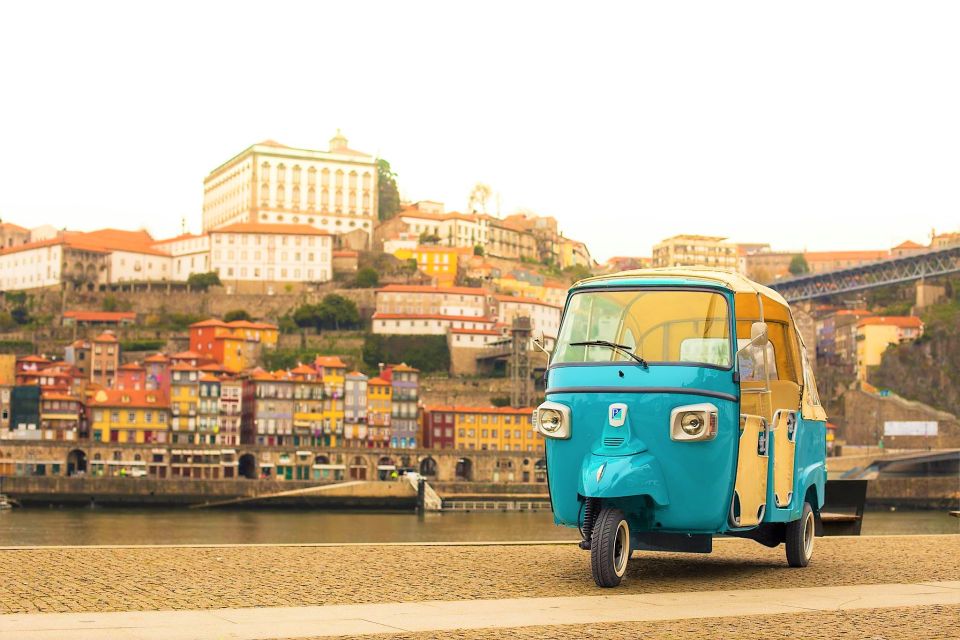
Porto’s historic center has two modes: sightseeing and living. The Bolhão area and Rua de Santa Catarina lean hard toward living.
First, you arrive at the Bolhão area, described as the city’s most commercial zone during this tour portion. You’ll visit a traditional market with local products and shops of all kinds. This is a great stop if you like to browse food shops, small retail corners, and the everyday rhythm that doesn’t show up in museums.
Then comes Rua de Santa Catarina, identified as the busiest street in town. It’s the kind of place where you see Porto’s modern side without giving up the old-center energy. And yes, there’s a classic stop here: Café Majestic, pointed out as the most luxurious café in Porto. You don’t need to spend a fortune to appreciate what this street represents. Look at the contrast: the street’s motion against the heritage behind the façade.
This stretch is one of the best ways to prevent your tour from turning into a checklist of monuments. Market + busy street gives your day a pulse.
Palácio da Bolsa, São Francisco Church, and Ribeira’s river truth
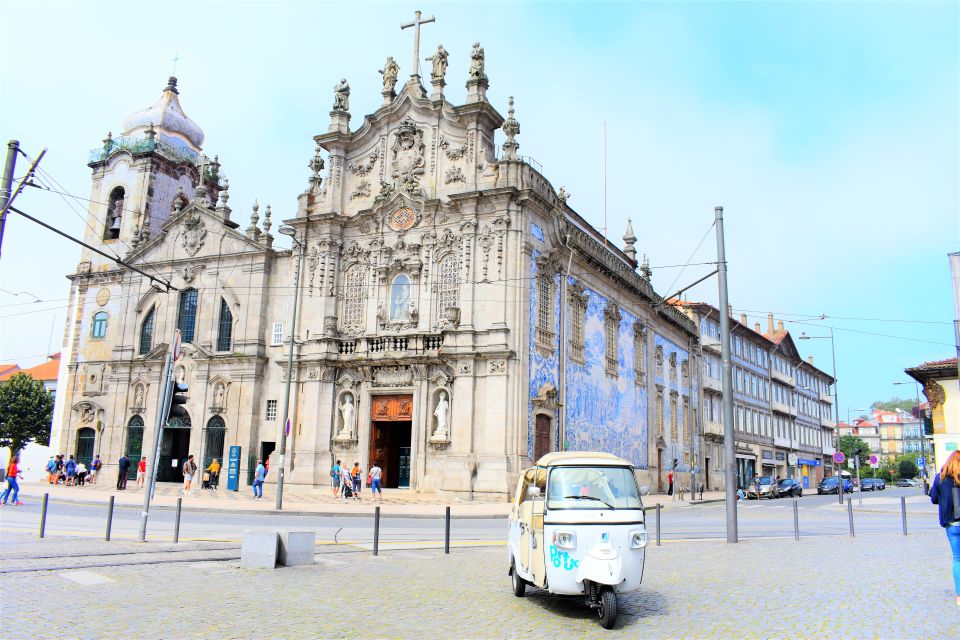
Next, you head past Praça do Infante. This square ties together several major landmarks: Palácio da Bolsa, São Francisco Church, and the old Ferreira Borges Market. Even if you don’t go inside, seeing them in sequence helps you understand why this area became a hub for commerce and movement.
Then you land in Ribeira, described as the last neighborhood of the oldest four areas visited on the tour. Ribeira is where the riverfront energy makes the strongest impression. The city looks like it’s built for water: layers of streets and buildings facing the Douro, with viewpoints that make sense only when you stand there.
You also make a brief stop on the way to the other side of the river for a look at Serra do Pilar Monastery. This bridge-and-monastery moment works like a visual reset. You’ve been moving along the river, then suddenly you’re stopping at the point where the skyline flips and the view becomes deeper.
If you like travel photos, this is where you’ll actually earn them. The angles from Ribeira and the monastery viewpoint don’t feel repetitive. They feel like Porto from two minds: one looking at the water from the town side, and one looking back at the city across the river.





Serra do Pilar and the Porto wine finish by the Douro
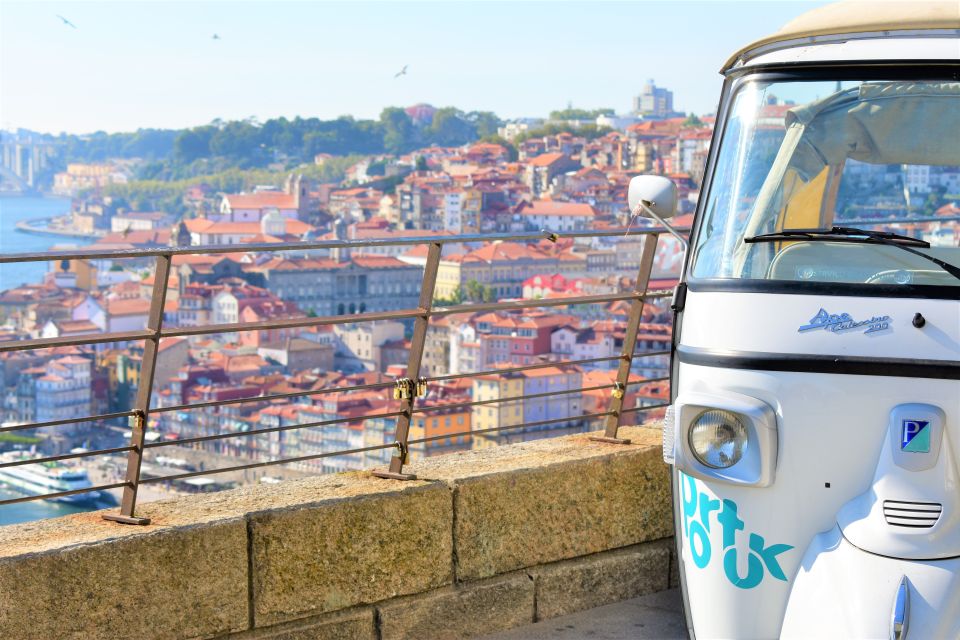
The end of the tour is exactly what I like to see: something you can savor without sprinting. You finish with a glass of Porto wine while you contemplate the Douro River and the City of Porto on the other bank.
This matters because Porto wine isn’t just a souvenir. It belongs to the river story. Even when you don’t go deep into wine production, a simple glass by the water puts the city’s history in the right physical place. You’re standing where trade routes and river life meet the built environment you’ve been seeing all afternoon.
The view here is the reward for the whole route: coastal start, riverbank ride, hill climb, old streets, markets, and then one final panoramic moment. If your legs are tired, this ending lets you slow down without losing the sense that you finished on a high note.
How the 3.5 hours fit real people, not just ideal walkers
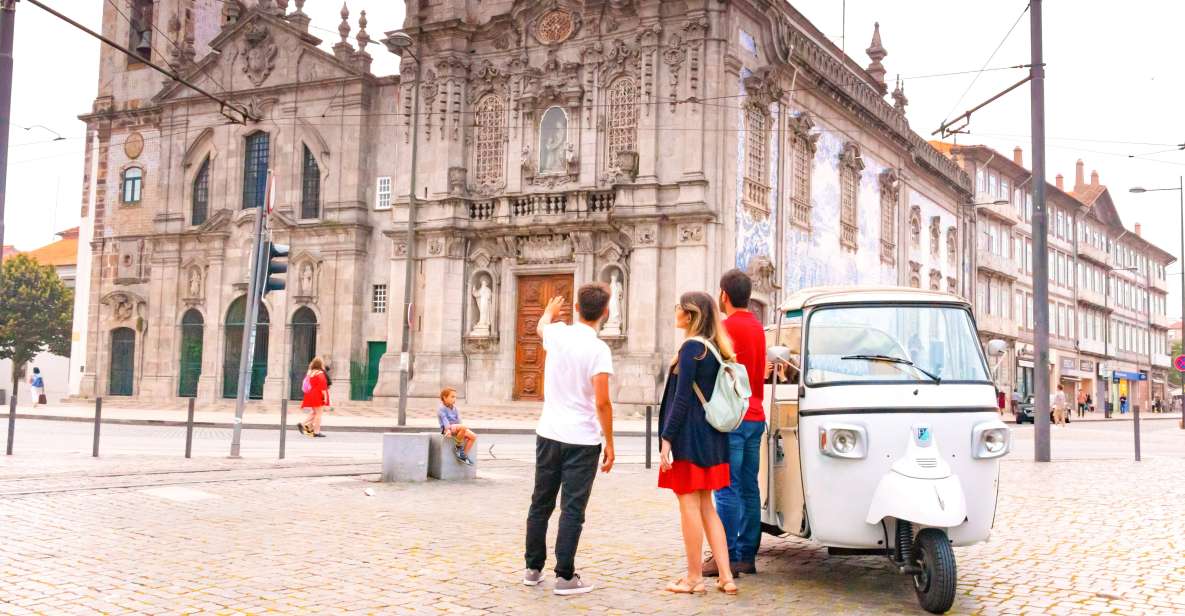
Three and a half hours is a sweet spot for first-timers. It’s long enough to get multiple neighborhoods and at least one big viewpoint. It’s short enough that you don’t feel you spent a whole day just moving between streets.
A private group helps a lot with this pacing. You’re not waiting for others to decide whether they want to stop. Your guide can steer the timing of walks and viewpoints based on how you’re doing. The tour also includes both driving and short walking portions, so you’re not stuck either entirely on foot or entirely inside a vehicle.
That said, I want you to go in with realistic expectations about the tuk tuk ride itself. A tuk tuk is fun and efficient, but it’s not a smooth car. One drawback flagged is that it isn’t ideal for people with back or neck problems, since you’ll feel bumps on uneven surfaces. If you’re sensitive to jostling, ask where you’ll be seated and keep your comfort priorities in mind.
Also, some of the places you stop may have paid entry depending on what you want to do once you arrive. The tour includes the guide, the tuk tuk, and a glass of Port wine, but entry fees aren’t included. So plan for small extras if you want to go inside certain attractions.
Price and value: what you’re paying for at $104 per person
At $104 per person, this isn’t a bargain-bin deal. But it also isn’t just a vehicle rental. You’re paying for three things that add up fast in a city like Porto:
First, you’re paying for smart transportation. Getting from the Leixões area into the dense historic core with multiple viewpoints takes time and energy. The tuk tuk handles the longer hops and helps you reach places that can be awkward on foot.
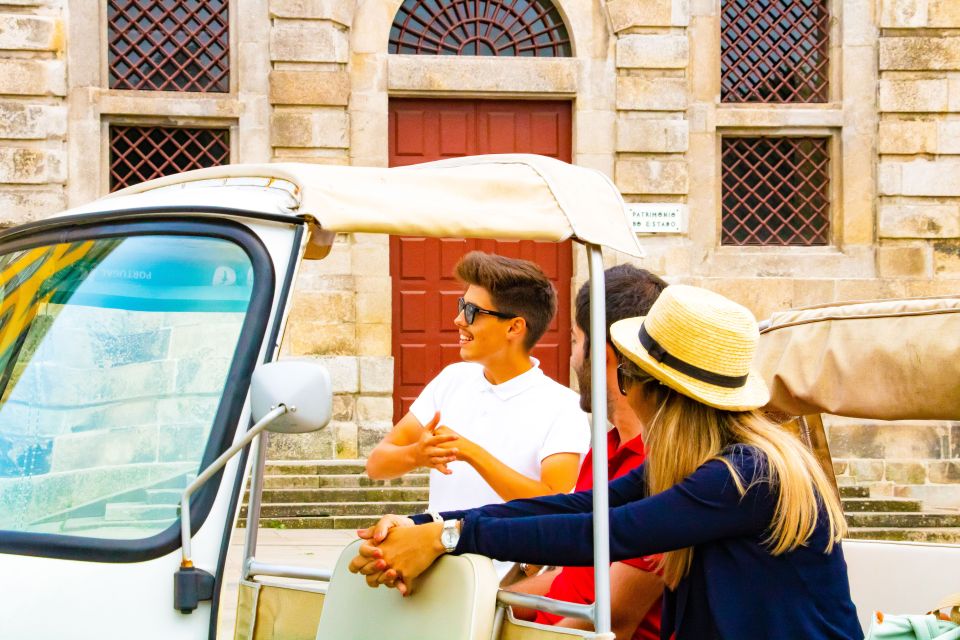
Second, you’re paying for a live private guide. That matters when you want more than a photo stop. You get interpretation of neighborhoods and landmarks, and you can ask questions as you go. People who’ve been on the tour describe guides as friendly and ready to explain the story behind districts, not only the dates on a plaque.
Third, the value is in how the day ends: a glass of Porto wine by the Douro River is included. In many Porto tours, food and drink are add-ons. Here it’s part of the plan, so you don’t have to build the experience yourself.
If you’re traveling with only two people, private touring can feel like a splurge. If you’re okay paying for convenience and guidance instead of squeezing in public-transport hops, it’s a fair way to see a lot in a short time.
Who this Porto tuk tuk tour is best for
This is a good match if you want to do Porto in one focused afternoon and you care about mixing viewpoints with real street life. It’s especially well-suited for:
- First-time visitors who want the city layout in a single outing
- People who dislike long walks over steep and cobbled streets
- Couples or small groups who want privacy and a guide who can pace the day
- Cruise travelers needing a convenient start near Leixões Port
- Anyone who likes markets and neighborhoods, not only monuments
It’s less of a match if you have significant mobility limits or you’re very sensitive to bumps. The route includes stairs at Torre dos Clérigos and walking through older streets. You can still enjoy the route, but you’ll want to plan around comfort.
Should you book? My honest take
If your goal is to see Porto’s highlights without turning the day into a long grind, I think this tour is an excellent booking choice. The big wins are the 225-step Torre dos Clérigos climb for a true panoramic payoff, the market-and-busy-street stop that keeps the day grounded, and the riverfront wine finish that makes the route feel complete.
I’d only hesitate if you know you’re uncomfortable on bumpy rides or you need very quiet conditions to follow spoken explanations. In that case, you might prefer a tour with a more stable vehicle and clearer sound setup. But if you’re okay with a fun, slightly jolty tuk tuk experience, this one gives you a smart, efficient way to connect Porto’s map to your feet.
FAQ
How long is the Leixões Porto Historic Center Tuk Tuk Tour?
The tour lasts 3.5 hours.
Where do I meet the guide?
Meet your guide at Leixões Port. Look for the tuk tuk in front of the port’s main gate.
Is this a private tour?
Yes, it’s a private group tour.
What’s included in the price?
Your private guide, private tuk tuk tour, and a glass of Port wine are included. Lunch and entry to paid attractions are not included.
What languages are available for the live guide?
The guide is available in English, Spanish, and Portuguese.
Is entry to attractions included?
No. Entry to paid attractions is not included.
Can I change the start time, and how does cancellation work?
You can adjust the start time after booking if needed, using instructions on your confirmation voucher. You can cancel up to 24 hours in advance for a full refund.
![From Arouca: Freita Mountain [Arouca Geopark]- Jeep Tour - Price and Value: Is $69.14 Fair for 4 Hours in a Jeep?](https://tours.portoadventures.com/wp-content/uploads/from-arouca-freita-mountain-arouca-geopark-jeep-tour-400x267.jpg)