REVIEW · PORTO
Authentic Braga & Guimarães: Small Historical Group Tour
Book on Viator →Operated by Oporto Road Trips · Bookable on Viator
Two medieval cities, one smooth day. This small-group tour (max 8) pairs Porto pickup with an air-conditioned ride and English guiding that makes a long day feel manageable.
I love how the route is built like a guided story: you move from Guimarães’ hilltop beginnings down through old streets and major squares, then continue to Braga’s cathedral and two major pilgrimage sites. Key monument entry is included (Braga Cathedral is stated as included), plus you get bottled water—small details that add up. One drawback to plan for: the day is packed into about 8 hours, so if your group includes other languages and the guide repeats key parts, it can stretch the time at each stop.
In This Review
- Key highlights to notice before you go
- Porto pickup and Guimarães Castle: the day starts with a proper viewpoint
- Igreja de São Miguel do Castelo and the legends that stick
- Palace of the Dukes of Braganza: power, marriage, and a museum after the restorations
- Old streets and everyday squares: Rua de Santa Maria to Praça de S. Tiago
- Largo da Oliveira and the Padrão do Salado: where big events happened
- Igreja de Nossa Senhora da Oliveira (Colegiada): back to the origins of the sacred
- Braga Cathedral: first Portuguese cathedral vibes, with entry covered
- Bom Jesus do Monte UNESCO 2019: Via Crucis, Five Senses, and panoramic payoff
- Sanctuary of Our Lady of Sameiro: a calmer finish with 566m views
- Price and what you really get for $70.60 per person
- Pace, walking, and what to pack for a smooth day
- Should you book this Braga and Guimarães day trip?
- FAQ
- How long is the tour?
- Is hotel pickup included?
- How many people are in the group?
- Are the monument entrances included?
- Is lunch included?
- Is the tour offered in English?
- Is there free cancellation?
Key highlights to notice before you go
- Max 8 people: easier questions, better pacing, and more time to actually look at what you came for.
- Air-conditioned vehicle + bottled water: you’ll arrive ready to walk, not cooked.
- Guimarães Castle area first: the tour starts high, then flows naturally downhill into the city center.
- Braga Cathedral entry included: you’re not stuck guessing what costs extra.
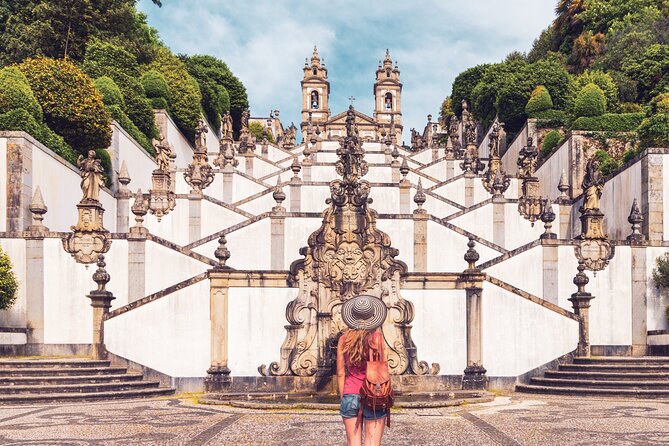
- Bom Jesus do Monte UNESCO site: a pilgrimage route with chapels, fountains, sculptures, and major viewpoints.
- Two Braga sanctuaries: big-name history at Bom Jesus, then a calmer finish at Sameiro.
Porto pickup and Guimarães Castle: the day starts with a proper viewpoint
The schedule kicks off in the morning, with pickup offered from your address in Porto. You’ll get your pickup time by email before the tour, and you’ll meet the guide at your door—simple, and it matters because you’re leaving early enough to enjoy Guimarães before the day gets crowded.
From the start, I like that the tour doesn’t waste energy. You go straight to the upper part of Guimarães, where the Guimarães Castle sits. That first stretch is more than scenery. It’s a way to get your bearings fast: Portugal’s early story feels different once you’re looking down from the hilltop rather than reading about it later.
Once you’re there, the guide connects place to people. As you move from the castle area down into town, you’re basically following how the city grew: hilltop power first, then daily life, markets, churches, and squares.
You can also read our reviews of more historical tours in Porto
Igreja de São Miguel do Castelo and the legends that stick
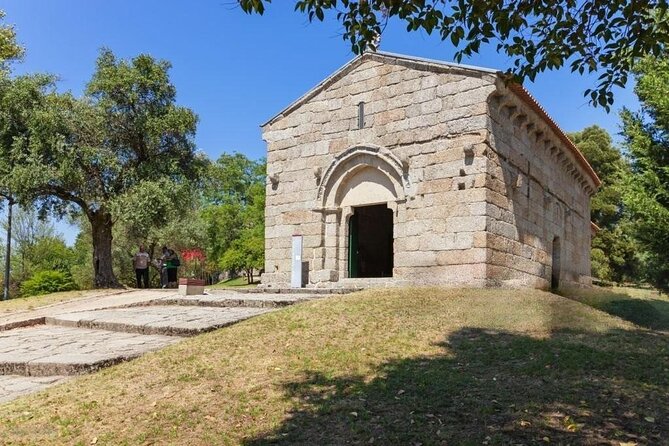
Your first major stop is Igreja de São Miguel do Castelo. Even if you don’t count yourself as a church person, this one works because it layers architecture with a local legend.
The church dates back to the 13th century and is classified as a national monument. It’s Romanesque in style, though it was rebuilt in the early 1900s to match its original look. That detail is useful: it helps you understand why it feels both old and carefully preserved.
Then there’s the story tied to the building: the legend says Portugal’s first king, D. Afonso Henriques, was baptized here. Legends can be tricky, but the guide’s job is to show you why residents repeat them—because they’ve shaped identity for centuries. You’ll get that context without needing a history degree.
Practical tip: keep your camera ready, but don’t rush the entry. This is a short stop on purpose, and the best photos often happen after you notice the small architectural cues.
Palace of the Dukes of Braganza: power, marriage, and a museum after the restorations
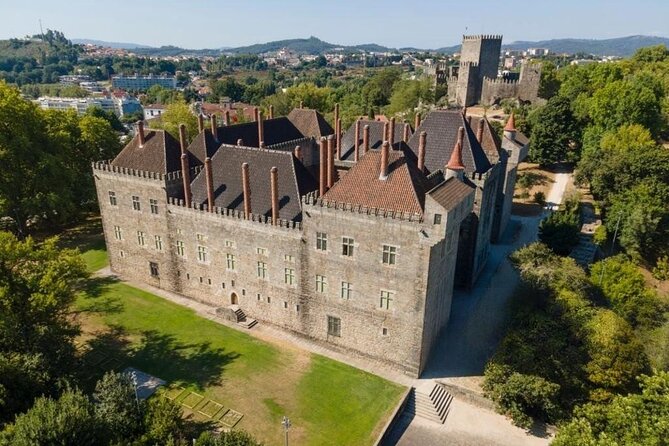
A little later you’ll visit the palace tied to Portugal’s royal family—built at the beginning of the 15th century, ordered by D. Afonso (son of King D. João I) when he married D. Constança de Noronha.
The palace has a long life. Over the years it served different purposes, which took a toll on the building. Then, in the early 1900s, restoration began—another detail that makes the visit feel grounded rather than vague.
Today, it’s a museum, and it’s not just for showing you one famous room. You’ll see items such as tapestry works, furniture, Chinese porcelain, and paintings. That mix is part of the value: it hints at how wealth traveled and how taste circulated through elite households. It also gives you a change of pace from the outdoor walking.
Old streets and everyday squares: Rua de Santa Maria to Praça de S. Tiago
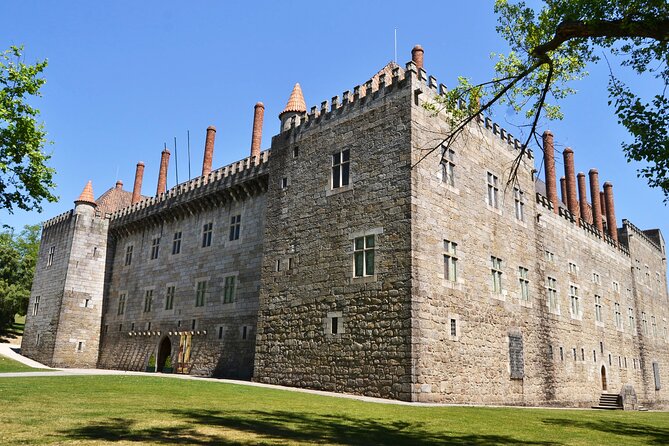
One reason I like Guimarães for a guided day is how the key stops are tied to ordinary movement. You’ll pass through Rua de Santa Maria, one of the first streets in Guimarães. It connected the convent of D. Mumadona Dias, the residential area, and the castle.
That kind of street-level history hits harder than it sounds. It helps you picture daily routes: where people lived, where they prayed, and how power connected to the streets you’d walk today.
Then you’ll arrive in Praça de S. Tiago, a social square with restaurants, bars, and terraces. It’s surrounded by typical architecture, so you’re not just standing at a monument—you’re in the kind of place locals actually use. The legend says the square’s name relates to the apostle James leaving an image of the Virgin Mary here, and a church once stood there in the 12th century before being demolished in the 19th.
This stop is also a good “reset.” It’s short, but it gives you a real sense of the town’s rhythm.
Largo da Oliveira and the Padrão do Salado: where big events happened
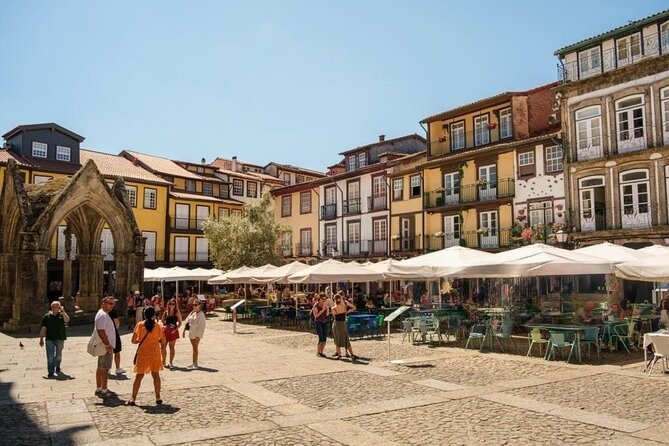
Largo da Oliveira is one of Guimarães’ most emblematic squares. The name comes from an ancient olive tree symbolizing peace and tradition. That’s the kind of detail a quick photo won’t explain—you need the guide’s framing.
More importantly, it’s described as the setting for major events across centuries, including medieval courts and crucial moments in the formation of Portugal as a nation. You can feel why a town would treat this square like a center of gravity.
Nearby is the Padrão do Salado, a monument commemorating D. Afonso IV’s victory over the Moors in the Battle of Salado in 1340. Again, legends and monuments here aren’t random. They’re anchored to local memory and political turning points.
If you care about being efficient with your time, this is one of the best areas on the day: multiple “why it matters” moments in a compact radius.


Igreja de Nossa Senhora da Oliveira (Colegiada): back to the origins of the sacred
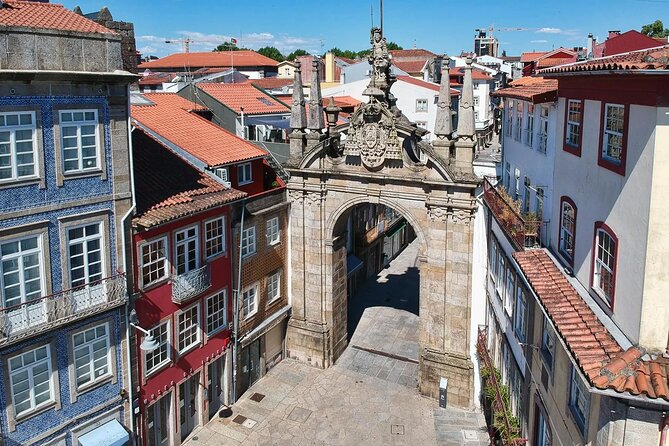
From Largo da Oliveira, you’ll look toward Igreja de Nossa Senhora da Oliveira—also called the Colegiada de Guimarães. Its origins link back to a monastery founded in the first half of the 10th century by Countess Mumadona Dias.
The current church was built in 1387 by order of King D. João I, using Gothic architectural models. That matters because you’re not just seeing a pretty church—you’re seeing how a place evolves across time periods while staying tied to the same spiritual identity.
This is a great stop for “pause and look.” Even if you don’t go deep into architecture, you’ll notice how the guide connects the building to the bigger story of Portugal’s early formation.
Braga Cathedral: first Portuguese cathedral vibes, with entry covered
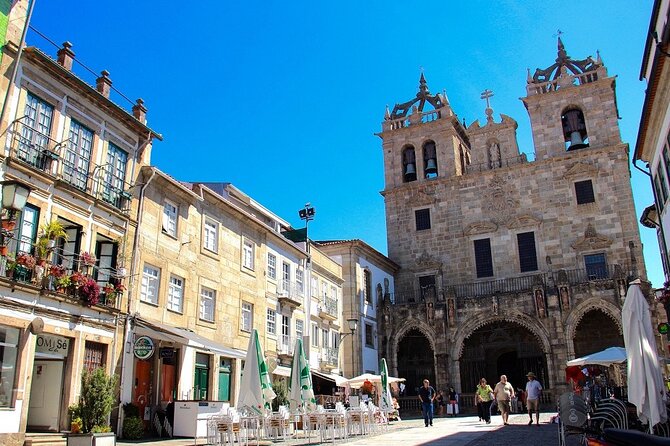
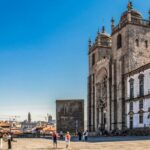
After Guimarães, the tour continues to Braga for Se de Braga, the cathedral. This is the point in the day where Braga’s long-standing religious importance becomes clear fast.
Construction is dated to the end of the 11th century. It’s dedicated to the Virgin Mary and was sacred by Bishop D. Pedro. The tour info highlights something you’ll want to remember: it’s considered the first Portuguese cathedral, built several decades before the founding of the nation itself.
You’ll get around 30 minutes here, with cathedral entry included. That’s important value-wise. Many guided tours give you a look from the outside and call it done. Here, you actually step into the place the history is tied to.
Practical note: cathedral visits can be quiet. If your group likes questions, ask early—once the walking rhythm is set, you may not have the same opening later.
Bom Jesus do Monte UNESCO 2019: Via Crucis, Five Senses, and panoramic payoff
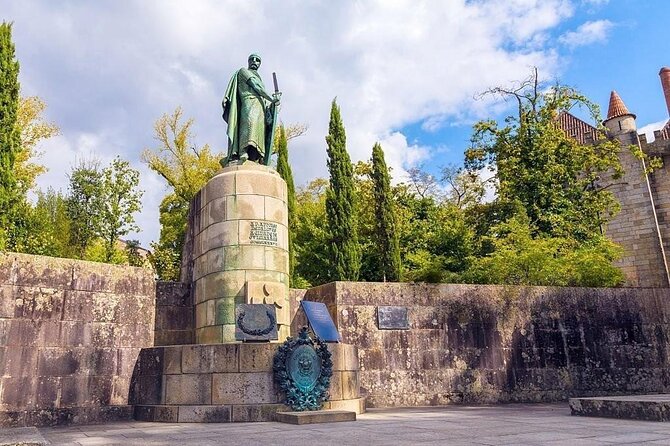
Bom Jesus do Monte is one of the day’s biggest reasons to book. It’s a sanctuary with over 600 years of history and a major pilgrimage tradition. The tour frames it as an example of the European Sacri Monti concept created after the Council of Trent in the 16th century, and it was recognized as a UNESCO World Heritage Site in 2019.
What makes this stop feel worth the time is the way the site tells a story through movement. The Via Crucis winds up the mountainside with chapels, fountains, and sculptures representing the Passion of Christ. The route culminates in the neoclassical church built between 1784 and 1811.
Then there’s the Staircase of the Five Senses, described as baroque and built around the senses through fountains and statues. If you’re the type who enjoys details that make you stop and look twice, this is your moment.
And yes, you’ll get views over Braga. Even if you think you’ve seen city panoramas before, this one matters because you’re looking from a pilgrimage complex built for contemplation and arrival—not just a random hill.
One consideration: this is a sanctuary on a slope. The tour gives you about an hour, so wear comfortable shoes and expect some uneven walking as you follow the route.
Sanctuary of Our Lady of Sameiro: a calmer finish with 566m views
To close the day in Braga, you’ll visit the Sanctuary of Our Lady of Sameiro (Santuário do Sameiro). This is one of Portugal’s important Marian worship centers, founded on June 14, 1863 by Father Martinho António Pereira da Silva.
Sameiro is described as the second largest Marian pilgrimage center in Portugal after Fátima, and it also draws tourists because it sits high—566 meters above sea level—and offers strong city views over Braga and the surrounding area.
The timing works well. After the structured intensity of Bom Jesus, Sameiro feels more like a thoughtful landing. You’ll get about 30 minutes, and it’s long enough to take in the setting without feeling like you’re dragging your schedule.
Price and what you really get for $70.60 per person
At $70.60 per person for an 8-hour day from Porto, the value comes from the package, not just the sightseeing list.
You’re paying for:
- Small-group size (max 8), which makes the guide’s pacing and explanations more personal.
- Premium air-conditioned transportation plus bottled water. That matters on a long day in Portugal.
- Expert guiding in English, with entries to major sites covered.
- A route that combines Guimarães’ medieval power story with Braga’s cathedral and pilgrimage tradition.
Lunch isn’t included, so you’ll be on your own for that meal. The good part: with this kind of guided day, you usually get practical food suggestions so you’re not guessing where to eat while you’re tired. If you want a low-stress plan, ask the guide what’s best for your dietary needs before you choose a place.
Also, the included tickets reduce friction. The day flows better when you’re not constantly checking which spots cost extra.
Pace, walking, and what to pack for a smooth day
The walking is described as moderate in the feedback, with the overall pace not meant to be punishing. Still, plan like you’re doing a proper day tour with hills and stairs—especially once Bom Jesus comes into play.
Bring:
- Comfortable walking shoes
- A light layer (sanctuaries and churches can feel cooler inside)
- Water is handled, but you might want your own small snack just in case you’re hungry between stops
If you’re sensitive to timing, keep in mind one practical reality: in small groups, if multiple languages are present, the guide may repeat key parts. That’s not automatically bad—it can make sure everyone gets the story—but it can also reduce time for independent wandering.
Finally, one small note from the human side: different guides lead different styles. In past experiences with this operator, guides like Cheila, Nuno, Brahim, and Francisco have been singled out for keeping the day organized, offering clear English, and providing extra atmosphere on the ride (including an audio-visual experience mentioned by one guest). So you’ll likely get more than a simple checklist.
Should you book this Braga and Guimarães day trip?
I’d book this if you want a day that covers the big spiritual and civic heart of northern Portugal without renting a car or building a complex route. It’s especially good if you like:
- Medieval cities where the street layout explains the story
- Guides who connect legends to real places
- A tight, guided pace that still leaves you enough time to look around
I’d think twice if you need lots of personal downtime or you hate structured schedules. This is a packed itinerary, and while stops are timed reasonably, you won’t have the kind of freedom you’d get on a fully self-guided day.
Bottom line: for most visitors based in Porto, this is a smart-value, efficient way to see Guimarães + Braga in one shot—up close, with the entry details handled and the story told in a way you can actually remember on the walk back to the bus.
FAQ
How long is the tour?
The tour is about 8 hours.
Is hotel pickup included?
Yes. Hotel pickup and drop-off are included, and pickup time is sent by email before the day of the tour.
How many people are in the group?
The group is limited to a maximum of 8 travelers.
Are the monument entrances included?
Yes. Entries to monuments are included, and the tour specifically notes Braga Cathedral entry as included.
Is lunch included?
No. Lunch is not included.
Is the tour offered in English?
Yes, it is offered in English.
Is there free cancellation?
You can cancel for a full refund up to 24 hours in advance of the experience start time. If you cancel less than 24 hours before, the amount paid isn’t refunded.