REVIEW · PORTO
Porto: Old City and Monuments Tour
Book on GetYourGuide →Operated by Alma At Porto · Bookable on GetYourGuide
Three hours in Porto can feel like a week. This Old City monuments walk strings together major sights with a guide who helps you read the buildings like a story. You get three distinct architectural styles in one morning-style outing, plus time inside landmark interiors you’d miss if you just popped in on your own.
What I like most is the combo: Cathedral + Cloisters, then Palácio da Bolsa with its famous Arab Hall, and finally the St. Francis Church with its gold wood carvings. And honestly, the tour format works—short guided stops, then walking through the World Heritage old-town area so the pieces click.
One thing to consider: in a mixed-language situation, timing can run later than you expect. One group ended up finishing about 1.5 hours after schedule, which can throw off lunch plans.
In This Review
- Quick Hit Highlights: What Makes This Tour Worth Your Time
- Starting at Terreiro da Sé: Porto’s Old-City “front door”
- Sé Cathedral and the Cloisters: medieval stone with real atmosphere
- The Old City walk: learning the streets, not just the monuments
- Palácio da Bolsa: Neoclassical grandeur and the Arab Hall
- St. Francis Church: the Gold Church and Portuguese Baroque drama
- How the three styles make Porto click in your brain
- Guide quality: Pedro and Andre set the tone
- Price and value: what $129 buys you in real terms
- Who should book this tour, and who might skip it
- Should You Book the Porto Old City and Monuments Tour?
- FAQ
- Where is the meeting point?
- How long is the tour?
- Which places are visited on the tour?
- Are entrance tickets included?
- What languages are available for the live guide?
- Is the tour guided?
- What is the price per person?
- What is included in the tour cost?
- What’s not included?
- Is there a payment or cancellation flexibility option?
Quick Hit Highlights: What Makes This Tour Worth Your Time
- Terreiro da Sé as a smart starting point, right by the Cathedral entrance
- Medieval Cloisters at Sé Cathedral, a calm pocket inside busy Porto
- Palácio da Bolsa (Neoclassical) plus the standout Arab Hall
- St. Francis Church (Baroque) and those famous golden wood carvings
- A guided walk through the World Heritage Old City area that helps you connect the sites
Starting at Terreiro da Sé: Porto’s Old-City “front door”
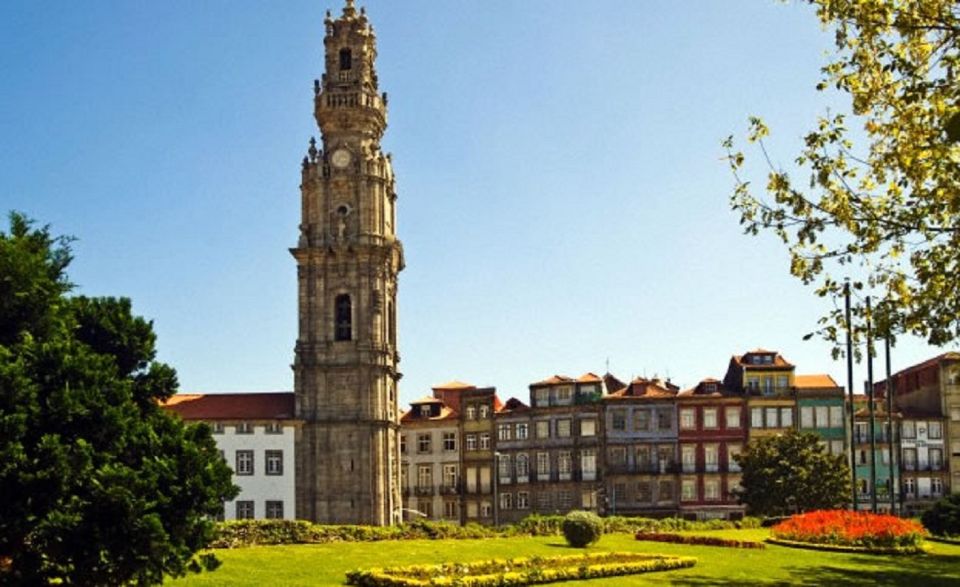
You meet at Terreiro da Sé, right in front of the Cathedral entrance. That matters more than it sounds. When your tour begins at the city’s historic center of gravity, you waste less time threading through streets and more time learning where you are.
From this spot, the route makes practical sense. You’re not doing a random hop between far-off neighborhoods. You’re moving within the core of Porto’s World Heritage zone, so every turn in the walk feels relevant. It’s also easy to orient yourself afterward—after the tour, you’ll know which streets to aim for if you want to keep wandering on your own.
The tour runs about 3 hours total, with guided time inside each monument. That means you get the benefit of a guide explaining details while you’re still in the room, instead of trying to figure it out later from your phone.
You can also read our reviews of more city tours in Porto


Sé Cathedral and the Cloisters: medieval stone with real atmosphere
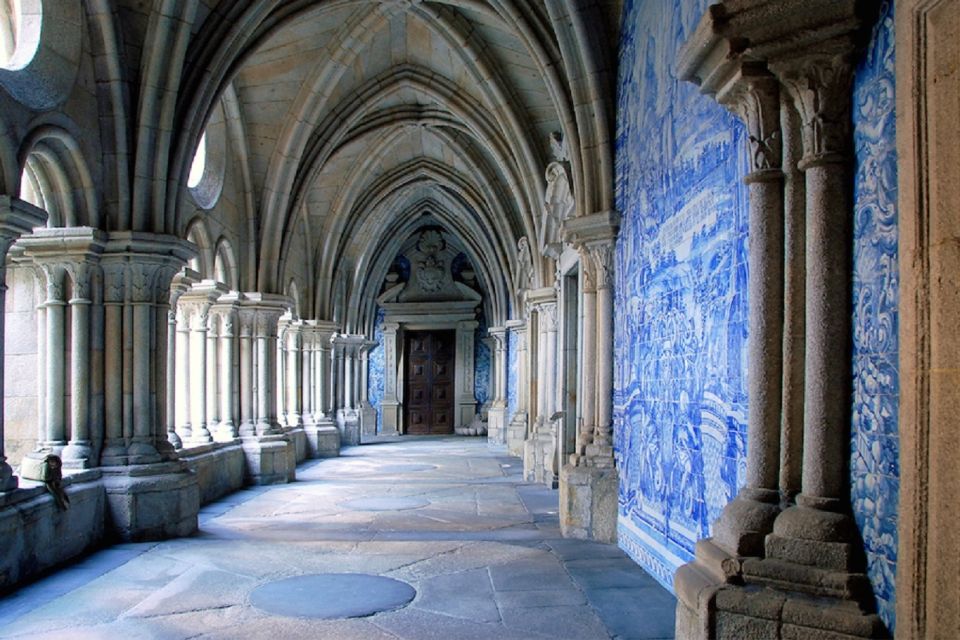
The day starts with a guided visit to the Sé, Porto Cathedral complex (about 1 hour). You’re not just looking at a church façade. You’re guided into the Cloisters, described as medieval-era cloisters—and that’s the real emotional payoff.
Cloisters change how you experience a building. You go from street noise to an enclosed, slower-feeling space. Even if you’re not a church person, it’s one of those places where you can feel the age in the layout and scale. A guide helps you notice the kinds of details people often walk right past: how the space is arranged, what the building was built to do, and why this setting became important over time.
This is also where the tour’s “see Porto through architecture” goal begins. Your time at Sé gives you a grounding in the older style side of the city, so later stops feel less like disconnected landmarks and more like chapters.
Tip for your visit: keep your eyes up while you’re inside. Even when you’re in a quiet area like a cloister, the design cues are often higher than you think.
The Old City walk: learning the streets, not just the monuments
Between the big interior visits, you walk through the old city. This isn’t filler time. The walk helps you understand the setting—Porto isn’t just famous buildings stacked next to each other. It’s a place where the streets, history, and architecture grew together.
Since the tour includes the World Heritage area, the guide’s job is to connect what you’re seeing to why the area matters. In practical terms, that gives you a mental map: where you are in relation to what’s famous, how the pieces line up, and what you should pay attention to if you keep exploring after the tour ends.
I like this pacing because it prevents the day from turning into a museum sprint. You get time to look, breathe, and reset between stops. That matters in Porto, where getting from point A to B on cobbled streets can feel like more effort than you expect.
Palácio da Bolsa: Neoclassical grandeur and the Arab Hall
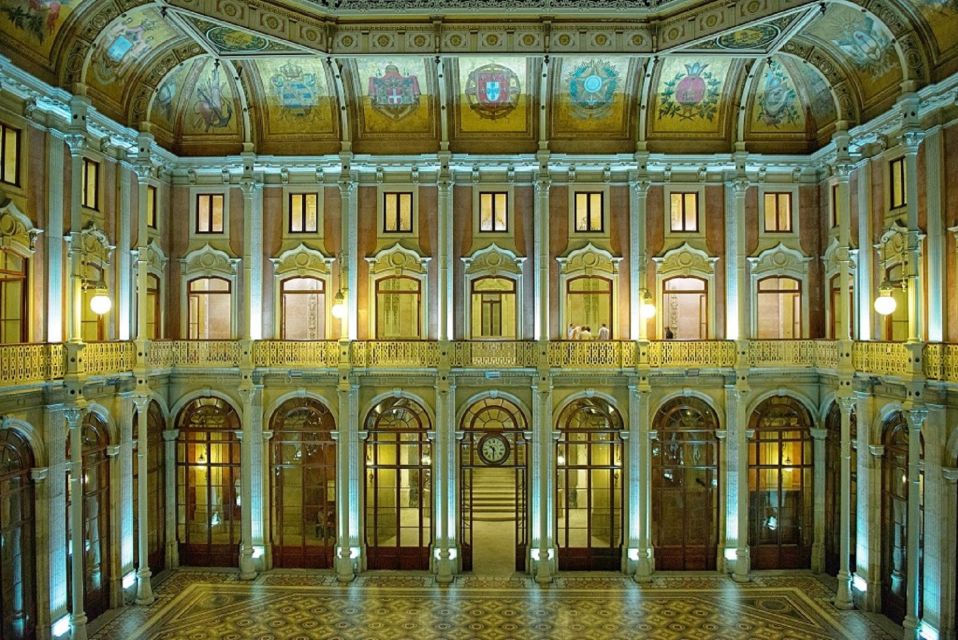
If there’s one stop many people book for, it’s Palácio da Bolsa. The guide takes you inside for about 1.5 hours, which is a proper chunk of time for a major building like this.
Palácio da Bolsa is Neoclassical, and the tour frames it as one of Porto’s top monuments—something like a city signature. It’s also tied to state-level history: the building has hosted the world’s greatest statesmen over times, which explains why the interior feels ceremonial rather than casual.
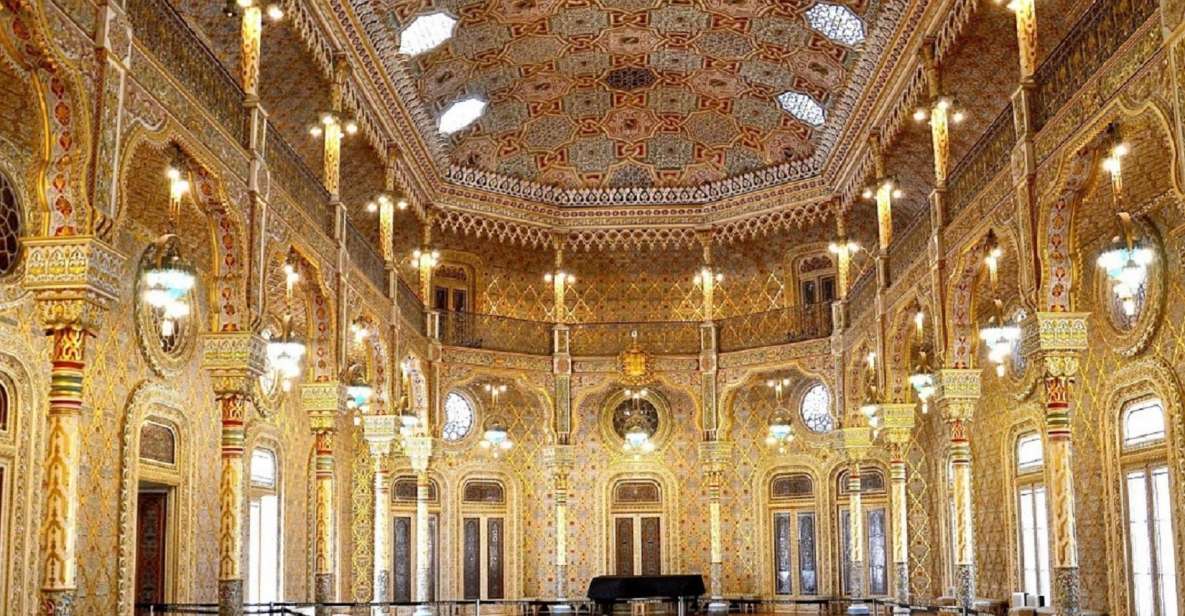
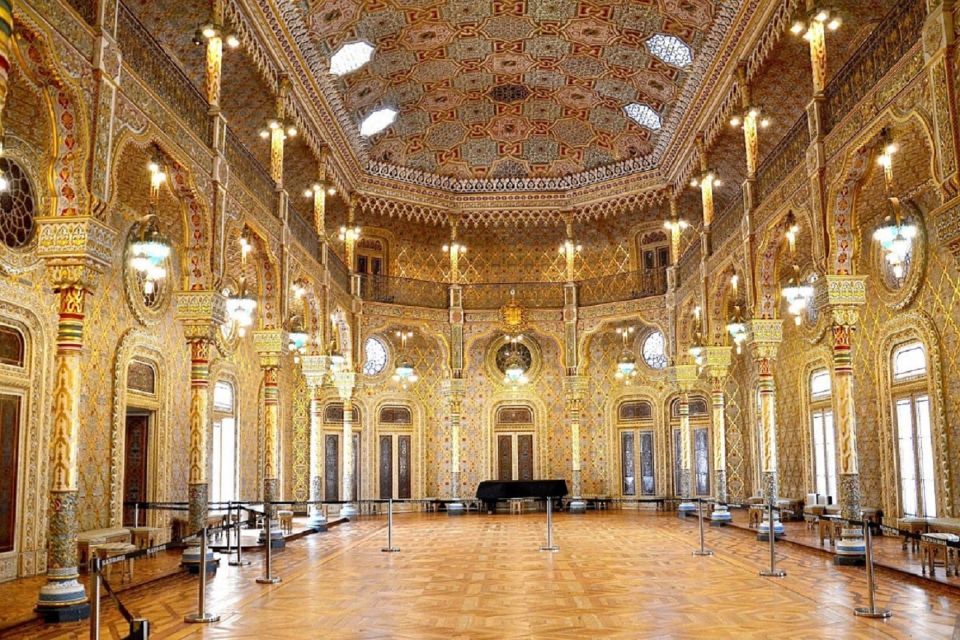
Then comes the feature everyone asks about: the Arab Hall. This is where you can feel the building’s complexity. Even if you’re not sure what style you’re looking at, a guide helps you understand why this space is so striking—how the design language creates a different mood, how the hall works visually, and why it became such a centerpiece inside Palácio da Bolsa.
One review specifically mentioned that finishing the tour at Palácio da Bolsa was the main reason for booking—and in that private setting, people had whole rooms to themselves at points. That’s not guaranteed for every departure, but it’s a good reminder of something you can control: if you can fit a smaller-group tour time into your schedule, you might experience these rooms with less rush.
St. Francis Church: the Gold Church and Portuguese Baroque drama
The final monument stop is the Monument Church of St Francis (about 1 hour). You’ll hear people call it the Gold Church for a reason.
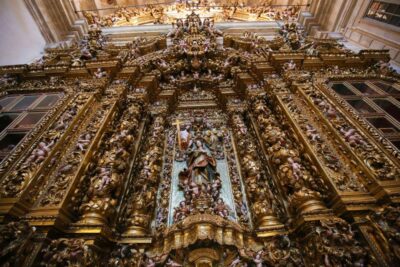
St. Francis Church is one of the most important examples of Portuguese Baroque, and the standout detail is the incredible golden wood carvings. This is not a “glance and move on” church. Baroque decoration is meant to pull your attention through layers—so you’ll want your eyes to slow down.
A guide here is hugely helpful because Baroque interiors can look like sensory overload if you’re staring at everything at once. With a guide, you learn what to notice: recurring design elements, the way the decoration is organized, and the purpose behind the spectacle.
By the end of this stop, the tour’s big theme comes together. You start with a medieval-feeling base at Sé, then you move into Neoclassical grandeur, and you close with Portuguese Baroque showmanship. It’s a fast way to train your eye, and it makes Porto feel less like random sightseeing and more like a coherent architectural journey.



How the three styles make Porto click in your brain
This tour explicitly aims to show you Romanic, Baroque, and Neoclassical styles—three building personalities in a single outing. That matters because Porto can otherwise be overwhelming. You can love a city and still leave not fully sure what you saw or why it’s famous.
Here’s what I think works about this approach for most people:
- Sé Cathedral gives you an older, medieval-rooted baseline. Even when you don’t know the labels, you start to recognize what “age” feels like in the architecture.
- Palácio da Bolsa brings in Neoclassical order and state-level presence. The building feels designed to impress, and the Arab Hall adds a dramatic twist inside that formal shell.
- St. Francis Church brings Baroque energy. You see what happens when decoration becomes a language, not just decoration.
When you get these contrasts back-to-back, you stop thinking of buildings as isolated attractions. Instead, you start seeing patterns—how different eras expressed power, faith, and artistry.
Guide quality: Pedro and Andre set the tone
The tour is led by a live guide, and the reviews we have show a clear pattern: the guide’s delivery makes the difference between seeing rooms and actually understanding them.
Pedro, for example, is described as very good, friendly, and sharp on Porto and Portugal. Andre is praised for passion for Porto and Portugal in general, and there’s even mention that his storytelling helped people understand special details in the historic buildings.
Now, a quick reality check. Even a great guide can only work with the group they have. One experience noted a timing issue when the group included two Spanish speakers, and the added language handling made the tour run later. So if you’re the type who hates schedule drift, plan your day with buffer time for lunch or later plans.
If you want to get the most from the tour, don’t treat the guide like background noise. Ask small questions when something feels interesting. The best guides respond well when you show curiosity.
Price and value: what $129 buys you in real terms
At $129 per person for a 3-hour outing, you’re not paying for a “walk and point.” You’re paying for access and guided time inside three major monuments, plus a guided Old City walk.
What’s included matters for value:
- Live guide in English, Spanish, or Portuguese
- Tickets to Sé Cathedral, Palácio da Bolsa, and St. Francis Church
- Old City walk
- Personal insurance
If you tried to replicate this on your own, you’d still be paying entry fees for multiple sites and spending extra time figuring out the best route and timing. Here, the tour collapses all that uncertainty into a single structured morning: you arrive, you go inside, you get context, and you leave with your eyes trained.
Would it be cheaper to DIY? Often, yes, if you’re flexible and enjoy self-guided reading. But if you want the buildings explained while you’re standing in them, the price starts to look fair—especially when you compare it to paying separately for multiple sites plus guide time.
Who should book this tour, and who might skip it
I think this tour is a strong match if you:
- Want a tight 3-hour plan in Porto’s historic center
- Like architectural variety—Romanic/medieval feeling, Neoclassical formality, and Portuguese Baroque drama
- Prefer guided context inside buildings with lots of details (Cloisters, Arab Hall, gold wood carvings)
I’d consider skipping or choosing something else if:
- You have an inflexible lunch appointment and can’t absorb schedule drift
- You’re the type who only wants exterior photos and quick stops, because this tour includes guided time inside three significant churches/buildings
It’s also a good fit for first-timers who want a fast way to learn how Porto is organized—where the center of history lives and which monuments deserve your time.
Should You Book the Porto Old City and Monuments Tour?
I’d book it if you want an efficient, structured introduction to Porto’s most famous historic interiors without spending hours coordinating entrances and routes. The combination of Sé Cathedral cloisters, Palácio da Bolsa (especially the Arab Hall), and St. Francis Church is a genuinely smart sequence for learning what Porto looks like across eras.
Just do one small piece of planning: give yourself breathing room afterward. One tour ran later than scheduled due to multilingual handling, and that’s the main downside to watch for. If you can handle a little flexibility, you’ll likely feel like you spent three hours wisely.
If your priority is architectural contrast and guided access to these interiors, this tour is an easy yes.
FAQ
Where is the meeting point?
You meet at Terreiro da Sé, right in front of the Cathedral entrance.
How long is the tour?
The duration is 3 hours.
Which places are visited on the tour?
The tour includes Sé, Porto Cathedral, Palácio da Bolsa, and the Monument Church of St Francis.
Are entrance tickets included?
Yes. Tickets to Palácio da Bolsa, the Cathedral, and Saint Francis Church are included.
What languages are available for the live guide?
The live guide is available in English, Spanish, and Portuguese.
Is the tour guided?
Yes. The tour includes a live tour guide and a guided walk through the Old City.
What is the price per person?
The price is $129 per person.
What is included in the tour cost?
Included items are the live tour guide, the Old City walk, tickets to the listed monuments, and personal insurance.
What’s not included?
Anything not listed under Included is not included.
Is there a payment or cancellation flexibility option?
The activity offers free cancellation up to 24 hours in advance for a full refund, and you can reserve now and pay later.