REVIEW · PORTO
Porto Highlights: The best of Porto City Walking Tour
Book on Viator →Operated by Luka Urban Trails · Bookable on Viator
Porto starts to make sense when you walk it with a good guide. This Porto Highlights tour strings together the city’s must-see viewpoints and landmarks in about 1 hour 50 minutes, with a licensed guide keeping the story clear as you go. I like that you get panoramic photo views at Miradouro da Vitória, and I also like the mix of classic Porto stops (markets, churches, and viewpoints) without turning it into a sprint.
One thing to plan for: admission isn’t included for two big sights on the route—Torre dos Clerigos and Igreja do Carmo—so you may want a little extra cash (and time) if you want to enter them. Also, it runs with a group size up to 60, so on a busy day you’ll want patience while you shuffle forward for photos.
In This Review
- Key Things to Know Before You Go
- Why This Porto Highlights Walk Works for First-Timers
- Your Route: From Vímara Peres to Praça da Batalha
- Stop 1: Estatua de Vimara Peres
- Stop 2: Mercado Ferreira Borges
- Stop 3: Miradouro da Vitoria
- Stop 4: Torre dos Clerigos (entry not included)
- Stop 5: Igreja do Carmo (entry not included)
- Stop 6: Avenida Dos Aliados
- Stop 7: Capela das Almas
- Stop 8: Rua de Santa Catarina
- Stop 9: Igr eja de San Idelfonso
- Stop 10: Praca da Batalha
- Miradouro da Vitoria: How the View Fits the Story
- Torre dos Clerigos and Igreja do Carmo: Entry Choices That Matter
- Price and Logistics: What You Get for $41.32
- Group Size and Pacing: How to Have a Better Walk
- What the Guides Add (From Real Experience You Can Expect)
- Who This Tour Suits Best (and Who Should Skip It)
- Quick Practical Tips So You Enjoy It More
- Should You Book Porto Highlights: The best of Porto City Walking Tour?
- FAQ
- How long is the Porto highlights city walking tour?
- What is the price per person?
- Is the tour offered in English?
- Does the tour include a guide?
- Is there a mobile ticket?
- Which stops require paid admission?
- Where does the tour start and end?
- What group size should I expect?
- What is the cancellation policy?
Key Things to Know Before You Go
- Licensed guide who walks with you through the main historic areas
- Miradouro da Vitória built in for photos and skyline views
- Most stops are free (a lot of entry fees are not required on the walk)
- Two paid-entry stops: Torre dos Clerigos and Igreja do Carmo
- Group size up to 60 and the walk moves at city-walking pace
- Mobile ticket and English-speaking tour options
Why This Porto Highlights Walk Works for First-Timers
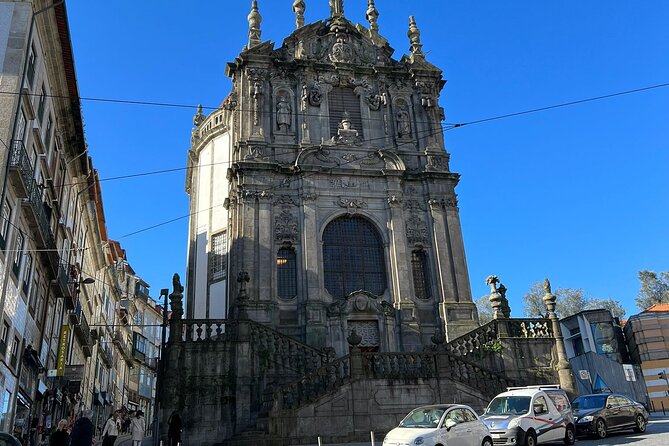
If Porto feels like a maze of hills and stairs, this tour is a smart on-ramp. You get a tight route through central landmarks, and each stop is tied to a quick explanation so the city doesn’t stay a list of random names. The whole experience is designed to fit a short first visit day, which is exactly what I’d want if my time is limited.
I also like that the route doesn’t rely on just one “big moment.” Yes, Miradouro da Vitória is a standout for photos, but you also spend time around other key parts of the city—markets, major streets, and churches—so you leave with a better sense of where things are. It’s the kind of walking plan that helps you navigate later without feeling lost.
Price-wise, this isn’t a budget-only option and it isn’t a premium private guide either. At $41.32 per person for an ~1h50 guided walk with a licensed guide, the value comes from the number of high-interest stops packed into that time and the fact that most sights you stop at have free entry or no separate admission needed for the stop.
You can also read our reviews of more walking tours in Porto


Your Route: From Vímara Peres to Praça da Batalha
The tour begins at the Statue of Vímara Peres on Calçada de Vandoma, then finishes at Praça da Batalha, next to the national theater. That end point is handy: it’s a central square where it’s easy to continue exploring on your own afterward.
The walk is made up of short “chapters,” and the stops are spaced so you can absorb the city without constantly checking your phone. Typical time at each stop is about 10 minutes, with a 15-minute viewpoint break at Miradouro da Vitória and a short 5-minute stop at Praca da Batalha.
Here’s what you can expect from each stop, and why it matters.
Stop 1: Estatua de Vimara Peres
You start with the Estatua de Vímara Peres, where your guide explains who the figure is and why it shows up here. This kind of first-stop context matters more than it sounds. It helps you understand what the city is trying to remember before you zoom in on buildings and streets.
Stop 2: Mercado Ferreira Borges
Next is Mercado Ferreira Borges, a market area that’s more than just a place to browse. You’ll get a quick history-style explanation about the market itself, which gives you something to look for when you notice how Porto uses public spaces.
A practical tip: markets are often more active visually, so it’s a good time to slow down, look around, and let your guide set the story. If you’re the type who likes cities through daily life, this stop will feel especially useful.
Stop 3: Miradouro da Vitoria
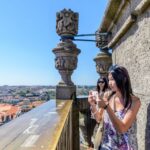
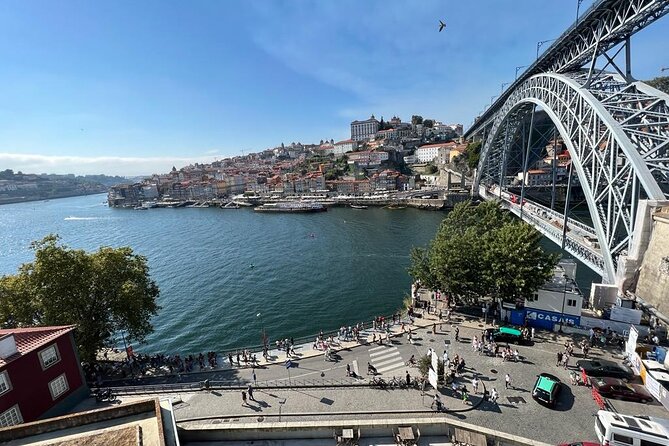
This is your built-in “pause and breathe” moment. At Miradouro da Vitoria, you’ll stop for photo time, plus commentary that ties the view to the city around you. Expect this to be one of the most memorable moments, simply because Porto rewards looking up.
You can also read our reviews of more city tours in Porto


Stop 4: Torre dos Clerigos (entry not included)
You’ll reach Torre dos Clerigos next, and the guide explains how and why the tower was constructed. The catch: admission isn’t included, so if you want to go up or enter, you’ll need a separate ticket.
This is a key decision point for your day. If you hate feeling rushed, budget time and money for it. If you’re more “look from outside is enough,” you can still get a lot from the explanation without buying entry.
Stop 5: Igreja do Carmo (entry not included)
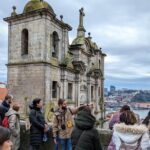
After that, the route continues to Igreja do Carmo, where the guide covers the church’s construction. Same situation as the tower: entry isn’t included. Even if you don’t go inside, this stop helps you understand why Porto’s religious architecture shows up everywhere in your walking day.
Stop 6: Avenida Dos Aliados
Now you shift to a major street: Avenida dos Aliados. You’ll hear how the avenue was built and what role it played in the city’s layout. This stop is useful for orientation because it connects you to a more straightforward grid of landmarks after the hillier, older-feeling streets.
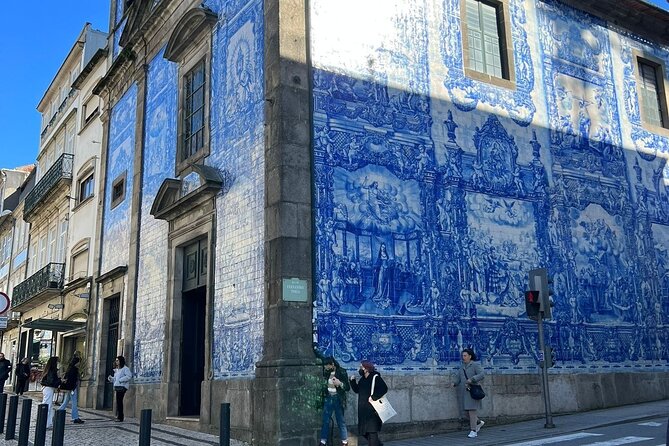
Stop 7: Capela das Almas
At Capela das Almas, your guide gives you the story behind the chapel. This is one of the “smaller but memorable” moments on the walk—brief enough to fit the route, interesting enough to stand on its own.
If you enjoy churches as visual objects and not just inside spaces, this stop works well. You’ll get a clean explanation without needing to plan your day around an extra ticket.
Stop 8: Rua de Santa Catarina
Then comes Rua de Santa Catarina, with a city-focused explanation about what you’re seeing and how Porto functions in this area. Think of it as a walking break that still moves you forward through the city’s pulse.
Stop 9: Igr eja de San Idelfonso
Next is Igreja de San Idelfonso, again with an explanation tied to construction. The “why this looks this way” angle helps you notice details you’d otherwise ignore, especially when you’re surrounded by façades and don’t know what to look for.
Stop 10: Praca da Batalha
Finally, you end at Praca da Batalha for a short wrap-up. The guide explains the square, and you finish near the national theater area. This ending point makes sense because it leaves you in the middle of things rather than dropping you at the edge of town.
Miradouro da Vitoria: How the View Fits the Story
Porto’s best photos often happen because you’re standing somewhere higher than you expected. Miradouro da Vitória is placed in the middle of the route for a reason: you get the climb-and-view effect before you spend the rest of your walk on flatter street-level moments.
What I like about a viewpoint stop like this is that it resets your brain. After you’ve listened to a lot of history and walking directions, you get a clear payoff—city views you can actually process. If you’re traveling with someone who wants both culture and photos, this is a strong compromise stop.
One more practical note: viewpoints can get crowded because everyone wants the same angles. With a max group size up to 60, you’ll want to be flexible on where you stand so you can grab photos without blocking others.
Torre dos Clerigos and Igreja do Carmo: Entry Choices That Matter
Two stops on this walk are marked with admission not included: Torre dos Clerigos and Igreja do Carmo. That means the tour still brings you there and explains construction, but you decide if you want to spend extra time or money to go inside or up.
Here’s how I’d think about it:
- If you love “walk-up-and-go” sightseeing, plan to add tickets for at least one of the paid stops.
- If your day is tight or you prefer to keep moving, you can still enjoy the walk’s main value without paying for entry.
- If you’re sensitive to lineups or slow entrances, consider skipping paid entry and focus on the guide’s exterior explanations.
Also, the tour doesn’t include bottled water. In warm weather or if you’re doing this after a lot of stairs, you’ll feel it. Bring water if you can, or plan to buy it nearby so your energy stays steady.
Price and Logistics: What You Get for $41.32
This tour’s cost—$41.32 per person—feels fair when you look at what’s included: a licensed guide plus a concentrated route through major Porto landmarks. The real value is the structure: you don’t just wander. You stop, listen, look, take photos, and move on.
Most stops are free to visit for the stop itself—you’ll see Mercado Ferreira Borges, Miradouro da Vitoria, Avenida dos Aliados, and more without separate admission called out for those specific stops. The two exceptions are the tower and the church, so your spending is limited to specific choices rather than a long list of mandatory tickets.
Time matters here, too. At about 1 hour 50 minutes, it’s long enough to give you context but short enough that it won’t hijack your entire day. If you’ve got dinner reservations or you want to add a second activity later, this timing is practical.
Group Size and Pacing: How to Have a Better Walk
The tour runs with a maximum of 60 people, which is on the larger side for a walking tour. That doesn’t mean it’s bad. It just means you should expect occasional bunching and waiting during the transitions between stops.
The route is still manageable because each stop is short, usually around 10 minutes. That keeps the walking day lively, and it also prevents the tour from dragging. If you’re the type who likes to linger on your own once the guide finishes, this format works: you get the curated highlights first, then you can return later if something clicks.
Also, the start and end points are clearly defined, and it finishes at a central square. That helps you avoid the classic problem of “what do I do next?” after a tour.
What the Guides Add (From Real Experience You Can Expect)
One theme from the experience is that the guide quality drives the day. In particular, guides like Fernando and Luiz (also listed as Luis in some cases) are praised for being engaging and for making the city make sense. There’s also a mention of a guide working through history studies, which shows up as clear explanations and good English for non-Portuguese speakers.
That matters because Porto’s architecture can look similar from far away—until someone explains what you’re actually looking at. In this tour, each stop is connected to a construction or history theme, so your attention has a target.
If you want the tour to feel less like a lecture and more like a guided walk with stories, this one leans that way. The best way to get that benefit is to bring your curiosity: ask what you should notice at the next stop, or ask for one recommendation after the guide points you to where you’re walking next.
Who This Tour Suits Best (and Who Should Skip It)
This works especially well if:
- You want a first-day overview of central Porto landmarks
- You like a guide that gives context while you walk
- You want a manageable duration that won’t wipe out your day
It might be less ideal if:
- You hate group settings and prefer quieter, smaller tours
- You strongly dislike optional paid-entry stops and want every stop fully included
- You need a lot of downtime between walking segments
Quick Practical Tips So You Enjoy It More
A walking tour lives or dies on comfort. Wear comfortable shoes because you’ll be on foot through streets, stairs, and viewpoint terrain.
Since bottled water isn’t included, I’d plan to carry a small bottle or buy along the way. Even if the walk seems short on paper, you’ll move enough to work up a thirst.
Finally, treat it as a primer. This style of tour is great for orientation and first impressions. After that, you can come back for deeper time on whatever parts you liked most.
Should You Book Porto Highlights: The best of Porto City Walking Tour?
I’d book it if you want a structured, efficient way to see Porto’s headline spots in under two hours, especially if Miradouro da Vitória and the main historic landmarks are on your list. The licensed guide, strong stop-by-stop explanations, and mostly free stop admissions make it good value for the money.
I would hesitate if you’re trying to avoid any paid entry at all, since Torre dos Clerigos and Igreja do Carmo aren’t included. I’d also think twice if you’re very sensitive to crowds, since the tour can run up to 60 people.
FAQ
How long is the Porto highlights city walking tour?
It runs about 1 hour 50 minutes (approx.).
What is the price per person?
The price is $41.32 per person.
Is the tour offered in English?
Yes, it is offered in English.
Does the tour include a guide?
Yes. A licensed guide is included.
Is there a mobile ticket?
Yes, you’ll have a mobile ticket.
Which stops require paid admission?
Torre dos Clerigos and Igreja do Carmo list admission as not included. The other listed stops show free admission tickets for the stop.
Where does the tour start and end?
It starts at the Statue of Vímara Peres on Calçada de Vandoma and ends at Praça da Batalha, next to the national theater.
What group size should I expect?
The tour has a maximum of 60 people.
What is the cancellation policy?
You can cancel for a full refund if you cancel at least 24 hours before the experience start time. If you cancel less than 24 hours before, the amount paid is not refunded.