REVIEW · PORTO
Porto Highlights Small-Group Walking Tour
Book on Viator →Operated by Be My Guest In Porto · Bookable on Viator
Porto starts speaking the moment you arrive. This 3-hour walking tour strings together the city’s big visual icons and the stories behind them, with an art historian guide in your small group. You’ll hit São Bento Station’s tile panels, then keep rolling through squares and landmarks that explain how Porto grew.
Two things I really like: you get sharp context, not just photos, especially around architecture and azulejo tilework. And because the group tops out at 6 people, you can actually ask questions without feeling like you’re being rushed through.
One consideration: this is a paced walk with short stop windows, so if you want to linger for long inside each site, you’ll need to plan extra time on your own afterward.
In This Review
- Key highlights at a glance
- A walking tour that ties Porto’s sights to why they exist
- Getting from the start point to your first big wow: Praça de Gomes Teixeira
- Stop 1: São Bento Railway Station and the story inside the tiles
- Stop 2: a standout bookstore stop that slows you down
- Stop 3: Fonte dos Leões in a square packed with monuments
- Stop 4: Praca da Ribeira and the city’s older roots by the river
- Why the guide style matters in a small group (and who you’ll learn from)
- How the $84.02 price makes sense for what’s included
- Pacing, timing, and when to slow down on your own
- What’s not included, so you don’t get surprised
- Who should book this Porto walking tour
- Should you book Porto Highlights Small-Group Walking Tour?
- FAQ
- How long is the Porto Highlights small-group walking tour?
- What does the tour cost?
- How big is the group?
- Is the tour in English?
- Where does the tour start and end?
- What attractions are included in the walk?
- What’s included in the price?
- Are food and drinks included?
Key highlights at a glance
- São Bento Station’s tiled murals explained with architecture and historical context
- Professional art historian guidance focused on buildings, art, time periods, and street details
- Max 6 people means more questions and a more flexible feel on the route
- Ribeira Square and riverfront context tied back to earlier city life
- Free-entry stops like the station and key squares help you spend on the parts that matter
- Tailored route in real time when you share what you most want to see
A walking tour that ties Porto’s sights to why they exist
Porto can feel like a string of photo stops until someone explains the logic behind them. This tour works because it treats the city like a set of connected clues—tiles, streets, and squares all point back to how Porto developed, who shaped it, and what people wanted to show off.
I love that the guide isn’t just reading facts off a screen. Instead, you get links between what you’re seeing and the bigger story: building styles, materials, and the way different eras left fingerprints all over the city. It also helps that the format is small-group and English-language friendly, so you can follow along without turning it into a scavenger hunt.
If you’re the type who wants the “why” behind a place—especially in architecture—this is a solid choice. And if you simply want an easy intro that gets you oriented, it can do that too, because the route hits recognizable landmarks without turning into a sprint.
You can also read our reviews of more walking tours in Porto



Getting from the start point to your first big wow: Praça de Gomes Teixeira
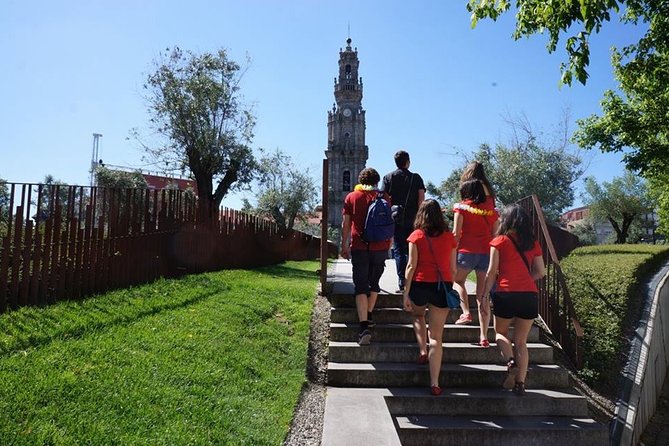
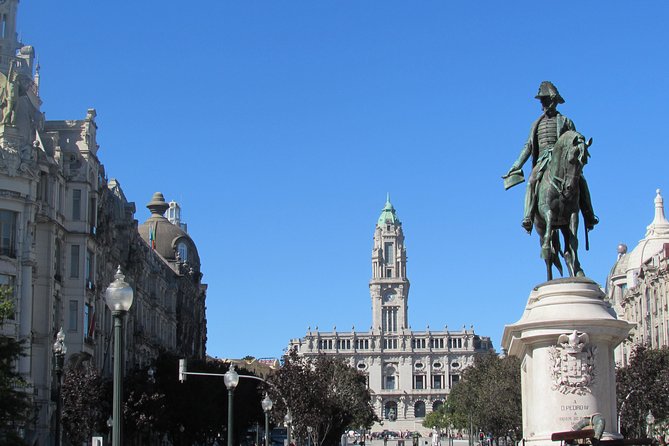
The tour begins at Praça de Gomes Teixeira and ends at Ribeira Square. That matters more than you’d think. You start in a central, practical spot for people arriving by public transportation, and you finish in the area where Porto feels most like itself—near the river, with the old-town energy that pulls you in.
You’ll also have a mobile ticket, which is handy when you’re juggling maps, weather, and your phone battery. Just do the normal thing: charge up, download what you can, and keep an eye on the day’s walking time because this is designed to move.
From the first minutes, the guide’s tone sets expectations. You’re not “waiting around for the next picture.” You’re walking with commentary that makes the scenery make more sense as you go.
Stop 1: São Bento Railway Station and the story inside the tiles
São Bento Station is the kind of place where you slow down automatically. Even if you’ve seen photos, being inside is different—you’re surrounded by tile panels that feel like historical scenes turned into architecture.
What makes this stop worth it on a guided walk is the way the guide frames the tiles as part of Porto’s visual language. You don’t just get what the images are; you get why this kind of artwork shows up where it does, and how it connects to Portuguese identity and the era it reflects. The station is also a great “first anchor” for the tour: it gives you a foundation for what comes next.
The station stop is about 15 minutes, so plan to use that time efficiently. Look at one panel in more detail, then zoom out and take in the wall as a whole. If you try to read everything at once, you’ll lose the bigger picture—and the guide is there to help you find the story threads that matter.
Practical note: you’ll want shoes that handle indoor/outdoor transitions. The walk is short and manageable, but you’re still on your feet.
Stop 2: a standout bookstore stop that slows you down
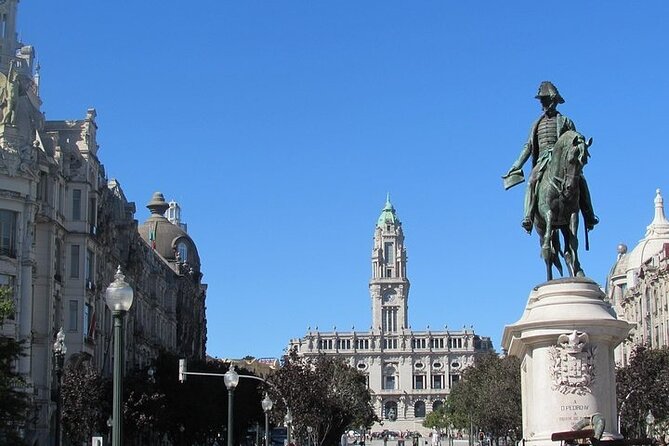
Between the big architectural moments, the tour includes a bookstore stop that’s described as a magical place and among Portugal’s best-known. This is one of those pauses that changes the mood of the day.
Why it works: it gives you a break from monument mode. Books are part of Porto’s culture too—especially for travelers who like to bring a little local flavor home. Even if you don’t buy anything, it’s a chance to slow down, reset your brain, and enjoy the atmosphere without feeling like you’re racing to the next landmark.
Time here is also part of the pacing. You’re not on a shopping excursion; you’re getting a taste of Porto’s quieter charm. If you love browsing in general, this stop is the one where you might wish the clock had more patience.
If your goal is strictly photos and moving on, you’ll still appreciate it. It’s short, but it adds texture to the route.
Stop 3: Fonte dos Leões in a square packed with monuments
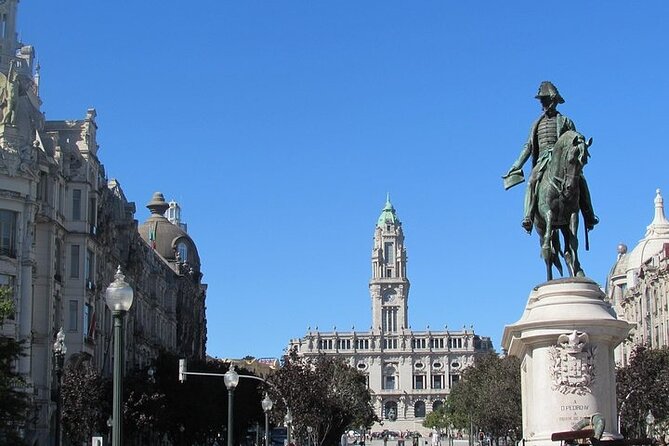
Next up is Fonte dos Leões, positioned in a square ringed with monuments. Water features tend to be more than decoration, and fountains often become meeting points where a city shows its aesthetic and civic priorities.
On this stop, the guide’s job is to connect the fountain to what surrounds it. You’ll get help reading the square like a “map in stone”—how the buildings and monuments relate to each other, and what that says about the neighborhood’s role in Porto’s evolution.
The visit is again about 15 minutes, so I’d treat this like a focused photo-and-story block. Find the fountain, take a couple of minutes to absorb the surrounding façades, then let the guide do what they do best: turn an open square into a timeline you can actually picture.
This is also where Porto’s layers show up clearly. Even when you’re standing in one place, you’re seeing multiple eras argue with each other in the design.



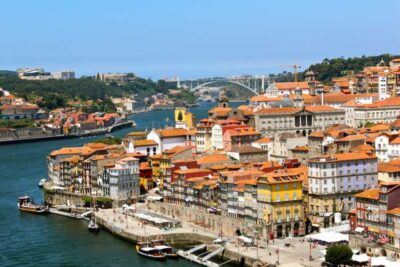
Stop 4: Praca da Ribeira and the city’s older roots by the river
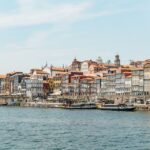
The tour ends at Praça da Ribeira, the main square of the village since Roman times. That one sentence is a big deal. It turns Ribeira from a scenic riverside zone into a place with a long memory.
Here the guide helps you connect the feel of the area today—crowds, views, and street energy—with how earlier Porto would have functioned. A square that’s been used for centuries doesn’t just preserve buildings; it preserves patterns of movement. People gather here for a reason, and that reason keeps shifting across time.
The Ribeira finish is about context for your next steps. Once you’re done with the tour, you’re in an area where it’s easy to keep exploring on your own, because you’re already oriented. If you came in with only one idea of Porto—wine, views, boats—you leave with a second idea: how the city’s structure grew.
If you’re hoping to take your time at the end, plan for it. The guided part is timed, but the payoff is that you land in a neighborhood where your curiosity has somewhere to go.
Why the guide style matters in a small group (and who you’ll learn from)
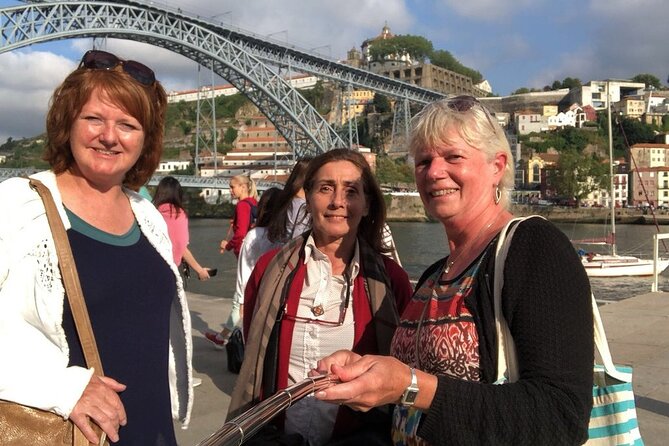
This isn’t a big bus tour where you stand in one spot and hope you can hear. The group size is capped at 6 people, and you’re with just your party, which keeps conversations realistic.
In real life, that often changes the tour from lecture to dialogue. You can ask follow-up questions, and if your interests lean more toward tiles, street history, or architecture, you’ll get answers shaped around that.
Guides like Nuno and Ana have stood out for exactly that style in the past—giving lots of detail about art and tiles, then adjusting the walk based on what you’ve already seen. One person even described how the guide asked what they’d already noticed and helped steer them toward places off the typical route.
Is that guaranteed? Not every day is identical, and construction and crowds can affect the exact flow. But the structure is built to allow it: personalized tour means you’re not stuck with a rigid script.
How the $84.02 price makes sense for what’s included
At $84.02 per person, this tour isn’t the cheapest way to see Porto, but it also isn’t trying to be. Here’s what you’re paying for, in plain terms:
- You’re getting a local guide and a professional art historian guide working together or in tandem.
- You’re paying for interpretation—architecture, art, and time periods explained so you understand what you’re looking at.
- You’re getting value through free-entry stops (like São Bento Station and the key squares), which means you’re spending on guidance more than entry fees.
A 3-hour walking tour with serious context is often where you feel the price most. Anyone can walk around Ribeira. What you’re buying here is the ability to read Porto while you walk.
Also, small-group tours tend to cost more than mass-group options, but the math can swing in your favor if you care about asking questions. If you’re the kind of person who hates missing details, this price can feel very fair.
Pacing, timing, and when to slow down on your own
The route is built for a 3-hour experience, with most stops around 15 minutes. That’s a great rhythm for keeping energy up and covering a lot without exhaustion. It also means you should treat the guided stops like the “first pass.”
If you want time to stare, sketch, or do slow interior viewing, add your own extra time before or after the tour. I also recommend using the guide time to pick what you’ll revisit. Ask questions that help you decide where your free hours should go.
One practical note: Porto can have construction. If the city is working on something in your walking corridor, it can add noise or slow the group a bit. When that happens, it’s rarely the guide’s fault. Still, mentally plan for a little friction on any real street tour.
And yes, it helps if you dress for heat and shade. Even a well-run 3-hour walk can feel longer if you’re under-dressed.
What’s not included, so you don’t get surprised
Two things to plan around:
- No hotel pickup or drop-off. You’ll meet at Praça de Gomes Teixeira and finish in Ribeira Square.
- Food and drinks aren’t included. So if you want snacks, water, or a proper tasting afterward, you’ll need to add it yourself.
That’s not a dealbreaker. In fact, it can be a plus because you stay in control of your budget and dietary needs. Just don’t assume the tour includes a break with a cafe stop.
Who should book this Porto walking tour
This experience is a strong fit if you want:
- Architecture and art context rather than a simple route list
- A small group where questions feel normal
- A guided introduction that lands you near Ribeira for continued exploring
- A tour that includes both major icons (like São Bento) and “in-between” cultural stops (like the bookstore)
It may feel less ideal if your travel style is mostly “hands-off wandering” with no interest in explanation. You can still enjoy the landmarks, but the tour’s value is in the storytelling.
For most people, though, it hits a sweet spot: enough structure to help you understand Porto fast, without dragging you through every street like a forced march.
Should you book Porto Highlights Small-Group Walking Tour?
I’d book it if you want Porto to make sense as you walk. The mix of São Bento tiles, cultural stops, and a guided finish at Praca da Ribeira is a practical way to get oriented and learn what you’re actually looking at.
I’d think twice only if you hate fixed pacing. The stops are timed, and some moments—especially tile-heavy ones—invite longer viewing. If that’s you, just plan a little extra time on your own after the tour and you’ll still get the best of both worlds.
If your idea of a great trip includes asking questions, looking up close, and understanding the logic behind the sights, this small-group walk is a very solid value.
FAQ
How long is the Porto Highlights small-group walking tour?
It’s about 3 hours.
What does the tour cost?
The price is $84.02 per person.
How big is the group?
It’s a maximum of 6 people per booking, with a minimum of 2 people.
Is the tour in English?
Yes, it’s offered in English.
Where does the tour start and end?
It starts at Praça de Gomes Teixeira, Porto and ends at Ribeira Square (Praça Ribeira, Porto).
What attractions are included in the walk?
The stops include São Bento Railway Station, Fonte dos Leões, and Praca da Ribeira, plus a bookstore stop described as one of Portugal’s well-known bookshops.
What’s included in the price?
You get a local guide and a professional art historian guide.
Are food and drinks included?
No. Food and drinks are not included.