Porto can feel like a movie when you walk it with locals. I especially love how the route pairs big-name architecture like São Bento Station with slower, human street scenes in the back lanes. I also like that you get practical restaurant recommendations and local trivia, not just photo stops. The only real catch is the tour is mostly walking and includes a fair number of stairs and cobbles, so it’s not ideal if your mobility is limited.
You’re in good hands with a small group (max 10) and guides who can flex the pace to your interests. Expect a relaxed stroll that mixes lively downtown energy with quieter quarters, then funnels you back toward key sights like the Cathedral Sé area and Porto’s views. If you’re expecting lots of indoor time or a sit-down experience, this won’t be that kind of tour.
In This Review
- Key highlights in plain terms
- Where it starts: the old red kiosk meeting point
- Getting your bearings in downtown Porto (and why that matters)
- São Bento Station: the tiled interior you actually have time to see
- Igreja do Carmo, Fonte dos Leões, and the Porto street-life filter
- University of Porto and Livraria Lello: architecture with a point of view
- Clérigos Tower: the view stop that helps you read Porto
- Antiga Cadeia da Relação do Porto and the city’s harder edges
- Sé Cathedral area, Rua das Aldas viewpoint, and the best “look back” moments
- Rua das Flores and the “small changes” that make Porto feel local
- Pace and timing: 2.5 hours that still feel like a proper orientation
- Price and value: why $29 can be more than a sightseeing add-on
- Who should book this walk (and who might not love it)
- Quick decision: should you book?
- FAQ
- How long is the Porto highlights walking tour?
- What is the group size?
- Where do I meet the guide?
- What languages are offered?
- Is admission to stops included?
- Does the tour run in rain?
Key highlights in plain terms
- Small group max 10 keeps the walk calm enough to hear stories and ask questions.
- São Bento Station gets more than a quick glance, with time to appreciate the tiled interior.
- Clérigos Tower area and viewpoints help you understand how Porto’s hills shape the city.
- Livraria Lello & Irmão is handled as a guided stop/pass-by, with context around what you’re seeing.
- Cathedral Sé and nearby streets show daily life around the city’s most iconic old core.
- Off-the-beaten-path alleys lead to everyday Porto details, not just the obvious postcards.
Where it starts: the old red kiosk meeting point
The tour kicks off in central Porto, meeting at the square by the old red kiosk. There’s also a couple of starting options listed around Praça de Carlos Alberto (you may see Praça de Carlos Alberto 70 or 68), but the key is to show up at the kiosk area so the group can gather easily.
This is the kind of start I like because it gets you moving right away, without a long intro lecture. Within minutes you’re in the flow of the city, learning how Porto is organized by neighborhoods, viewpoints, and street “levels.” It’s a great reset if you arrived earlier and still feel a bit untangled on the map.
One practical tip: bring comfortable shoes. Porto’s center can be uneven underfoot, and this walk is designed for people who can keep a steady pace for a couple of hours.
You can also read our reviews of more walking tours in Porto



Getting your bearings in downtown Porto (and why that matters)
The opening stretch is mostly around up-to-downtown areas, so you get quick orientation. You’ll pass through lively streets and also cut into quieter pockets where the city feels less curated. The guide’s job here is to give you a mental map: what’s worth returning to, what to skip, and how local routes work.
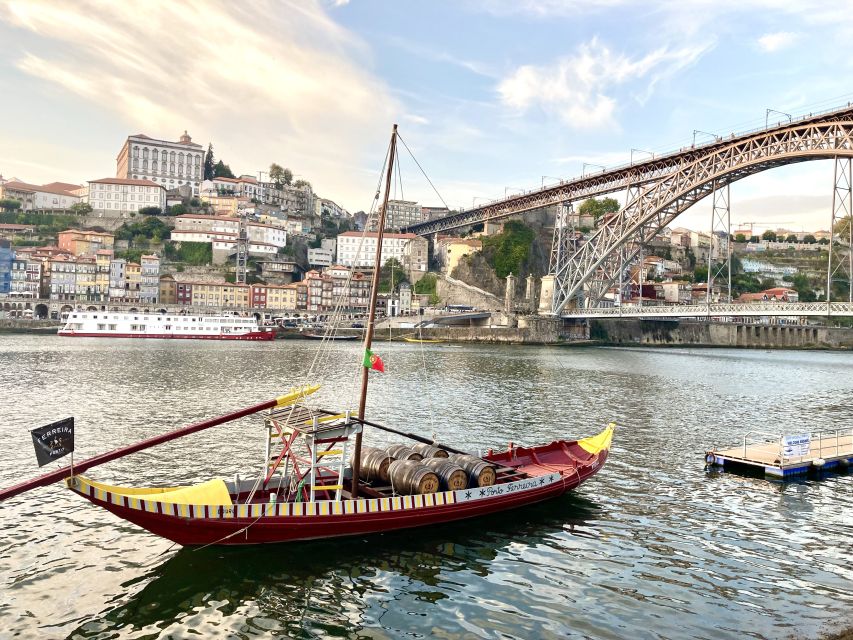
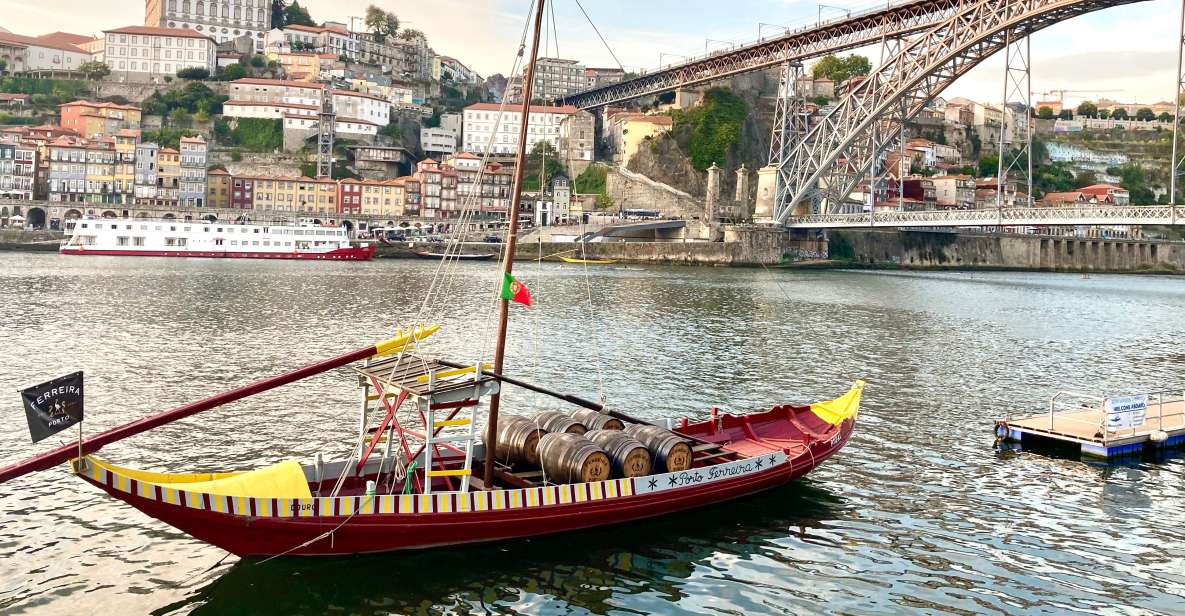
You also pick up local context fast. In guides’ stories you’ll hear about Porto as cidade invicta, plus trivia about the most important day of the year, city weddings, and the way Porto’s iconic bridges fit into the broader story of the city.
Why this matters: if you do this walk early in your trip, it helps you stop wandering aimlessly later. You’ll know which streets lead where, and you’ll recognize the architecture style instead of just snapping a picture and moving on.
São Bento Station: the tiled interior you actually have time to see
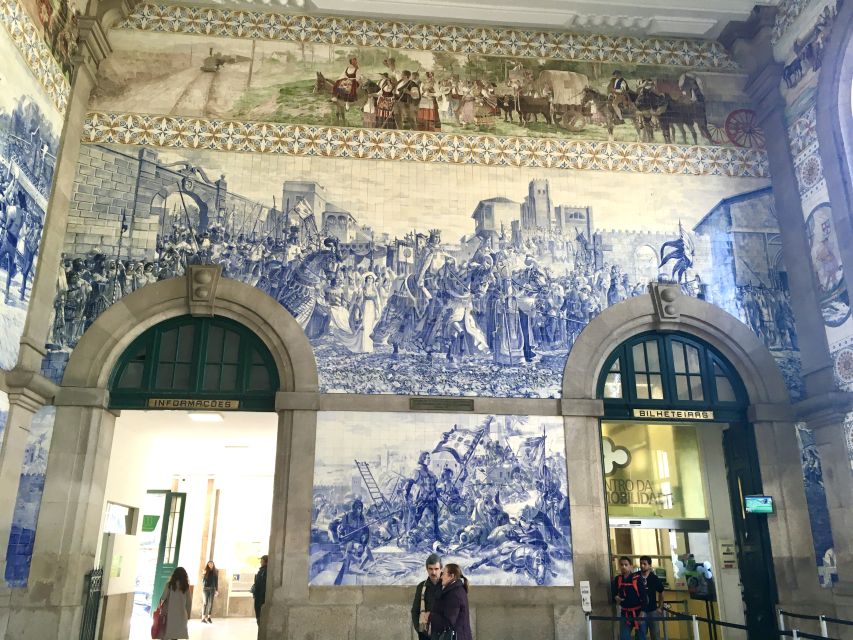
São Bento Station is the first major “wow” moment on the route. You won’t just arrive, glance, and run. The tour includes a guided stop with time to appreciate the architecture and especially the tiled interior (azulejo work that turns the station into a visual narrative).
The best part isn’t only the tiles. It’s how the guide connects what you’re seeing to Porto’s identity—how the city tells stories in public spaces, and how transport hubs can become cultural landmarks. You’ll also notice that people use this space for daily routines, not just sightseeing.
If you’re the type who likes architecture and details, this stop alone is a strong reason to join. If you’re more of a “fast photos” person, still plan to slow down here—this is one place where the guide’s pacing pays off.
Igreja do Carmo, Fonte dos Leões, and the Porto street-life filter
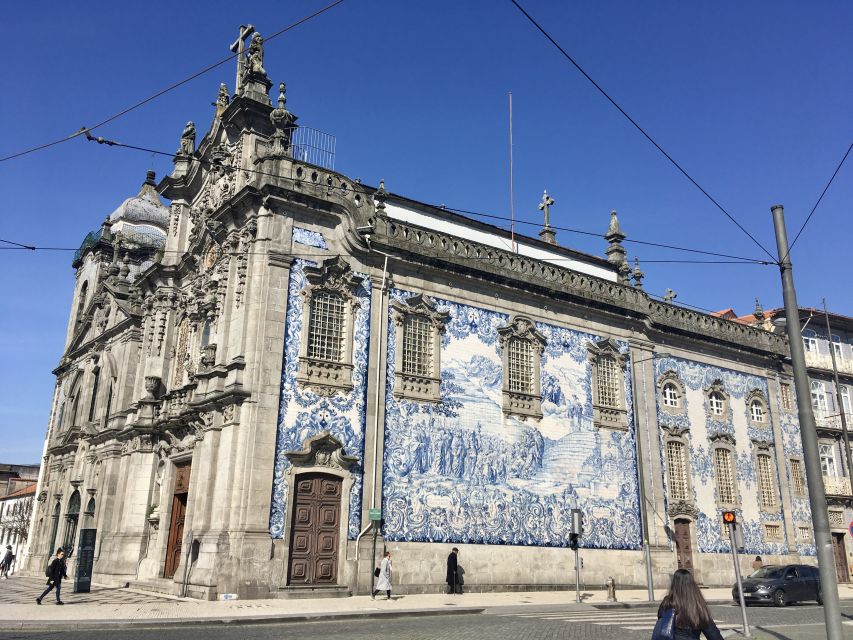
Between the bigger landmarks, you get smaller anchors that make the city feel lived-in.
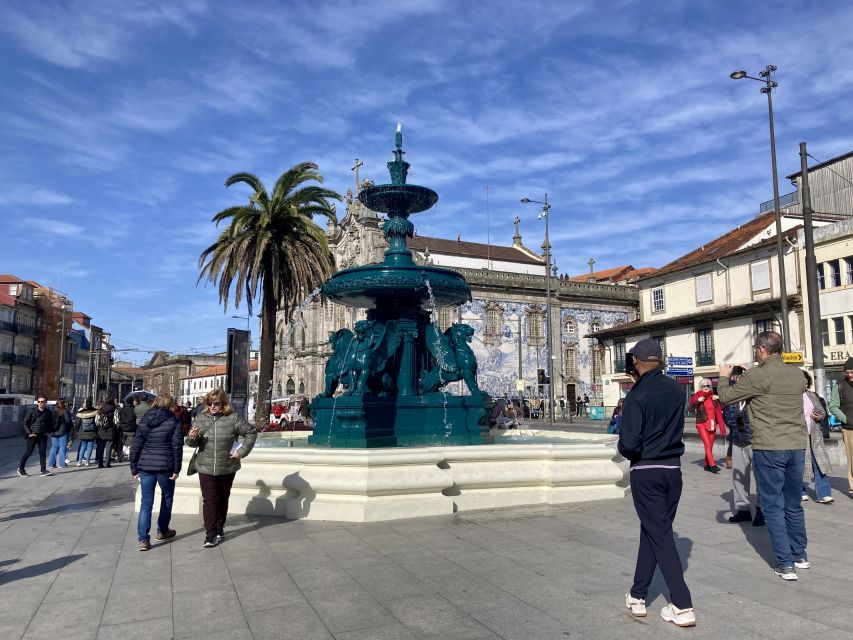
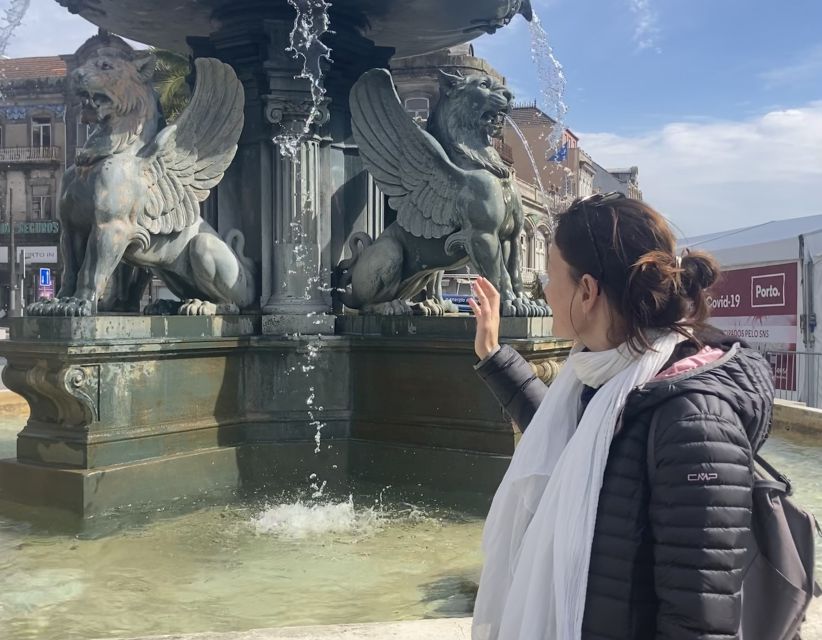
- Fonte dos Leões is one of those recognizable Porto points where it becomes easy to understand how locals move through the streets. The guide spends short guided time here, enough to explain what you’re looking at without turning it into a museum lecture.
- Igreja do Carmo is listed as a pass-by. Even so, it’s the kind of pass-by that helps you notice frontage details you’d miss on your own—things like street alignment, how the church sits within the neighborhood, and how that area “holds” local life.
This part of the walk is also where the tour earns its value for repeat visitors. You learn what’s practical: where streets feel calmer, where photo light works better, and which areas feel more like everyday Porto versus a performance for visitors.
University of Porto and Livraria Lello: architecture with a point of view
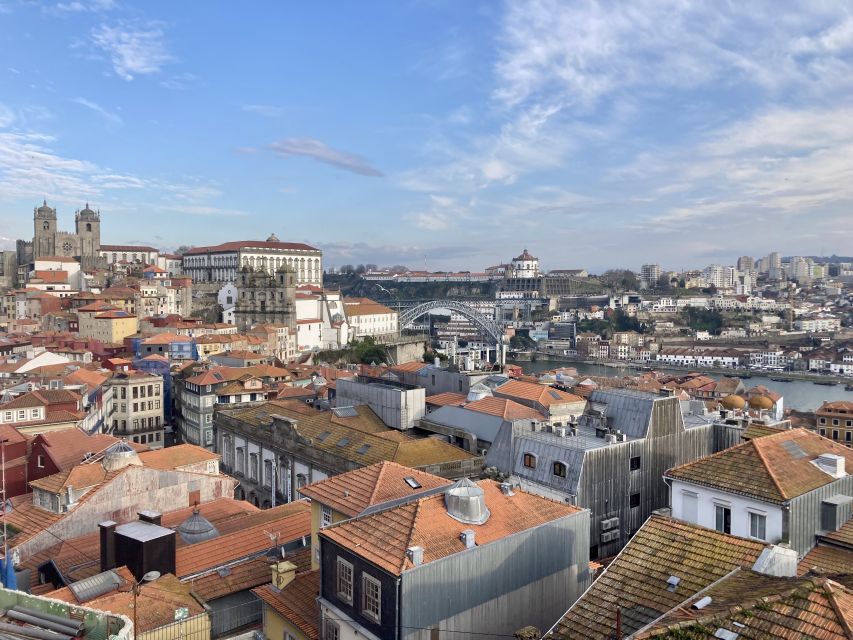
Next up, the route swings toward two places where architecture and identity overlap.
University of Porto gets guided time (about 15 minutes) or a pass-by depending on the flow that day. Even if you don’t consider yourself a “school buildings” person, the guide helps you read it like a landmark in the city’s layout—what the building signals, how it connects to the broader neighborhood, and why it’s still part of Porto’s daily rhythm.
Then there’s Livraria Lello & Irmão. It’s featured as a guided stop with time to take it in (with pass-by listed too). The guide frames it as more than a famous interior: you’ll understand why it gained its reputation and what makes it feel like a storybook place even when you’re standing in regular lines and crowds.
Important note for your planning: the tour includes guided time, but admission to facilities is not included if tickets are needed. If you want to go full bookshop mode, plan your expectations around that.



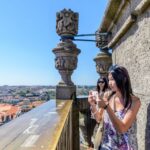
Clérigos Tower: the view stop that helps you read Porto
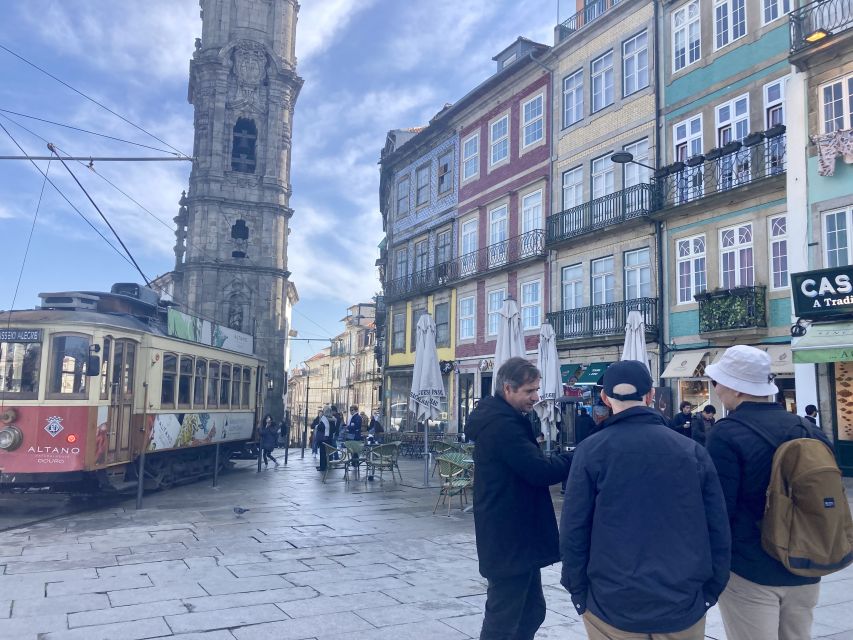
The route includes Clérigos Tower and timed guided viewing/pass-by time. This is one of those stops where Porto’s geography becomes obvious: hills, sightlines, and why the city feels layered as you move.
What I like about having a guide here is that you don’t just look at the tower. You learn how to look: what to notice in the skyline, how to interpret the slope of streets, and where the best “orientation” happens so you don’t feel lost later.
If you’re the type who wants to understand the city’s structure rather than just its highlights, this is a high-return stop.
Antiga Cadeia da Relação do Porto and the city’s harder edges
Porto has soft postcard corners, but it also has places that show its more serious side. Antiga Cadeia da Relação do Porto is on the route with a brief guided stop (pass-by listed with a short time).
Even when time is limited, this is useful because it adds balance. The walk isn’t only about pretty facades. You learn that Porto’s history includes institutions, systems, and change over time—things that help explain why some areas feel formal and why others feel more intimate and street-level.
This stop also tends to trigger good questions from your group. The guide’s job is to keep it readable and connected to today, not stuck in dates.
Sé Cathedral area, Rua das Aldas viewpoint, and the best “look back” moments
You’ll reach Sé, Porto (Cathedral area) with guided time. Expect time to understand its role in the old core and how it anchors the neighborhood. The tour then continues with Porto Cathedral as a guided or pass-by moment.
After that, you get Rua das Aldas Viewpoint, with a photo stop. This is one of the smartest parts of the itinerary because it gives your brain a chance to catch up. You’ve been walking through streets and buildings; now you pause long enough to see how the city connects.
Practical takeaway: a viewpoint stop isn’t only for photos. It’s when you start noticing patterns—where the bridges likely fit, why some streets feel steeper, and which directions lead toward major landmarks you’ll return to later.
Rua das Flores and the “small changes” that make Porto feel local
Rua das Flores appears as a short guided stop. This is the kind of street that can be busy, but the guide helps you see beyond that. You’ll notice signage, street rhythm, storefront character, and how Porto balances charm with real day-to-day use.
The “local perspective” here is about details: what people do in that area, what kind of businesses you’ll see, and how to time your own visits so you’re not just stuck in crowds.
In this part of the walk, you also start hearing more of the practical advice layer—where to eat local food, what to avoid as tourist traps, and how to get better photos without walking in circles.
Pace and timing: 2.5 hours that still feel like a proper orientation
The tour length is listed as 2.5 hours, with a range of about 2.5 to 3 hours depending on the flow and the group. That’s a good sweet spot. Long enough to cover key landmarks and still include side streets. Short enough that you won’t feel doomed when your feet start arguing.
A big advantage is the small group size (max 10). When the group is bigger, you lose details because you’re constantly moving and not hearing the explanation. Here, it’s set up so you can actually follow the story.
One more thing: the experience is designed to run rain or shine. Porto weather can turn quickly, so having that mindset matters. Pack a weather-ready layer and a small umbrella if you tend to get cold.
Price and value: why $29 can be more than a sightseeing add-on
At $29 per person for roughly 2.5 hours, this isn’t a budget-only “walk and point” tour. The value comes from three things you can use right away:
First, you get guided architecture time at the big anchors: São Bento Station, Clérigos Tower, and the Sé/Porto Cathedral area.
Second, you get the local “why” layer. The guide brings trivia and context like cidade invicta, city wedding customs, and Porto’s key-day stories—details that make the city feel like more than a list.
Third, you leave with practical direction: a detailed restaurant recommendation list and tips for what to do after the tour. That’s not just helpful now. It saves you from guesswork later when you’re tired and hungry.
In other words, you’re paying for orientation plus better decisions, not just for walking past landmarks.
Who should book this walk (and who might not love it)
This tour fits best if you:
- want a focused intro to Porto’s old core plus street-level neighborhoods
- like architecture, but also enjoy learning how locals live and shop
- prefer small groups where the guide can tailor attention
It may not be a great match if you:
- struggle with longer walking, uneven ground, or stairs
- need step-free routes (the tour isn’t suitable for mobility impairments based on the provided info)
- are traveling with someone with low fitness, or if you’re managing fatigue early
If you’re mid-level mobile and you can handle a steady pace, it’s a strong early-trip move.
Quick decision: should you book?
I think you should book this walk if you want Porto explained in a practical way: where to look, what to notice, and what to do next. The combination of small group size, time at São Bento Station, and the mix of cathedral + viewpoints + side streets makes it a solid orientation tool.
Skip it only if you want mostly indoor time, very low walking effort, or a strict highlight-only checklist with zero local context. For many first-time visitors, this style of guided stroll is the shortcut to feeling confident exploring the rest of Porto.
FAQ
How long is the Porto highlights walking tour?
It lasts about 2.5 hours (with timing that can run to roughly 2.5–3 hours).
What is the group size?
The group is small, limited to a maximum of 10 participants.
Where do I meet the guide?
Meet in the square by the old red kiosk. You may also see starting points listed around Praça de Carlos Alberto (70 or 68).
What languages are offered?
The live guide offers English and German.
Is admission to stops included?
Admission to facilities is not included (if any entry tickets are needed).
Does the tour run in rain?
Yes, it runs in rain or sunshine. It’s a walking tour, so comfortable shoes and weather-ready clothing help a lot. It is not suitable for people with low fitness or mobility impairments, and it isn’t recommended for people over 80.