REVIEW · PORTO
Porto: Guided City Highlights Walking Tour
Book on GetYourGuide →Operated by Natália Lapa Official Tour Guide · Bookable on GetYourGuide
Porto rewards slow walking, and this tour is built for it. You’ll get an official guide leading you through signature stops like the Clérigos Church and the story-packed São Bento Train Station, plus plenty of time to ask questions and take photos. I also like that the route mixes big landmarks with calmer lanes, so you leave with a real sense of how the city lays out.
One thing to consider: this is a 3-hour walking tour with no hotel pickup, so you’ll want comfortable shoes and to accept some stairs and uneven medieval streets. It’s also not suitable for wheelchair users or people with mobility impairments.
In This Review
- Key highlights to look for
- First Stop: Câmara Municipal do Porto (and what you’ll get from day one)
- Porto City Hall: A classic facade that sets the tone
- Clérigos Church: Baroque drama you can actually understand on foot
- Miradouro da Vitória: The Douro viewpoint that earns its photo time
- Liberdade Square and Rua das Flores: Where Porto feels like Porto
- São Bento Train Station: Azulejo tiles that finally make sense
- Porto Cathedral (Sé): Medieval streets and a real sense of place
- Palacio da Bolsa: A key stop that rounds out the “Porto story”
- Ribeira Square: Closing the loop on the riverfront vibe
- Price and value: Why $23 can feel like more than a bargain
- Best fit: Who will love this tour most
- Small practical tips before you go
- Should you book Porto: Guided City Highlights Walking Tour?
- FAQ
- FAQ
- How long is the Porto guided city highlights walking tour?
- Where does the tour start?
- What does the tour cost?
- Is food included?
- What is included in the price?
- What languages are the guides?
- Are there guided stops for the main sights?
- What should I bring?
- Does the tour run in bad weather?
- Is the tour wheelchair accessible?
- Is free cancellation available?
Key highlights to look for
- Official guide with an unmistakable badge (Natália Lapa’s badge and sardine-topped stick are easy to spot)
- Two major architectural anchors: Clérigos Church and the Porto City Hall area
- São Bento’s azulejo tiles, with built-in guidance so you know what you’re seeing
- Douro River viewpoints from Miradouro da Vitória, plus photo time
- Ribeira Square finish, where the riverfront energy helps you settle into Porto fast
First Stop: Câmara Municipal do Porto (and what you’ll get from day one)
The meeting point is at Câmara Municipal do Porto, the Porto City Hall area. It’s a smart place to start because you immediately get a feel for the city’s scale and how the streets funnel you toward the historic core.
This tour is only three hours, but it’s structured so you don’t waste that time wondering where to go next. You’ll be following an official guide on foot, with short guided segments and built-in walk time between sights. That balance matters in Porto, where a few blocks can change the vibe completely.
I like that this isn’t just a checklist of famous places. You’ll get context as you go, and that makes the landmarks feel connected instead of random stops. The guide for this experience is Natália Lapa, an Official Tour Guide, and several past participants called out her approach as clear, patient, and great for getting comfortable fast.
You can also read our reviews of more walking tours in Porto



Porto City Hall: A classic facade that sets the tone
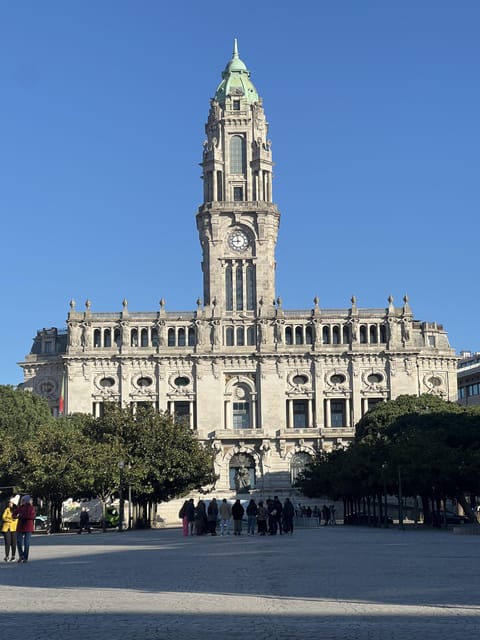
Your first stop is Porto City Hall, with a short sightseeing moment right in the immediate area. Even if you don’t go inside, the exterior gives you something useful: scale, symmetry, and a sense of how Porto presents itself in the public square spaces.
Why it’s worth even a brief look: it’s a contrast point. Porto’s older streets and churches can make everything feel medieval and stone-heavy. Starting with a civic building early helps you notice how the city has layers: formal public architecture on one side, older alleyways on the other.
You’ll also get moving quickly, because the group keeps pace. If you prefer slow, long museum-style time, this tour is not that. It’s more about orientation and key visual moments.
Clérigos Church: Baroque drama you can actually understand on foot
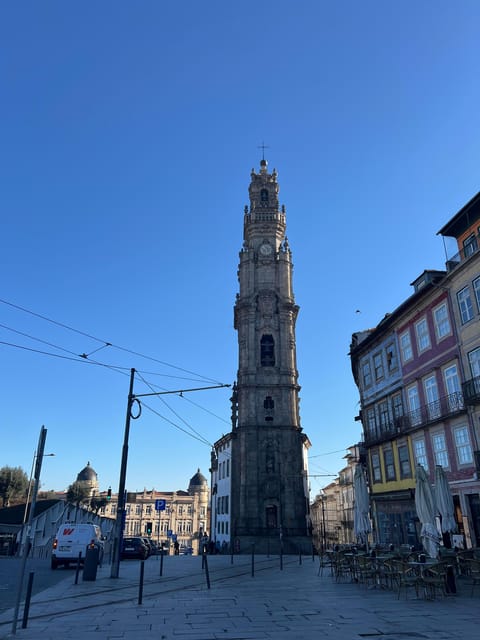
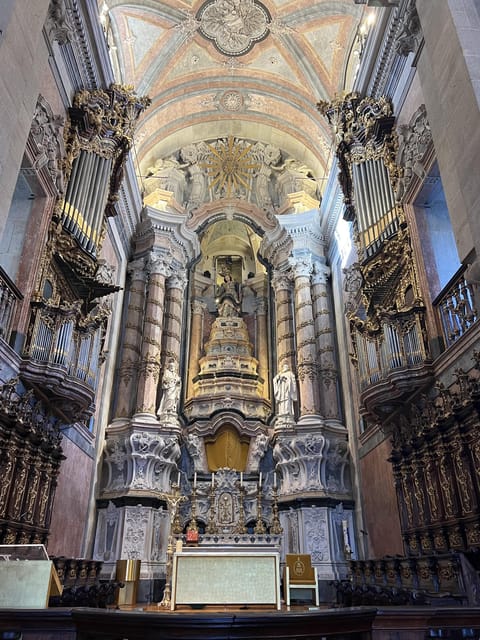
Next up is Clérigos Church for a guided look. This is the kind of stop where having a guide changes the experience. Without context, you might just register impressive stonework and move on. With a guide, you start noticing how the design communicates status, belief, and artistic ambition.
The best part here is how it works as an anchor. Once you understand what you’re looking at, the rest of the walk makes more sense. You’ll pass other streets and buildings with better instincts for what’s old, what’s religious, and what’s decorative versus structural.
From the reviews, one theme is how well Natália explains things and keeps the atmosphere friendly. One participant specifically mentioned that the tour was fun for their kids, which tells you the style isn’t stiff or lecture-only. If you’re visiting Porto early in the trip, this is also a good way to get your bearings quickly.
Miradouro da Vitória: The Douro viewpoint that earns its photo time
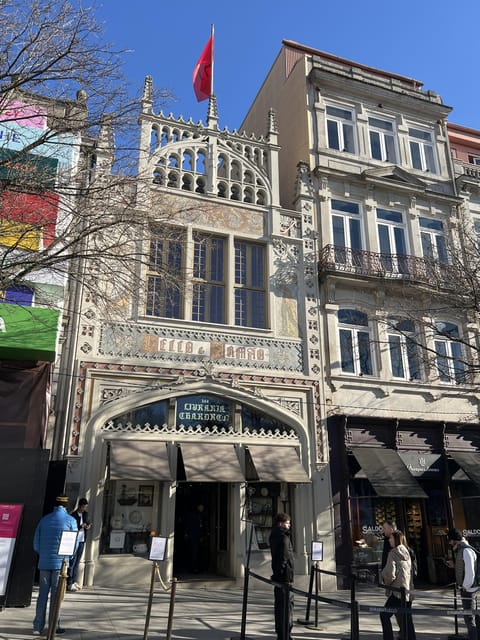
After the church, you’ll head to Miradouro da Vitória for a photo stop. This is one of those moments where Porto’s geography becomes the main character. The Douro River shows you why the city grew where it did, and why the streets keep stepping and turning the way they do.
The guide gives you enough direction to frame the scene before you take photos. You’re not just standing there guessing. You’ll look outward, then back at the cityscape, and suddenly the walking route you’re on feels connected to what you’re seeing.
Plan for this stop as your mental reset. You’ll likely feel the afternoon come on—sun, wind, and stairs add up. Water helps, and comfortable shoes matter even more at viewpoint moments because people tend to stop, start, and reposition for photos.
Liberdade Square and Rua das Flores: Where Porto feels like Porto
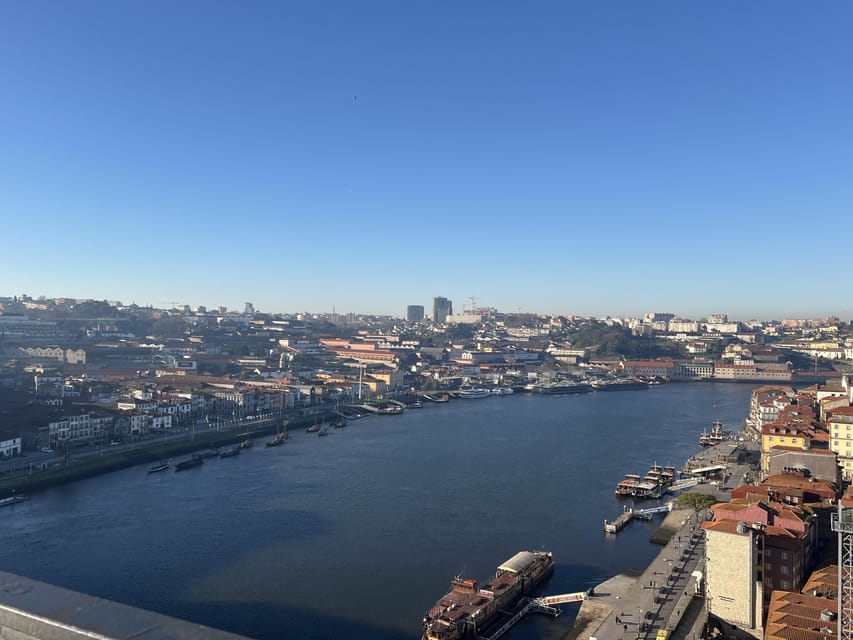
From here, the tour shifts from landmark focus to street-level character. You’ll spend time sightseeing around Liberdade Square, then move toward lively lanes such as Rua das Flores, known for shops and café energy.
This part works because it slows you down just enough to feel daily life. It’s not a sterile pedestrian mall moment. You get the real street texture—fronts of buildings, small storefronts, and the everyday rhythm of the historic center.
I like that the itinerary isn’t all churches and viewpoints. Porto is also about walking the in-between spaces: the short turns where you catch a glimpse of another church facade, the little clusters of people waiting outside cafés, and the way sound carries down older streets.
If you’re traveling with kids or you just hate feeling locked in with grown-up museum time, this street segment helps the whole tour breathe.
You can also read our reviews of more guided tours in Porto



São Bento Train Station: Azulejo tiles that finally make sense
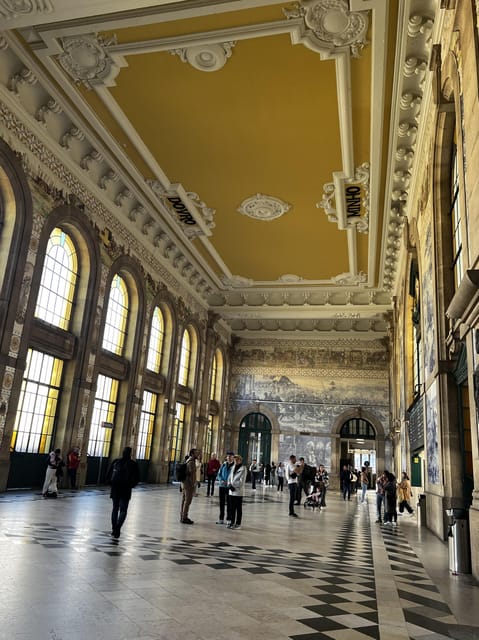
Then comes one of the biggest “wow” stops: São Bento Train Station. You’ll get a guided visit that focuses on what you’re seeing in the famous azulejo tiles, with enough explanation so the scenes aren’t just pretty patterns.
This is one of those sights where people often stand in front and take pictures, but don’t know what the imagery is telling them. A guide fixes that. You leave understanding the purpose of the tiles and what kind of historical storytelling they use.
Why this is great value on a walking tour: the station is the kind of place you could see on your own, but you’d likely miss the meaning. Here, the time is short, but it’s purposeful. You’re not rushing past a masterpiece without context.
One of the reviews praised Natália for being informative and patient, and that kind of approach matters at São Bento. People will ask questions on the spot, and a good guide gives answers instead of waving you along.
Porto Cathedral (Sé): Medieval streets and a real sense of place
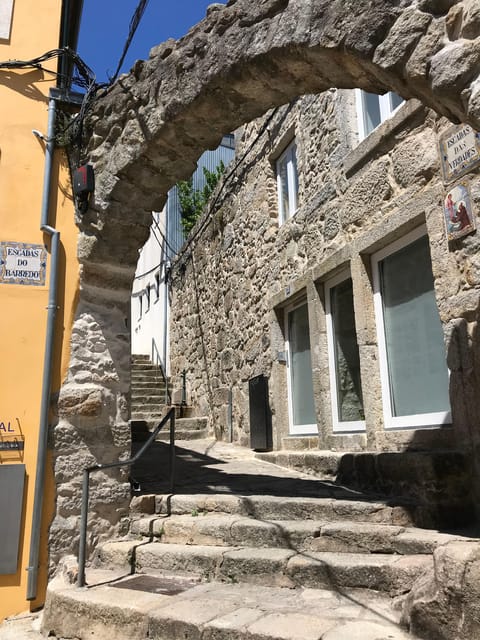
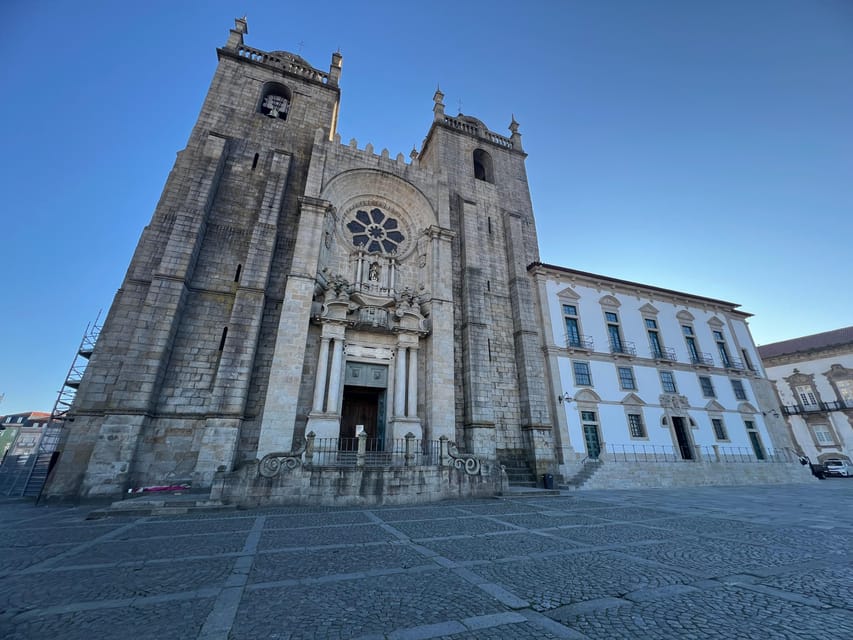
After the station, you’ll reach Porto Cathedral, often called Sé Cathedral. You’ll stop for a photo moment and sightseeing with guidance, then continue through the medieval streets that sit around it.
This area benefits from having someone pace you. Porto’s old quarters can feel like a maze if you’re not used to them. The guided approach helps you notice the shifts in architecture and street layout without getting lost.
The Sé stop also connects back to earlier landmarks. You start to see a timeline: civic spaces, ornate church architecture, then the heavier medieval feel of Sé and the older lane pattern around it. It’s a practical way to understand Porto’s layers without needing a formal lecture.
Palacio da Bolsa: A key stop that rounds out the “Porto story”
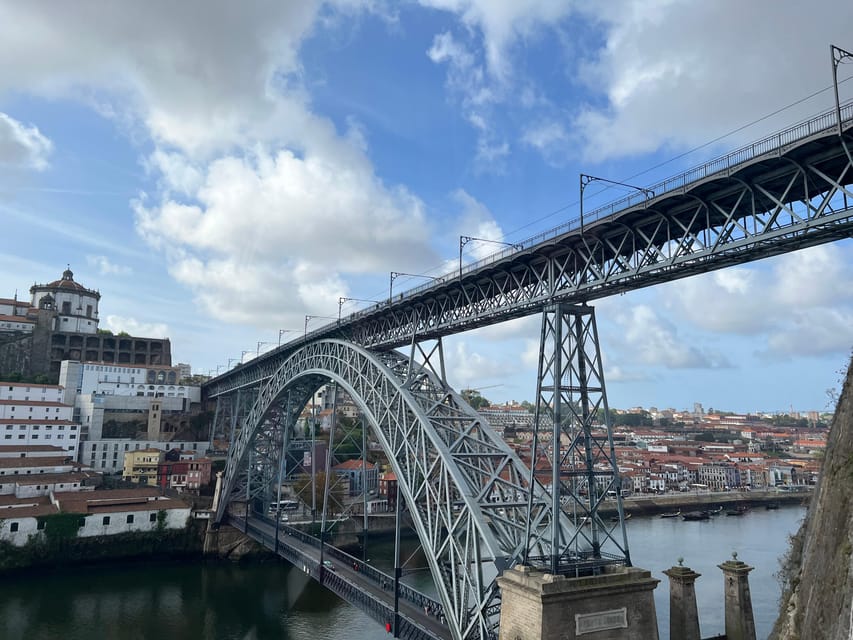
You’ll also see Palacio da Bolsa with sightseeing time. This is another “you’ll recognize it on the outside” type of stop—especially helpful if you like making connections between what you’ve seen and what you’ll want to explore later.
Even when the tour doesn’t go deep inside, you get enough context to understand why it’s a major piece of Porto’s city identity. And it’s positioned in a way that keeps your eyes moving forward—so the walk feels like progression instead of circling the same sights.
If you’re a traveler who likes to return later with a focused plan, this is a good preview stop. You’ll know what you want to look up or spend more time on once you’re back at your hotel.
Ribeira Square: Closing the loop on the riverfront vibe
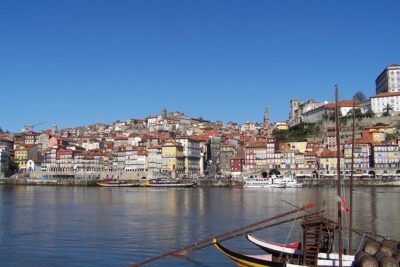
Finally, you’ll finish at Ribeira Square, Porto’s riverside district. This is a smart finish because the riverfront atmosphere makes it easy to transition into the rest of your day.
You’ll get a photo stop and a guided segment there, and then you’re free. That matters because Ribeira is the kind of place where the best next step is flexible. You might head toward a viewpoint, grab a meal, or just wander along the river and let Porto settle into your senses.
From a practical standpoint, ending here also helps you remember the route. It’s visually distinct, so when you look back on the walk, the sequence feels clear: civic start, church anchor, viewpoints, tiles, cathedral streets, then the riverfront finish.
Price and value: Why $23 can feel like more than a bargain
This tour costs $23 per person for about three hours with a live guide. For a guided walk that covers multiple signature sights, I’d call it good value.
Here’s the practical logic: you’re paying for two things that are hard to recreate on your own—time and interpretation. The guide doesn’t just point; she helps you understand what you’re looking at, especially at São Bento Station and Clérigos Church. That’s the difference between seeing Porto and getting oriented in Porto.
Also, the group moves at a pace that keeps you productive. There’s no wasted time waiting in long lines included in the price, and there’s no hotel pickup detour. You spend your time on the street, which is the whole point of a walking tour in this city.
If you only have a morning to get the big picture, this is the kind of tour that can make the rest of your trip easier.
Best fit: Who will love this tour most
You’ll likely enjoy this if:
- You want a guided orientation to Porto’s historic center in a short time
- You appreciate interpretation at major stops like azulejos and big church architecture
- You’re visiting in a first-day fog and want to stop guessing your way around
- You want a guide who’s comfortable handling questions (several reviews emphasized her patience and approachability)
It’s less ideal if:
- You need wheelchair access or step-free routes (this tour is not suitable for wheelchair users)
- You’re uncomfortable with a steady walk for three hours
Small practical tips before you go
Here’s how to make the tour feel smooth instead of stressful:
- Wear comfortable walking shoes. Porto’s older streets can be uneven.
- Bring a camera since several stops are designed for photos, especially Miradouro da Vitória.
- Carry water, especially if you’re walking in warmer months or on a bright day.
- Dress appropriately for the weather since the tour operates in all weather conditions.
If you tend to run low on energy during city walks, pack a small snack for after. The tour doesn’t include meals or drinks, so you’ll want to handle that on your own.
Should you book Porto: Guided City Highlights Walking Tour?
I’d book it if you want a fast, well-paced way to get the Porto “greatest hits” without turning your day into a sprint. The strongest reason is the guide-led interpretation. Stops like Clérigos and São Bento go from impressive to meaningful when you understand what you’re seeing.
I’d skip it only if you can’t handle a 3-hour walking route or you need accessibility accommodations not offered here. Also, if your idea of fun is long independent exploring with no structure at all, you might prefer a self-guided plan.
For most people, this tour hits a sweet spot: enough guidance to reduce confusion, enough variety to keep things interesting, and an ending in Ribeira Square that sets you up for the next chapter of your day.
FAQ
FAQ
How long is the Porto guided city highlights walking tour?
It lasts about 3 hours.
Where does the tour start?
The meeting point is Câmara Municipal do Porto (Porto City Hall area).
What does the tour cost?
The price is listed as $23 per person.
Is food included?
No. Meals and drinks are not included.
What is included in the price?
You get a guided walking tour.
What languages are the guides?
The live tour guide is available in English and Spanish.
Are there guided stops for the main sights?
Yes. There are guided segments for places like Clérigos Church and São Bento Station, plus sightseeing/photo stops at other key locations.
What should I bring?
Bring comfortable shoes, a camera, and water.
Does the tour run in bad weather?
Yes, it operates in all weather conditions, so dress appropriately.
Is the tour wheelchair accessible?
No. It’s not suitable for wheelchair users or people with mobility impairments.
Is free cancellation available?
Yes, you can cancel up to 24 hours in advance for a full refund.