REVIEW · PORTO
Porto and Gaia: Walking Tour of Douro’s Two Riversides
Book on Viator →Operated by Amsterdam Guías & Tours · Bookable on Viator
Two rivers, one afternoon route. This Porto to Gaia walking tour strings together iconic sights—Henry the Navigator’s square, the Douro waterfront, and port-wine cellars—without rushing you through the good parts. You’ll end where port drinking actually makes sense: in Gaia, near the wineries.
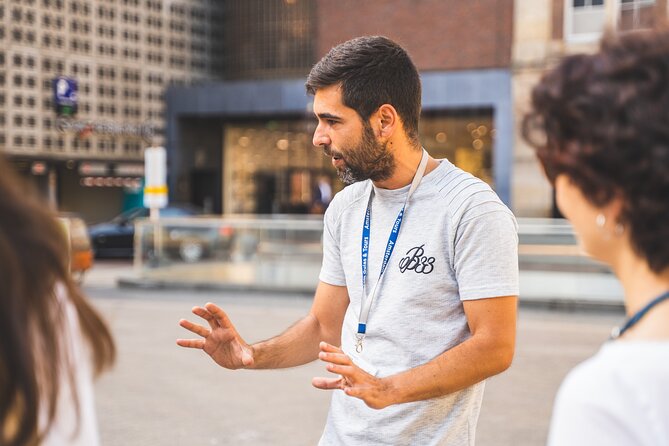
I especially like the small group size (up to 15). I also like the way the guide turns architecture and monuments into clear stories, with names like Sofia, Susana, Michael, and Arturo showing up in past guide praise.
One consideration: if your expectation includes a river-boat moment, keep it flexible. A mismatch between a promised boat segment and what runs on the day can change the plan, and the tour description focuses on a walk-across Douro experience.
In This Review
- Key things to know before you go
- Porto and Gaia on one walk: how this tour really feels
- Start smart: the exact meeting point and how to get oriented fast
- Stop 1: Henry the Navigator square and the Porto set-up
- What to look for while you pause
- The Stock Exchange Palace: trade made into architecture
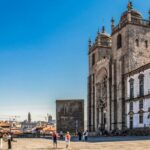
- St. Francis Church: where faith shaped the city’s look
- The UNESCO-listed historic house: tying Porto to the bigger story
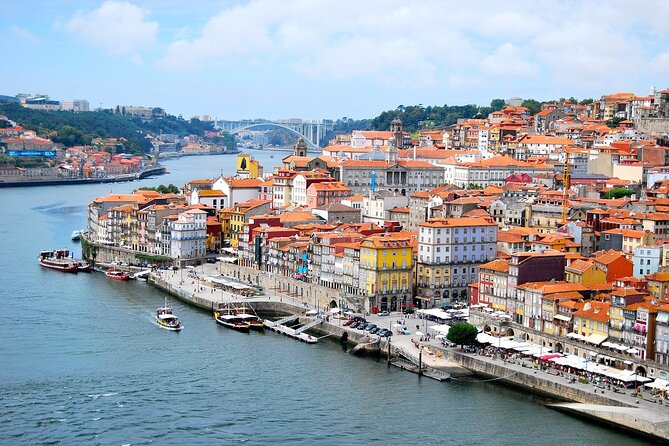
- Ribeira Square: the Douro waterfront in real life
- Stop 2: Alminhas da Ponte and the 1809 bridge memory
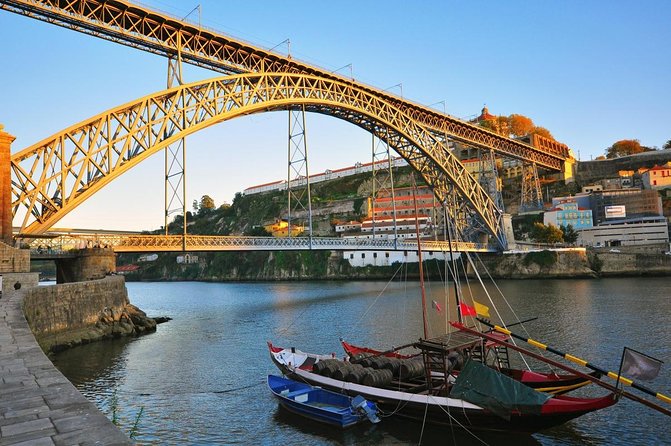
- Crossing the Douro on foot: it’s not just a route, it’s the point
- The Gaia finish: port-wine birthplace energy and a convent calm
- Price and value: $36.74 for a focused two-hour story walk
- Wine tastings at the end: how to budget without getting rushed
- Which kind of traveler should book this?
- A note on guides: Sofia, Susana, Michael, and Arturo show up often
- Should you book: my practical call
- FAQ
- What’s the start time and how long is the tour?
- Where do I meet the guide?
- Where does the tour end?
- Is this tour in English?
- How big is the group?
- What’s included?
- What tickets are included or not included?
- Are food and drinks included?
- Is hotel pickup available?
- Can I bring a service animal?
Key things to know before you go
- Easy meeting point in central Porto: start at Jardim do Infante Dom Henrique (R. do Infante Dom Henrique, 4050 Porto).
- A tight 2-hour route: you get historic highlights on both banks without spending your whole day in transit.
- Alminhas da Ponte stops for meaning, not selfies: a free 1809 bridge remembrance with stories tied to invasions and legends.
- Douro crossing on foot: included time built into the schedule, with the river always part of the theme.
- Gaia finish by the port-wine cellars: you can add a tasting after the tour for extra cost.
- A guide who can explain both sides: English offered, and the guide is listed as speaking English and Spanish too.
Porto and Gaia on one walk: how this tour really feels
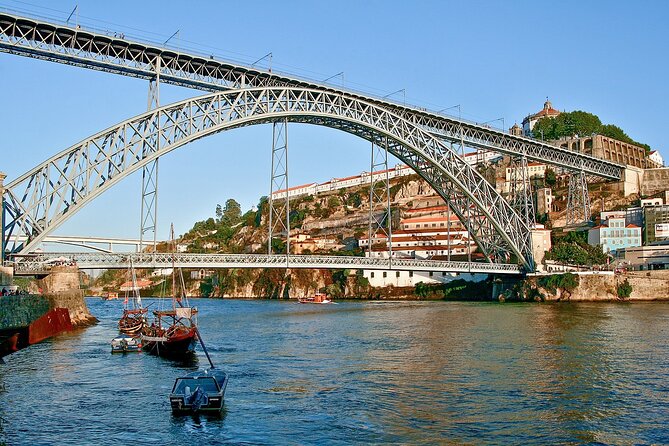
Porto and Vila Nova de Gaia sit across the Douro River, so seeing them together works better than hopping back and forth all day. This tour keeps things simple: meet in central Porto, walk through key historic areas, cross the river on foot, then finish in Gaia in port-country surroundings.
What makes it satisfying is the balance. You’re not just ticking boxes. You’re getting the “why” behind the squares, churches, and river connections—the kind of context that makes even famous buildings feel personal. And because the group is capped at 15, you’re more likely to ask questions and actually get answers.
The tour runs about 2 hours and starts at 2:30 pm, so it’s a great fit for afternoons when mornings are already booked or you just want a concentrated local walk.
You can also read our reviews of more walking tours in Porto
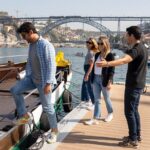


Start smart: the exact meeting point and how to get oriented fast
You’ll meet at Jardim do Infante Dom Henrique, R. do Infante Dom Henrique, 4050 Porto. That location is useful because it puts you close to a key historic anchor—Henry the Navigator—so the tour starts with a sense of direction instead of random wandering.
From a practical point of view, the “near public transportation” note matters in Porto. You don’t want to fight your way through long transfers right before a scheduled 2-hour walk. This start point is also easy to spot on foot once you’re in the right neighborhood, and the tour description highlights that it’s an easy meeting spot.
If you’re coming from a hotel, I’d give yourself extra time to arrive early enough to settle your bearings. Even a short delay can feel bigger when cobblestones and river views tempt you to stop for photos.
Stop 1: Henry the Navigator square and the Porto set-up
The first stop is Jardim do Infante Dom Henrique, and it’s a short one—about 15 minutes. The big idea here is orientation. Henry the Navigator’s legacy sits behind a lot of the city’s Portuguese discovery-era identity, and it’s a clean way to start talking about why Porto matters historically.
From there, the tour moves into the Porto that visitors recognize, but with a guide’s thread tying it all together. You’ll hit major landmarks around the historic center—places connected to trade, faith, and city identity.
Even when you’re just pausing outside, this sequence helps. You go from a discovery figure (Henry) to the feeling of commerce and power (Porto’s historic trading world), then into the religious monuments that shaped daily life.
What to look for while you pause
At this stage, I’d focus less on trying to memorize everything and more on picking up one or two themes:
- Porto as a trading city (architecture linked to commerce)
- Porto as a faith-shaped city (church style and symbolism)
- Porto as a story city (bridges, river access, and memory)
The Stock Exchange Palace: trade made into architecture
Next comes Portugal’s first Stock Exchange Palace—described as one of Porto’s most stunning buildings. Whether you’re seeing it mostly from the outside or getting a quick look in, you’ll come away with a sense of how seriously the city took business.
This stop matters because Porto’s famous port wine isn’t just a product. It’s tied to systems: shipping, wealth, and international connections. When a guide frames the Stock Exchange Palace in that context, it makes the rest of your walk feel less like sightseeing and more like a guided argument for why the city looks the way it does.
If you’re the kind of person who enjoys architecture even when you’re tired, this is where you’ll likely perk up.
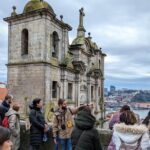


St. Francis Church: where faith shaped the city’s look
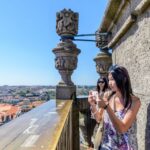
Then you’ll spend time at the Church of St. Francis. The tour frames it around the idea that faith shaped Portugal’s history, and you’ll learn how the church reflects that spirit.
This is one of those stops where a guide can turn a postcard into a place. The key isn’t only what’s beautiful—it’s how religious power and community identity showed up in what people built and preserved.
One practical tip: take a minute to notice how the church fits into the surrounding street rhythm. Porto’s historic core has a way of making you feel like buildings grew into place over centuries, not like they were dropped into a modern plan.
The UNESCO-listed historic house: tying Porto to the bigger story
After St. Francis, the route includes a UNESCO World Heritage Site house in Porto’s historic center. This is a great mid-walk change of pace because it shifts your attention from major public monuments to something more human-scale.
You’ll get that sense of Porto having layers: official landmarks, yes, but also the preserved private structures that hold evidence of what life looked like back then. When the guide explains it clearly, the UNESCO label stops being a stamp and starts being a clue.
Ribeira Square: the Douro waterfront in real life
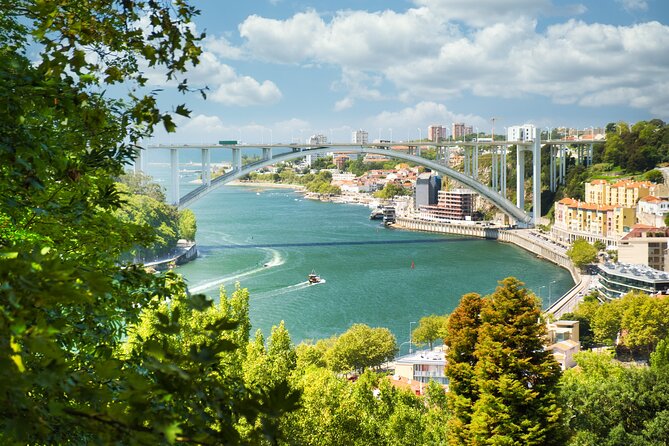
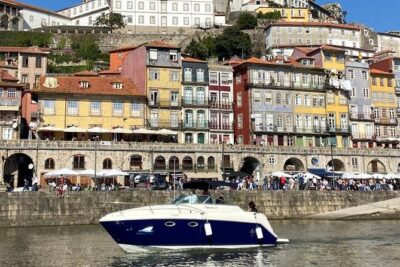
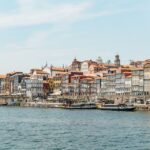
Next up: Ribeira Square, on the banks of the Douro River. It’s described as one of Porto’s oldest and liveliest spots, and that’s exactly why this stop is valuable even if you’ve already seen river views on the outside.
Ribeira is where you start to notice the everyday part of the story. Porto isn’t only grand buildings; it’s daily life anchored to the water. You’ll feel that here—walking along the river edge and getting stories that connect the city’s past to what’s still happening now.
If you like taking photos, this is a good time. But also remember: the best river pictures usually come from pausing, not sprinting.
Stop 2: Alminhas da Ponte and the 1809 bridge memory
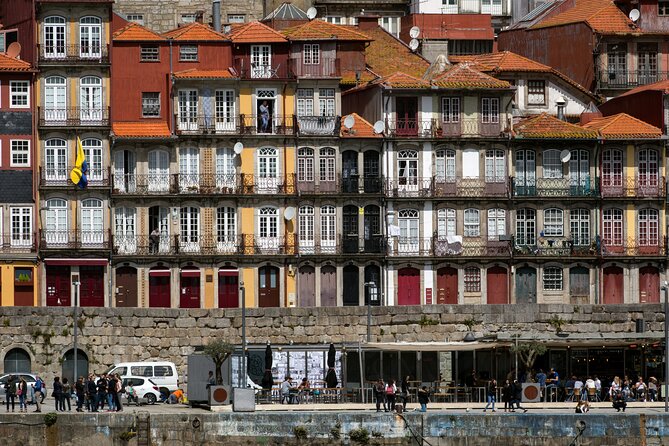
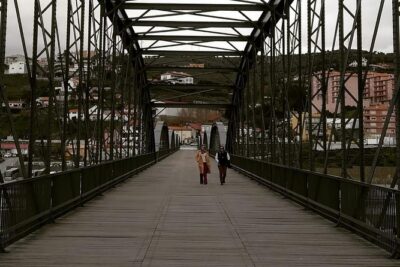
The tour then goes to Alminhas da Ponte, with a 15-minute stop. These are monuments honoring the tragic collapse of the bridge in 1809, and the tour notes the admission is free.
This stop is one of the best reasons to do a guided walk instead of wandering alone. A monument like this can look like a small roadside detail—until someone explains what happened and why that memory matters.
You’ll also hear stories about bridges that connect more than places—linked to French invasions, kings, legends, and heroes. That’s the kind of “Porto and its river” theme that makes the rest of the walk feel cohesive.
Crossing the Douro on foot: it’s not just a route, it’s the point
You’ll then head to the Douro River and cross on foot, with about 15 minutes scheduled. The tour description marks this part with admission included, so it’s built into the flow rather than something you have to figure out at the last minute.
This is where the tour title comes alive. You stop thinking “Porto sightseeing” and start thinking “Porto-to-Gaia connection,” because you’re physically moving between the two sides that trade and share history.
Even if you’ve seen bridges before, crossing the Douro here gives you a new angle on the city. The river stops being a background and becomes the main character.
The Gaia finish: port-wine birthplace energy and a convent calm
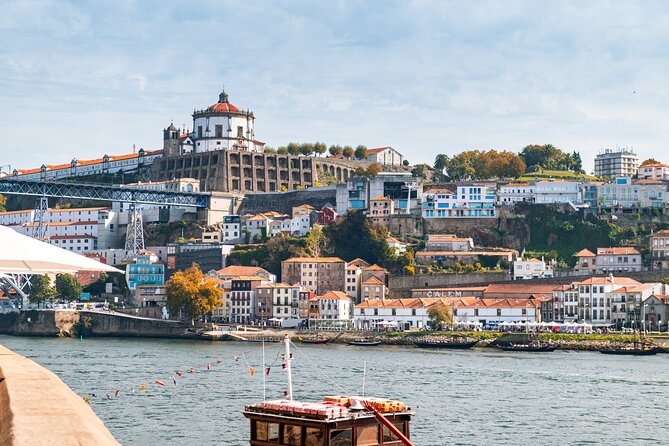
After the crossing, you enter the part of the experience that’s geared toward port wine culture. The tour describes learning about the birthplace of Port Wine and seeing its iconic cellars—the place where each bottle traces back to centuries of tradition.
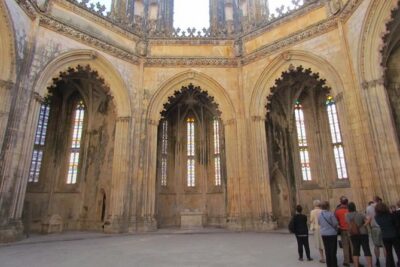
Then there’s a tonal shift: you’ll visit a former convent with simple yet powerful architecture and a religious heritage that invites calm and reflection. That contrast is useful. After a walking tour that’s all momentum, ending with quiet architecture helps the last stop feel like a reset rather than a forced finale.
The tour ends at Largo Joaquim Magalhães 4, 4400-174 Vila Nova de Gaia, and you finish close to one of the city’s interesting cellars. That sets you up perfectly if you want to extend the experience.
Price and value: $36.74 for a focused two-hour story walk
At $36.74 per person for about 2 hours, this tour sits in the “good value” category because you get:
- a local guide with English offered (and the guide is listed as speaking English and Spanish too)
- a structured walk through key Porto and Gaia areas
- the included Douro crossing
- a small group setting that keeps the experience interactive rather than crowded
What you should factor in: food and drinks aren’t included, and the port finish is described as an extra-expense experience. The value is still strong because you’re not paying extra just to be guided between sights—you’re paying for someone to connect the sights into a story.
The small group matters too. With a maximum of 15, you’re more likely to get personal recommendations on what to see next and where to go for an optional tasting after the walk.
Wine tastings at the end: how to budget without getting rushed
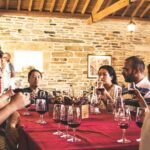
The tour finishes near cellars in Gaia, and the end point is intentionally close to places you can add on. The tour summary specifically mentions sipping local port at a winery as an optional extra.
That optional part can go two ways:
- You keep it simple: one tasting, quick and friendly, then you’re back out exploring.
- You go deeper: you spend more time inside a cellar that fits your tastes.
One thing to keep in mind based on real experiences: not every tasting stop at a finish is equally satisfying. If port is your main mission, I’d plan to choose the tasting that matches your style—classic and historic, or something more modern and lively. Popular options like Graham’s show up as a name people choose when they want a standout tasting moment.
Which kind of traveler should book this?
This is a strong choice if you want:
- a compact afternoon plan (2 hours, 2:30 pm start)
- the Porto-to-Gaia connection without stress
- a guide to explain what you’re looking at, not just where to stand for a photo
- a small group experience (up to 15)
It also suits people who like history but prefer stories tied to streets, buildings, and river life over long lectures.
If you’re trying to fill a whole day with only “must-see highlights,” you might want one additional activity after this, because the walk is short enough to leave energy for a second stop.
A note on guides: Sofia, Susana, Michael, and Arturo show up often
If you’re the kind of person who cares about the guide’s voice and style, you’ll likely appreciate the range of guide personalities mentioned with strong praise. Names that show up include:
- Sofia, described as engaging with background rooted in architecture
- Susana, praised for friendliness and energy
- Michael, noted for history explanations that kept attention
- Arturo, highlighted for clear explanations and city pride
That variety is a good sign. It suggests the tour is built around interpretation—people who can make the walk feel like a conversation, not a script.
Should you book: my practical call
Book it if you want a well-timed walk that gives you the Porto and Gaia story in one go. The structure is the win: central meeting point, historic anchors, a meaningful river moment with the Douro crossing, and a finish that makes it easy to add a port tasting.
Skip it or go in with eyes open if you’re fixated on a guaranteed river-boat component. The tour description is centered on walking across the Douro, and day-of water transport can be unpredictable.
My overall take: at $36.74, this works as a smart, human-scaled way to connect the two river sides—especially if you like learning why the city is laid out the way it is, not only seeing what’s famous.
FAQ
What’s the start time and how long is the tour?
It starts at 2:30 pm and runs for about 2 hours.
Where do I meet the guide?
You meet at Jardim do Infante Dom Henrique, R. do Infante Dom Henrique, 4050 Porto, Portugal.
Where does the tour end?
The tour ends at Largo Joaquim Magalhães 4, 4400-174 Vila Nova de Gaia, Portugal, near port-wine cellars.
Is this tour in English?
Yes. The experience is offered in English, and the guide is listed as speaking English and Spanish.
How big is the group?
The tour has a maximum of 15 travelers, which keeps it small and more personal.
What’s included?
The tour includes an expert local guide, a walking route through Porto and Gaia, personalized recommendations, and the Douro River crossing as part of the schedule.
What tickets are included or not included?
The ticket for Jardim do Infante Dom Henrique is not included. Alminhas da Ponte is free. The Douro River crossing is listed as admission included.
Are food and drinks included?
No. Food and drinks aren’t included, and the wine/port tasting at the end is described as an extra expense.
Is hotel pickup available?
No. Hotel pickup and drop-off aren’t included.
Can I bring a service animal?
Yes. Service animals are allowed.