REVIEW · PORTO
3-Hour Porto Jewish Heritage Walking Tour with Local Guide
Book on Viator →Operated by EFun Tours · Bookable on Viator
Porto’s Jewish story is written in stone. This 3-hour Jewish Heritage walking tour links religion, commerce, and dark chapters of history as you move from Porto Cathedral toward the Ribeira area. You’ll get an English-speaking local guide, with a small-group feel (and a mobile ticket to make check-in easier).
I love how the tour keeps the focus on specific places—not vague “and then history happened.” Seeing landmarks like the cathedral and the nearby squares makes the story feel anchored in the streets. I also like that the guide work is the star here; guides such as Ricardo (often mentioned for deep preparation and strong Q&A) bring details you’d likely miss on your own.
One thing to plan for: much of what you’re learning about is about traces—the physical community was erased, so you’ll see markers and context more than big, intact Jewish sites. The route also includes stairs and steep streets, so wear proper shoes even if you’re only walking “for a few hours.”
In This Review
- Key things I’d circle before you book
- Why this Porto Jewish Heritage walk hits different
- Meeting at Porto Cathedral and getting your bearings fast
- From the cathedral to Ribeira Square: commerce and community
- Sao Bento da Vitoria and Nossa Senhora da Vitoria: memorials you can’t ignore
- Postigo do Carvao and the idea of a gate that still matters
- Porta do Olival fountains and Miradouro views: where history meets the hill
- Passeio das Virtudes: finishing near the Ribeira energy
- What you’re actually paying for: $36.30 and 3 hours of street-level interpretation
- Included vs. not included: plan your next step
- Stairs, steep streets, and smart casual: practical comfort notes
- Who should book this Porto Jewish Heritage walking tour
- Should you book?
- FAQ
- Where do I meet the guide, and where does the tour end?
- How long is the Porto Jewish Heritage walking tour?
- Is the tour in English, and how large are the groups?
- What is included, and do I visit the synagogue or Jewish Museum?
- What should I wear or bring?
- Is the route flat?
- What if it’s poor weather?
Key things I’d circle before you book
- Small-group tour format: usually capped at 10 for shared tours, with an overall maximum noted by the operator.
- Clear focus on the Jewish quarter’s outlines: you’ll track where quarters were inside and outside city walls.
- Inquisition-era context with real locations: gates and confinement points are explained as you pass them.
- Viewpoints built into the route: you’ll end with the higher views around Passeio das Virtudes and Miradouro da Vitoria.
- You’re not doing a museum visit: the tour teaches through walking, with synagogue and museum stops not included.
- Stairs + hills are part of the deal: comfortable shoes are non-negotiable.
Why this Porto Jewish Heritage walk hits different
Porto has that tricky-but-interesting quality: a lot of the Jewish presence is no longer easy to point at. So the tour leans into what you can actually do in a city like this—read the town’s shape, notice old gates and neighborhoods, and understand how power and persecution changed daily life.
In practice, this means you’re not just collecting facts. You’re connecting them to streets you’ll walk later. That’s what makes a 3-hour walking tour worth it: it gives you a mental map you can keep using for the rest of your trip.
You can also read our reviews of more walking tours in Porto



Meeting at Porto Cathedral and getting your bearings fast
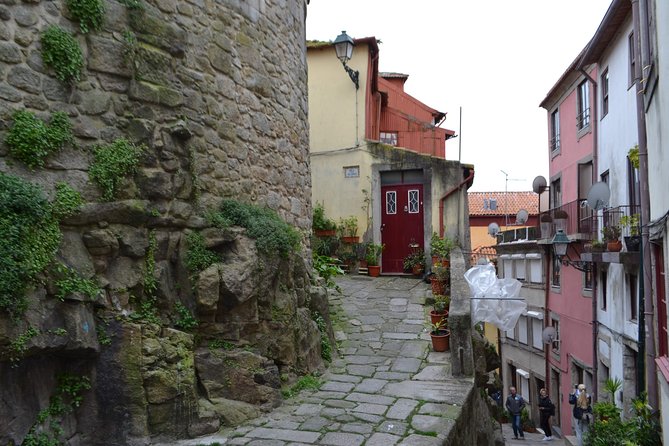
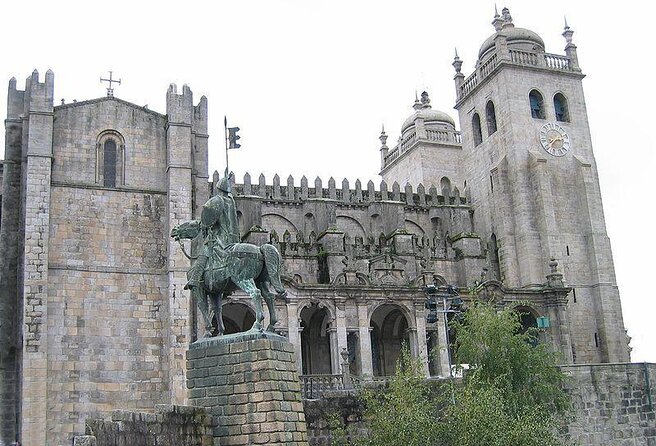
You meet at Porto Cathedral (Catedral do Porto) at Terrey da Sé. The cathedral area is a smart starting point because it’s central to how you’ll understand the rest of the walk: you’ll learn the city’s early rhythms and then watch those ideas move outward into neighborhoods and gates.
The tour is designed to be easy to join logistically. You’ll have a mobile ticket, service animals are allowed, and it’s near public transportation. If you’re the type who likes to show up a little early, do it—the meeting spot is busy and you’ll get less flustered.
Group size is kept fairly tight. If you’re on a shared departure, the limit is up to 10 travelers, while the operator lists a larger overall maximum for the experience. Either way, you should expect more than a casual chat: the format supports questions and back-and-forth.
From the cathedral to Ribeira Square: commerce and community
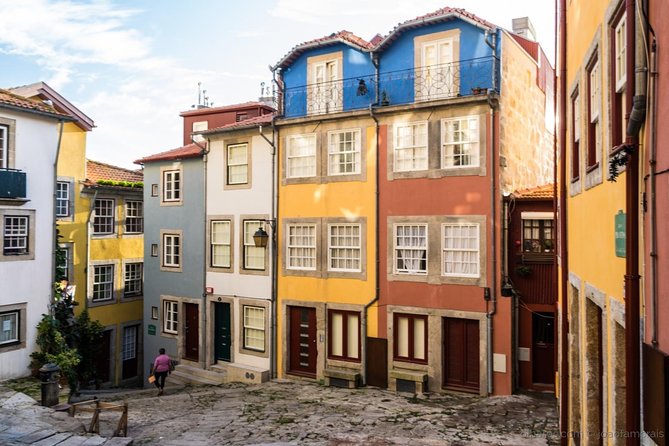
Your first stop is the cathedral area, where the walk begins with the setting. Since the stop includes free admission, you can spend a little time orienting yourself before the story starts pulling you into the neighborhoods.
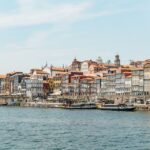
Then you move toward Praca da Ribeira, where the old Jewish quarter is discussed. This is where the “why Porto?” part matters. You’ll hear about the role Jewish people played in establishing Porto’s merchant trade during Portugal’s early years—an angle that helps you see the community not as a footnote, but as part of the city’s economic engine.
This is also where a guide’s pacing matters. The best tours here don’t rush past the street corners. They slow down for the logic of the city: where people lived, how they moved, and what the city’s structure allowed.
Sao Bento da Vitoria and Nossa Senhora da Vitoria: memorials you can’t ignore
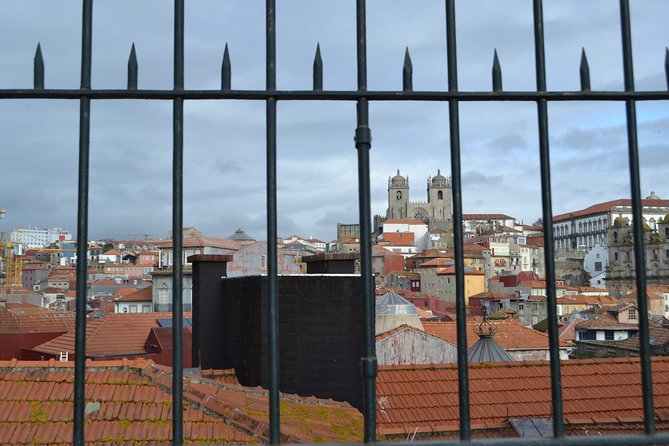
Next up is Mosteiro de Sao Bento da Vitoria. The stop is short, but it’s timed right: you’re walking through a dense area where religious institutions and memory overlap. The guide uses this moment to connect what you see now with what once mattered to the community.
You’ll then hear more at Igreja Paroquial de Nossa Senhora da Vitoria. Taken together, these church stops act like bookends for how Porto processed change over time. Even if you’re not an expert on Portuguese religious architecture, you’ll leave with a better sense of what survives and what was transformed.
The tradeoff here is simple: you may not see a “Jewish building” in the way you might expect. Instead, you’ll see how Christian sites in the present are tied to earlier eras through the stories attached to them. If you like interpretation, this works well.
Postigo do Carvao and the idea of a gate that still matters
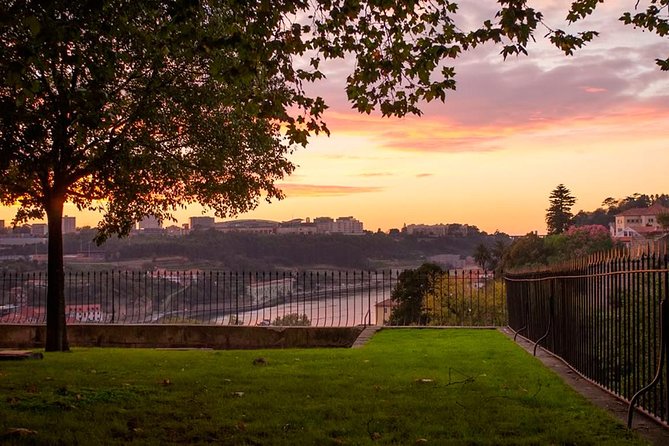
One of the more intriguing stops is Postigo do Carvao. The tour frames this as a window into medieval Porto—especially the way gates and access points shaped neighborhood life.
This is also where the story turns darker. You’ll learn how the Portuguese Inquisition tormented Jewish people and tried to erase their role in history. The guide doesn’t keep it abstract. You’ll see a gate connected to confinement in a medieval ghetto and talk through the effect that confinement had on where people could live, work, and gather.
A practical tip: if you’re curious, ask questions right here. The “how did the city work?” theme is strongest around the places that once controlled entry and movement. Once you move on to viewpoints, the city-shape lessons keep the momentum, but they’re harder to question in the same way.
You can also read our reviews of more guided tours in Porto



Porta do Olival fountains and Miradouro views: where history meets the hill
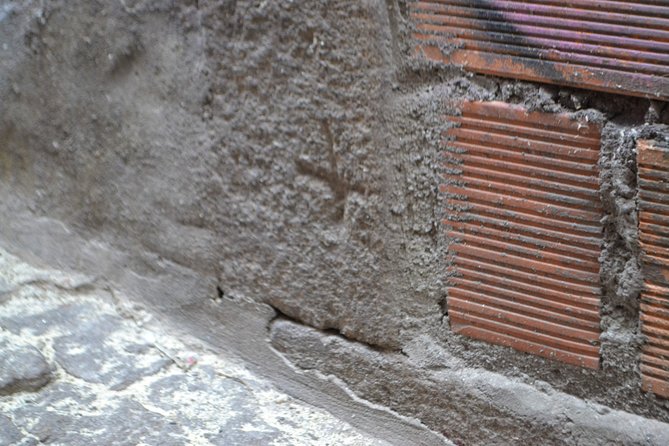
You’ll pass Chafariz da Porta do Olival, another stop meant to help you “read” history through the built environment. Fountains and gates may sound ordinary, but in old cities they’re functional landmarks—points that show where routes ran and where people were expected to pass.
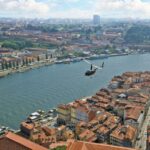
Then the tour climbs to Miradouro da Vitoria for a viewpoint stop. This is one of the payoff moments of the whole walk. From up here, Porto’s steep streets and winding layout make sense in a way they don’t from street level.
If you’re doing the tour on a day with clear light, you’ll get extra value. Views don’t change the story, but they make the city’s geography easier to remember. And remembering geography is what helps the Jewish quarter narrative stick.
Passeio das Virtudes: finishing near the Ribeira energy
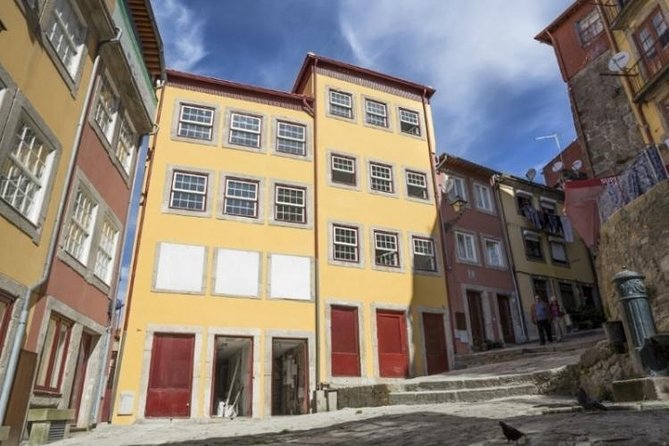
The final stretch includes Passeio das Virtudes. This is listed as the tour’s end point, and it fits the rhythm of the walking route: you start at the cathedral, move through neighborhood landmarks, then end up near the downhill connection back toward Ribeira Square.
There’s a reason ending in this area feels natural. Ribeira is the part of Porto where you can keep exploring after the tour without overthinking your next move. The “walk and then loosen up with a plan” style works well here.
If you want a quick post-tour reset, use the ending area to get a snack and map out the rest of your day. You’ll be in a better position to choose where to wander next because you’ve just learned what shaped the city.
What you’re actually paying for: $36.30 and 3 hours of street-level interpretation
At about $36.30 per person for roughly 3 hours, the cost is less about transportation and more about the guide’s on-the-ground interpretation. You’re paying for someone to point out what matters, explain why it mattered, and connect changes over time to the specific corners you’re standing on.
In cities where a lot is “general sightseeing,” this tour feels more targeted. The stops aren’t randomly picked. They line up with the story beats: early trade, neighborhood outlines, confinement and the Inquisition, and then the physical traces that remain.
Is it “worth it”? For me, the deciding factor is how you like learning. If you enjoy history that’s tied to real street logic, this format delivers. If you’re expecting a set of fully preserved Jewish landmarks, you might feel frustrated—because the tour is built around traces and context, not a museum checklist.
Included vs. not included: plan your next step
This experience includes a local guide and a professional guide. You also get a mobile ticket. What you do not get is a guided stop inside certain institutions: the Porto Synagogue and the Porto Jewish Museum are not included.
That matters. If synagogue or museum time is a priority for you, treat this walk as the “set the map” phase. It helps you understand what you’re looking at later—whether that’s a museum exhibit or a separate visit you schedule on your own.
Stairs, steep streets, and smart casual: practical comfort notes
Even with a 3-hour duration, this route asks for stamina. The operator notes that you go up through some stairs and steep streets. The reviews echo this with simple advice: bring comfortable shoes, and don’t pretend you’re doing “just a little walk.”
Dress code is smart casual. That’s not fancy; it just means you should avoid sloppy footwear and treat the tour as something you want to look nice for in photos and at stops.
Weather-wise, the tour operates in all weather conditions, and you should dress appropriately. Also keep in mind: if it gets canceled due to poor weather, you’ll be offered a different date or a full refund.
Who should book this Porto Jewish Heritage walking tour
This is a great fit if you:
- want a focused historical walk, not a generic city tour
- like learning that’s tied to actual street corners
- enjoy viewpoints and medieval city structure as part of the story
- are comfortable with hills, stairs, and steady walking for about three hours
You might think twice if you:
- need a mostly flat route (this has stairs and steep streets)
- want visits primarily to intact Jewish buildings (this walk is built around traces and memory)
- prefer long inside-the-building time over outdoor interpretation
Should you book?
Yes, if your goal is to understand Porto’s Jewish presence through the city’s real geography. This tour is the best kind of history walk: it gives you names, locations, and a clear explanation of how commerce, community life, and persecution shaped the neighborhoods.
If you’ve got the shoes and a decent walking pace, you’ll come away with a street-smart sense of Porto that lasts beyond the tour. And if you’re the type who likes asking questions, you’ll appreciate the guide setup—especially based on the repeated praise for guides like Ricardo, who are described as prepared, engaging, and easy to talk with.
FAQ
Where do I meet the guide, and where does the tour end?
You start at Porto Cathedral (Terreiro da Sé, 4050-573 Porto, Portugal). The experience ends at Passeio das Virtudes (Passeio das Virtudes, 4050 Porto).
How long is the Porto Jewish Heritage walking tour?
It lasts about 3 hours.
Is the tour in English, and how large are the groups?
The tour is offered in English. If you book a private tour, it’s just your group and the guide; otherwise the shared group is capped at a maximum of 10 travelers (and the operator lists a maximum of up to 20 travelers for the experience).
What is included, and do I visit the synagogue or Jewish Museum?
Included are local guide and professional guide. The tour does not include a visit to the Porto Synagogue or the Porto Jewish Museum.
What should I wear or bring?
Wear smart casual and bring comfortable shoes. You’ll be walking over stairs and steep streets, and the tour runs in all weather, so dress for conditions.
Is the route flat?
No. Expect stairs and steep streets. Good physical fitness helps.
What if it’s poor weather?
The tour operates in all weather, but if it’s canceled due to poor weather, you’ll be offered a different date or a full refund.