REVIEW · PORTO
Ride through romantic Foz in an eco-friendly car
Book on Viator →Operated by ECO LOCAL Tours · Bookable on Viator
Porto hits hardest by the water. This 2-hour ride in an eco-friendly E-Mehari takes you from Catedral do Porto down the Douro River’s right bank and out toward Foz do Douro and Matosinhos. It’s a fast route packed with viewpoints, historic stops, and that seaside “I’m really here” feeling.
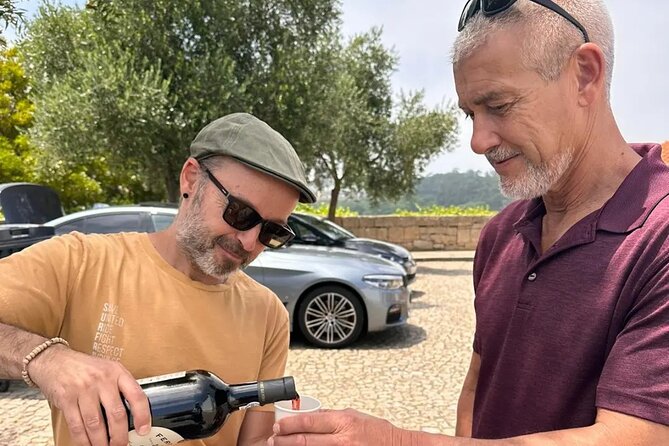
I especially love the quiet electric ride—more glide than roar—so you can actually enjoy the scenery. And I like that the tour includes an offered glass of Port wine, which fits the place and doesn’t turn the trip into a long dinner detour.
The main drawback is simple: the experience needs good weather, and the stops are brief. If you want long, slow museum time or deep church visits, you’ll treat this as orientation and photo time—not a replacement for full-day exploring.
In This Review
- Key highlights you’ll feel right away
- Riding an E-Mehari: why this route works so well in 2 hours
- Starting at Catedral do Porto: the hill-to-river setup
- Infante D. Henrique Square to the Bolsa and St. Francis
- Right-bank riverfront: slope houses, customs buildings, and “why Porto looks like this”
- Massarelos and the Arrábida Bridge: the engineering break you’ll remember
- Miradouro de Santa Catarina: the Douro estuary view (plus a quick reset)
- Foz do Douro: gardens, aristocratic homes, and sea-breeze energy
- Matosinhos Beach finish: Atlantic air instead of more city stops
- Alcohol + timing: the real value behind the $56.47 price
- Weather, expectations, and who this is best for
- Should you book this eco-friendly Porto-to-sea tour?
- FAQ
- How long is the tour from Porto’s riverfront to the coast?
- What’s included in the price?
- Is there a place for lunch during the tour?
- Is the tour ticket mobile?
- Do I need to buy tickets for the cathedral?
- What if the weather is bad?
Key highlights you’ll feel right away
- Open-air, no-noise electric transport: the E-Mehari style keeps it fun and easy for photo stops.
- Right-bank Douro to the Atlantic: you get a natural “from river city to seaside” route in one go.
- Iconic views at Miradouro de Santa Catarina: a real viewpoint break over the Douro estuary.
- Arrábida Bridge in reinforced concrete: designed by Edgar Cardoso, with impressive mid-20th-century engineering cred.
- Foz do Douro promenades: Passeio Alegre gardens and aristocratic homes you can spot along the drive.
- A short beach finish at Matosinhos: Atlantic air to wrap up the loop, with time to look and reset.
Riding an E-Mehari: why this route works so well in 2 hours
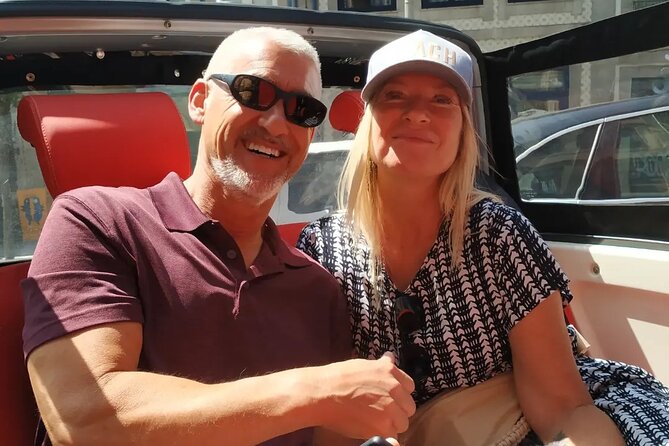
Porto can feel like a “walk forever” city. This tour avoids that problem by using an eco-friendly E-Mehari to connect the dots—cathedral, riverfront, bridges, estuary viewpoint, and finally the coast. In about 2 hours, you get the big picture and several memorable angles without needing to cram in transport plans.
The E-Mehari vibe matters. It’s open and light, and the electric ride tends to be quiet, which makes the whole experience more relaxed. You’re not shouting over a noisy engine while trying to enjoy the view or hear the guide’s explanations.
And because it’s private (your group only), the guide can pace the trip around your interests—especially during photo moments. That’s a big deal on a short outing, where you don’t have time to waste.
You can also read our reviews of more tours and experiences in Porto.
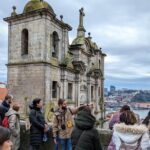


Starting at Catedral do Porto: the hill-to-river setup
The trip starts at Rua do Infante D. Henrique 111, right by the Catedral do Porto. This is more than just a meeting point. The cathedral sits on the old growth area of the city, and the tour ties it to the rise of Porto from the Morro da Pena Ventosa hill area.
You’ll spend around 5 minutes there. That’s enough to get your bearings and understand why this spot matters, but not enough for a slow inside visit. Admission for the cathedral isn’t included, so if you want to go beyond the exterior, plan to pay separately and add extra time later.
Practical tip: arrive a few minutes early so your group is ready to roll. When you’re heading down toward the river, that timing helps you get into the best daylight windows.
Infante D. Henrique Square to the Bolsa and St. Francis
From the cathedral area, the drive heads toward Infante D. Henrique Square, with its statue anchoring the history of the city’s maritime identity. Right away you get a sense of how Porto’s story is tied to exploration and trade.
Then you pass two major landmarks you’d easily miss if you were only doing random wandering:
- Palácio da Bolsa (Stock Exchange Palace)
- Igreja de São Francisco (the Church of St. Francis, built in the 14th century)
Even if you don’t step inside, simply seeing these buildings from the right perspective helps you map where things sit relative to the river. It turns Porto from a list of sights into a route you can understand.
Right-bank riverfront: slope houses, customs buildings, and “why Porto looks like this”
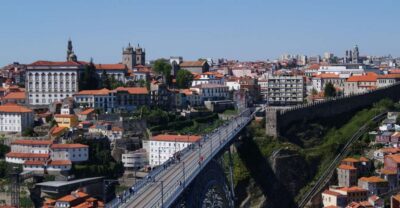
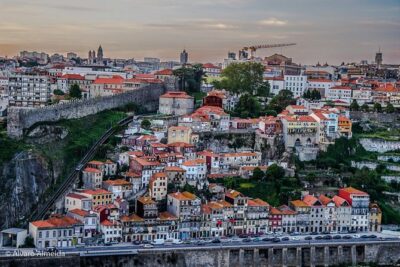
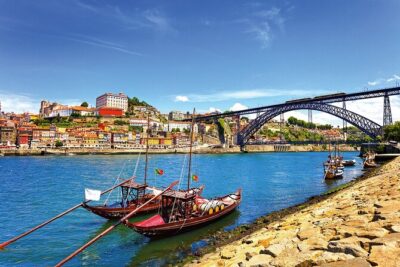
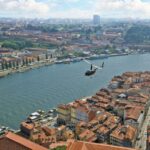
Here’s where the “romantic right bank” part actually becomes real. The tour follows the river’s right side and shows you the houses built on the slopes—the visual reason Porto looks the way it does from across the water.
On this stretch, you’ll spot or pass several historic pieces that connect city life to maritime commerce:
- São Pedro de Miragaia Church
- The old customs house, Alfândega (now a Congress Center and Museum of Transport)
- The Museum of Discoveries
You’re not trying to cram in a museum ticket here. Instead, you’re learning how Porto’s riverfront was built for movement of goods and people. If you like cities where the buildings have jobs, this section clicks fast.
Also, the slope neighborhoods can be easier to appreciate from the road than on foot. If your feet get tired quickly, the electric vehicle becomes a comfort upgrade, not just a novelty.
Massarelos and the Arrábida Bridge: the engineering break you’ll remember
After the riverfront district, the tour moves through Massarelos and points you toward the Arrábida Bridge. This is a standout moment because it’s not just a bridge—it’s a headline about engineering.
The bridge was designed by Porto engineer Edgar Cardoso. In the 1960s, it was considered one of the longest-arch bridges in reinforced concrete in the world. You’ll feel the scale when you look at it from the right angles, and it gives you a clean “stop and think” break in the middle of the ride.
Why this matters on a short tour: it gives your brain a landmark. After seeing it, the rest of the coastline and viewpoint stops feel connected rather than random.

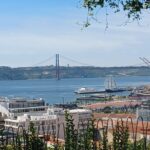
Miradouro de Santa Catarina: the Douro estuary view (plus a quick reset)
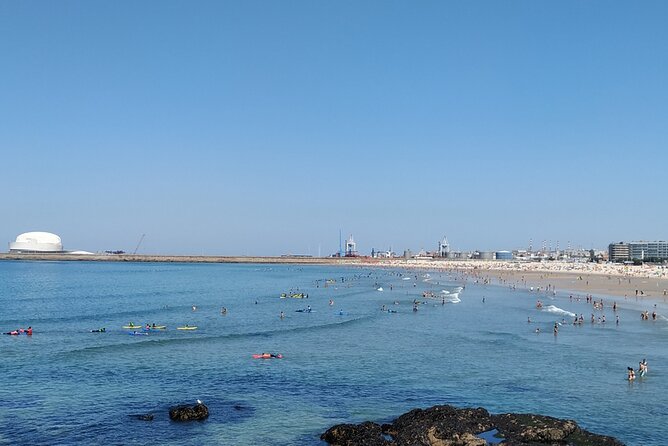
Next comes one of the best moments on the whole route: Miradouro de Santa Catarina. You arrive in the Lordelo do Ouro area, which used to be a typical fishing neighborhood near where the Douro meets the sea.
You’ll get about 10 minutes at the viewpoint. During that time, look out over the Douro estuary and you can spot places like the Local Natural Reserve of the Douro Estuary, the fishing district S. Pedro da Afurada, and the Calém Garden.
This is the kind of stop that makes the rest of Porto make more sense. From street level, the city is layered and busy. From here, you understand the geography that created those layers: river, estuary, coastline, and neighborhoods built along the water.
Bring your camera, but also just stand and watch. Even in a short window, you can feel how Porto transitions from river culture to Atlantic life.
Foz do Douro: gardens, aristocratic homes, and sea-breeze energy
After the viewpoint break, the drive continues toward the Atlantic. You pass a small fishing port area called Cantareira, and then you reach Foz do Douro.
This is where Porto shifts into a more seaside mood. You’ll glimpse the Passeio Alegre gardens and the surrounding homes associated with the Porto aristocracy. Even from the road, you can see how the coastline neighborhood design differs from the denser river slopes.
This is also a good “breath stop” on the schedule. You’re not stuck inside anything. You’re just moving along the coast, letting the scenery do its job.
If you’re a fan of architecture or you like noticing how neighborhoods evolve, Foz is a satisfying segment because it’s visually different from the inner city.
Matosinhos Beach finish: Atlantic air instead of more city stops
The tour rounds things out with Matosinhos Beach. The route goes along Avenida do Brasil and Montevideu, and you can spot a city park on one side while the beach sits in the background.
Then you continue through Matosinhos to the shoreline area, with another 10-minute break. This final stop keeps the whole experience from feeling like only old buildings and river history.
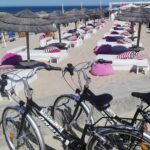
Beach time at the end works for a reason: your body gets a change of pace. After bridges and viewpoints, you get salt-air visuals and a simple chance to look around without needing tickets.
Practical note: this is short. If you want a longer beach walk, treat this as the “starter portion” and then continue on your own after the tour returns to the meeting point.
Alcohol + timing: the real value behind the $56.47 price
The price is $56.47 per person for an experience that runs around 2 hours, includes private transportation, and offers a glass of Port wine. For a private guided format with an eco-friendly vehicle, that can feel like good value.
Here’s why I think it’s worth it:
- You’re paying for route efficiency. In a short time, you see a coordinated sequence—cathedral area, main landmarks, right-bank riverfront, bridge, viewpoint, seaside, and a beach finish.
- You’re not burning energy on long transfers. The vehicle handles the connections.
- The Port wine is a small inclusion, but it matches the setting and makes the tour feel properly Portuguese without turning it into a long detour.
What you should also keep in mind: lunch isn’t included, so you’ll want to plan your meal either before or after. If you’re booking an afternoon slot, pairing it with a late lunch or early dinner often works best.
One more value detail: it’s a private tour, but there’s a minimum of 2 people per reservation. So it’s easiest if you’re traveling with someone, or you’re flexible enough to pair up with a friend’s schedule.
Weather, expectations, and who this is best for
This tour requires good weather. If skies are rough, it can be canceled and you’ll be offered a different date or a full refund. That matters because a big portion of the experience is looking outward—over the estuary, toward the Atlantic, and at bridge views.
Also, expectations: this is a short, moving tour with quick stops. It’s not designed for long internal visits. Catedral do Porto has an admission note, and the time allocations (5 minutes, 10 minutes, 10 minutes) tell you the style: look, learn, photo, then move.
This works especially well if you:
- have limited time in Porto and want the “river to sea” story
- don’t want to walk constantly uphill or across long stretches
- like guided orientation that helps you plan where to go next
- prefer quiet, comfortable transport over more chaotic city navigation
It may not be ideal if you want hours of beach time or deep museum-level visits. In that case, think of it as a first pass, not the final stop.
Should you book this eco-friendly Porto-to-sea tour?
Book it if you want a smart, efficient overview of Porto’s geography: the cathedral zone, the historic riverfront, the engineering landmark, and the coast. The combination of an electric E-Mehari ride, short viewpoint moments, and a Port wine inclusion is a very practical way to get romance and context without spending half a day on logistics.
Skip it (or at least add your own plans) if you already know Porto well and you crave long stays at a single location. This is built for movement and “see the whole idea,” not for deep time in one place.
If you’re on the fence, I’d choose it on a day when the sky looks trustworthy. The viewpoint portions are the kind of moments that really need clear visibility.
FAQ
How long is the tour from Porto’s riverfront to the coast?
It lasts about 2 hours.
What’s included in the price?
You get private transportation and an offer of a glass of Port wine.
Is there a place for lunch during the tour?
Lunch isn’t included.
Is the tour ticket mobile?
Yes, you receive a mobile ticket.
Do I need to buy tickets for the cathedral?
Admission to Catedral do Porto is not included.
What if the weather is bad?
The experience requires good weather. If it’s canceled due to poor weather, you’ll be offered a different date or a full refund.