REVIEW · PORTO
Porto 6 bridges Speedboat Tour along the Douro
Book on Viator →Operated by BBDouro · Bookable on Viator
Six bridges, one fast ride.
This speedboat tour on the Douro is interesting because it mixes classic Porto-and-Gaia landmarks with speed, and you may even get an extra thrill if conditions allow the boat to head out toward the sea. I like how the experience starts at Douro Marina in Vila Nova de Gaia, so the meeting point feels straightforward and the ride launches quickly.
My second favorite part is the combo of feeling safe and still having fun—life vests are part of it, and the crew has a knack for keeping you comfortable (jacket offers show up when the air or mist turns chilly). One thing to consider: you can get a bit wet from the spray, and the tour depends on good weather, so you’ll want to plan with that in mind.
In This Review
- Key points to know before you go
- Why a Speedboat Works Best for Porto and Gaia
- Check-In at BBDouroDouro Marina: Easy to Find, Easy to Start
- Safety With a Twist: Life Vests, Crew Comfort, and Real Fun
- The 45-Minute Route: From Douro River Landmarks to Gaia Quays
- Douro River views: caves, boats, and the estuary vibe
- Douro Marina: modern Porto on the water
- Afurada edge-of-the-river setting
- Ponte da Arrábida: the bridge with the big reinforced concrete claim
- Porto’s electric tram museum area and tile-covered church facades
- Alfândega Porto Congress Centre: a customs building made of iron and stone
- Passeio das Virtudes and the terraced view factor
- Torre dos Clérigos: the tower that was once a navigation aid
- Cais de Gaia: where wine moved, aged, and got exported
- Barcos rabelos: the traditional wine carriers
- Ribeira and Paço Episcopal: medieval Porto in a tight band
- Dom Luís I Bridge and the river crossings that define the skyline
- Serra do Pilar Monastery: circular architecture with a fortress past
- Crystal Palace gardens and the estuary nature reserve
- Passeio Alegre: where the Douro meets the Atlantic
- The Six-Bridge Angle: Seeing Porto’s Connections Like a Map
- What to Wear When Speed Meets River Spray
- Price and Value: Is $54.22 Worth 45 Minutes?
- Who Should Book This (and Who Might Rethink It)
- Should You Book Porto 6 Bridges Speedboat Tour?
- FAQ
- How long is the Porto 6 bridges speedboat tour?
- Where does the tour start?
- Is the tour offered in English, and what’s the minimum age?
- What’s the group size on the boats?
- Does the route ever go out to sea?
- What happens if the weather is poor?
Key points to know before you go
- Douro Marina start: meet at BBDouroDouro Marina in Vila Nova de Gaia for an easy launch.
- Short and punchy: about 45 minutes to see a lot from the water.
- Small-feeling boats: up to 10 people per boat with three boats running.
- Chance for sea views: if conditions are right, you’ll cruise out to the sea.
- Bridge-and-river story: you’ll get landmark context while moving fast under and around major Porto crossings.
Why a Speedboat Works Best for Porto and Gaia
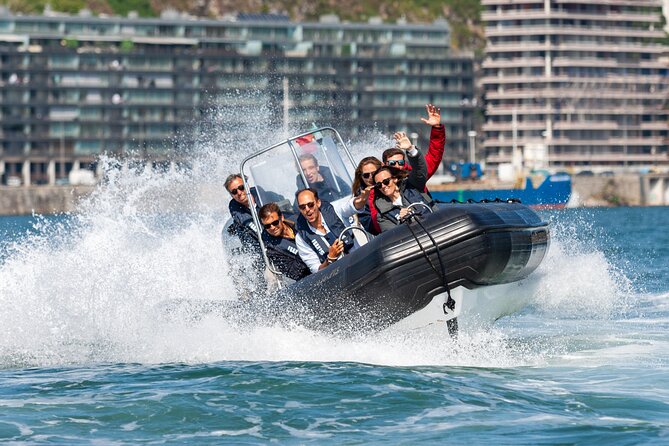
Porto from the river hits different. From street level, it’s charming. From water level, it’s dramatic—bridges, churches, and wine-quay architecture line up in a way your feet can’t really manage.
This tour is built around speed, not lingering. That’s the point. In about 45 minutes, you get the main Porto-and-Gaia highlights, plus a wildlife flavor at the river estuary area if the route and conditions line up. It’s an efficient “get your bearings fast” plan for first-time visits.
You can also read our reviews of more tours and experiences in Porto.

Check-In at BBDouroDouro Marina: Easy to Find, Easy to Start
You meet at BBDouroDouro Marina, R. da Praia, 4400-554 Vila Nova de Gaia. The big advantage here is that you’re starting from the water side, not trekking through old streets first. If you’re pairing this with other Porto sightseeing, that matters—you lose less time just getting to the boat.
The tour uses a mobile ticket, and you’ll receive confirmation at booking. It’s also offered in English, which helps if you want the historical bits explained while you’re moving.
Safety With a Twist: Life Vests, Crew Comfort, and Real Fun
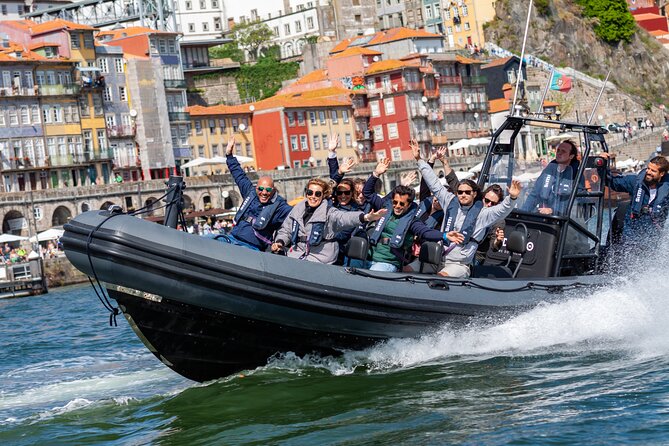
Speedboat rides can feel intimidating if you don’t trust the operator. Here, the experience leans into safety in a practical way: you’ll be directed to wear a life vest, and the ride feels controlled rather than chaotic.
And yes, the fun part is the speed. The good news is that the crew clearly understands that wind + spray can be uncomfortable, because jackets may be offered in case you need an extra layer. You still get the thrill of speed while staying warm enough to enjoy the views instead of just bracing.
Only watch out for the obvious: it can be windy and you might get wet.
The 45-Minute Route: From Douro River Landmarks to Gaia Quays
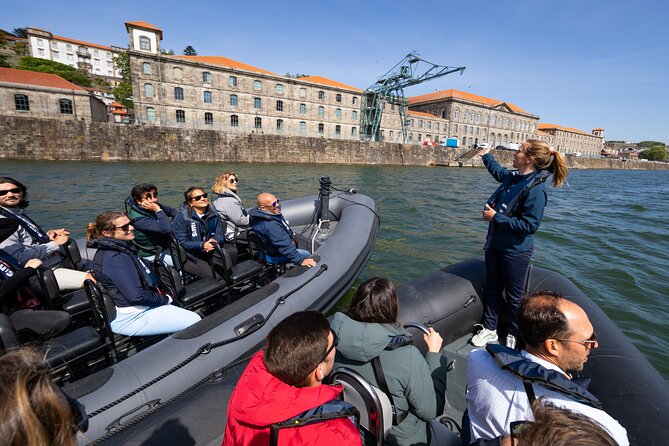
The itinerary is structured more like a highlight drive-by than a sit-and-wait museum tour. You stay on the water, and the “stops” are largely about what you can see and learn as you pass.
Douro River views: caves, boats, and the estuary vibe
Early on, you’re on the Douro River with views of both cities as you move toward the coast. You’ll take in signature references like the Wine Caves, Ouro Street, and Clérigos Church. You’ll also see the Rabelo boats tradition up close in the sense that the route connects you to how those boats historically moved Port wine.
Then there’s the estuary angle. You head toward the Douro estuary, a protected area with wildlife and birdlife. Even if you never get out of the boat, the explanations make the nature element feel real instead of like a random detour.

Douro Marina: modern Porto on the water
At Douro Marina, you see a newer piece of Porto’s waterfront story. The marina opened to the public in February 2012 after an 8.5 million euro investment, with 2.5 million allocated to floating equipment. The dock can handle about 300 vessels up to 20 meters long.
This stop is useful because it gives context for how Porto manages its water traffic today—repair and maintenance areas, shops, restaurants, and water sports infrastructure all sit near the boats. It’s not just a pretty harbor photo; it’s the working engine of the waterfront.
Afurada edge-of-the-river setting
Next you pass by the Afurada area. It’s near the mouth of the Douro and has a population around 6,500. The early inhabitants focused on fishing, and the viewing area ties to that rootsy river livelihood.
This part adds a human scale. Porto and Gaia can feel all monuments and wine cellars. Afurada shifts you back to a working-edge river town.
Ponte da Arrábida: the bridge with the big reinforced concrete claim
You’ll see Ponte da Arrábida, the arch bridge connecting Porto to Vila Nova de Gaia. It was inaugurated June 22, 1963, and at construction time it had the largest reinforced concrete arch of its kind in the world.
The pedestrian story is interesting too: there were lifts built so pedestrians could cross the distance between river and roadway. Those lifts stopped working in the mid-1990s, but the bridge still reads as a clever piece of mid-century engineering.
Porto’s electric tram museum area and tile-covered church facades
As you cruise, two specific cultural landmarks come into view in a “spot it, notice it” way.
You’ll pass the Museu do Carro Electrico area, tied to Porto’s electric transport story. The museum is in a former building linked to the Massarelos Thermoelectric Plant built in 1915. The idea here isn’t that you tour inside during the boat ride; it’s that you recognize why the architecture around you looks the way it does.
You’ll also see the Igreja da Confraria das Almas do Corpo Santo de Massarelos, built in 1776, with distinctive tile-covered surfaces and a layered facade design. From the river, churches like this often look more sculptural than they do on a street walk.
Alfândega Porto Congress Centre: a customs building made of iron and stone
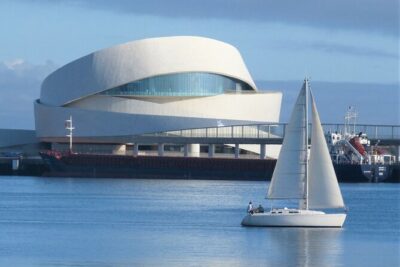
Another standout viewpoint is the Alfândega Porto Congress Centre, the New Customs building designed by French architect Jean Colson in the 19th century. It represents the mercantile boom along the Douro banks, and the building’s mix of iron with stone, bricks, and wood gives it a sturdy, industrial look.
From the water, it’s easy to understand why this site mattered: it was built for shipping and trade, right where the river brings goods and gravity does the rest.
Passeio das Virtudes and the terraced view factor
You’ll also come alongside Passeio das Virtudes, a park known for being “vertical” in design—terraces descend down a slope. The payoff is that the views (of the Alfândega, the Douro, and Gaia) are strong from many points.
On a boat ride, this is mostly about perspective. But seeing it from the river helps you understand why these terraces became such a popular Porto look-out style.
Torre dos Clérigos: the tower that was once a navigation aid
Then there’s the Torre dos Clérigos, designed by Nicolau Nasoni, completed in 1763. You might recognize it instantly from photos, but the river angle makes its height feel even more imposing.
The tower has had multiple roles over time: bell tower, orientation point for boats, and even a strategic military reference. The climb is 225 steps if you come back later for the full view.
Cais de Gaia: where wine moved, aged, and got exported
Once you reach the Gaia side, the tone shifts to wine and shipping history.
The Gaia Quay (Cais de Gaia) was a shipyard and trading post since the 18th century. It’s strongly tied to Port wine because, for centuries, the river port was located there where goods were exported and imported. Rabelo boats anchored nearby, then unloaded barrels for aging in Gaia’s cellars.
After refurbishment completed in 2003, the quay became more leisure-focused and even won a Tourism Award – Enhancement of Public Space. The whole area makes a strong case for why Porto’s wine culture isn’t just about grapes—it’s about logistics and access to water.
Barcos rabelos: the traditional wine carriers
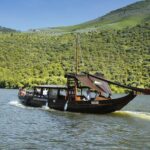
You’ll connect those wine-quay views with the story of Rabelo boats. Historically, they transported Port wine between the remote Douro wine region and the cellars in Gaia, especially before roads and railways existed for this kind of work.
The tricky part: before dams, the Douro could be rough, with fast currents in narrows and gorges. So steering a Rabelo required experienced sailors. In other words, wine movement wasn’t casual shipping—it was skilled river work.
Ribeira and Paço Episcopal: medieval Porto in a tight band
Passing along Ribeira, you’re looking at one of Porto’s oldest areas and part of the UNESCO World Heritage Historical Center. It’s known for commerce and movement because it sits close to the river.
This section also includes the legend of Ribeira’s Duque, a local figure known for saving people from drowning. Even if you don’t know the story yet, the memorial naming is the kind of detail that makes Porto feel personal instead of purely architectural.
Nearby is the Paço Episcopal, the former residence of the bishops of Porto. It sits adjacent to the cathedral and dominates the skyline from the right elevated angle. It’s classified as a National Monument since 1910.
Dom Luís I Bridge and the river crossings that define the skyline
No Porto river story is complete without the Dom Luís I Bridge. This metal bridge measures about 395 meters long and 8 meters wide and connects Porto and Gaia with two decks.
It was completed in 1888 and built by Théophile Seyrig under the orders of King Louis I. It’s a landmark not only because it’s pretty, but because it’s practical—two-level connectivity that reshaped how people and goods moved between sides.
Serra do Pilar Monastery: circular architecture with a fortress past
On the hillside and monastery side, you’ll see Miradouro Serra do Pilar. The Serra do Pilar Monastery is a 17th-century church with a circular plan and an imposing hemispherical vault. It’s a UNESCO World Heritage Site since 1996.
The building’s past includes military use: during Napoleonic invasions in 1809 and again in 1832–33 during liberal struggles, it was used as a military base and later converted into an artillery barracks.
From the boat, the circular plan can look almost impossible. That’s part of the attraction.
Crystal Palace gardens and the estuary nature reserve
You’ll also pick up the area around the Jardins do Palácio de Cristal. The original project began in 1861 and the gardens were inaugurated September 18, 1865 by King D. Luís. The original Crystal Palace was demolished in 1951 to make way for today’s Super Bock Arena.
The gardens were designed by Emil David, and the current design keeps features tied to the original plan, including terraces and avenues. From the river, these gardens add softness and greenery without taking over the view.
Then you get the Reserva Natural do Estuario do Douro, a 66.35-hectare protected area on the south bank near Afurada. It protects birdlife in the migratory corridor known as the East Atlantic Route. There’s even a suspended walkway where you can visit freely—so if you like what you see from the boat, you know where to go next.
Passeio Alegre: where the Douro meets the Atlantic
Finally, you’ll be drawn toward Jardim do Passeio Alegre. This late 19th-century garden was designed by Émile David (the same architect tied to Crystal Palace gardens) and is classified as a Public Interest Property.
It’s known for shade and for the exact feeling of where the Douro waters merge with the Atlantic. The “turtle fountain” (a granite fountain designed by Nicolau Nasoni) adds a quirky Porto detail, along with obelisks and a bandstand that sometimes hosts concerts. It’s the kind of place you might want to linger after your boat ride ends.
The Six-Bridge Angle: Seeing Porto’s Connections Like a Map
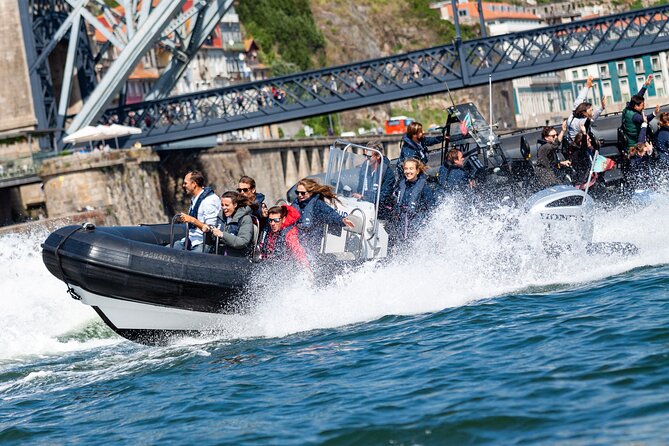
The tour is titled around six bridges, and that theme matters because the Douro is really a system of crossings. When you move fast enough and stay close to the waterline, bridges stop being background and become part of the motion.
You’ll definitely learn about Ponte da Arrábida and the Dom Luís I Bridge as two key crossings that define Porto–Gaia connections. You’ll also hear the bridge story tied to Porto’s earlier infrastructure (including references to the D. Maria Pia bridge) and the city’s modern replacements. Even if you don’t clock every bridge as a separate stop, the way the route threads between them makes the whole “bridge city” feeling click.
What to Wear When Speed Meets River Spray
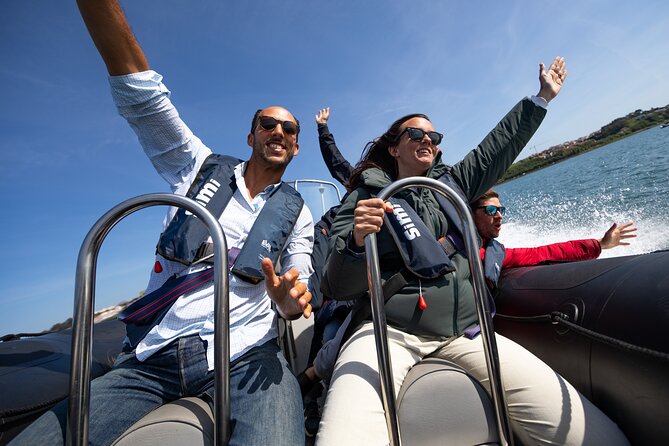
This isn’t a warm-weather-only activity. It’s outdoors, it’s fast, and the river can spray the boat.
I’d plan for two things: wind and wet clothes risk. A light waterproof layer helps, and if you feel the cold, take advantage of the crew’s jacket offer if they provide them. You’ll be in a life vest, so avoid bulky items that feel awkward around it.
If you’re doing this on a day when the sky looks iffy, keep your expectations flexible. The tour requires good weather, and if conditions aren’t right, you’ll be rescheduled or get a full refund.
Price and Value: Is $54.22 Worth 45 Minutes?
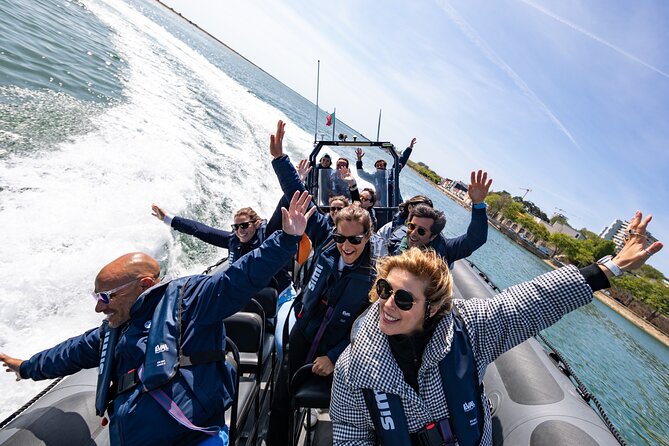
At $54.22 per person for about 45 minutes, you’re paying for time efficiency and viewpoint quality. You’re not buying a long, sit-down sightseeing block. You’re buying a fast, guided water perspective that links landmarks in Porto and Gaia in one shot.
The value also comes from the feel of small groups on the water. With a maximum of 38 travelers overall and up to 10 per boat across three boats, you typically don’t feel lost in a crowd.
And the experience is well-rated: a 4.9 overall rating and 96% recommended suggests that most people who choose this do feel like they got their money’s worth. In a city where everything is spread across hills and waterfront curves, this is one of the smarter “do it early” choices.
Who Should Book This (and Who Might Rethink It)
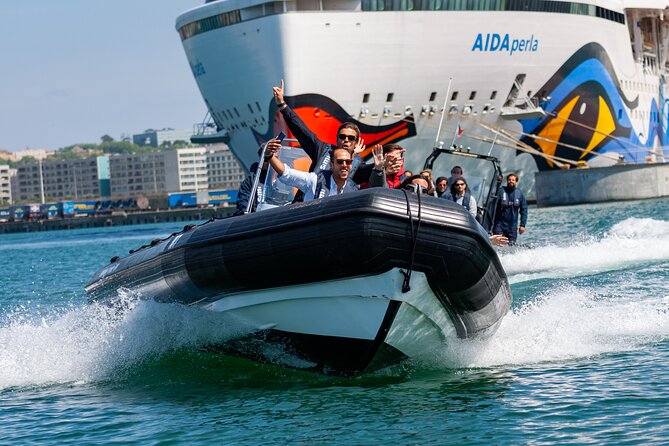
This tour suits you if:
- you want a fast, high-view plan that covers Porto + Gaia from the water
- you like river context, not just photos
- you’re okay with motion and a bit of spray
It’s also family-friendly in the sense that the minimum age is 10 years old, and most people can participate. The maximum group size stays controlled with three boats.
If you hate wind, don’t want to get wet at all, or strongly prefer slow strolling experiences, you might find a walking tour or viewpoints route more comfortable. But for many people, that contrast is exactly why they choose the speedboat.
Should You Book Porto 6 Bridges Speedboat Tour?
Book it if you want a real “Porto in motion” experience. It’s short, guided in English, and designed around iconic bridges and waterfront landmarks you’d otherwise stitch together over an entire day. The biggest practical win is the river perspective: bridges, churches, customs buildings, wine-quay history, and even the estuary nature angle, all in one ride.
Skip it only if you can’t handle outdoor wind or you’re likely to be miserable with a little spray. Otherwise, it’s one of the more efficient ways to get the city’s geography working in your head.
FAQ
How long is the Porto 6 bridges speedboat tour?
It runs for about 45 minutes.
Where does the tour start?
You meet at BBDouroDouro Marina, R. da Praia, 4400-554 Vila Nova de Gaia, Portugal, and the activity ends back at the meeting point.
Is the tour offered in English, and what’s the minimum age?
The tour is offered in English. The minimum age is 10 years old.
What’s the group size on the boats?
The maximum is 38 travelers overall. There are three boats, and up to 10 people can participate per boat.
Does the route ever go out to sea?
If conditions are right, the cruise can continue out to sea.
What happens if the weather is poor?
The tour requires good weather. If it’s canceled due to poor weather, you’ll be offered a different date or a full refund.