REVIEW · PORTO
Port : Douro Cruise, 6 Bridges & 4 Port Wines (Max 7)
Book on Viator →Operated by Alma Douro · Bookable on Viator
If you want Porto without the cruise-ship crowd noise, this 2-hour Douro outing is a smart pick. It’s built around a small group (max 7), with a smooth mix of iconic river sights and story-rich stops, capped with four port wines you can taste and compare. The vibe is relaxed, and the hosts, Nadia and Paulo, keep things personal.
What I love most is the way the experience balances scenery with real context, including landmarks you normally only speed past. I also like the food-and-drink feel: you’re not just looking out at bridges, you’re actually sampling local flavors along the route. The only real consideration: it’s not recommended for reduced mobility, and the whole experience depends on good weather.
In This Review
- Key things to know before you go
- Porto on the water: what this 6-bridges cruise actually feels like
- Starting in Afurada: why the meeting point matters
- Clérigos Tower and Porto’s vertical views
- Dom Luís I Bridge: the postcard made practical
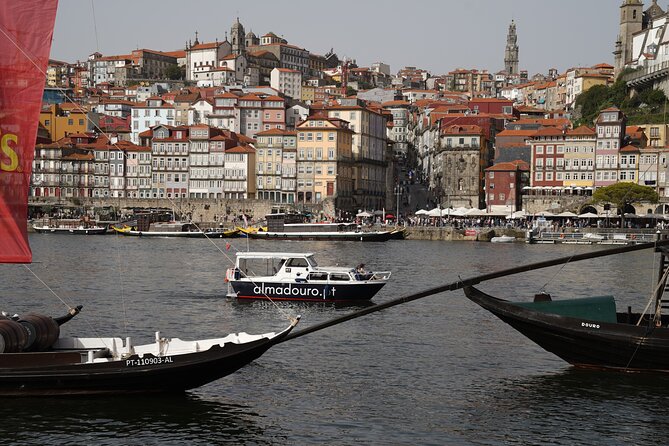
- Ribeira and the classic riverfront feel
- Serra do Pilar Monastery: UNESCO views with real stone weight
- D. Maria Pia Bridge: Eiffel’s iron arch at river level
- Nature reserve time: birds at the Douro Estuary
- Ending at the Douro mouth near the Atlantic: the scenery shift
- Port wine tasting: where the experience becomes memorable
- Snacks, blankets, and the small-boat comfort factor
- How the 2 hours work with Porto sightseeing logic
- Value check: is $72.41 worth it?
- Who should book this Douro cruise (and who shouldn’t)
- Do I recommend it?
- FAQ
- How long is the Douro cruise?
- Where does the tour start?
- Is the experience offered in English?
- How many travelers can join?
- Does it include port wine tasting?
- Is it suitable for reduced mobility?
Key things to know before you go
- Max 7 people: you get a calmer ride and more room to ask questions.
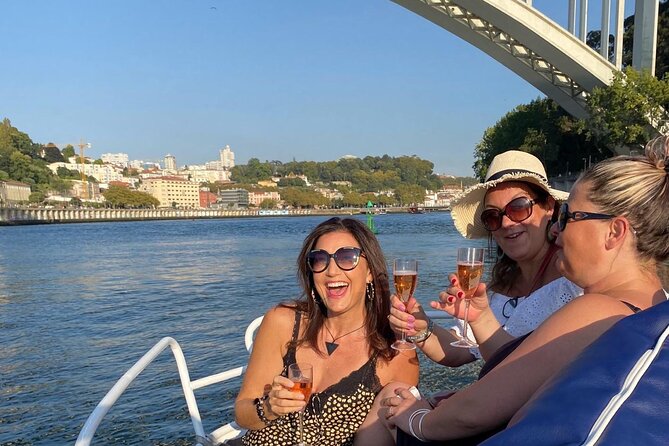
- Four port wines included: you taste and learn, not just sip casually.
- Clérigos Tower stop (225 steps): worth it if you’re comfortable climbing.
- UNESCO Serra do Pilar: a circular monastery viewpoint over the river.
- Bridge highlights: Dom Luís I and D. Maria Pia with engineering history.
- Ends at the Douro mouth by the Atlantic: a nice change of scenery at the end.
Porto on the water: what this 6-bridges cruise actually feels like
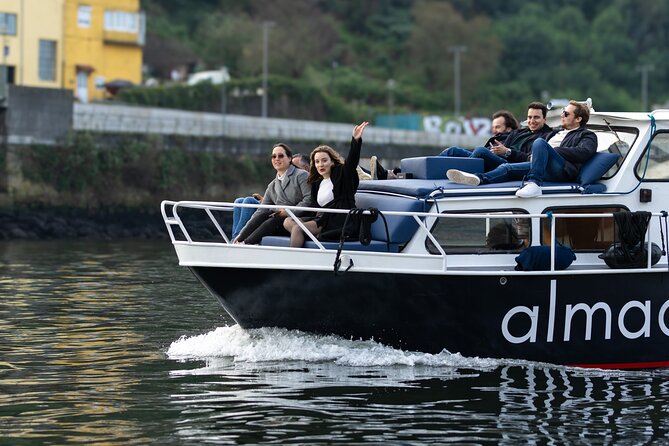
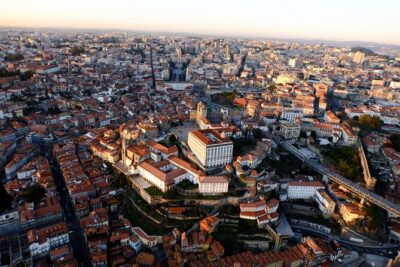
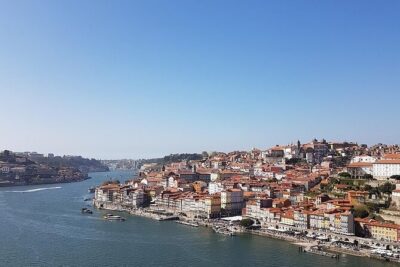
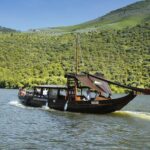
This is one of those Porto activities that helps everything click. You start near Marina da Afurada (Vila Nova de Gaia), then you spend your time looking across the Douro as the city’s layers slide by: old waterfront streets, steep viewpoints, and the big iron-and-stone structures that make this river famous.
The key is that it’s not trying to do everything at full volume. The group stays tiny, and the pacing is built around short, memorable stops plus time for the river views. You’re also not left wondering what to do with all that scenery; the hosts explain what you’re seeing as you go, with enough breathing room to take photos and just enjoy the moment.
And yes, the port tasting matters here. Four different ports give you a chance to notice differences instead of treating it like a single quick sample. If you’ve only had one type of tawny or one type of ruby elsewhere, this is a way to recalibrate your palate without getting dragged into a classroom lecture.
You can also read our reviews of more boat tours in Porto
Starting in Afurada: why the meeting point matters
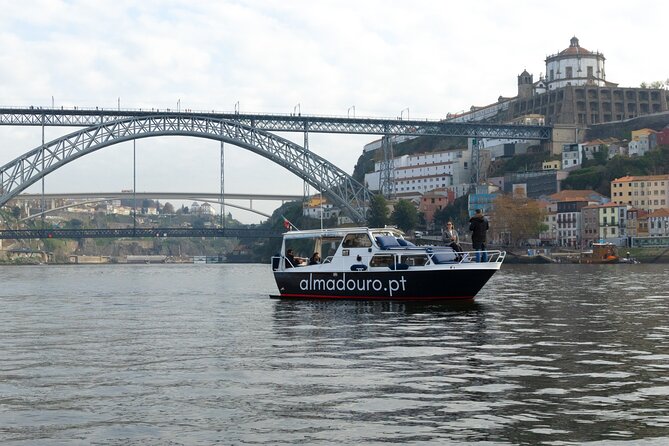
You meet at Marina da Afurada, on R. da Praia 430, in Vila Nova de Gaia. This is a practical advantage. Gaia is the side of the river where you feel the port trade history most clearly, and Afurada itself has a traditional, working-waterfront feel compared with Porto’s more postcard-famous streets.
Also, starting at the marina keeps the experience efficient. You’re not wasting time zigzagging across town before you even reach the river. If you’ve got limited Porto energy, this helps a lot.
One more nice detail: it’s listed as near public transportation. That doesn’t mean you’ll walk across town with a suitcase, but it usually means you have more than one option to get there without stress.
Clérigos Tower and Porto’s vertical views
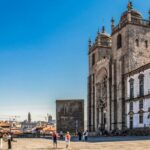
One of the standout non-river pieces is a stop that centers on Clérigos Tower. This tower was designed by Italian architect Nicolau Nasoni, completed in 1763, and it originally functioned as a bell tower. Over time it also became a landmark for vessels and even played a strategic role during military conflict.
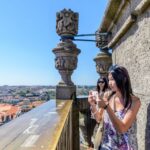
What you should know up front is the climb. The route to the top includes a 225-step journey. If you’re okay with stairs and want wide views over Porto and Gaia, this is a highlight. The payoff is the kind of perspective that flat streets can’t give you: you start seeing how neighborhoods stack up along hills, and how the river cuts the city into two personalities.
Possible drawback: if you’re short on time, the steps can slow your pace. It’s also not a stop you’d want to rush.
Dom Luís I Bridge: the postcard made practical
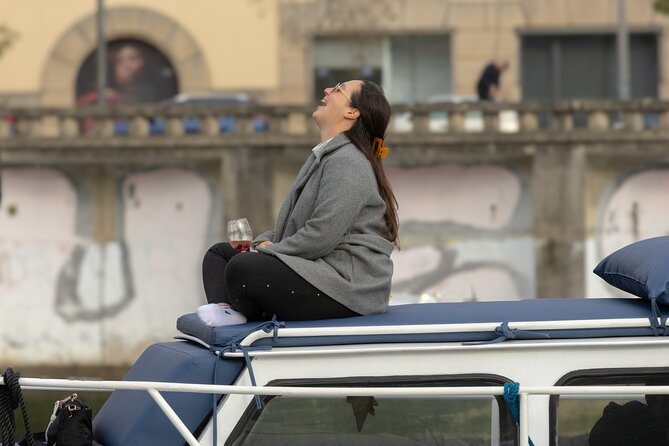
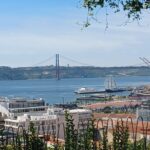
The cruise’s bridge focus really pays off with Dom Luís I Bridge, a metal bridge with two decks built between 1881 and 1886. It connects Porto and Vila Nova de Gaia across the Douro.
You’ll spend about 30 minutes at the bridge area (admission ticket is free, according to the info). On a cruise, this amount of time helps. You’re not just snapping one quick photo; you get multiple angles as the river motion and city backdrop shift.
Why this matters for you: this bridge isn’t only a pretty structure. It’s one of the “don’t-miss” engineering signatures of Porto. Watching it from the water lets you understand its scale and why it dominates the river crossing.
Ribeira and the classic riverfront feel

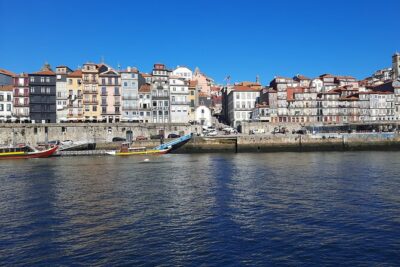
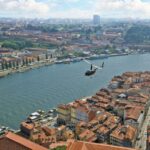
The experience includes a stop for Ribeira, the colorful waterfront area that many visitors treat like a must-see postcard. From a river level, Ribeira looks different than it does from the top viewpoints. You see the packed street character, the way buildings step down toward the water, and you catch the rhythm of Porto life along the river.
If you want your photos to look like Porto, this is where you’ll get them. But also, don’t rush through it like a checklist. Ribeira is the kind of place where small details matter—steps, old walls, and the layered waterfront perspective.
You can also read our reviews of more wine tours in Porto

Serra do Pilar Monastery: UNESCO views with real stone weight
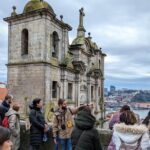
On the Gaia side, you’ll reach Serra do Pilar Monastery, an austere 17th-century church classified by UNESCO as a World Heritage Site since 1996. It’s also designated as a National Monument.
The big architectural point: the church and surrounding cloister use a circular plan, with a hemispherical vault and a balcony, plus a lantern element on top. Inside, you’ll find notable carved and gilded work. The cloister is especially interesting: it has a circular vault supported by 36 Ionic columns, and it preserves a distinctive Mannerist design.
Here’s the “why you’ll care” part. This monastery is not just a pretty shape. Its location mattered during major events: in 1809 during Napoleonic invasions, and again in 1832–33 during the liberal struggles, it served as a military base. It was later raised in status as a fortress and even converted into military barracks.
So when you stand there (or look from the river), you’re not just admiring architecture. You’re seeing a place that has held power and conflict across centuries.
D. Maria Pia Bridge: Eiffel’s iron arch at river level
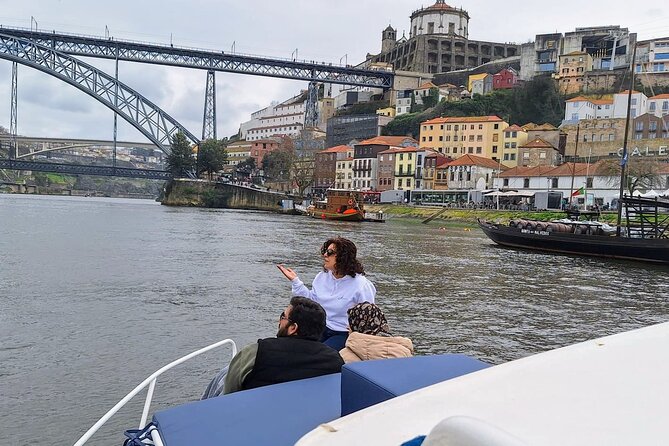
Another major bridge highlight is D. Maria Pia Bridge, a railway infrastructure crossing the Douro between Porto and Vila Nova de Gaia. It opened on November 4, 1877, then closed on June 24, 1991, later replaced by Ponte de São João.
This is one of Gustave Eiffel’s biggest engineering masterpieces alongside the Garabit Viaduct, and at the time of opening it was described as the bridge with the largest iron arch in the world. It has been a National Monument since 1982.
From the cruise, you get a sense of how iron structures change the river’s geometry. The water gives you a live “scale reference,” and the changing angles help you see why it became such a famous feat.
Nature reserve time: birds at the Douro Estuary
The experience also brings you toward Douro Estuary Local Nature Reserve, which covers 66.35 hectares along the south bank near Afurada. It includes Cabedelo and São Paio Bay, where you can find a salt marsh.
The practical highlight here is birds. The reserve sits along the migratory corridor known as the East Atlantic Route, so bird activity is a realistic expectation, especially during migration periods. You don’t need specialist equipment from the info given, but if you like spotting life in the margins, this section adds a different flavor to the cruise.
Ending at the Douro mouth near the Atlantic: the scenery shift
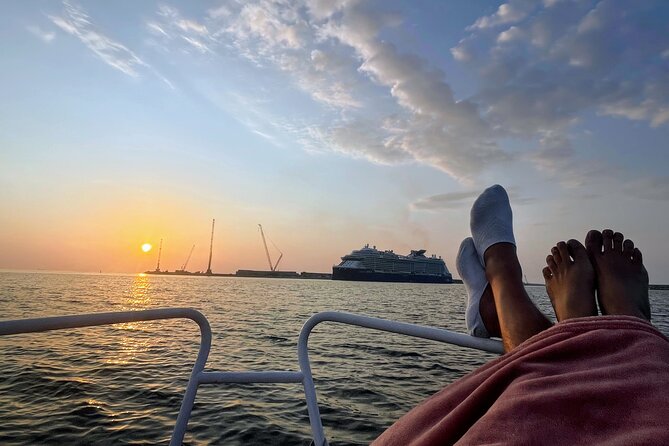
The ride ends at the mouth of the Douro, right by the Atlantic Ocean. That final stretch is a smart way to wrap up. Porto and Gaia can feel like they’re always turning into “more city,” but the river-to-ocean ending helps you reset your eyes.
Also, if you’re chasing that feeling of distance after a city visit, the Atlantic edge gives it to you. You stop seeing only buildings and start seeing horizon.
Port wine tasting: where the experience becomes memorable
The title promises 6 bridges & 4 port wines, and that tasting is the part that most people remember because it connects you to place. Port doesn’t become a souvenir when you taste multiple types in the same experience. It becomes a comparison.
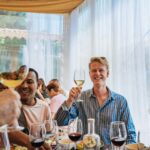
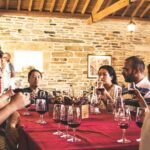
The hosts’ style shows up in the way they pair and explain. The reviews highlight that Nadia and Paulo don’t turn the tasting into a boring lecture. Instead, they pair the different ports with foods that help bring out flavors, and they sprinkle in small anecdotes as you pass landmarks.
That approach is worth paying attention to because it changes how you experience the river. You’re not just collecting views. You’re also learning how local flavors and history tie together.
And it’s not only port. Reviews mention drinks like sangria, plus snacks and cheese plates. The exact items can vary, but the pattern is consistent: you get something to nibble while you watch the river.
Snacks, blankets, and the small-boat comfort factor
Small-group cruises feel different for one reason: you don’t get treated like background noise. On this one, the boat setup and service add comfort without turning it into a formal dining event.
From reviews, you can expect:
- Snacks/cheese boards and other local-style bites
- Blankets when the weather turns chilly
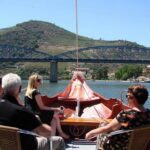
- Time to sit outside and actually enjoy the views
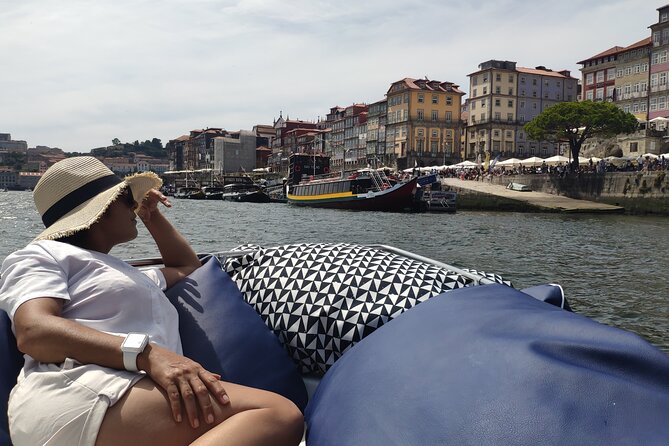
That last bit matters. If you’re used to bigger tours where you stand, crane, and shuffle, the front seating plus comfort makes the river feel slower and more personal.
One practical tip: if you’re going in shoulder season or winter, pack a light layer even if the day starts sunny. The blankets help, but you’ll still feel better if you start dressed for changing conditions.
How the 2 hours work with Porto sightseeing logic
Two hours can sound short, until you see how it’s structured. This experience doesn’t try to replace Porto’s walking tours. It complements them.
Think of it as:
- Great first or last afternoon activity (use it to see the city from the river after you’ve explored streets, or to end your trip with a calming wrap-up)
- A way to cover bridges and viewpoints without spending half your day in transit and queues
- A chance to connect food and wine to the geography that made port trade possible
If you love Porto for its textures—stone, steep grades, river fog, ironwork—this fits your interests better than a purely sightseeing bus tour.
Value check: is $72.41 worth it?
At $72.41 per person for an about 2-hour cruise/tasting experience, the value depends on two things: how much you care about (1) small-group service and (2) the included tastings and snacks.
Here’s the real-world equation:
- If you’d rather avoid 40+ person boats, you’re paying to keep things human-sized.
- If you like food and want port tastings where you can actually compare bottles, your money goes farther than a “one glass and move on” stop.
- If you’re okay with a weather-dependent activity, you’re buying a flexible, scenic experience that can turn into a highlight even without perfect skies.
In plain terms: if you’d only come for the views, you might find cheaper options. But if you want the whole package—bridges, stories, and tastings in a calm boat setting—this price makes sense.
Who should book this Douro cruise (and who shouldn’t)
Book this if you:
- Want Porto from the water plus bridge landmarks
- Care about port wine tasting with pairing and explanations
- Prefer small groups and a more personal guide style
- Like comfort touches like blankets and a relaxed pace
Skip it (or choose something else) if you:
- Have reduced mobility needs, since it’s not recommended
- Can’t do stairs like the Clérigos Tower 225 steps
- Have very tight scheduling and you’re worried about weather disruption (the experience requires good weather)
Do I recommend it?
Yes, with a couple of conditions. If your priority is seeing Porto and Gaia from the Douro with minimal crowd stress, plus getting meaningful port tasting time, this is a strong pick. The combination of Nadia and Paulo’s hosting style, the small group size, and the bridge-and-monument route adds up to an experience that feels like you’re learning the city, not just passing through it.
If you’re traveling with mobility limits or you hate stair climbs, you’ll probably be happier with a different option.
FAQ
How long is the Douro cruise?
It lasts about 2 hours.
Where does the tour start?
The meeting point is Marina da Afurada, R. da Praia 430, 4400-554 Vila Nova de Gaia, Portugal.
Is the experience offered in English?
Yes, it is offered in English.
How many travelers can join?
The maximum group size is 7 travelers.
Does it include port wine tasting?
Yes. The experience includes 4 port wines.
Is it suitable for reduced mobility?
It is not recommended for reduced mobility.