REVIEW · PORTO DISTRICT
Pinhão: 2-Hour Rabelo Boat Tour with Audio Guide
Book on GetYourGuide →Operated by Magnifico Douro · Bookable on GetYourGuide
Terraced vineyards look different when the river is doing the talking. This 2-hour Rabelo boat tour from Pinhão takes you up the Douro toward Tua, past famous quintas, with free geo-timed audio on your phone.
I really like the pacing. Two hours gives you enough time to soak in the views without feeling stuck, and the up-river and down-river sections can feel like two separate rides because you’re watching the same stretch from another angle.
One thing to think about: this tour’s commentary runs through a mobile app, so you’ll want to plan for phones, earphones, and any connection quirks. If your audio doesn’t play, you’ll still have the scenery, but you’ll miss part of the story.
In This Review
- Key highlights to zero in on
- Why this Douro cruise feels special even at “just” 2 hours
- Getting to the pier: finding Magnifico Douro near the iron bridge
- The river route: from Ponte do Pinhão toward Tua and back to Pinhão
- Leaving Pinhão and passing Ponte do Pinhão
- Watching quintas roll by: Bomfim, Roeda, Roncão, Romaneira, Merouço
- Quinta de Merouço to Malvedos: when terraces become a pattern
- Foz Tua and Barragem do Tua: the turnaround area hits differently
- Coming back: Quinta do Roriz, Pessegueiro, Ventozelo, Carvalhas
- Audio guide on your phone: how to get the most out of the app
- Download and setup: do it before you board
- How the audio pacing works
- Boat comfort and weather control on a Rabelo-style deck
- Crew help: why names matter when things go wrong
- Value for money: does $35 make sense for the Douro?
- Who this cruise suits best (and who might want a different style)
- FAQ
- FAQ
- Where does the tour start?
- How long is the boat tour?
- Where does the boat go?
- Is an audio guide included, and what languages are available?
- Do I need to bring earphones?
- Are drinks included?
- What if the tour requires a minimum number of passengers?
- Who speaks with you in person?
- Should you book the Pinhão Rabelo boat tour?
Key highlights to zero in on
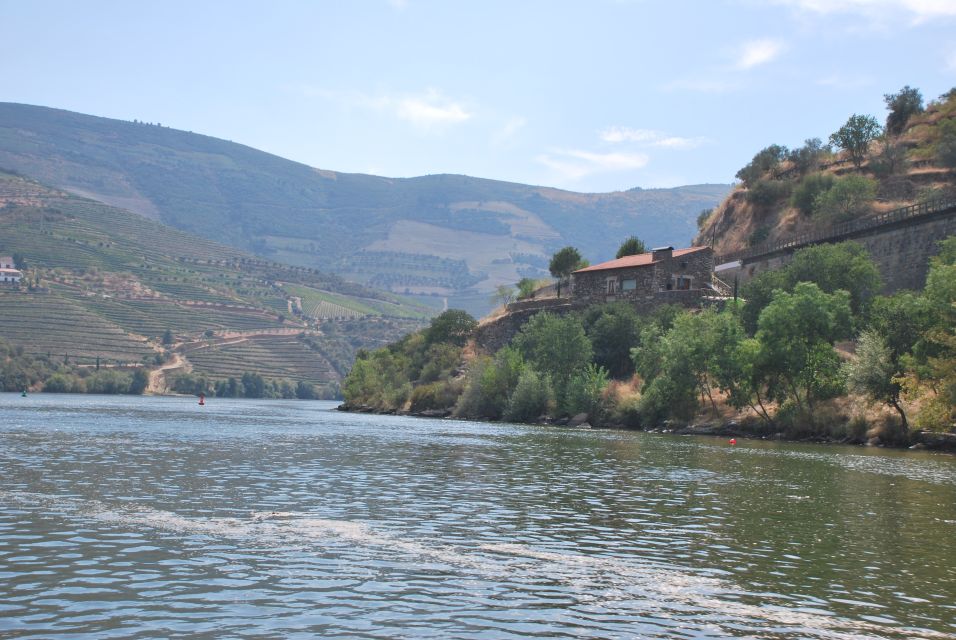
- Traditional Rabelo-style boat with both open and sheltered areas, so weather is less of a deal-breaker.
- Pinhão to the Tua area (and back), including the Foz Tua and Barragem do Tua stretch for a more varied feel.
- Free audio guide app (Magnifico Douro – Boat Tour app) in 5 languages for geo-located info while you cruise.
- Photo-friendly viewpoint options: you can move around and choose where you sit for light and angles.
- A ride that stays calm: the pace is gentle and the boat is small enough that the trip feels personal, not like cattle-herding.
Why this Douro cruise feels special even at “just” 2 hours
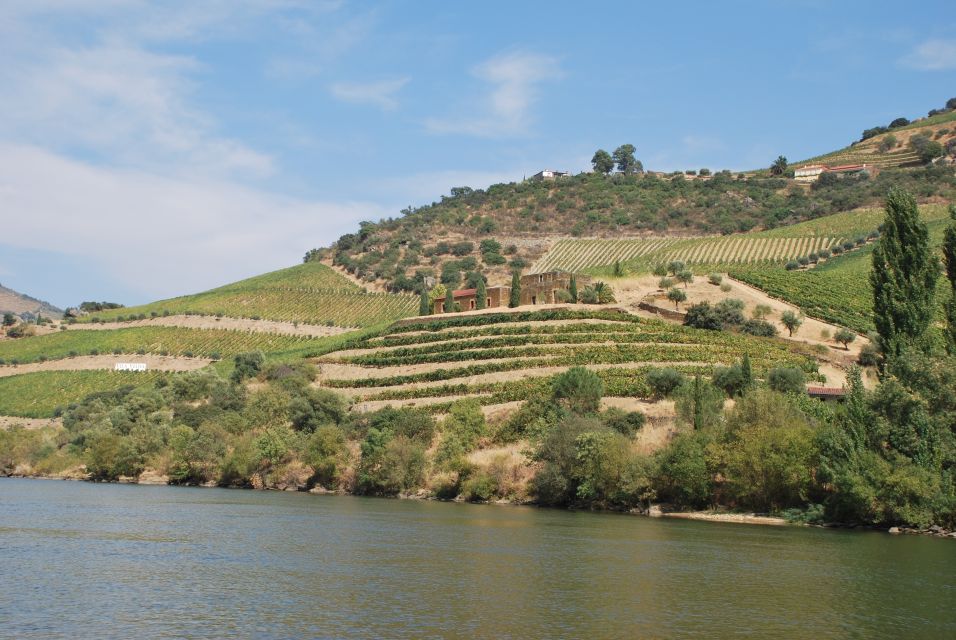
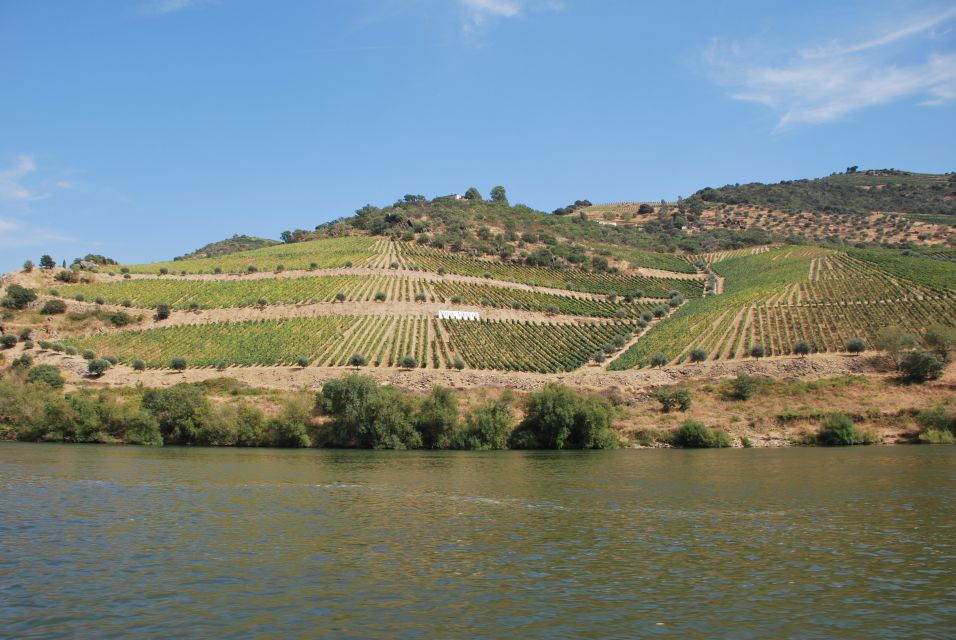
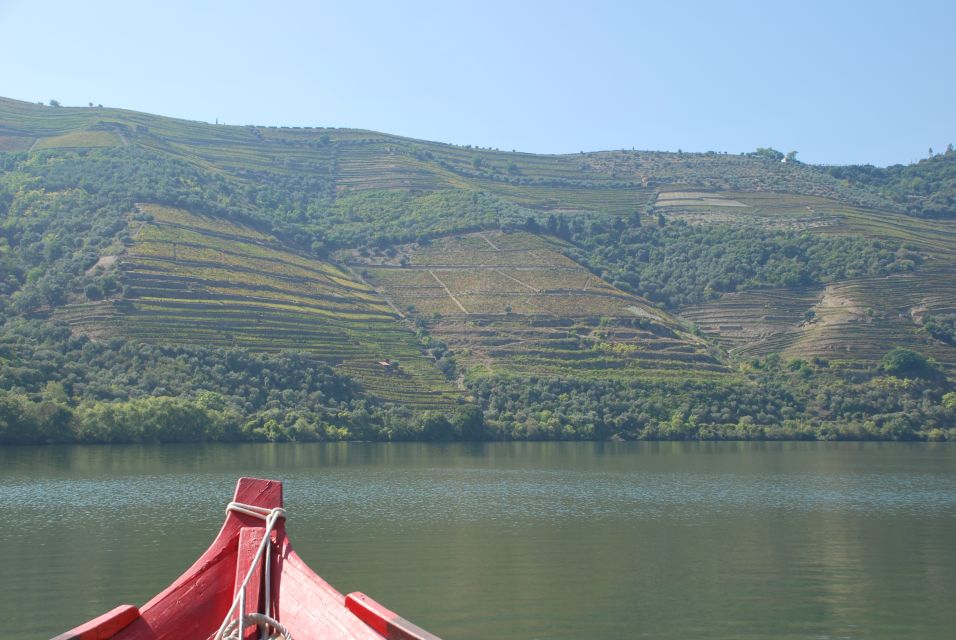
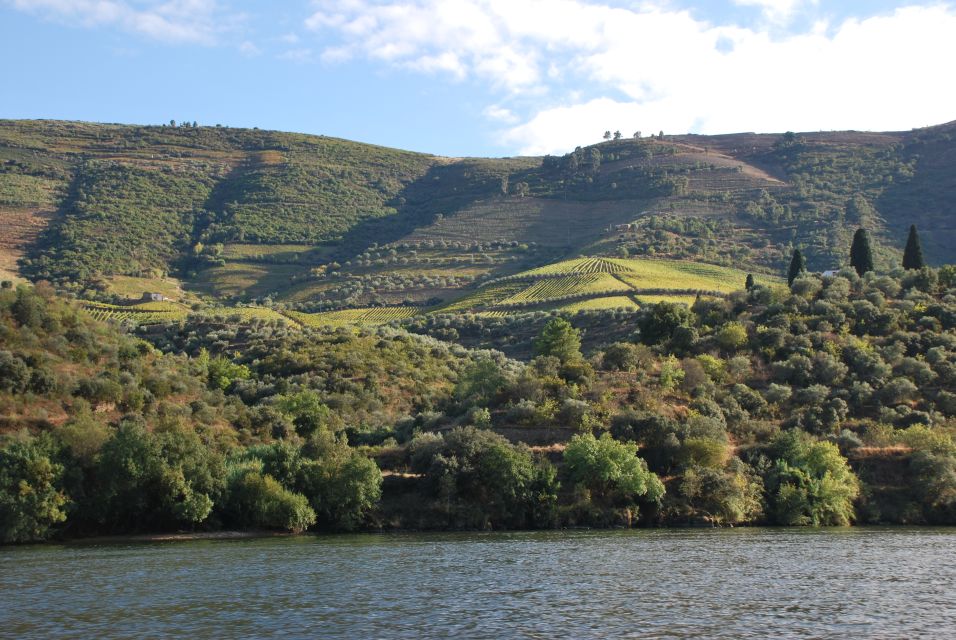
The Douro Valley is famous from land, but the river version hits harder. From the water, you see how the terraces reach down to the waterline, and you get that rare sense of quiet—no national roads, no traffic noise, just the river and the working vineyards.
I like that the tour avoids the overly hectic “see everything” approach. You’re not hopping between viewpoints. You’re drifting past quintas in a straight line of scenery, which makes it easy to relax, take photos, and notice details you’d otherwise miss—like the way vineyard parcels stack up along the hills.
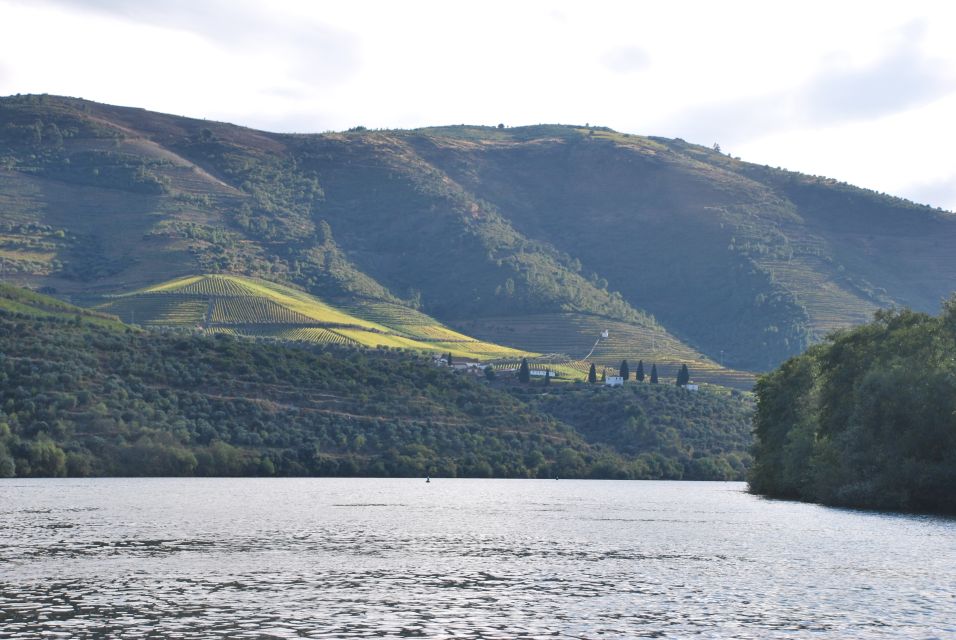
And yes, the trick of going upstream and then back helps. Even though you return on the same general route, the perspective changes. Different curves, different angles, and shifting light can make familiar stretches look new.
You can also read our reviews of more boat tours in Porto District

Getting to the pier: finding Magnifico Douro near the iron bridge
Meet at the Magnifico Douro Pier in Pinhão, near the iron bridge (Ponte do Pinhão). The pier is described as being by the Vintage House Hotel garden gate, and you enter by the bridge.
This part matters more than it sounds. If you arrive with time to spare, you’ll have less stress downloading the app, getting earphones ready, and boarding without rushing. A few visitors noted that crew members can help if you’re stuck with the app setup, so it’s worth being present early enough to get that help.
The river route: from Ponte do Pinhão toward Tua and back to Pinhão
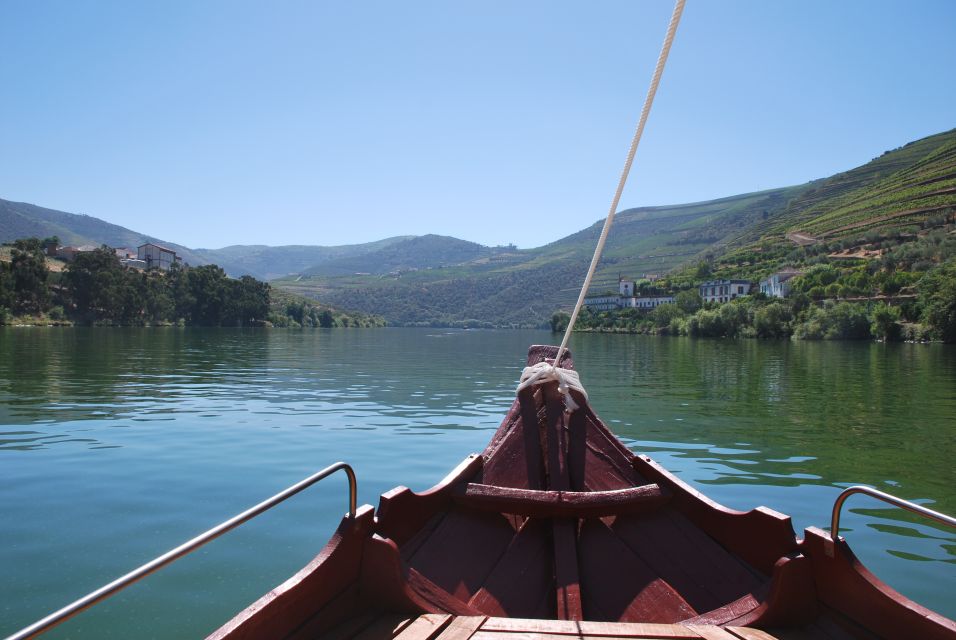
The tour runs as a round-trip: you start in Pinhão, go upstream through the central Douro wine country, reach the Tua area where you turn around, and then cruise back down to Pinhão.
Leaving Pinhão and passing Ponte do Pinhão
Right at the start, you get scenic river views as you move under the iron bridge. It’s a good “reset” moment after you’ve been walking around the village area—suddenly you’re oriented to the river like a local.
Watching quintas roll by: Bomfim, Roeda, Roncão, Romaneira, Merouço
As you head upriver, you pass several well-known names tied to the valley’s wine landscape. Here’s what to watch for, and why it’s worth paying attention:
- Quinta do Bomfim: Look for how the vineyard parcels sit relative to the river bend. The placement explains why this region developed the way it did—wine farming here is built into the geography.
- Quinta da Roeda: Notice the terraces as layers, not single rows. The Douro’s steepness turns planting into architecture.
- Vieira de Sousa – Quinta do Roncão: Try picking out farm boundaries and how they “read” from the water compared with a road viewpoint. From the river, lines and slopes become clearer.
- Quinta da Romaneira: Watch for how the hills rise away from the water. It’s easier to understand the gradient when you can see the vertical jump.
- Quinta de Merouço – Casa do Rio: This is a good stretch for moving to a different spot on the boat. One side can look more dramatic depending on sun and cloud cover.
A practical note: on the water, you’ll often be able to shift position more easily than you can on land. Use that. Step for a better photo angle, then come back to where you feel comfortable.
Quinta de Merouço to Malvedos: when terraces become a pattern
As you continue, Quinta dos Malvedos is one of the names that helps you connect the dots. The terraces start to feel like a repeated system, not random hills. That pattern recognition is part of why a river tour works: your brain starts reading the valley faster.
If you’re the type who likes to compare views, this is where you can start mentally mapping what you’ll see on the return leg.
Foz Tua and Barragem do Tua: the turnaround area hits differently
You’ll reach the Foz Tua and Barragem do Tua area as part of the upriver run. This changes the vibe a bit. Instead of focusing only on wine estates, you get a more “river engineering meets valley” feel—plus a natural sense of scale because the dam is a real landmark.
When the boat turns around, you get a clean break between going-out and coming-back. The return leg can feel like a second chapter, especially once you recognize how the terraces looked earlier from the other direction.
Coming back: Quinta do Roriz, Pessegueiro, Ventozelo, Carvalhas
On the way back toward Pinhão, you pass more named estates, including:
- Quinta do Roriz
- Quinta do Pessegueiro – Adega e Visitas
- Quinta do Ventozelo
- Quinta das Carvalhas
For these sections, I’d focus on two things: (1) how the river curves affect what you can see, and (2) what you remember from the outbound direction. If you look at the estates on the first pass and then check them again on the second, you’ll get that satisfying “ah, now I see it” moment.
Audio guide on your phone: how to get the most out of the app
This tour includes a free audioguide app called Magnifico Douro – Boat Tour app, available in English, French, German, Portuguese, and Spanish. It’s geo-localized, so it aims to match the narration to what you’re passing.
The key practical point: bring your own earphones. Without them, you’ll either hear nothing clearly, or you’ll be part of a noisy phone chorus. The app is meant for your personal listening.
Download and setup: do it before you board
You’ll be asked to download the app ahead of time. I suggest you do it with Wi-Fi if possible, then test your audio with your earphones while you’re still on land. That way, you’re not stuck trying to solve phone problems while the boat is moving.
There have been reports that the audio can be affected by connection, and some devices struggled with downloading. The crew may help in some cases, including getting it working, so if you get stuck, ask right away.
How the audio pacing works
One useful detail from experience-based notes: the audio tends to cover the upriver portion more than the return. That means even if outbound works and return is quieter, you can still enjoy the ride without the app interfering with the calm.
Still, don’t assume your phone will cooperate. If you can, come prepared with a charged battery and a plan for saving your spot on the app timeline if it stops.
Boat comfort and weather control on a Rabelo-style deck
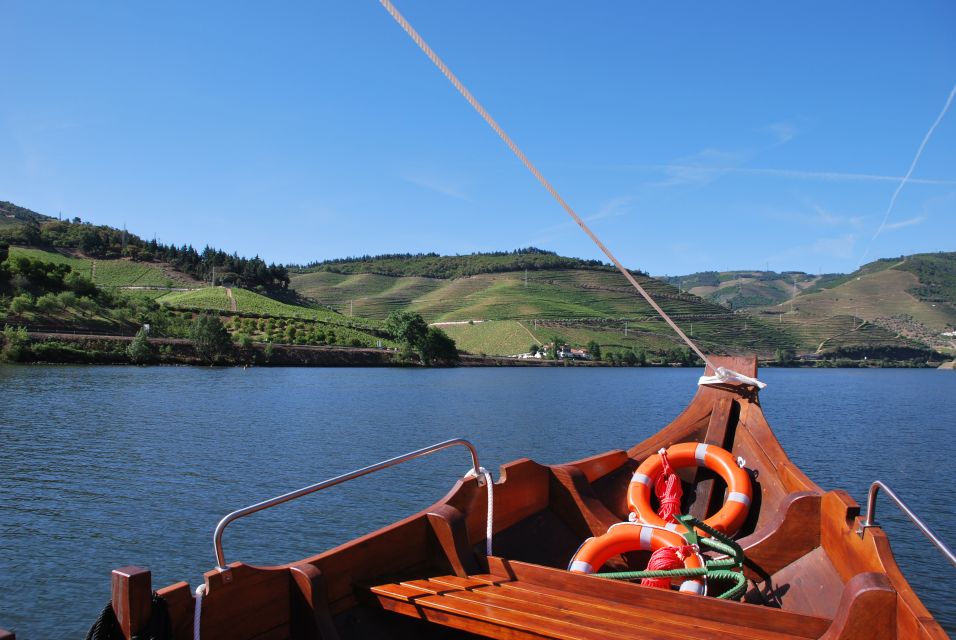
The traditional rabelo boat design is part of the appeal. It has open and closed areas, so you can choose sun or shade based on the day.
In warm weather, shade becomes your best friend. Several people mentioned there was enough cover to escape strong sun. In cooler or windy conditions, the enclosed area helps a lot, especially on the return when conditions can feel different even though you’re on the same stretch.
Dress in layers. One of the most common patterns with Douro river time is quick temperature swings: you might start with warmth and end up wanting a sweater once the breeze picks up.
Crew help: why names matter when things go wrong
A recurring theme is that the crew is helpful, especially when passengers are trying to download the app or get audio synced.
You might also meet captains and staff who are willing to talk. For example, captain Barbara has been highlighted for friendly, entertaining guidance. Other crew members were also praised for assistance—like Luis and Bernadetta in some notes.
Even if you’re relying on the app, it’s worth remembering: you can still ask questions on board. It’s not a totally silent experience.
Value for money: does $35 make sense for the Douro?
At around $35 per person for a 2-hour cruise, this feels like a solid value if you’re treating it as a core “Douro experience” rather than a quick add-on.
Here’s why it can be worth it:
- Time depth: two hours is long enough to appreciate multiple estates and reach the Tua area, not just “see the first bit.”
- Different viewpoints: the upstream and downstream legs can feel like separate perspectives.
- Included narration: you’re not paying extra for commentary if you can get the app running.
It’s not a bargain for everyone, though. The boat is pleasant and the views are the main event, but there’s no drinks included. If you’re hoping the ticket includes a tasting or a port glass, you’ll need to plan that separately.
So think of the price as paying for your access to the water: you’re paying for that uninterrupted stretch of terraced views.
Who this cruise suits best (and who might want a different style)
You’ll likely enjoy this tour most if you:
- Want an easy, low-effort way to see the Douro Valley without booking vineyard transfers
- Like scenery and photos, and you’re happy to listen via headphones
- Prefer smaller, calmer outings over crowded, fast-paced group tours
- Feel comfortable handling a phone app during a live experience
It might not be the best fit if:
- You dislike app-based audio or you know your phone often struggles with downloads
- You were hoping for a fully live, face-to-face guide throughout the cruise
- You’re traveling with devices that can’t connect or can’t play audio reliably
FAQ
FAQ
Where does the tour start?
The meeting point is Magnifico Douro Pier in Pinhão, near the iron bridge and in front of the Vintage House Hotel garden gate. You enter by the bridge.
How long is the boat tour?
The cruise is 2 hours total.
Where does the boat go?
You go upstream from Pinhão toward the Tua area, then turn around and return to Pinhão. The route passes the Foz Tua area and Barragem do Tua as part of the journey.
Is an audio guide included, and what languages are available?
Yes. A free audioguide app called Magnifico Douro – Boat Tour app is included, with audio available in English, French, German, Portuguese, and Spanish.
Do I need to bring earphones?
Yes. You’re asked to bring your own earphones for a better audio experience.
Are drinks included?
No. Drinks are not included with the tour.
What if the tour requires a minimum number of passengers?
A minimum of two passengers is required for the tour to operate.
Who speaks with you in person?
An English-speaking host or greeter is listed for the experience.
Should you book the Pinhão Rabelo boat tour?
If your goal is to see the Douro Valley in a calm, scenic way, and you can handle phone audio, I’d say book it. The route to the Tua area gives you more than the shortest excursions, and the Rabelo boat setup with open and sheltered sections makes the experience flexible across weather.
If you know your phone setup is unreliable, consider whether you’ll be okay cruising with less commentary. In that case, it might be worth choosing a tour style that depends less on an app.